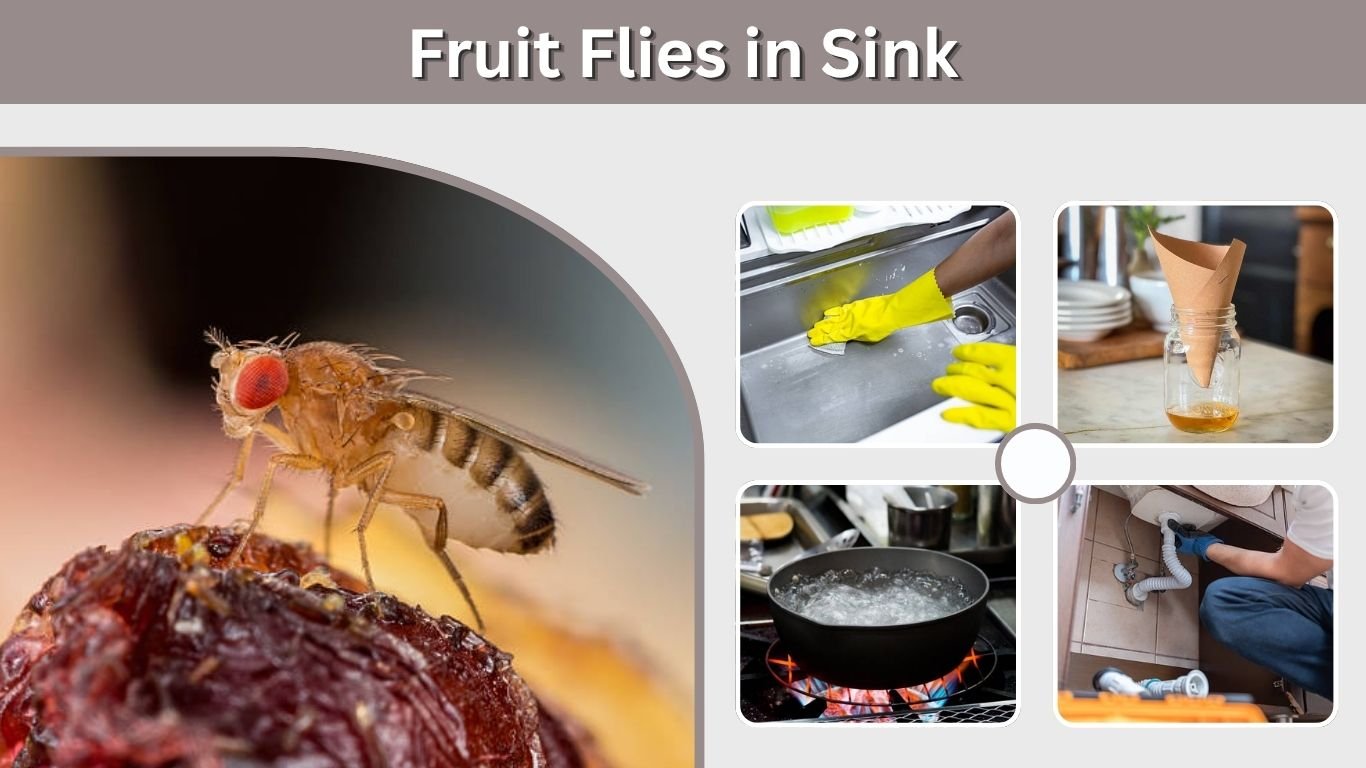
Fruit flies around a kitchen or bathroom sink usually indicate moisture and hidden organic residue nearby. They may be feeding on fermented material inside a garbage disposal, recycling container, drain opening, or sink overflow. However, insects described as sink fruit flies are often drain flies or phorid flies instead. Successful control requires identifying the insect, removing its breeding material, cleaning the drain mechanically, and eliminating other food sources—not merely killing the visible adults.
Why Are Fruit Flies Around the Sink?
Common fruit flies, also called vinegar flies, are attracted to yeasts growing in fermenting fruit, vegetables, sugary drinks, and other moist organic material. They can breed in beverage residue, garbage, compost, and food waste trapped around a sink or disposal.
Possible sources include:
- Food trapped beneath the drain stopper
- Slime coating the drain opening
- Residue under a garbage-disposal splash guard
- Sugary liquid inside bottles or cans
- Wet sponges, cloths, and mop heads
- Moist garbage or compost
- Sink overflow channels
- Leaking plumbing beneath the sink
- Overripe produce near the counter
Biofilm can form in sink drains, overflow openings, floor drains, and garbage disposals. This moist organic coating may support fruit flies and several similar small flies.
Are They Fruit Flies or Sink Flies?
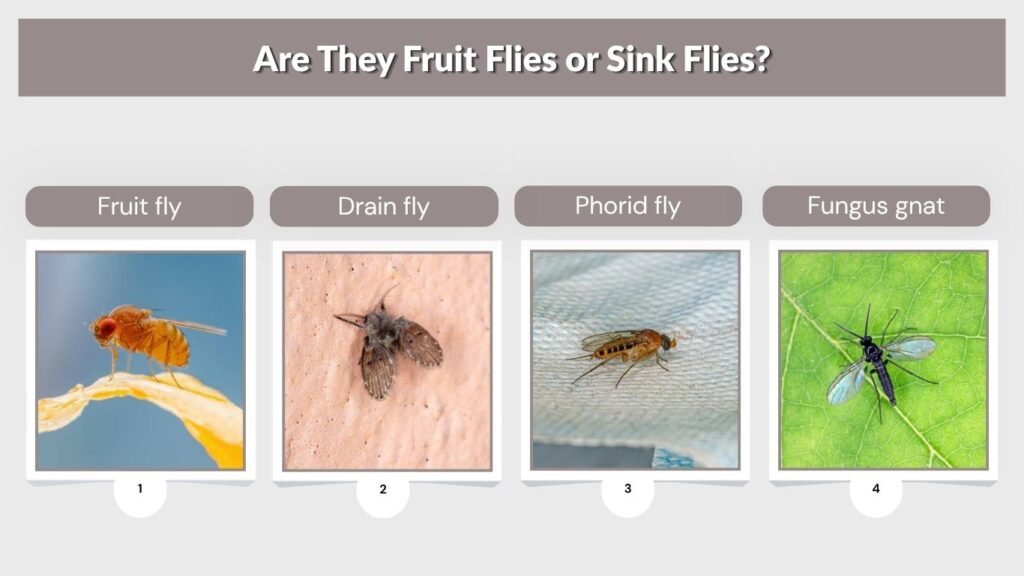
Not every tiny insect hovering around a sink is a fruit fly. Drain flies, phorid flies, and fungus gnats are frequently mistaken for them.
| Insect | Appearance | Likely breeding source |
| Fruit fly | Tan, stocky body; often red eyes | Fermenting food and beverage residue |
| Drain fly | Gray, fuzzy body; moth-like wings | Slime inside drains and wet plumbing |
| Phorid fly | Brown or dark body with a humped back | Drains, leaks, garbage, and decaying material |
| Fungus gnat | Dark, slender, mosquito-like body | Damp houseplant soil |
Fruit Flies
Fruit flies are usually light brown, approximately 2–3 millimeters long, and commonly have bright red eyes. They are especially attracted to overripe produce, vinegar, wine, beer, and sugary residue.
Drain Flies
Drain flies, also called moth flies, are tiny, grayish insects with hairy wings held over the body like a roof. Their larvae feed on bacteria and organic slime inside continuously wet plumbing.
Phorid Flies
Phorid flies resemble small fruit flies but have a noticeably arched or humped thorax. They may breed in food waste inside drains, moist garbage, damaged plumbing, or sewage leaks.
Do Fruit Flies Live and Lay Eggs in Sink Drains?
Fruit flies can breed in a drain when fermenting food residue and moisture are available. They do not normally lay eggs on clean metal or inside a completely clean pipe.
Females place their eggs directly on suitable food or around its edges. The eggs can hatch within one or two days, and the entire life cycle may be completed in little more than a week under warm conditions.
Drain-fly larvae are even more closely associated with plumbing. They live in the gelatinous bacterial film coating the interior of wet drains. Therefore, flies emerging directly from a clean-looking sink are often drain flies or phorid flies rather than true fruit flies.
How to Confirm Flies Are Coming From the Drain
Conduct a simple overnight tape test before treating every drain in the home.
- Dry the drain opening.
- Place clear tape across part of the opening with the sticky side facing downward.
- Do not seal the drain completely.
- Leave it in place overnight.
- Check the tape for trapped flies the following morning.
Flies stuck beneath the tape indicate that the tested drain is probably an active source. Test the sink drain, overflow opening, garbage disposal, bathtub drain, and nearby floor drains separately when necessary.
How to Get Rid of Fruit Flies in a Sink
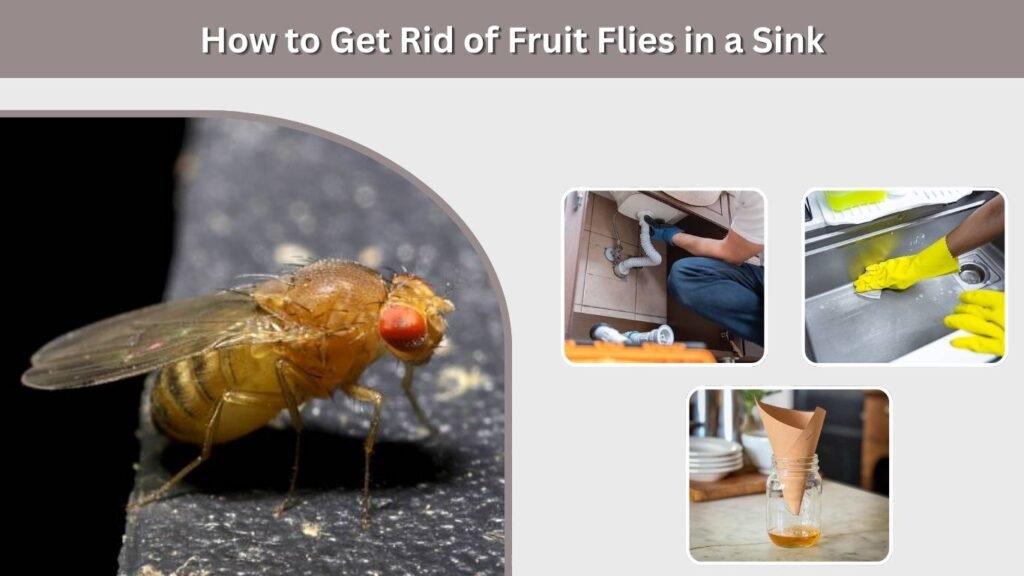
Removing the breeding material is more important than spraying or trapping adults. Adult flies will continue appearing while eggs and larvae remain inside the drain or elsewhere in the room.
1. Remove Nearby Food Sources
Refrigerate ripe produce and discard anything overripe or damaged. Empty garbage and compost, rinse beverage containers, and clean sticky residue around recycling bins.
During an outbreak, susceptible fruit should be covered or refrigerated for at least a week. Used bottles and cans should be washed thoroughly before storage or disposal.
2. Remove and Clean Sink Parts
Take out the drain stopper, strainer, and other removable components. Wash them with detergent and scrub away visible slime.
For a garbage disposal, disconnect the power before cleaning any accessible part. Scrub the underside of the rubber splash guard, where food particles and grease frequently accumulate. Never place a hand or tool near disposal blades while the unit is connected to power.
3. Scrub Inside the Drain
Use a long, stiff drain brush to scrub the accessible pipe walls. Mechanical brushing removes the organic coating that feeds larvae.
Cleaning only the sink basin will not reach material farther inside the drain. Colorado State University Extension recommends eliminating the bacterial gel or lodged food waste by thoroughly brushing the pipes and drains.
4. Treat the Overflow Opening
Bathroom and some kitchen sinks have an overflow channel near the upper edge of the basin. Organic material can accumulate inside it even when the main drain appears clean.
Use a suitable narrow brush where accessible, then apply a drain-cleaning product labeled for overflow channels. Follow the manufacturer’s instructions and avoid damaging internal plumbing.
5. Use an Enzyme-Based Drain Cleaner
After brushing, apply an enzyme or microbial drain product labeled for breaking down organic buildup. Foaming formulas can remain in contact with the pipe walls longer than a liquid that immediately drains away.
Follow the product label regarding dosage, contact time, ventilation, and plumbing compatibility. Enzyme-based cleaners help digest the material supporting larvae rather than merely killing adult flies.
6. Repair Leaks and Moisture Problems
Inspect the cabinet beneath the sink for dripping pipes, wet wood, condensation, and unpleasant odors. Drain and phorid flies may develop around hidden plumbing leaks or moisture beneath floors and walls.
Persistent flies after thorough drain cleaning may indicate a damaged pipe, failed seal, or sewage problem that requires a plumber.
7. Trap the Remaining Adults
Place a small amount of apple-cider vinegar, wine, beer, or mashed fruit inside a jar. Add a paper funnel or use a commercial fruit-fly trap.
Traps can reduce adult numbers, but they cannot eliminate an infestation without sanitation and source removal.
Does Bleach Kill Fruit Flies in a Sink?
Bleach is not a reliable stand-alone solution. Even when a chemical kills insects or microorganisms it contacts, the organic film supporting eggs and larvae may remain inside the pipe. Physical scrubbing and an appropriate drain-cleaning product are more important for lasting control.
Never mix bleach with vinegar, ammonia, drain cleaner, or another household cleaning product. Such combinations can produce toxic fumes or other dangerous reactions. Always follow the product label and ventilate the area.
Does Hot or Boiling Water Work?
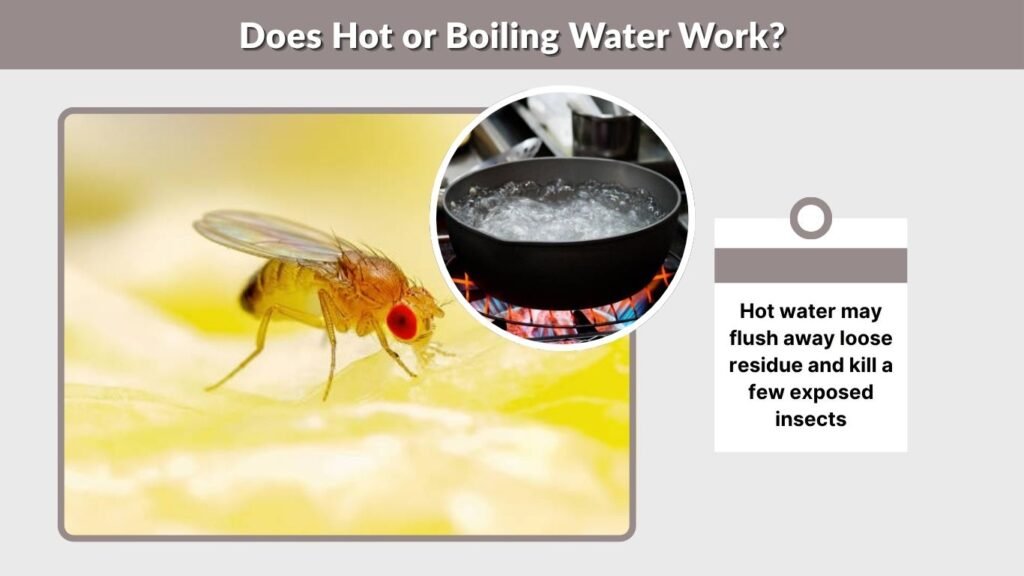
Hot water may flush away loose residue and kill a few exposed insects, but it generally does not remove the biofilm attached to pipe walls. Extension guidance notes that hot water and pour-down caustic cleaners perform poorly when the underlying organic coating is not physically removed.
Repeatedly pouring boiling water into a sink may also be unsuitable for certain plumbing materials. Mechanical brushing followed by a compatible enzyme cleaner is a more targeted approach.
How Long Does It Take to Eliminate Sink Flies?
Numbers should begin declining within several days once every breeding source has been cleaned or removed. However, adults may remain for a week or longer, and previously formed pupae may continue emerging.
A complete fruit-fly infestation may take around two weeks to disappear after breeding has stopped. Continued activity beyond that period suggests an untreated drain, overflow opening, garbage disposal, leaking pipe, recycling container, or another hidden source.
FAQs
What should I pour down the sink for fruit flies?
Do not rely on a single homemade liquid. First scrub the pipe and removable drain components to eliminate organic buildup. Then apply an enzyme-based foaming drain cleaner according to its label. Cleaning the physical breeding material is more effective than repeatedly pouring vinegar, bleach, or hot water into the drain.
Why are fruit flies coming from my bathroom sink?
The insects may actually be drain flies or phorid flies breeding in the drain, overflow channel, or a plumbing leak. Bathroom fruit flies can also be attracted by residue in trash cans, damp cleaning materials, or products containing sugars and plant ingredients.
Can fruit flies come through a clean sink drain?
Flies may emerge from plumbing that appears clean at the opening while organic buildup remains farther down the pipe. Use an overnight tape test to confirm the source. Persistent activity after cleaning may indicate a hidden leak or damaged drainpipe.
Are fruit-fly eggs visible in a sink?
Fruit-fly eggs are extremely small and difficult to recognize without magnification. Pale larvae may occasionally be visible in wet organic residue. Drain-fly larvae can also inhabit pipe slime. Finding larvae means the breeding material should be removed rather than simply flushed deeper into the plumbing.
How can I prevent fruit flies from returning?
Keep produce refrigerated or covered, rinse bottles and cans, empty garbage regularly, clean beneath sink stoppers and disposal guards, dry sponges, and repair leaks. Periodically brushing frequently used drains helps prevent the organic coating that supports fruit flies, drain flies, and phorid flies.