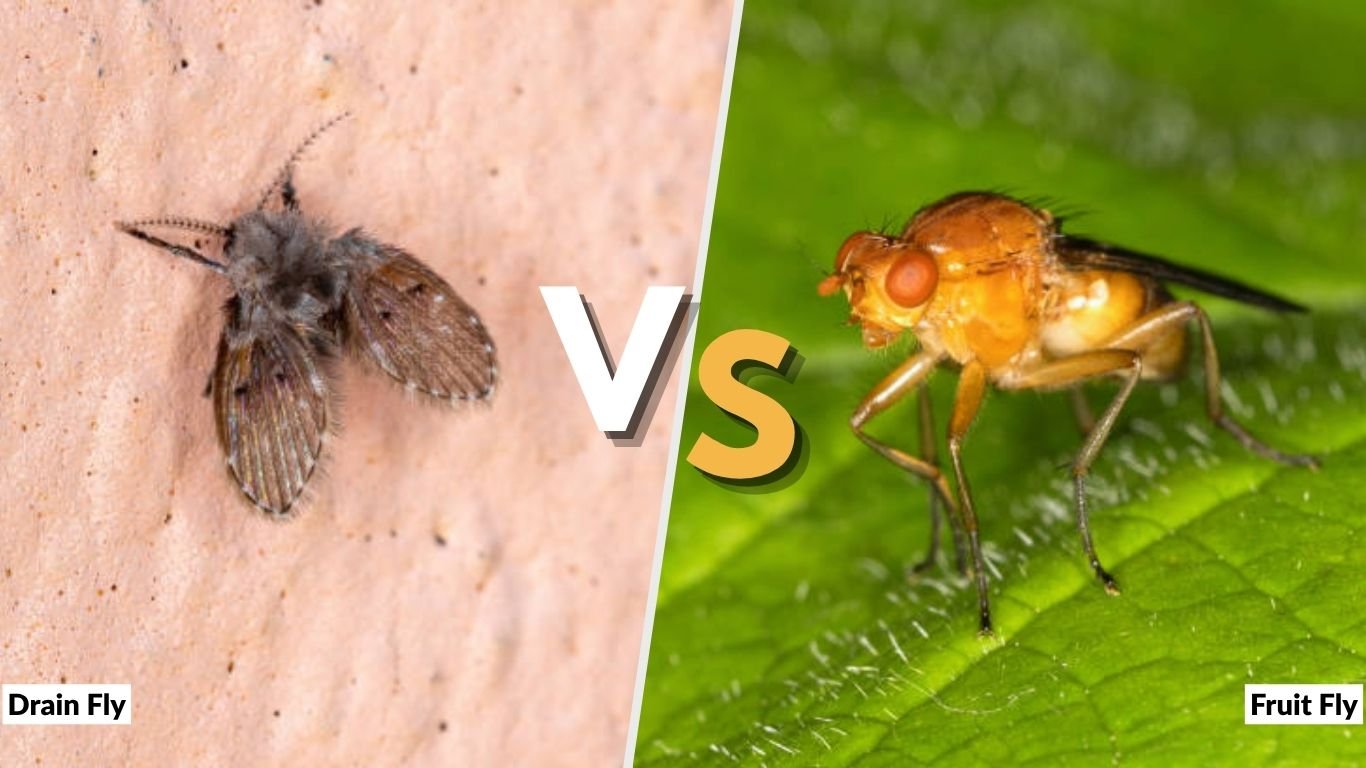
Drain flies and fruit flies are tiny household pests commonly found in kitchens and bathrooms. Because both insects may gather around sinks, they are often mistaken for each other. However, drain flies are fuzzy, moth-like insects that breed in organic buildup inside plumbing, while fruit flies are smooth-bodied flies attracted to fermenting food and drinks. Identifying the insect correctly will help you locate its breeding source and select an effective treatment.
Drain Fly vs Fruit Fly: Quick Comparison
Although these insects are similar in size, their appearance, behavior, and preferred breeding sites are different.
| Feature | Drain Fly | Fruit Fly |
| Size | About 1/16–1/5 inch | About 1/8 inch |
| Appearance | Fuzzy and moth-like | Smooth and rounded |
| Color | Gray, brown, or black | Tan, brown, or yellowish |
| Eyes | Dark | Often red |
| Wings | Broad and hairy | Clear and smooth |
| Flight | Weak, short, hopping flights | Quick and active |
| Main habitat | Drains and wet plumbing | Kitchens and food-storage areas |
| Breeding source | Organic film inside pipes | Fermenting food and liquids |
Drain Fly Identification
Drain flies have fuzzy bodies and broad, hairy wings. Their wings often rest in a roof-like position over the body, making them resemble tiny moths.
Important identification features include:
- Gray, brown, or black coloration
- Broad, rounded wings
- Hairy or fuzzy appearance
- Short, irregular flights
- Frequent resting on walls
- Activity near sinks, showers, or floor drains
Drain flies are also called moth flies, filter flies, or sewer flies.
Fruit Fly Identification
Fruit flies have compact, rounded bodies and smooth wings. Many common fruit flies have noticeable red eyes, although some species have dark eyes.
Typical features include:
- Tan or yellowish-brown body
- Rounded abdomen
- Red or dark eyes
- Short antennae
- Smooth, clear wings
- Faster and more active flight
- Activity around produce and beverages
Where Do Drain Flies and Fruit Flies Come From?
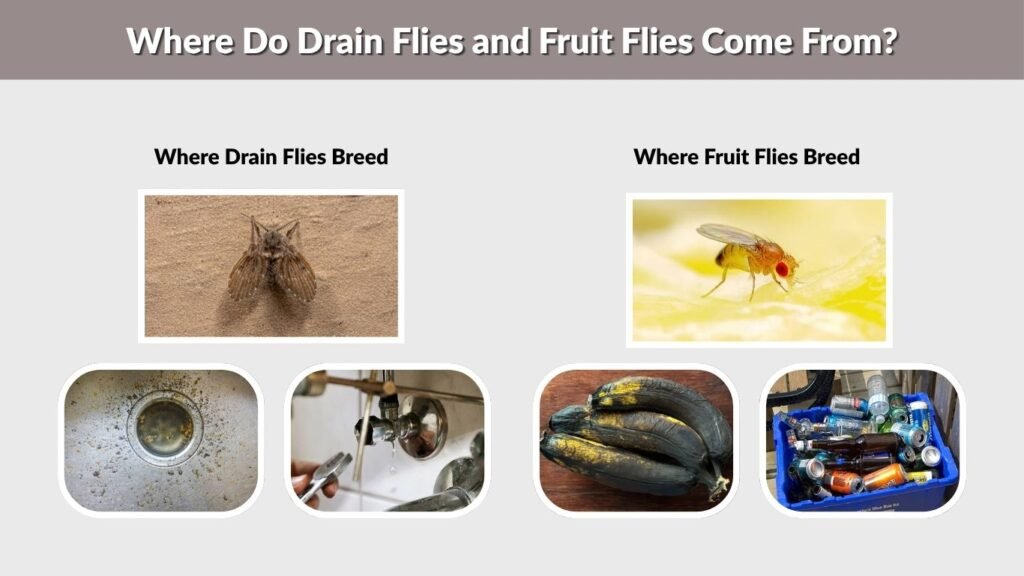
The location where the flies gather is often the best identification clue. Drain flies remain close to wet plumbing, while fruit flies usually follow fermenting food odors.
Where Drain Flies Breed
Drain flies lay their eggs in wet organic film. Their larvae feed on bacteria, algae, fungi, and decomposing material inside plumbing systems.
Common breeding locations include:
- Kitchen sink drains
- Bathroom drains
- Shower drains
- Floor drains
- Garbage disposals
- Sewage lines
- Condensate pans
- Leaking pipes
- Seldom-used toilets
- Standing wastewater
A drain does not need to be completely blocked to support drain flies. Even a thin layer of organic slime along the pipe walls may provide enough food for larvae.
Where Fruit Flies Breed
Fruit flies reproduce in moist, fermenting organic materials. They are especially attracted to yeast created as fruit, vegetables, and sugary liquids begin to break down.
Common breeding sources include:
- Overripe bananas and peaches
- Rotting tomatoes, potatoes, or onions
- Fruit juice and soda residue
- Wine and beer bottles
- Garbage and compost
- Recycling containers
- Food spills under appliances
- Dirty mops and cleaning cloths
- Food buildup in garbage disposals
Can Fruit Flies Live in Drains?
Yes, fruit flies can sometimes breed in drains containing food residue and fermenting organic material. Kitchen drains and garbage disposals are more likely to support them than clean bathroom drains.
However, insects coming directly from a drain are often drain flies. Appearance and behavior should be considered before beginning treatment.
Fruit flies found around a sink may also be breeding somewhere nearby rather than inside the drain. Inspect garbage cans, produce, recycling, and hidden spills before assuming the plumbing is responsible.
Drain Fly Larvae vs Fruit Fly Larvae
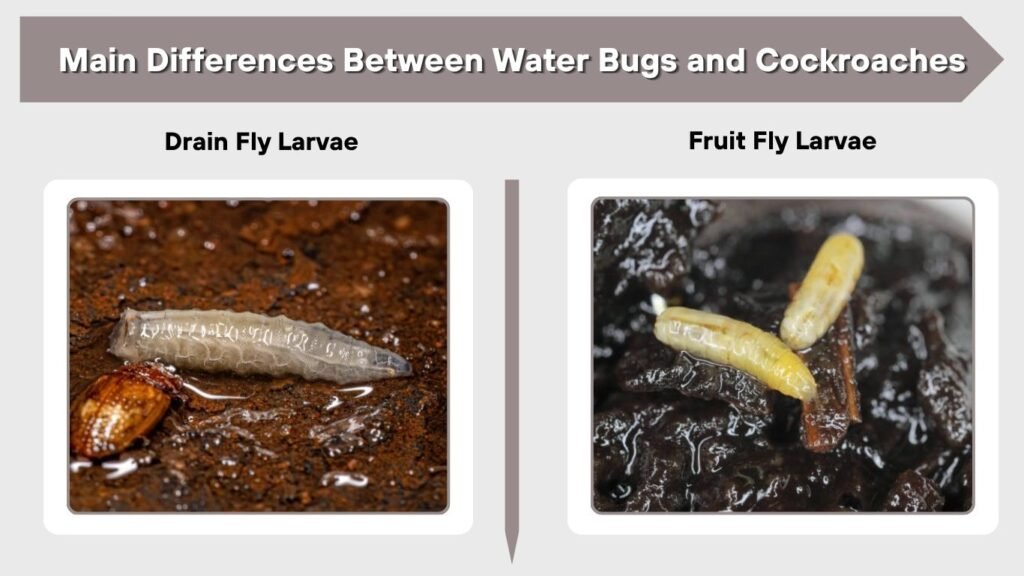
The larvae of both insects may live in wet organic matter, but they have slightly different appearances and preferred habitats.
| Characteristic | Drain Fly Larva | Fruit Fly Larva |
| Appearance | Slender, worm-like, sometimes dark at one end | Cream-colored and maggot-like |
| Location | Organic film inside drains | Fermenting food and liquid residue |
| Food | Bacteria, fungi, and drain buildup | Yeast and decomposing food |
| Development area | Plumbing and wastewater | Produce, garbage, and beverages |
Drain fly larvae often remain hidden inside the gelatinous film coating pipe walls. Fruit fly larvae may be seen crawling in spoiled produce or around the edges of garbage and recycling containers.
How to Test Whether Flies Are Coming From a Drain
Before treating a drain, confirm that it is an active breeding location.
Use the Clear-Tape Test
Place a piece of clear tape over part of the drain with the sticky side facing downward. Leave a small opening so emerging flies can reach the tape.
Check the tape the following morning. Fuzzy, moth-like insects suggest drain flies. Smooth, tan flies may indicate fruit flies.
Repeat the test for several nights because adults may not emerge from the drain every evening.
Inspect the Drain Buildup
Remove the drain stopper and look for dark, slimy organic material. You can also slide a long brush or adhesive strip into the drain to check for buildup.
Finding organic film does not automatically confirm an infestation, but it shows that the drain could support developing larvae.
How to Get Rid of Drain Flies
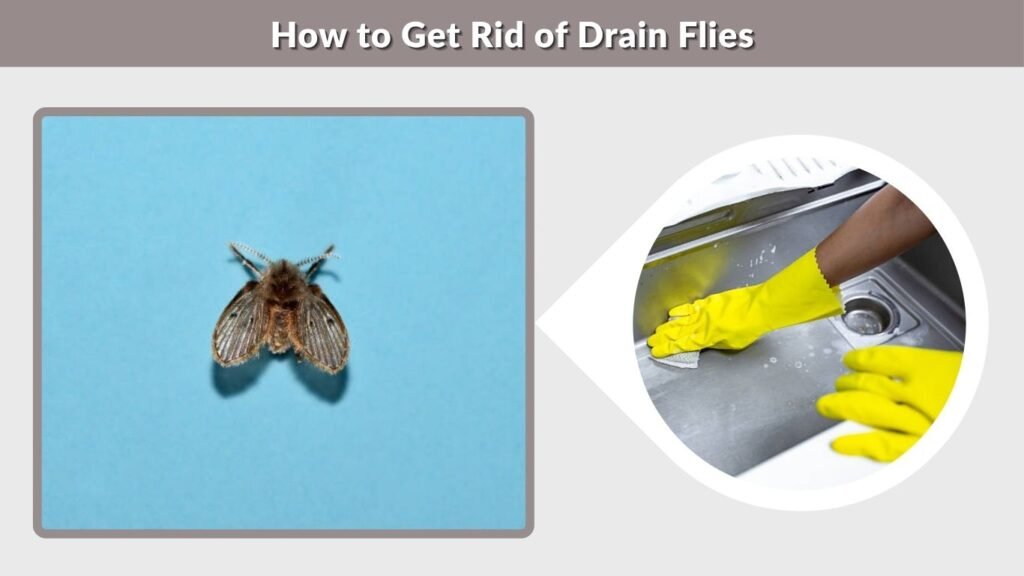
Drain fly control requires removing the organic film where their eggs and larvae develop. Killing adults alone will not eliminate the infestation.
Scrub the Drain Walls
Remove the stopper and use a stiff, long-handled drain brush to scrub the opening and accessible pipe walls.
Clean the following areas carefully:
- Drain opening
- Underside of the stopper
- Overflow opening
- Garbage-disposal splash guard
- Accessible pipe walls
- Edges around the drain
Rinse the loosened material away after scrubbing. Repeat the process for several days if fly activity continues.
Use an Enzyme Drain Cleaner
An enzyme or biological drain cleaner can help break down organic buildup. Choose a product labeled for the type of plumbing and follow its directions.
A thick gel formula may remain on the pipe walls longer than a thin liquid. Drain treatments are usually most effective when combined with physical brushing.
Repair Plumbing Problems
Persistent drain flies may indicate a leaking pipe, damaged drain line, broken seal, or standing wastewater. Repair leaks and clean any wet areas under sinks or appliances.
Professional plumbing assistance may be necessary when flies appear from walls, floor cracks, or areas near sewage odors.
How to Get Rid of Fruit Flies
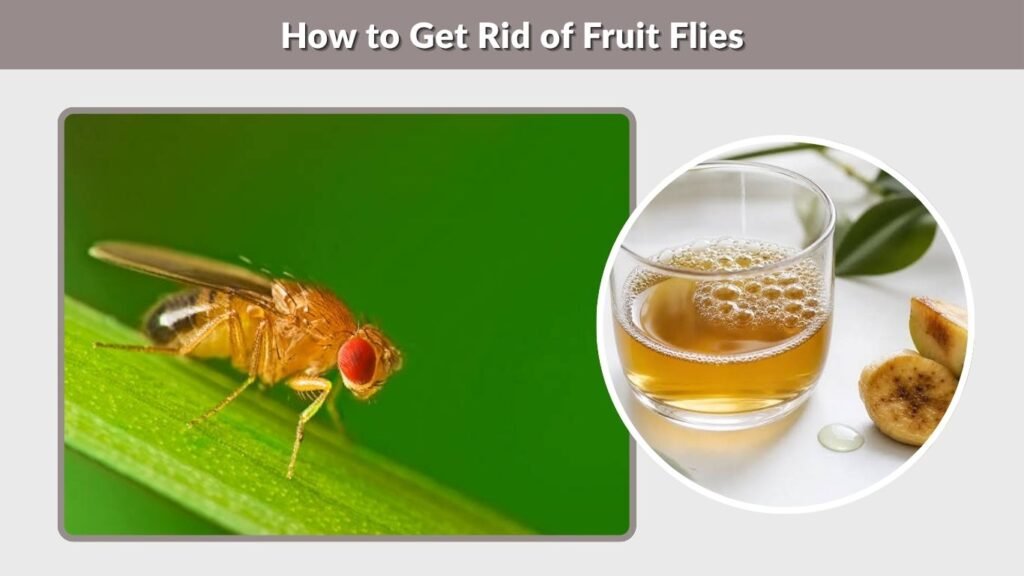
Fruit fly control focuses on removing fermenting food and trapping the adult flies that remain.
Remove Food Sources
Discard spoiled produce in a sealed bag and take it outdoors. Refrigerate ripe fruit and inspect stored potatoes and onions.
Empty and wash garbage, compost, and recycling containers. Rinse beverage bottles and clean sticky spills under appliances.
Make a Vinegar Trap
Pour a small amount of apple cider vinegar into a jar and add one or two drops of dish soap.
The fermented odor attracts fruit flies, while the soap prevents them from remaining on the liquid’s surface. Place traps near the sink, garbage can, recycling bin, or fruit-storage area.
Vinegar traps are much less effective against drain flies because drain flies are not strongly attracted to fermenting fruit odors.
Will Bleach Kill Fruit Flies or Drain Flies?
Bleach may kill insects or larvae it contacts, but it is not the most reliable drain treatment. It may flow through the pipe without removing the organic film attached to the walls.
If the breeding material remains, surviving larvae or newly laid eggs can continue developing. Scrubbing and appropriate enzyme cleaning are generally more effective for long-term control.
Never mix bleach with vinegar, ammonia, drain cleaner, or other chemicals. These combinations may release dangerous gases.
Does Boiling Water Kill Flies in Drains?
Very hot water may kill some larvae and loosen greasy residue, but it usually cannot remove all organic film. It may also be unsuitable for some plumbing materials.
Warm or hot water can be used after brushing to rinse away loosened buildup. Follow plumbing and manufacturer recommendations, especially when working with PVC pipes, porcelain fixtures, or garbage disposals.
Drain Flies vs Fruit Flies vs Fungus Gnats
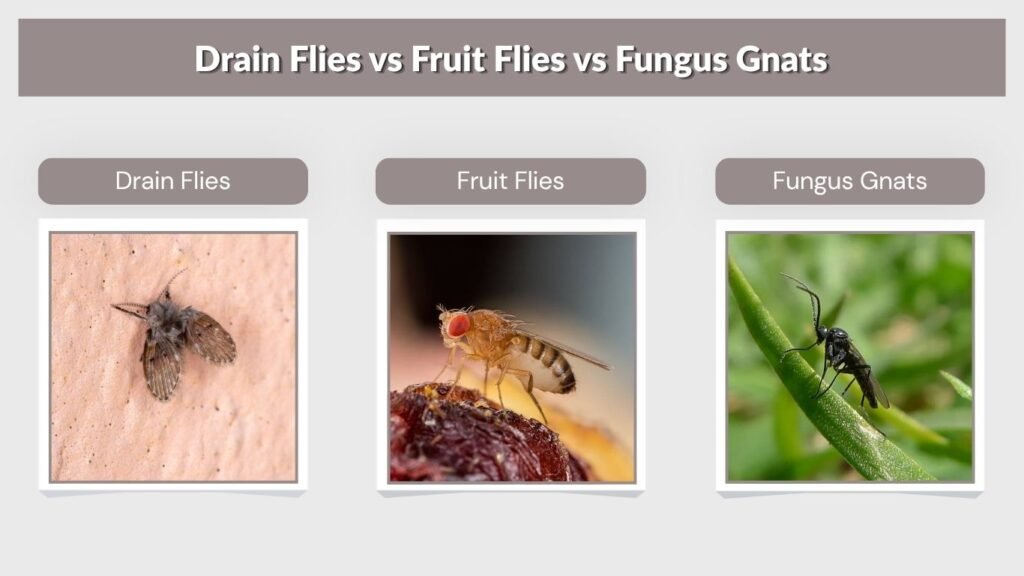
Fungus gnats are another small fly commonly confused with drain flies and fruit flies.
| Insect | Main Identification Feature | Main Breeding Site |
| Drain fly | Fuzzy, moth-like wings | Organic drain film |
| Fruit fly | Rounded body and often red eyes | Fermenting food |
| Fungus gnat | Slender, mosquito-like body | Damp plant soil |
Fungus gnats usually fly around houseplants and crawl across potting soil. Allowing the upper soil layer to dry and using yellow sticky traps can help control them.
How to Prevent Drain Flies and Fruit Flies
Clean drains regularly before thick organic film develops. Scrub stoppers, garbage-disposal components, and seldom-used drains. Repair plumbing leaks and avoid leaving standing water.
To prevent fruit flies, refrigerate ripe produce, clean food spills promptly, empty garbage frequently, and rinse bottles before recycling. Keep compost covered and inspect stored vegetables regularly.
FAQs
Are drain flies and fruit flies the same?
No. Drain flies are fuzzy, moth-like insects that breed in organic drain buildup. Fruit flies have smoother, rounder bodies and reproduce around fermenting produce, sugary drinks, garbage, and food residue.
Do fruit flies come from sink drains?
Fruit flies can breed in kitchen drains containing fermenting food residue. However, flies emerging directly from plumbing may be drain flies. Inspect their appearance and check other nearby food sources before treating the drain.
What should I pour down a drain for fruit flies?
An appropriately labeled enzyme or biological drain cleaner may help break down organic material. However, physically scrubbing the drain walls is usually necessary because pouring liquid alone may not remove the entire breeding film.
Why do drain flies keep coming back?
Drain flies return when eggs, larvae, or organic buildup remain inside the plumbing. Hidden leaks, damaged pipes, infrequently used drains, and inaccessible sewage problems can also support recurring populations.
When should I call a professional?
Contact pest control or a plumber when flies continue after thorough drain cleaning and source removal. Professional help may be needed to locate broken pipes, sewage leaks, inaccessible buildup, or another incorrectly identified fly species.