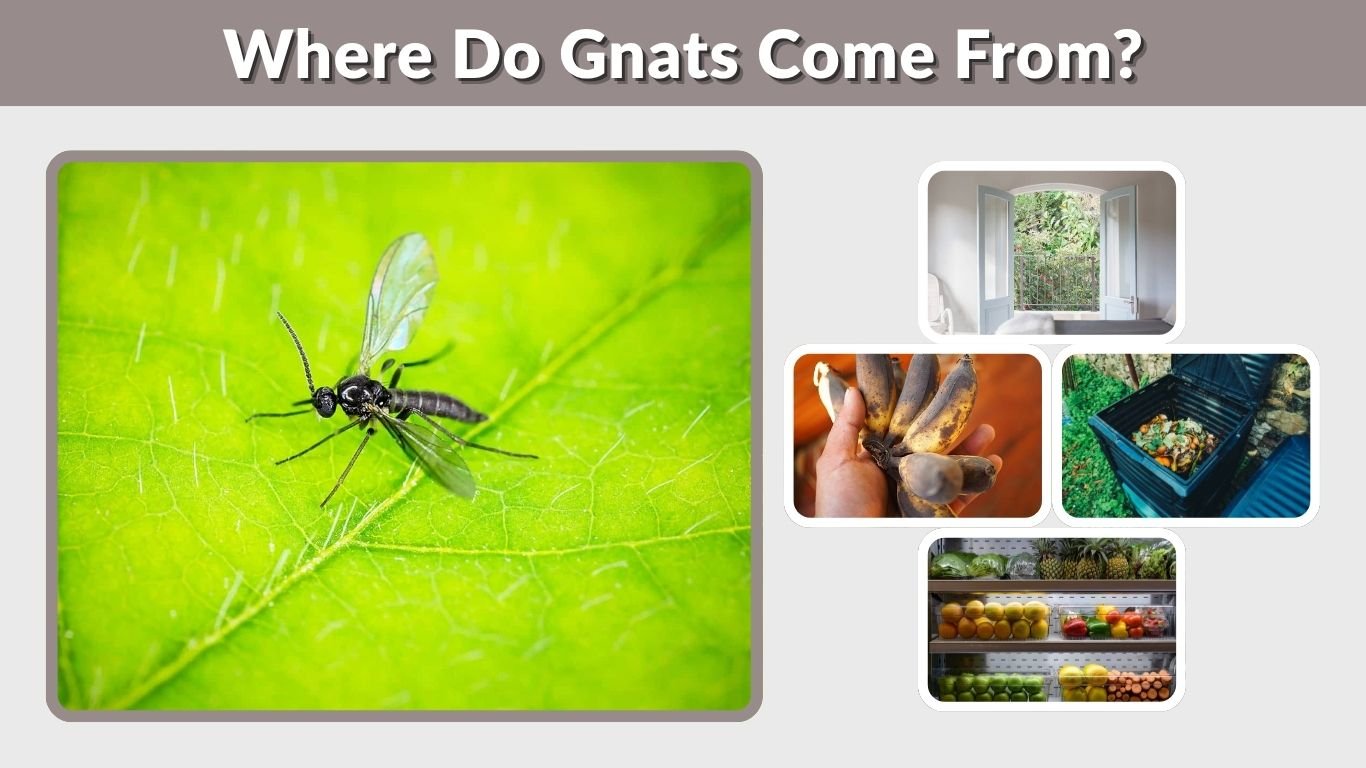
Gnats often seem to appear overnight, flying around houseplants, kitchen sinks, bathrooms, or windows. However, they do not arise spontaneously. Adult gnats usually enter through open doors, damaged screens, or small gaps, while others arrive in potting soil, plants, or produce. Once indoors, they lay eggs wherever moisture and decaying organic material are available. Identifying the exact insect and finding its breeding location are the most important steps toward controlling an infestation. This guide explains where gnats come from, what they look like, and how to get rid of them.
What Are Gnats?
“Gnat” is a general name used for several groups of tiny flying insects. It does not describe one specific species. Fungus gnats, biting midges, eye gnats, and other small flies may all be called gnats.
Inside homes, fungus gnats are among the most common. They are usually found near houseplants because their larvae develop in damp potting soil. Fruit flies and drain flies are also frequently mistaken for gnats.
Most common indoor gnats are more annoying than dangerous. Fungus gnats do not normally bite people, although certain outdoor insects known as biting gnats or midges can bite.
Where Do Gnats Come From?
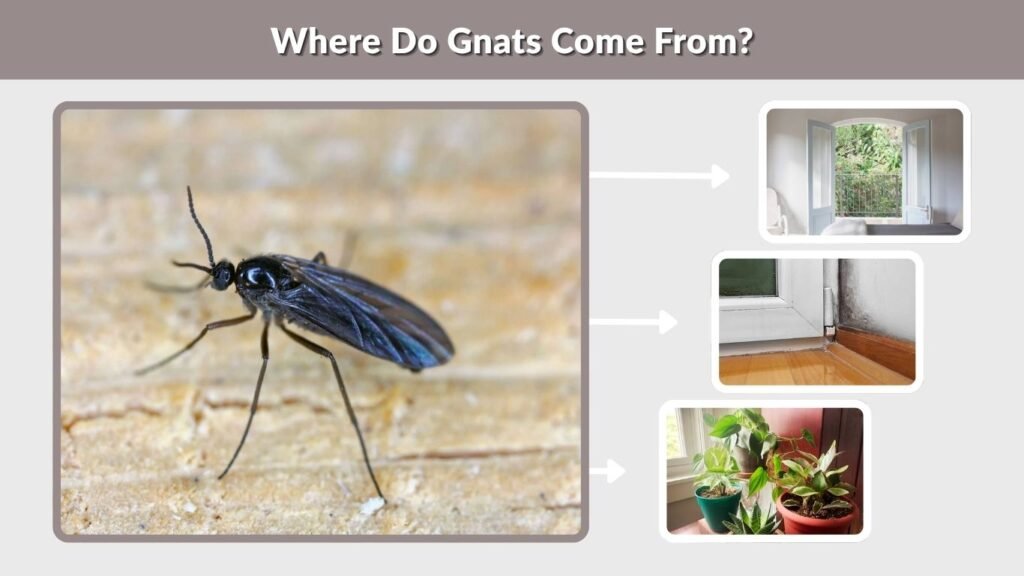
Gnats come from moist environments containing fungi, algae, decomposing plants, food residue, or other organic material. Adult insects locate these places and deposit their eggs nearby. After hatching, the larvae feed in the damp material before becoming adults.
Common Entry Points
Adult gnats may enter a house through:
- Open doors and windows
- Torn or poorly fitted screens
- Cracks around doors and utility lines
- Ventilation openings
- Newly purchased houseplants
- Bags of contaminated potting soil
- Fresh produce brought into the kitchen
A few adults can establish a much larger population when suitable breeding conditions are available indoors.
Common Breeding Locations
Depending on the type of insect, gnats may reproduce in:
- Overwatered potting soil
- Plant drainage trays
- Decaying leaves and roots
- Dirty kitchen drains
- Garbage disposals
- Leaking plumbing areas
- Compost containers
- Rotting fruits or vegetables
- Wet mops and cleaning cloths
- Refrigerator drip pans
- Standing water mixed with organic debris
Removing adult insects without cleaning these locations usually provides only temporary relief.
What Do Gnats Look Like?
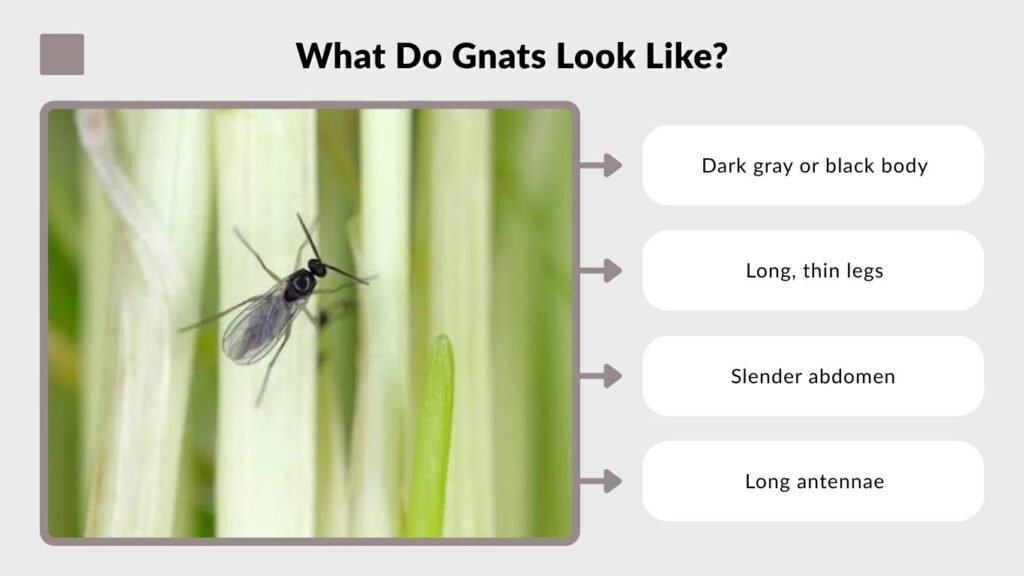
Fungus gnats are usually small, dark, and slender. Most adults measure approximately 1/16 to 1/8 inch long. They have long legs, narrow bodies, clear or smoky wings, and threadlike antennae.
Their mosquito-like appearance helps distinguish them from the rounder fruit fly. Fungus gnats are weak fliers and often remain close to plants, soil, and windows.
Gnat Identification Features
Look for the following characteristics:
- Dark gray or black body
- Long, thin legs
- Slender abdomen
- Long antennae
- Clear or slightly darkened wings
- Slow, irregular flight
- Frequent activity near damp soil
Fungus gnat larvae are small, translucent, wormlike creatures with dark head capsules. They live beneath the surface of moist potting soil, making them difficult to notice.
Common Types of Gnats in the House
Different tiny flies require different control methods. Identifying their preferred location can help determine which insect is present.
Fungus Gnats
Fungus gnats are commonly associated with indoor plants. Adult females lay eggs in moist potting soil, and the larvae feed on fungi, decomposing material, and tender plant roots.
A few gnats flying around a plant whenever the pot is disturbed strongly suggest a fungus gnat problem.
Drain Flies
Drain flies are small, fuzzy insects with broad, moth-like wings. They develop inside the slimy organic buildup found in drains, pipes, floor drains, and garbage disposals.
They are sometimes called drain gnats or sewer gnats, but they look noticeably hairier than fungus gnats.
Fruit Flies
Fruit flies have compact tan or brown bodies and often have red eyes. They gather around ripe fruit, fermented beverages, garbage bins, and recycling containers.
Although commonly called fruit gnats, they are not the same as fungus gnats.
Biting Gnats
Biting midges and similar outdoor gnats feed on blood and may leave itchy marks. They are more common near wetlands, ponds, and damp outdoor areas than inside homes.
Gnat vs. Fruit Fly: What Is the Difference?
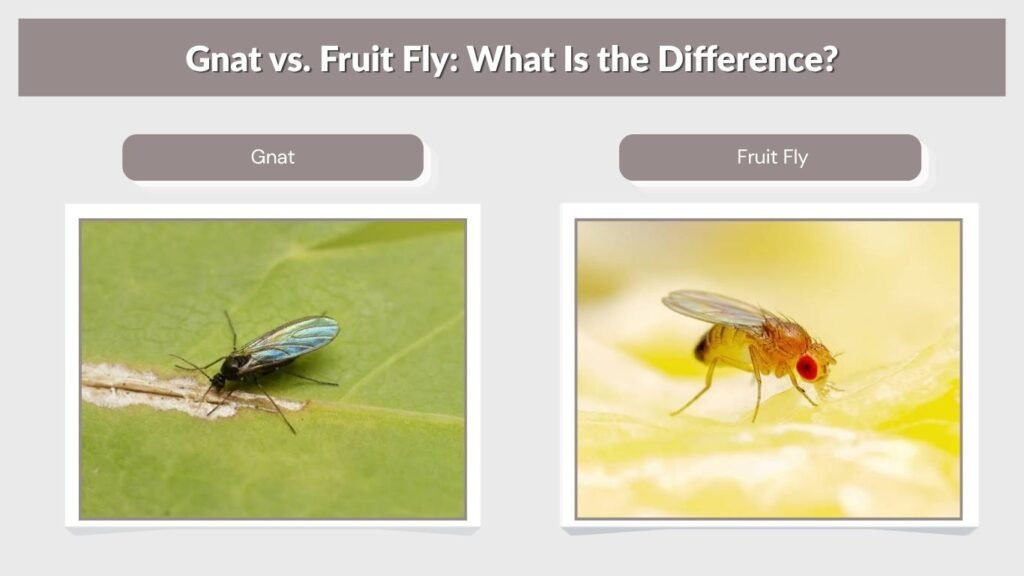
Gnats and fruit flies can appear together, but they differ in appearance and breeding habits.
| Feature | Fungus Gnat | Fruit Fly |
| Color | Dark gray or black | Tan, brown, or yellowish |
| Body shape | Thin and mosquito-like | Rounded and compact |
| Legs | Long and slender | Relatively short |
| Eyes | Small and dark | Often red or dark |
| Main attraction | Damp potting soil | Fermenting food and drinks |
| Flight | Slow and weak | Faster hovering |
| Common location | Houseplants and windows | Kitchens and trash areas |
Finding insects around plants usually points to fungus gnats. Flies hovering around bananas, juice, wine, or garbage are more likely to be fruit flies.
Are Gnats Baby Flies?
Gnats are not baby houseflies. Adult gnats are fully developed insects belonging to several families of small flies.
Like other flies, they pass through four life stages:
- Egg
- Larva
- Pupa
- Adult
The wormlike larvae remain inside soil, water, drain buildup, or decomposing material. The flying insects seen around the house are adults, not babies.
Why Are There Gnats in My House?
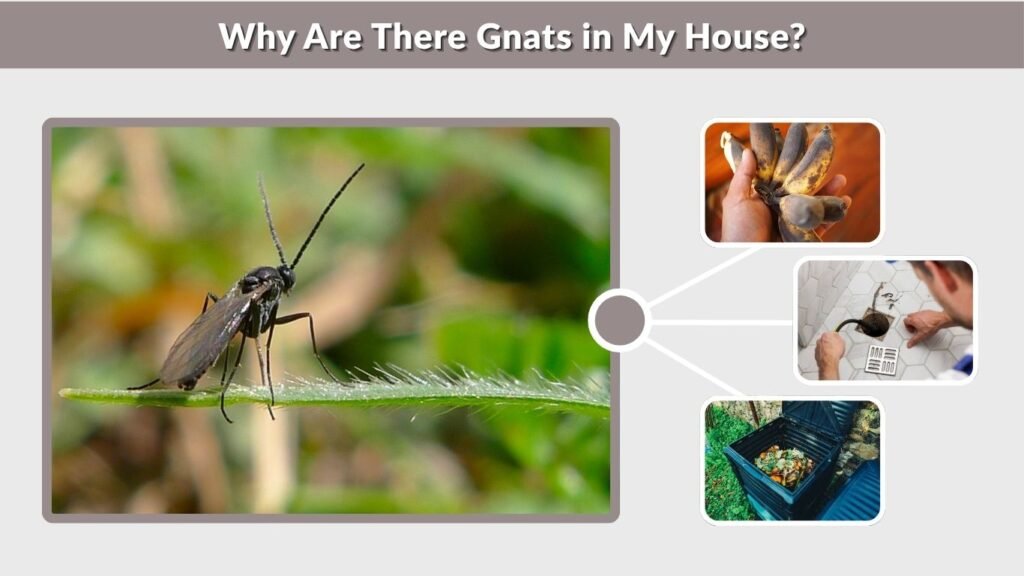
A gnat infestation usually indicates that moisture and organic matter are available somewhere indoors. Overwatering plants is one of the most common causes, but the exact source depends on where the insects are active.
Gnats in the Kitchen
Kitchen gnats may be attracted to:
- Overripe produce
- Food residue beneath appliances
- Dirty drains
- Open garbage containers
- Empty beverage bottles
- Damp cleaning materials
Check hidden onions, potatoes, and fruit stored inside cabinets.
Gnats in the Bathroom
Bathroom gnats may come from sink drains, floor drains, leaking pipes, wet trash, or constantly damp plant soil. Fuzzy insects resting on bathroom walls are more likely to be drain flies.
Gnats in the Bedroom With No Food
Gnats can appear in a bedroom even when no food is present. Houseplants, damp window areas, leaking air-conditioning units, flower arrangements, and nearby bathroom drains may be responsible.
Adults are also attracted to light and may fly into the bedroom from another part of the house.
Gnats in the Refrigerator
Adult insects may enter an open refrigerator or arrive with contaminated produce. Clean spills, discard spoiled food, inspect the drain opening, and check the drip pan beneath or behind the appliance.
How to Get Rid of Gnats in the House
The best way to get rid of gnats is to remove their breeding source while trapping existing adults. Spraying visible insects without addressing eggs and larvae will not solve the infestation.
Allow Plant Soil to Dry
Fungus gnat larvae need moisture. Allow the top one or two inches of soil to dry before watering again, provided the plant can tolerate it.
Empty drainage trays and avoid leaving standing water beneath plant pots.
Use Yellow Sticky Traps
Place yellow sticky cards close to affected plants. Adult fungus gnats are attracted to the color and become trapped on the adhesive surface.
Sticky traps reduce adults and help identify which plants are infested, but they do not kill larvae in the soil.
Replace Contaminated Soil
A heavily infested plant may need to be repotted. Remove the old soil, clean the container, inspect the roots, and replace it with fresh, well-draining potting mix.
Keep unused potting soil sealed and stored in a dry location.
Clean Drains Thoroughly
For drain flies or gnats around sinks, scrub the inside of the drain and pipe opening with a stiff brush. Remove the slimy layer where larvae develop.
Enzyme-based drain cleaners can help break down organic material. Simply pouring bleach or hot water into the drain may not remove the buildup attached to the pipe walls.
Remove Food Sources
Discard spoiled produce, wipe up sugary spills, wash recycling containers, and empty garbage regularly. Store ripe fruit in the refrigerator or inside sealed containers until the infestation ends.
Make a Vinegar Trap
Pour a small amount of apple cider vinegar into a container and add a drop of dish soap. The vinegar attracts fruit flies, while the soap reduces surface tension and causes them to sink.
This trap is generally more effective for fruit flies than fungus gnats.
How to Prevent Gnats
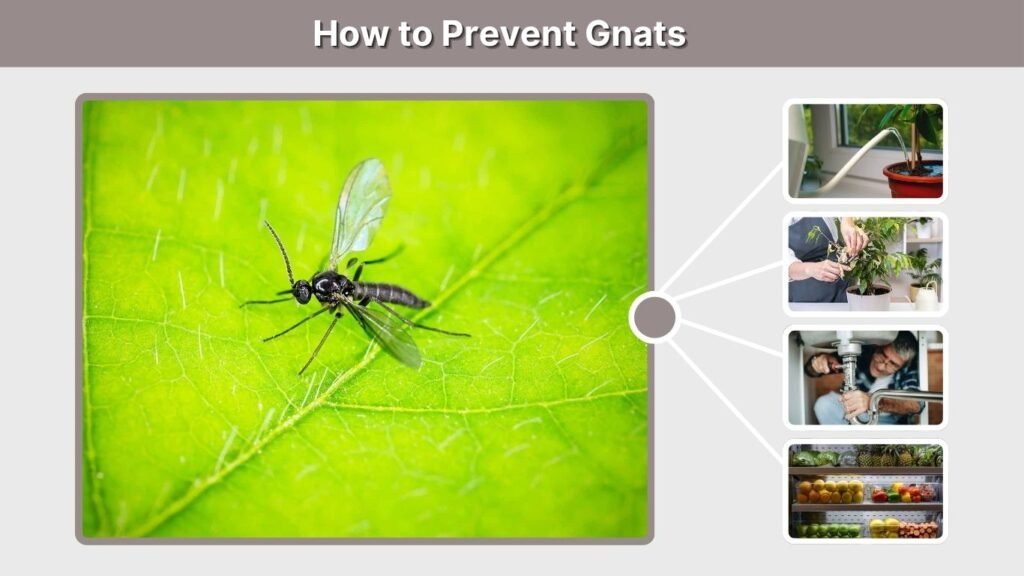
Prevention depends on controlling moisture and maintaining clean indoor environments.
- Avoid overwatering houseplants.
- Use pots with proper drainage holes.
- Remove dead leaves from plant soil.
- Repair leaking sinks and pipes.
- Clean drains and garbage disposals regularly.
- Store fruits and vegetables properly.
- Keep trash and compost containers covered.
- Repair damaged window screens.
- Clean spills beneath refrigerators and appliances.
- Inspect new plants before bringing them indoors.
FAQs
Do gnats come from drains?
Some small flies develop in drains, especially drain flies. Fungus gnats generally come from damp soil rather than plumbing. Scrubbing the drain can help determine whether organic buildup is supporting an infestation.
Where do gnats lay their eggs?
Fungus gnats lay eggs in damp soil and decomposing plant material. Fruit flies use fermenting food, while drain flies lay eggs inside the moist organic film coating drains and pipes.
Do gnats lay eggs on food?
Some insects called gnats may use decaying food, but fungus gnats usually lay eggs in moist soil. Fruit flies are more likely to lay eggs on damaged fruit, vegetables, and fermenting food residue.
Why do gnats keep coming back?
Gnats return when their breeding source remains available. Adult traps may reduce the visible population, but eggs and larvae can continue developing in damp soil, dirty drains, spoiled food, or other moist material.
How long does it take to eliminate gnats?
A small infestation may improve within several days after the breeding source is removed. Complete control can take a few weeks because existing eggs, larvae, and pupae must finish developing or be eliminated.