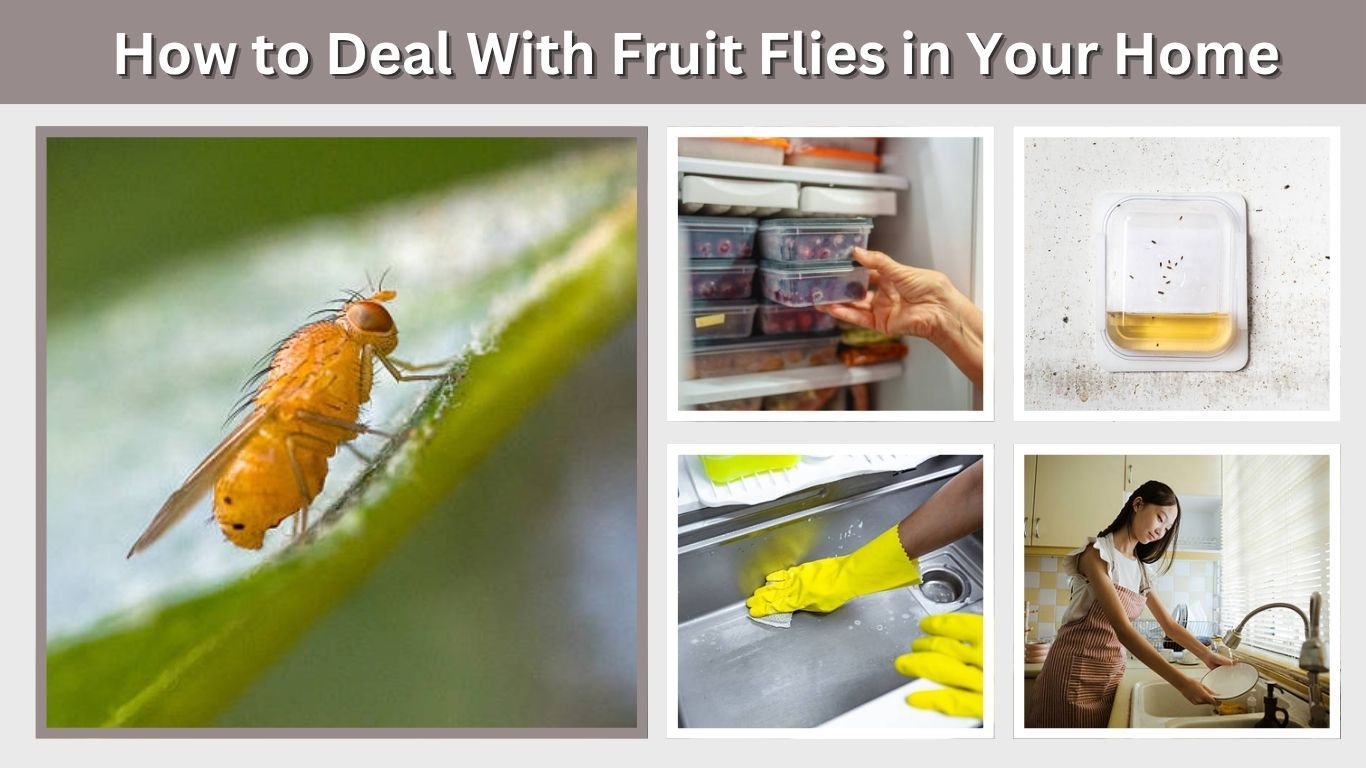
Fruit flies can quickly become frustrating when they gather around bananas, trash cans, sinks, compost containers, or open drinks. The best way to deal with fruit flies is to remove the moist, fermenting material where they breed and trap the adults that remain. Cleaning only the visible area is often not enough because eggs, larvae, and pupae may be hidden nearby. A combination of sanitation, trapping, proper food storage, and continued monitoring can usually control an infestation within several days.
Why Do Fruit Flies Appear?
Fruit flies are attracted to ripe, damaged, and fermenting organic material. They often enter a home through open doors or windows, but eggs or larvae may also arrive on produce.
Once indoors, they reproduce around food and moisture. Common sources include:
- Overripe bananas and other fruit
- Rotten potatoes, onions, or tomatoes
- Open garbage and compost
- Unwashed recycling containers
- Beer, wine, juice, and soda residue
- Food buildup beneath appliances
- Damp mops, sponges, or cloths
- Organic residue near sinks and drains
Removing these materials is the most important part of fruit fly control.
How to Deal With Fruit Flies Quickly
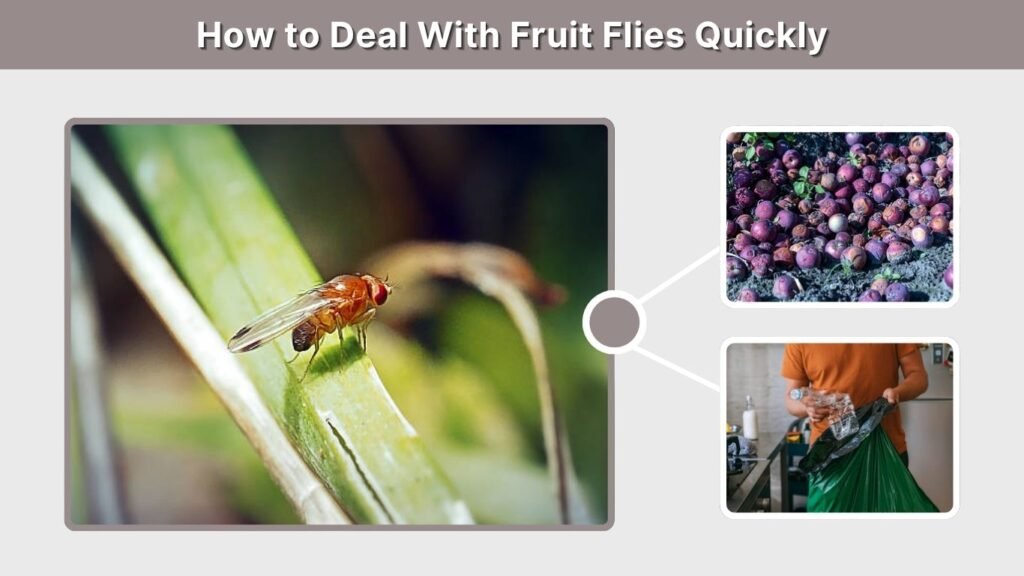
The fastest strategy is to clean the breeding area and set traps on the same day. Traps reduce adult numbers, while cleaning prevents new flies from developing.
Remove Spoiled Produce
Inspect fruit bowls, counters, cabinets, grocery bags, and pantry shelves. Throw away rotten produce and refrigerate ripe fruit until the problem is controlled.
Check stored potatoes, onions, garlic, and tomatoes carefully. One spoiled vegetable hidden at the back of a cabinet can support a significant infestation.
Wash the fruit bowl and the surface beneath it because juice may collect under containers.
Clean Garbage and Recycling
Empty garbage, compost, and recycling containers. Wash their interiors, lids, rims, handles, and bottoms with warm, soapy water.
Rinse bottles and cans before recycling them. A small amount of juice, beer, soda, or wine can continue attracting flies.
Remove Hidden Residue
Move small appliances and inspect beneath coffee machines, blenders, microwaves, refrigerators, and trash cans.
Clean sticky spills from floors, cabinets, walls, and beverage-storage areas. Wash dirty mops and dishcloths, then allow them to dry completely.
Best Traps for Dealing With Fruit Flies
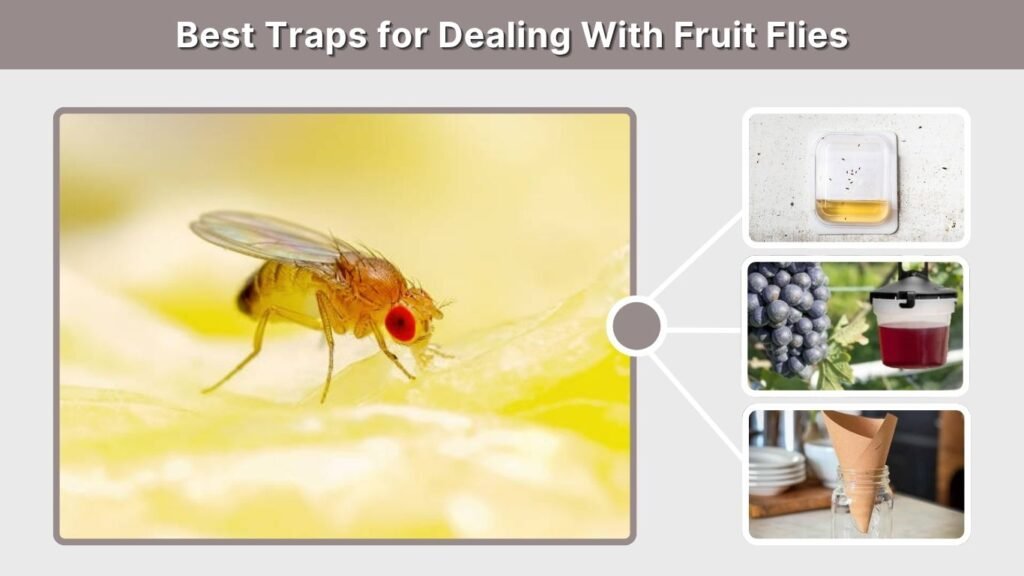
A homemade trap can catch many adult fruit flies, but it should support cleaning rather than replace it.
| Trap | Bait | Best feature |
| Vinegar trap | Apple cider vinegar | Simple and effective |
| Wine trap | Leftover wine | Strong fermented odor |
| Paper funnel trap | Overripe fruit | Prevents easy escape |
| Yeast trap | Sugar, yeast, and water | Works without vinegar |
| Bottle trap | Juice, beer, or fruit | Useful for larger numbers |
Apple Cider Vinegar Trap
Pour about ¼ cup of apple cider vinegar into a small bowl or jar. Add two or three drops of dish soap and stir gently.
The vinegar attracts the flies, while the soap reduces the liquid’s surface tension. Place the trap beside the fruit bowl, trash can, sink, or other active area.
You can leave the container open or cover it with plastic wrap and make several small holes.
Paper Funnel Trap
Place a piece of overripe banana, wine, beer, or vinegar inside a jar. Roll a sheet of paper into a cone with a narrow opening at the bottom.
Insert the cone into the jar without allowing the tip to touch the bait. Fruit flies enter through the opening but often struggle to find their way out.
Trap Without Vinegar
Mix ½ cup of warm water with one tablespoon of sugar and about ¼ teaspoon of dry yeast. Add a drop of dish soap.
The yeast ferments the sugar and creates odors that attract fruit flies. Replace the mixture when it loses its smell or becomes dirty.
How to Deal With Fruit Flies in the Kitchen
The kitchen is the most common place for a fruit fly problem because it provides warmth, food, and moisture.
Store Food Properly
Keep ripe fruit and vegetables in the refrigerator during an infestation. Cover cut fruit, juice, and sweet foods immediately.
Inspect produce before storing it. Remove damaged items so they do not contaminate healthy fruit or begin fermenting.
Clean Food-Preparation Areas
Wash counters, cutting boards, cabinet handles, floors, and appliance surfaces. Pay close attention to blender bases, juicers, coffee-machine trays, and areas where drinks are prepared.
Do not leave dirty dishes, wine glasses, beverage cans, or open food containers overnight.
Keep the Area Dry
Wipe sinks and counters after cleaning. Empty water from trays, buckets, and containers.
Rinse sponges and dishcloths, then place them somewhere they can dry. Moisture combined with food residue creates suitable breeding conditions.
How to Deal With Fruit Flies Near Drains
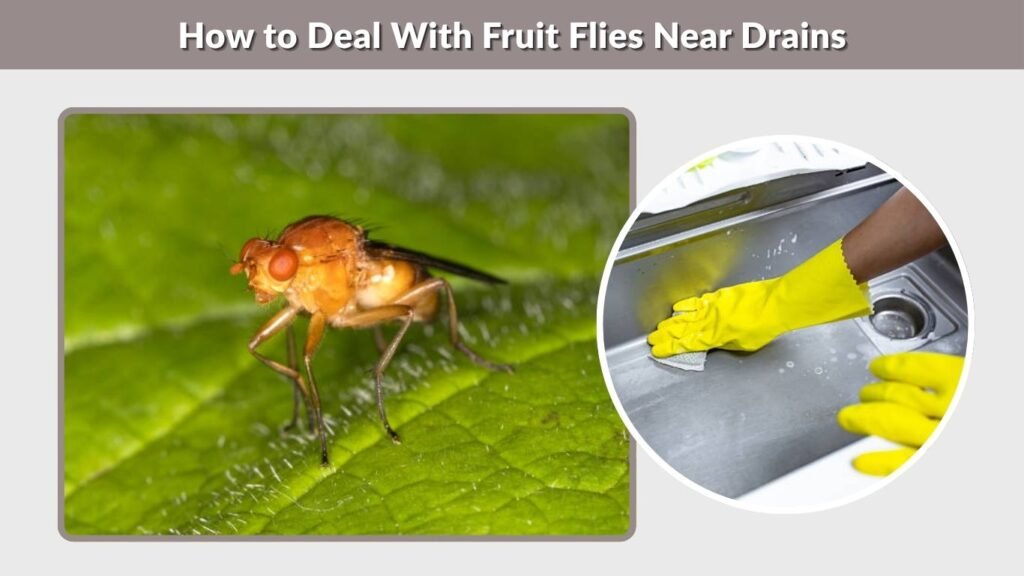
Fruit flies may gather near drains when food residue is present around the sink or disposal. However, fuzzy drain flies and humpbacked phorid flies are more likely to breed deep inside plumbing.
Scrub the Drain Area
Use a stiff drain brush to clean accessible surfaces inside the drain opening. Scrub the stopper, sink overflow, garbage-disposal guard, and surrounding edges.
Physical scrubbing removes organic film more effectively than simply pouring liquid into the drain.
Flush the cleaned area with hot water. Follow the label when using a drain-cleaning product.
Never mix bleach with vinegar, ammonia, or another cleaning chemical. Dangerous fumes or reactions may occur.
Check Whether the Drain Is the Source
Place clear tape loosely across the drain overnight, leaving a small opening for airflow. Flies found beneath or attached to the tape may indicate activity inside the plumbing.
Persistent drain activity may require professional cleaning or plumbing repair.
How to Deal With a Fruit Fly Infestation
A large infestation usually means that breeding material has been available for several days or that more than one source is present.
Use Multiple Traps
Place several small traps around the affected area instead of relying on one container. Put them near trash, fruit, recycling, sinks, and beverage stations.
The trap catching the most flies may help you locate the main breeding source.
Search the Entire Home
Do not limit the inspection to the kitchen. Check:
- Home bars
- Office trash cans
- Pet feeding areas
- Utility rooms
- Recycling storage
- Bedrooms containing food
- Indoor compost containers
- Forgotten cups and beverage bottles
Fruit flies can breed in a very small amount of fermenting material.
Continue Treatment
Keep cleaning and trapping for several days after the visible population declines. Existing pupae may still develop into adults after the original food source is removed.
Replace trap bait every one to three days and continue monitoring until no flies appear for several consecutive days.
How to Deal With Fruit Flies in Compost
Indoor compost can become a major breeding source because it contains moist fruit and vegetable scraps.
Indoor Compost
Use a container with a tight-fitting lid. Empty it frequently and wash it before adding fresh scraps.
During an infestation, keep food scraps in a sealed container in the refrigerator or freezer until they can be taken outside.
Outdoor Compost
Bury fresh scraps beneath older compost. Cover exposed fruit and vegetable waste with dry leaves, shredded cardboard, or untreated paper.
Avoid allowing the pile to become excessively wet. Proper airflow and a balanced mixture can reduce fruit fly activity.
Fruit Flies Around Houseplants
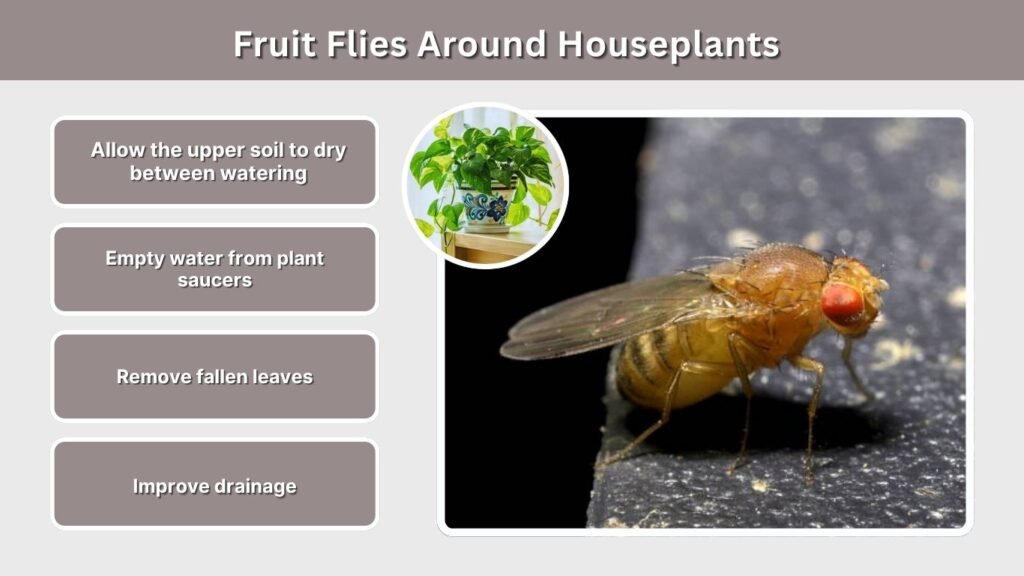
Tiny flies around houseplants are usually fungus gnats rather than fruit flies. Fungus gnats are dark, slender insects that breed in damp potting soil.
Fruit flies are rounder and more strongly associated with ripe fruit, drinks, and garbage.
To control fungus gnats:
- Allow the upper soil to dry between watering
- Empty water from plant saucers
- Remove fallen leaves
- Improve drainage
- Use yellow sticky cards
- Replace heavily contaminated soil when necessary
Vinegar traps may catch a few fungus gnats, but controlling soil moisture is more effective.
Should You Use Fruit Fly Spray?
Sprays may kill adult flies that they contact, but they do not remove eggs, larvae, or breeding material. For that reason, spraying alone rarely solves the problem.
Avoid unnecessary pesticide use around food-preparation surfaces. When using any indoor insecticide, select a product labeled for flying insects and follow all instructions. Cover or remove food, dishes, utensils, and pet supplies before treatment.
Sanitation and trapping are usually sufficient for ordinary household infestations.
How to Prevent Fruit Flies From Returning
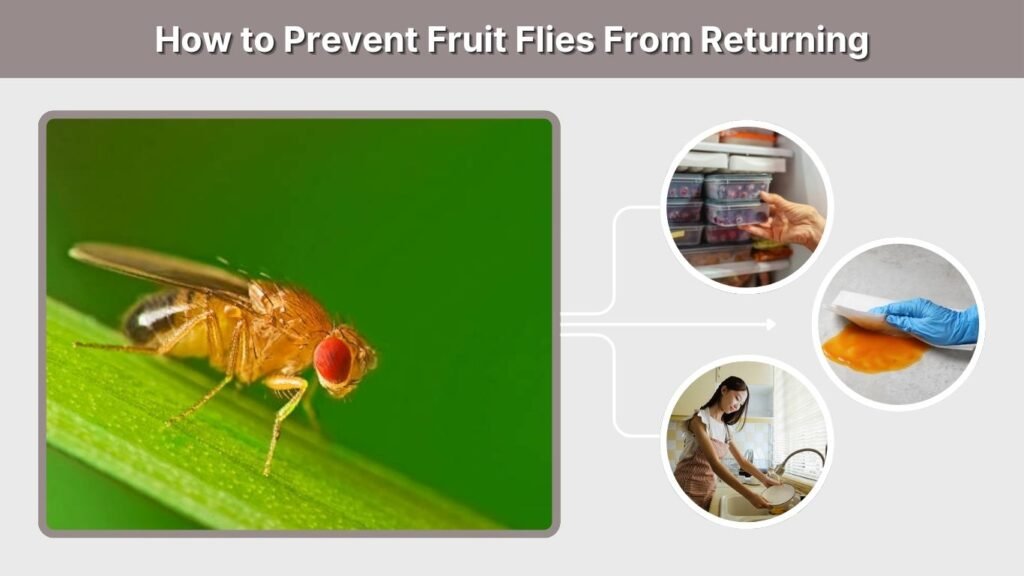
After eliminating the infestation, maintain simple habits that remove food and moisture.
- Refrigerate ripe produce.
- Discard damaged fruit quickly.
- Empty garbage and compost regularly.
- Wash waste containers.
- Rinse recycling bottles and cans.
- Clean drink spills immediately.
- Wash dishes before bedtime.
- Inspect stored vegetables weekly.
- Keep cleaning tools dry.
- Avoid leaving open drinks overnight.
FAQs
What is the easiest way to deal with fruit flies?
Remove spoiled produce, clean garbage and recycling containers, wipe up sticky residue, and place apple cider vinegar traps near active areas. Cleaning prevents reproduction, while traps catch adults that are already flying around the house.
How long does it take to control fruit flies?
A minor problem may improve within two or three days. A larger infestation can take one to two weeks because eggs, larvae, and pupae may continue developing after the first cleaning. Keep traps active during this period.
Why are fruit flies still present after cleaning?
A hidden source may remain in a drain, recycling container, garbage bin, beverage bottle, compost container, or beneath an appliance. Pupae may also produce new adults for several days after the original breeding material is removed.
Can fruit flies come from houseplants?
Common fruit flies do not normally breed in ordinary potting soil. Small flies around plants are usually fungus gnats. Reduce watering, remove decaying leaves, empty saucers, and use sticky cards to control them.
When should I call pest control?
Consider professional help when large numbers remain after one to two weeks of thorough cleaning and trapping. Persistent activity may indicate a plumbing problem, inaccessible breeding material, or another fly species requiring a different treatment.