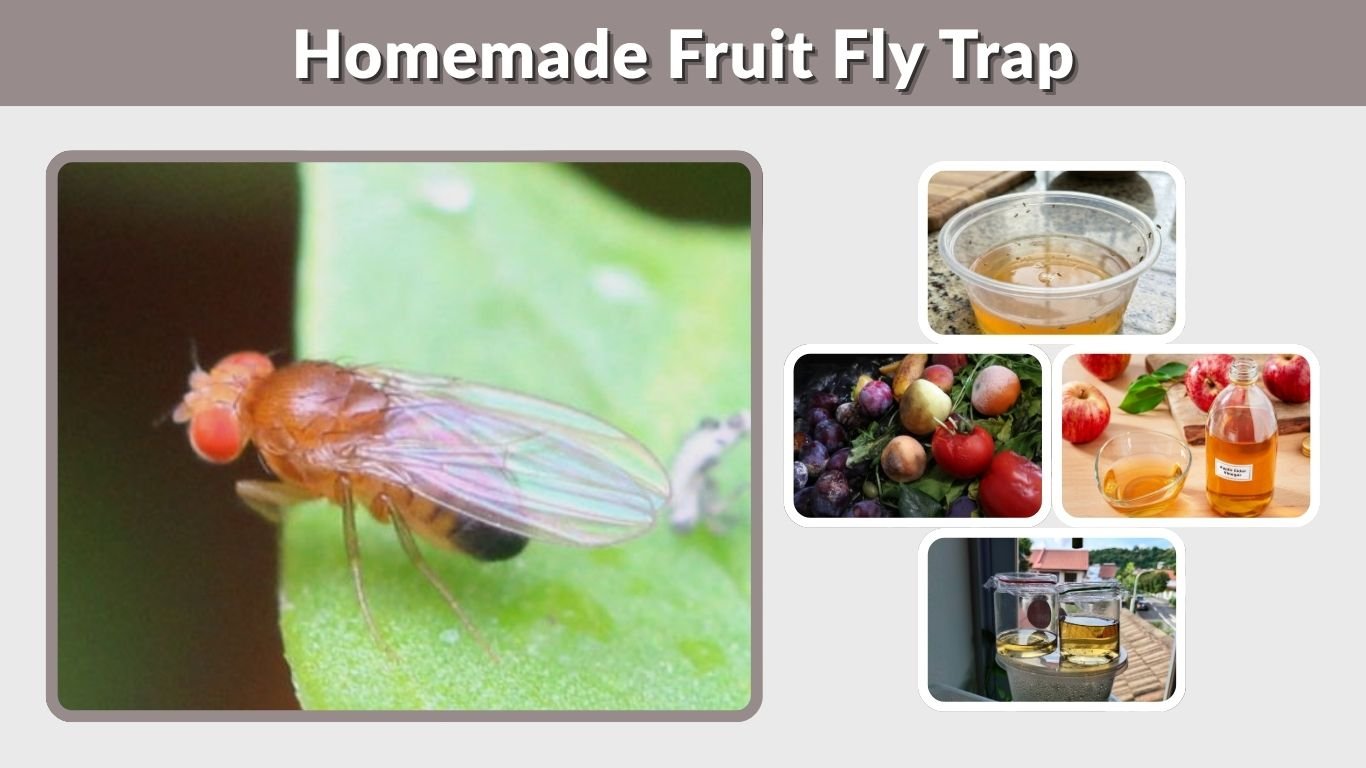
A homemade fruit fly trap can quickly reduce the number of tiny flies gathering around fruit bowls, trash cans, sinks, and kitchen counters. The most effective traps combine a sweet or fermented bait with a container that prevents the flies from escaping. Apple cider vinegar and dish soap are the most popular ingredients, but wine, beer, fruit, juice, and sugar water can also work. Traps catch adult flies, while cleaning breeding areas prevents new ones from appearing.
What Is the Best Homemade Fruit Fly Trap?
The best homemade fruit fly trap uses apple cider vinegar, a few drops of dish soap, and a small open container. Apple cider vinegar attracts fruit flies because its fermented odor resembles overripe fruit.
Dish soap breaks the liquid’s surface tension. When the flies land on the mixture, they sink instead of standing on the surface and flying away.
Ingredients
- ¼ cup apple cider vinegar
- Two or three drops of liquid dish soap
- A small bowl, cup, or jar
- Plastic wrap and a toothpick, if desired
Directions
Pour the apple cider vinegar into the container. Add two or three drops of dish soap and stir gently without creating too many bubbles.
Leave the container open or cover it tightly with plastic wrap. If using plastic wrap, make several small holes with a toothpick. The flies enter through the holes but often have difficulty finding their way out.
Place the trap near the strongest fruit fly activity. Good locations include beside a fruit bowl, trash can, recycling container, compost bin, or kitchen sink.
Homemade Fruit Fly Trap Comparison
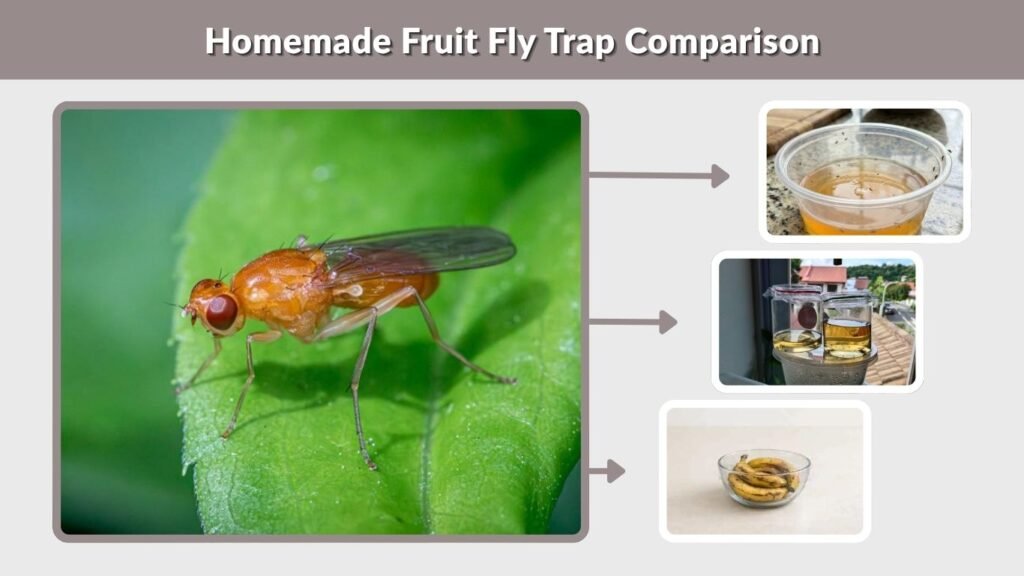
Different baits work because fruit flies are attracted to fermenting sugars. The best option usually depends on what ingredients are available.
| Trap bait | Effectiveness | Best use |
| Apple cider vinegar and dish soap | Very effective | Most indoor infestations |
| Wine or beer | Very effective | When vinegar is unavailable |
| Overripe fruit | Effective | Strong attraction and reusable containers |
| Fruit juice and dish soap | Moderately effective | Quick alternative |
| Sugar, yeast, and water | Effective | Vinegar-free trapping |
| White vinegar and sugar | Moderately effective | Substitute for apple cider vinegar |
Homemade Fruit Fly Trap Without Apple Cider Vinegar
Apple cider vinegar is not essential. Any bait with a sweet, fruity, or fermented smell may attract fruit flies.
Wine or Beer Trap
Leave a small amount of red wine, white wine, or beer in a glass. Add one or two drops of dish soap and place it near the infestation.
Wine is particularly attractive because it contains fermented fruit sugars. Beer can also work because of its yeast and fermentation odors.
Do not fill the glass deeply. A shallow layer is enough to attract and trap the flies.
Fruit Juice Trap
Pour a small amount of orange, apple, grape, or pineapple juice into a bowl. Add several drops of dish soap and stir gently.
Juice may not be as powerful as fermented vinegar, but it becomes more attractive as it sits and begins to ferment. Replace it every one or two days to prevent unpleasant odors.
Banana Trap
Place a small piece of overripe banana in a jar. Roll a sheet of paper into a cone, leaving a tiny opening at the pointed end.
Position the cone inside the jar without allowing the tip to touch the fruit. Fruit flies follow the scent through the opening and become trapped inside.
This method catches flies alive rather than drowning them immediately. Empty the jar outdoors before reusing it.
Homemade Fruit Fly Trap With White Vinegar
Plain white vinegar is less attractive than apple cider vinegar because it lacks a strong fruity scent. However, it can still work when combined with sugar or fruit juice.
Mix the following ingredients:
- ¼ cup white vinegar
- One teaspoon of sugar
- Two tablespoons of fruit juice
- Two or three drops of dish soap
Stir the ingredients in a small bowl and leave it uncovered near the affected area. The added sugar and juice make the bait more appealing.
Balsamic or red wine vinegar may work better than plain white vinegar because their aromas are sweeter and more complex.
Plastic Bottle Fruit Fly Trap
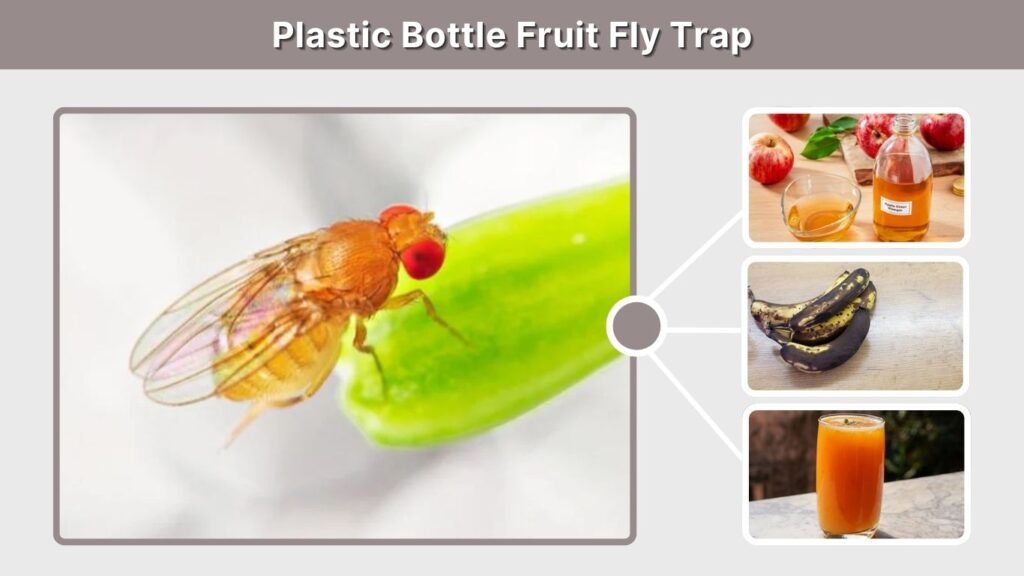
A plastic water or soda bottle can be turned into a reusable funnel trap. This design is helpful when many fruit flies are present.
How to Make the Bottle Trap
Cut the top third from an empty plastic bottle. Turn the cut top upside down and insert it into the bottom section, creating a funnel.
Add one of these baits to the bottom:
- Apple cider vinegar
- Wine or beer
- Overripe fruit
- Fruit juice
- Sugar and yeast water
Tape around the cut edges to seal any gaps. Fruit flies enter through the bottle opening but struggle to fly back through the narrow funnel.
Empty, wash, and refill the bottle when the bait becomes dirty or loses its smell.
Sugar and Yeast Fruit Fly Trap
A sugar and yeast mixture creates fermentation naturally, making it an effective homemade fruit fly trap without vinegar.
Mix one tablespoon of sugar with ½ cup of warm water. Add approximately ¼ teaspoon of dry yeast and stir.
Pour the mixture into a jar and add a drop of dish soap. Alternatively, cover the jar with a paper cone or perforated plastic wrap.
The yeast consumes the sugar and produces carbon dioxide and fermented odors that attract fruit flies. Avoid filling the container too deeply because the mixture may foam.
Homemade Funnel and Paper Cone Trap
A paper cone allows fruit flies to enter a container while making escape difficult. It works well with fruit, vinegar, wine, or beer.
Roll a sheet of paper into a cone. The bottom opening should be only a few millimeters wide. Secure the cone with tape.
Place the bait in a jar and insert the cone so that its pointed end remains above the bait. Seal any space between the cone and the rim of the jar.
This design works best when the container is left undisturbed overnight.
Where to Place Fruit Fly Traps
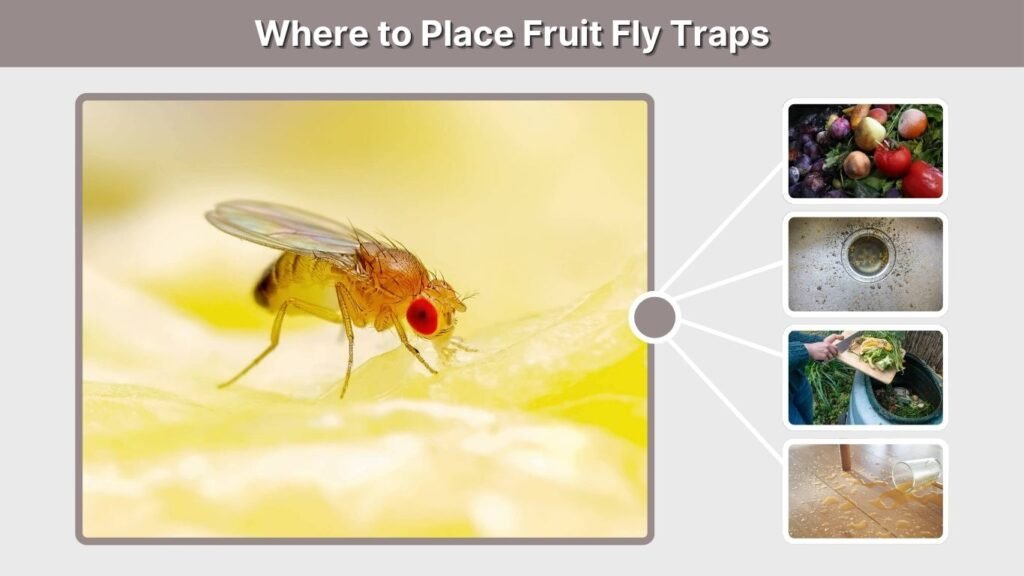
Trap placement strongly affects the results. A trap in the wrong location may catch only a few flies even when the bait is effective.
Place traps near:
- Overripe fruit and vegetables
- Kitchen sinks and drains
- Garbage and compost containers
- Recycling bins containing bottles or cans
- Potatoes, onions, or produce stored in cabinets
- Spilled juice, soda, beer, or wine
- Damp cleaning cloths and mop buckets
Use several small traps when fruit flies are appearing in different areas. Keep traps away from open windows, fans, and strong air movement that could disperse the bait’s scent.
Why Is the Homemade Trap Not Working?
A trap may fail when the bait is weak, incorrectly placed, or competing with a larger food source.
The Breeding Source Remains
Fruit flies can continue reproducing in forgotten produce, sticky spills, garbage residue, recycling containers, or organic material inside drains. Traps remove adults but do not eliminate eggs and larvae.
Inspect the entire kitchen and nearby storage areas. Discard spoiled food and clean containers thoroughly.
Too Much Dish Soap Was Added
Only a few drops are necessary. Adding excessive soap may overpower the fermented smell that attracts the flies.
The Trap Is Too Far Away
Move the trap close to the area where the flies gather. Once activity decreases, additional traps can be placed around nearby problem areas.
The Insects May Be Drain Flies or Fungus Gnats
Not every tiny indoor fly is a fruit fly. Drain flies have fuzzy, moth-like wings and often rest near drains. Fungus gnats are dark, slender insects commonly associated with damp houseplant soil.
Fruit flies usually have tan or brown bodies, rounded shapes, and noticeable red or dark eyes. They are strongly attracted to fermenting food and sweet liquids.
How to Get Rid of Fruit Flies Completely
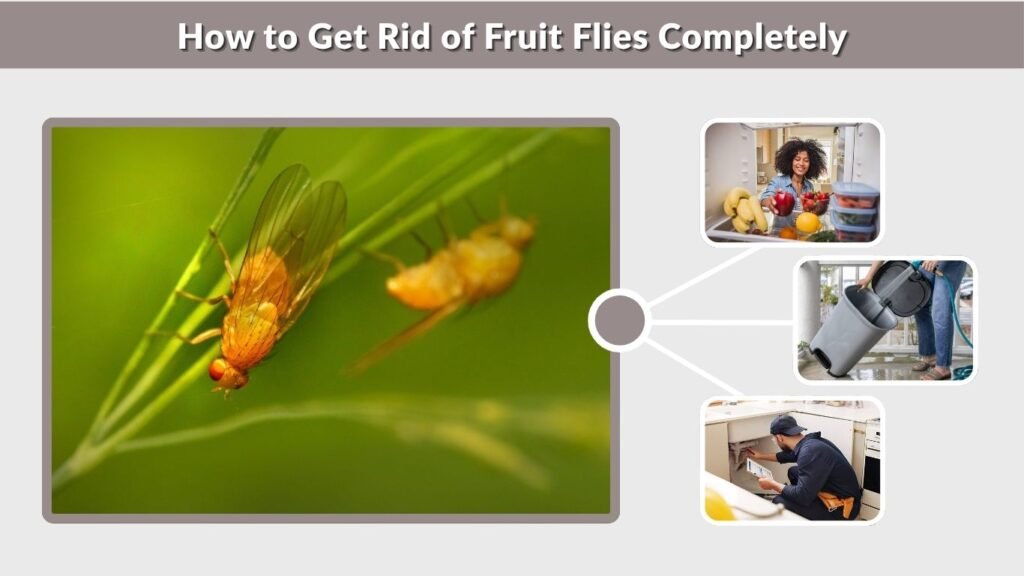
Homemade traps work best as part of a complete cleaning strategy. Without removing breeding sources, new adults may continue emerging.
Remove Food Sources
Refrigerate ripe fruit and vegetables until the infestation is controlled. Throw away rotten produce and inspect potatoes, onions, tomatoes, and other foods stored outside the refrigerator.
Wipe up spills immediately and clean beneath appliances where liquid or food may have collected.
Clean Garbage and Recycling Bins
Empty indoor trash regularly. Wash garbage cans, compost containers, and recycling bins with soap and water, paying attention to residue around rims and bottoms.
Rinse bottles and cans before placing them in recycling containers.
Check Drains and Garbage Disposals
Organic buildup inside a drain or garbage disposal can support small flies. Scrub accessible surfaces with a stiff drain brush and use hot water with an appropriate drain-cleaning product.
Pouring liquid into the drain without removing the buildup may not solve the problem.
Continue Trapping
Keep traps active for at least several days after the last fruit flies are seen. Any remaining eggs may hatch and develop into adults after the initial cleaning.
Replace liquid traps every one to three days or whenever they become filled with insects or debris.
FAQs
How do you make a simple homemade fruit fly trap?
Pour ¼ cup of apple cider vinegar into a small bowl and add two or three drops of dish soap. Leave the bowl near the fruit fly activity. The vinegar attracts the flies, while the dish soap causes them to sink into the liquid.
What can I use instead of apple cider vinegar?
Red wine, beer, fruit juice, overripe banana, balsamic vinegar, or a sugar-and-yeast mixture can replace apple cider vinegar. Fermented liquids usually perform best because their odor closely resembles the ripening and decaying foods fruit flies seek.
Does sugar water trap fruit flies?
Plain sugar water may attract some fruit flies, but it usually works better with yeast or fruit juice. Yeast causes fermentation, producing stronger odors. Add one drop of dish soap or use a funnel container to stop attracted flies from escaping.
How long does a homemade fruit fly trap take to work?
A properly placed trap may begin catching fruit flies within several hours. More flies are often captured overnight. Noticeable improvement may take several days, especially when eggs and larvae are still developing in hidden food residue or spoiled produce.
Will a homemade trap eliminate every fruit fly?
A trap alone may not eliminate an infestation because it mainly catches adults. Complete control requires removing spoiled food, cleaning spills and containers, checking drains, and preventing access to breeding materials. Continue trapping until no adult flies appear for several days.