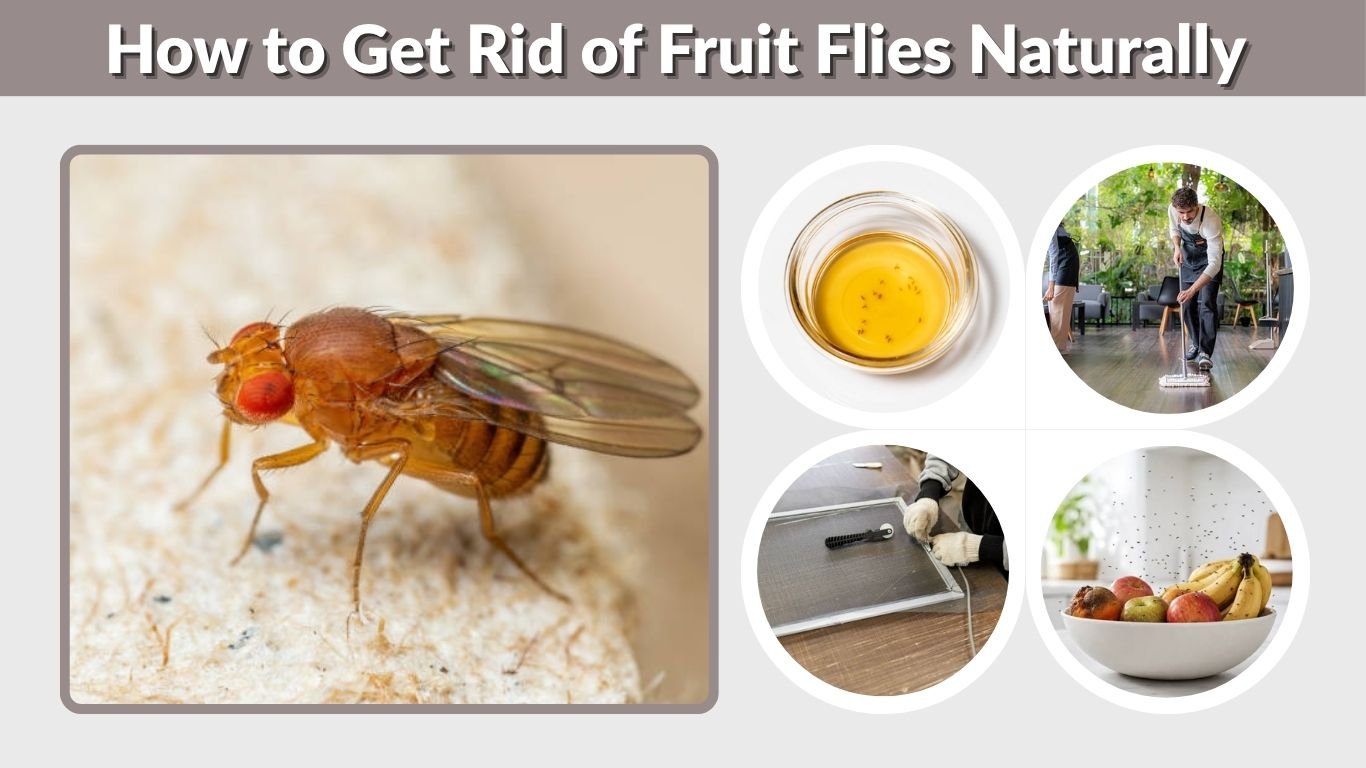
Fruit flies can multiply quickly around ripe produce, garbage, drains, and spilled drinks. The fastest natural way to remove them is to eliminate their breeding source, clean damp organic residue, and use simple homemade traps to catch the adults. A vinegar trap may reduce visible flies within hours, but complete control usually takes several days because eggs and larvae may still be developing. Follow the steps below to remove fruit flies safely and prevent another infestation.
Why Are Fruit Flies in Your Home?
Fruit flies are attracted to fermenting or decaying organic material. They often enter through open doors and windows or arrive on ripe produce purchased from a grocery store.
Once indoors, females lay eggs near moist food residue. Common breeding locations include overripe fruit, recycling containers, garbage cans, drains, compost bins, and forgotten spills.
Common Fruit Fly Sources
- Overripe bananas, peaches, tomatoes, or other produce
- Open wine, beer, juice, or soda containers
- Food scraps inside garbage cans
- Dirty recycling bottles and cans
- Fermenting compost
- Sticky residue beneath appliances
- Damp mop heads, sponges, and cleaning cloths
- Organic buildup inside drains or garbage disposals
A few trapped adults may continue appearing if the breeding material remains. Therefore, cleaning is more important than relying on traps alone.
The Fastest Natural Fruit Fly Removal Plan
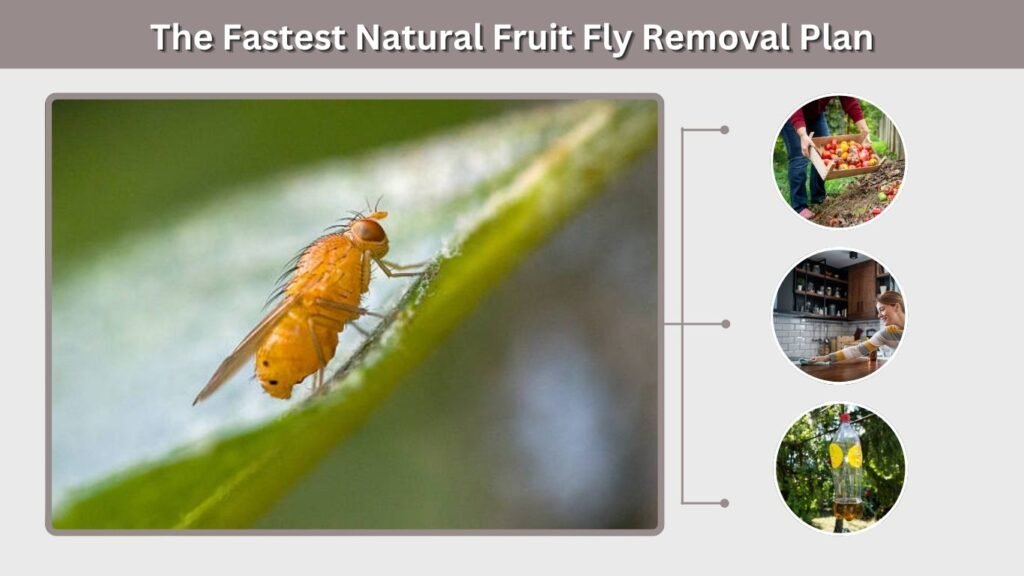
Use several methods together for quicker results. Begin by removing food sources, then clean likely breeding areas and place traps where adult flies are most active.
| Step | Action | Purpose |
| 1 | Remove ripe and decaying produce | Eliminates food and egg-laying sites |
| 2 | Clean counters, bins, and drains | Removes hidden larvae and residue |
| 3 | Set vinegar or fruit traps | Captures adult fruit flies |
| 4 | Store food in sealed containers | Prevents new breeding |
| 5 | Repeat cleaning for several days | Breaks the life cycle |
1. Remove the Breeding Source Immediately
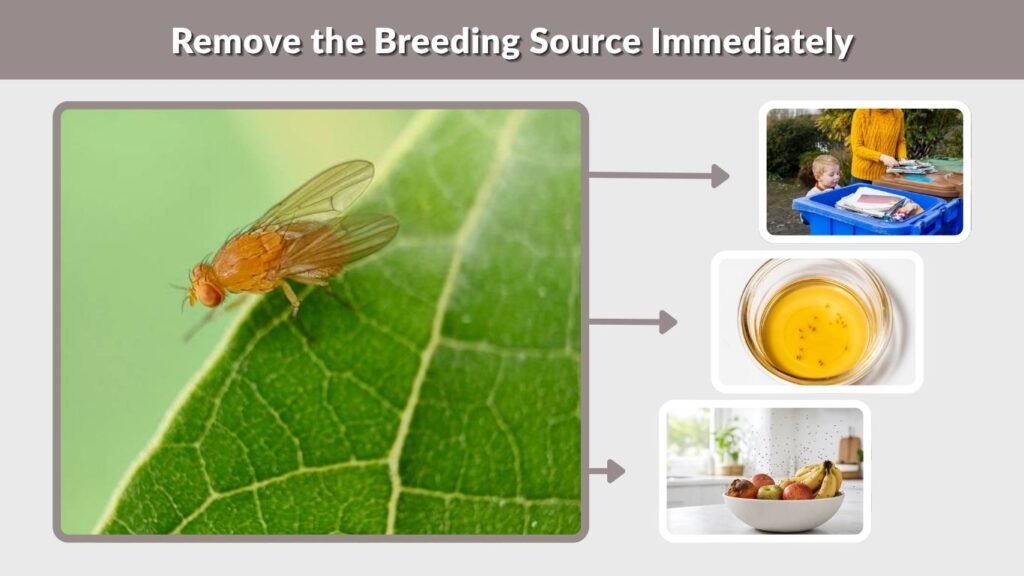
Start by inspecting the kitchen and nearby rooms. Throw away rotting produce in a sealed outdoor garbage container. Refrigerate ripe fruit that you plan to keep.
Check onions, potatoes, tomatoes, and fruit stored inside cabinets or baskets. One forgotten piece of fruit can support a surprisingly large number of flies.
Also inspect:
- The space beneath refrigerators and ovens
- Recycling containers
- Pet food bowls
- Compost buckets
- Reusable shopping bags
- Pantry shelves
- Empty drink cans and bottles
Wash produce bowls and storage containers with warm, soapy water before using them again.
2. Make an Apple Cider Vinegar Trap
Apple cider vinegar is one of the most effective natural fruit fly attractants because its fermented smell resembles overripe fruit.
What You Need
- A small bowl, cup, or jar
- Apple cider vinegar
- Liquid dish soap
- Plastic wrap or a paper cone
Pour approximately half an inch of apple cider vinegar into the container. Add two or three drops of dish soap and stir gently. The soap reduces the liquid’s surface tension, causing flies that land on it to sink.
Place the trap near the fruit bowl, garbage can, sink, or another area where flies gather. Replace the mixture daily until activity stops.
Paper Cone Method
Pour vinegar into a jar and place a paper cone inside, with the narrow opening pointing downward. Leave a small gap at the bottom.
Fruit flies enter through the opening but have difficulty escaping. Adding a drop of dish soap makes the trap more effective.
3. Use a Ripe Fruit Trap
A ripe fruit trap works when apple cider vinegar is unavailable.
Place a small piece of banana, peach, or other ripe fruit inside a jar. Cover the opening with plastic wrap and make several tiny holes with a toothpick.
The smell attracts fruit flies through the openings. Once inside, many will have difficulty finding their way out.
Empty the jar outdoors or seal and discard its contents each day. Do not leave the trap unchanged for too long, as the fruit could become another breeding source.
4. Clean Kitchen Drains Properly
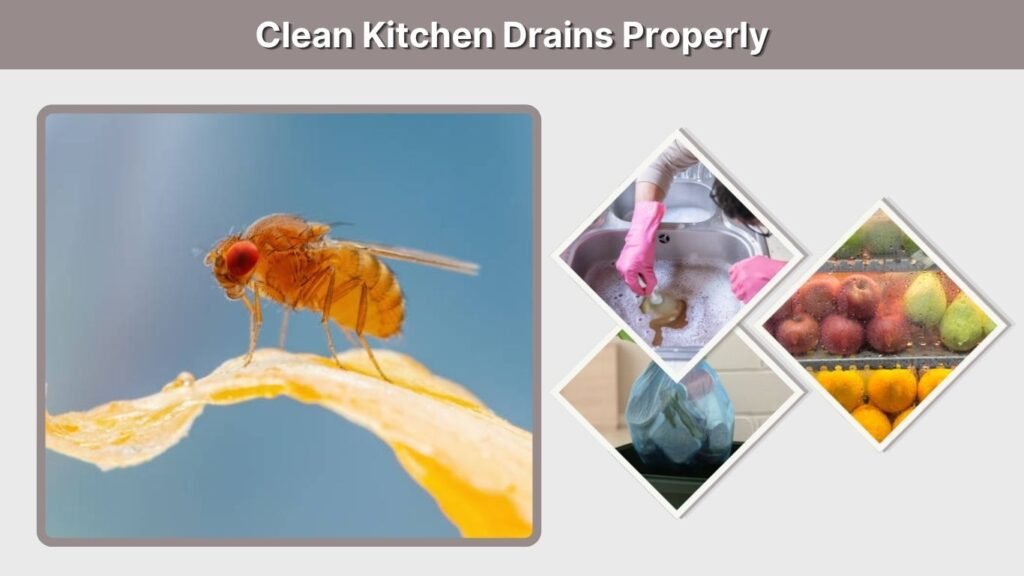
Fruit flies may feed around drains containing fermenting residue. However, drain flies and fungus gnats can also be mistaken for fruit flies. Cleaning the drain is useful when flies repeatedly gather around the sink.
Natural Drain-Cleaning Method
Remove the drain cover and scrub the inside walls with a long drain brush. Use hot water and dish soap to loosen slime and organic buildup.
Clean the garbage disposal splash guard, sink overflow opening, and rubber seals. These areas often hold residue that ordinary rinsing cannot remove.
A mixture of baking soda followed by vinegar may loosen some debris, but bubbling alone does not remove thick buildup. Physical scrubbing is usually more effective.
Never mix vinegar with bleach or other chlorine-based cleaners. The combination can produce dangerous fumes.
5. Clean Garbage and Recycling Containers
Fruit juice, soda, wine, and food residue often collect at the bottom of bins. Empty all containers and wash them with warm, soapy water.
Allow the bins to dry completely before replacing the liners. Rinse bottles and cans before placing them in recycling.
Take kitchen garbage outside daily while dealing with an infestation. Keep outdoor bins closed tightly and position them away from doors and windows when possible.
6. Store Produce Correctly
Refrigerate ripe fruit for several days until the infestation is controlled. Store onions, potatoes, and other unrefrigerated produce in clean, dry, ventilated containers.
Avoid leaving cut fruit, juice, smoothies, or wine uncovered. Wash dishes soon after eating and wipe up drink spills immediately.
Fruit fly eggs can be present on produce surfaces. Washing fruit after bringing it home may remove some eggs and food residue, although delicate fruit should be dried before storage to prevent mold.
7. Vacuum Adult Fruit Flies
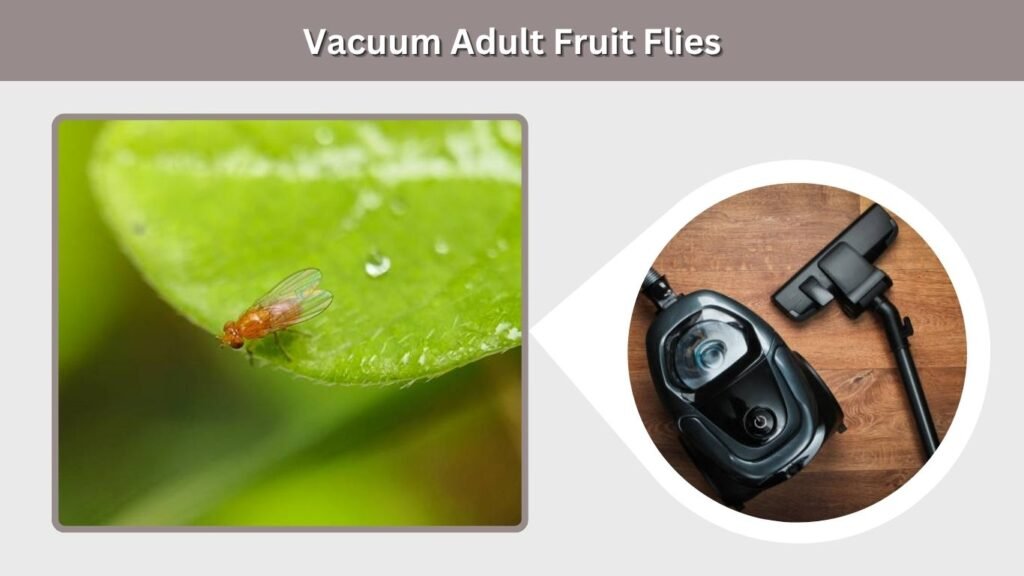
A vacuum provides immediate relief when many fruit flies are resting on walls, cabinets, or windows.
Use the hose attachment to collect visible flies. Empty the vacuum container outdoors afterward or seal and discard the bag.
Vacuuming does not eliminate eggs or larvae, but it quickly reduces the number of breeding adults while traps and cleaning address the source.
How Long Does It Take to Get Rid of Fruit Flies?
You may notice fewer adult flies within several hours of setting traps and removing food sources. A small infestation may improve significantly within two or three days.
Complete removal can take approximately one to two weeks because eggs, larvae, and pupae may remain hidden. Continue cleaning and trapping for several days after the last adult fly disappears.
If fruit flies remain after two weeks, search again for hidden breeding material. Commonly overlooked sources include floor drains, garbage disposal residue, damaged produce, recycling bins, and spills beneath appliances.
How to Prevent Fruit Flies From Returning
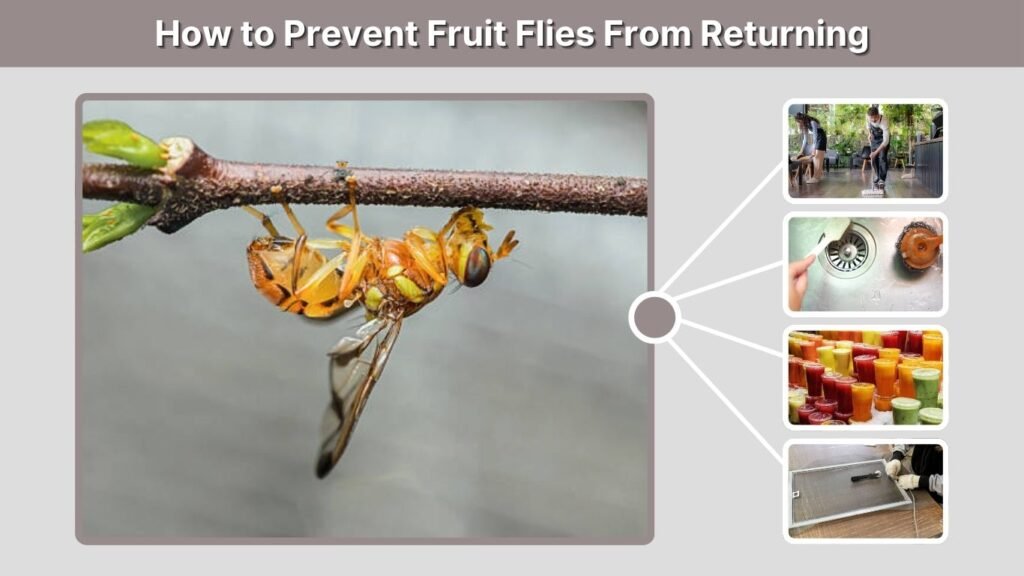
Prevention depends on keeping food residue unavailable and removing ripe produce before it begins fermenting.
Simple Prevention Tips
- Refrigerate ripe fruit when possible.
- Discard damaged produce promptly.
- Wipe counters and floors every day.
- Rinse recycling bottles and cans.
- Empty kitchen garbage regularly.
- Clean drains and garbage disposals.
- Keep compost in a covered container.
- Wash reusable cleaning cloths frequently.
- Store juice, wine, and sweet drinks in sealed containers.
- Repair damaged window screens.
Fruit Flies vs. Drain Flies
Fruit flies are small tan or brown flies that often have reddish eyes. They usually gather near fruit, garbage, fermented drinks, and food residue.
Drain flies have fuzzy, moth-like wings and commonly rest on walls near sinks, showers, or floor drains. If vinegar traps do not attract the insects, you may be dealing with drain flies rather than fruit flies.
| Feature | Fruit Fly | Drain Fly |
| Appearance | Tan or brown with clear wings | Gray and fuzzy with broad wings |
| Common location | Fruit, garbage, and drinks | Drains and wet plumbing areas |
| Main food source | Fermenting organic matter | Drain slime and microbial buildup |
| Best control | Remove food and use traps | Scrub and clean the drain |
FAQs
What kills fruit flies instantly naturally?
A vacuum can remove visible fruit flies immediately. Apple cider vinegar mixed with a few drops of dish soap also catches and kills adults quickly. However, neither method eliminates hidden eggs and larvae, so the breeding source must also be removed.
Can white vinegar get rid of fruit flies?
White vinegar may attract some fruit flies, but apple cider vinegar is usually more effective because it has a stronger fermented-fruit smell. Adding a few drops of dish soap helps prevent flies from remaining on the liquid’s surface.
Why do fruit flies keep coming back?
They usually return because ripe produce, drain residue, garbage, recycling, or another breeding source remains available. Adult traps reduce visible flies, but they cannot prevent new adults from emerging from hidden larvae and pupae.
Will fruit flies go away on their own?
They may disappear when all food and moisture sources are removed, but waiting allows them to reproduce. Removing damaged produce, cleaning bins and drains, and setting traps will control the problem much faster.
Are fruit flies harmful?
Fruit flies do not bite, but they can land on garbage, drains, and spoiled food before moving onto kitchen surfaces. Discard contaminated food, clean preparation areas, and keep produce covered while an infestation is present.