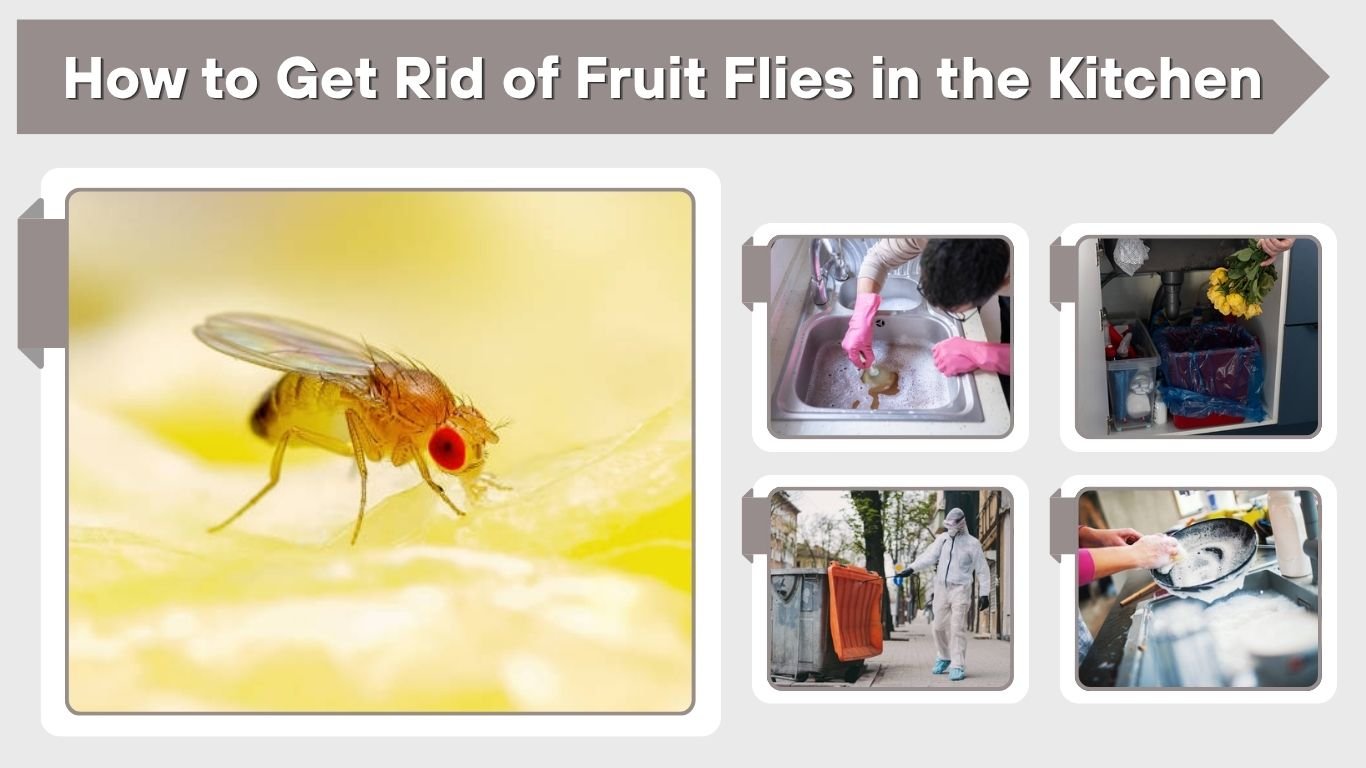
Fruit flies are tiny insects that gather around ripe produce, kitchen sinks, trash cans, recycling bins, and spilled drinks. Although they do not usually bite, they can quickly become a serious nuisance because they reproduce in fermenting food and moist organic residue.
Killing the visible adults is only a temporary solution. To remove a fruit fly infestation completely, you must locate the breeding source, clean the affected areas, and trap the remaining adults. The following steps explain how to get rid of fruit flies in the kitchen quickly and prevent them from returning.
Confirm That They Are Fruit Flies
Several small flies can appear in kitchens, and each one requires a slightly different treatment. Fruit flies are usually about 1/8 inch long, with tan or light brown bodies. Many have noticeable red eyes and hover around food, bottles, and trash.
| Small fly | Appearance | Common location |
| Fruit fly | Tan or brown, often with red eyes | Fruit, trash, drinks, and food residue |
| Drain fly | Fuzzy with broad, moth-like wings | Sinks, drains, and wet walls |
| Fungus gnat | Thin, dark, and mosquito-like | Moist houseplant soil |
| Phorid fly | Small with a hump-backed body | Sewage, decaying matter, and plumbing leaks |
Fruit flies usually circle around ripe fruit or sugary liquids. Fuzzy insects resting near a drain are more likely to be drain flies.
Step 1: Remove Overripe Fruit and Vegetables
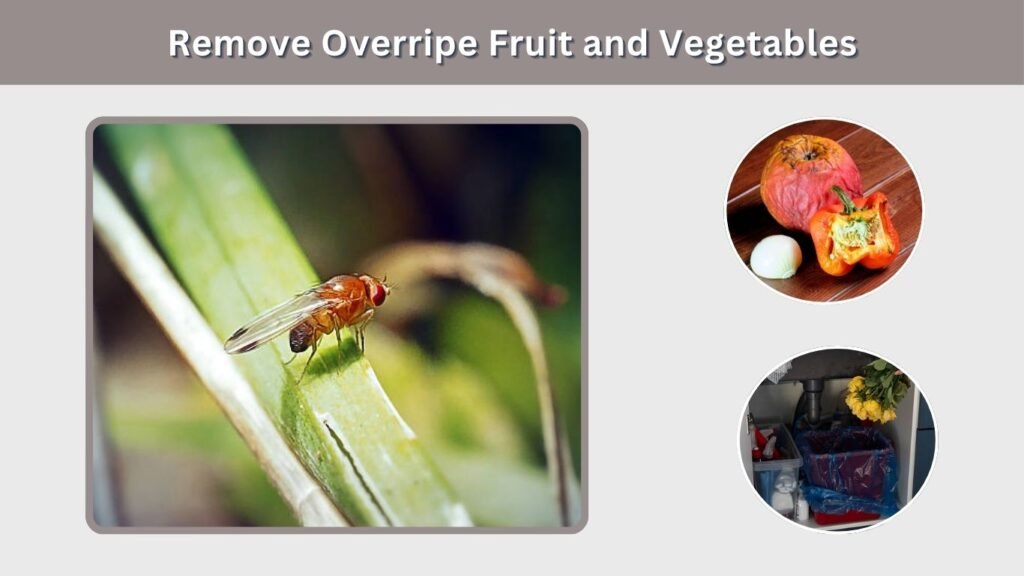
Overripe produce is one of the most common sources of kitchen fruit flies. Inspect every fruit and vegetable stored on counters, shelves, and inside cabinets.
Discard produce that is:
- Soft or leaking
- Cracked or damaged
- Moldy
- Producing a fermented smell
- Surrounded by small flies
Place damaged produce in a sealed bag and move it directly to an outdoor garbage container. Do not leave it in the kitchen trash because eggs and larvae may continue developing.
Check potatoes, onions, tomatoes, bananas, peaches, berries, and other produce that may have been forgotten in storage. A single rotten potato beneath a cabinet can support a large infestation.
Wash undamaged produce and refrigerate it whenever appropriate. Avoid keeping an uncovered fruit bowl on the counter while the infestation is active.
Step 2: Find Hidden Breeding Sources
Fruit flies need only a small amount of fermenting material to reproduce. Even after removing visible fruit, they may continue breeding in overlooked food residue.
Inspect these locations carefully:
- Under the refrigerator and stove
- Behind kitchen cabinets
- Beneath trash cans
- Inside reusable shopping bags
- Under appliance drip trays
- Around coffee makers and blenders
- Inside lunch boxes
- Beneath pet food bowls
- Around syrup, honey, and sauce bottles
- Inside compost containers
Clean any sticky or wet areas with warm, soapy water. Move appliances when possible and check for fallen fruit, food crumbs, and dried beverage spills.
A sweet liquid trapped underneath a kitchen appliance may continue attracting flies even when the rest of the room appears clean.
Step 3: Empty and Wash the Trash Can
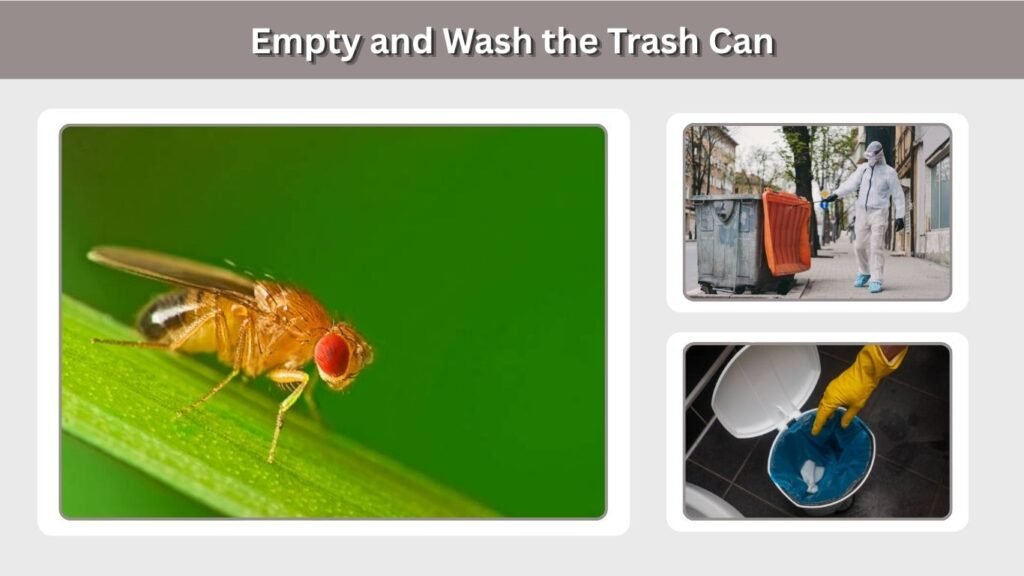
Taking out the garbage bag may not remove the breeding source. Juice, food liquid, and organic residue can leak through the bag and collect inside the bin.
Remove the bag and wash the entire container, including:
- The bottom
- The inside walls
- The rim
- The lid
- The handles
- Grooves around the top
Use warm water and dish soap, then allow the bin to dry completely before adding a new liner.
Take food waste outside frequently during warm weather. Use a trash can with a tight-fitting lid so adult flies cannot reach the contents.
Step 4: Clean Recycling and Compost Containers
Empty wine bottles, beer cans, soda containers, and juice cartons often contain enough liquid to attract fruit flies. Rinse recyclable containers before placing them in a bin.
Wash the recycling container if sticky residue has collected inside it. Keep it covered or store it outside when possible.
Kitchen compost bins can also become major breeding sites. Empty them regularly and wash the lid, rim, and interior. During an active infestation, store food scraps in a sealed container in the refrigerator or freezer until disposal.
Do not leave fruit peels, open beverage cans, or unfinished drinks on the counter overnight.
Step 5: Clean the Kitchen Sink and Drain
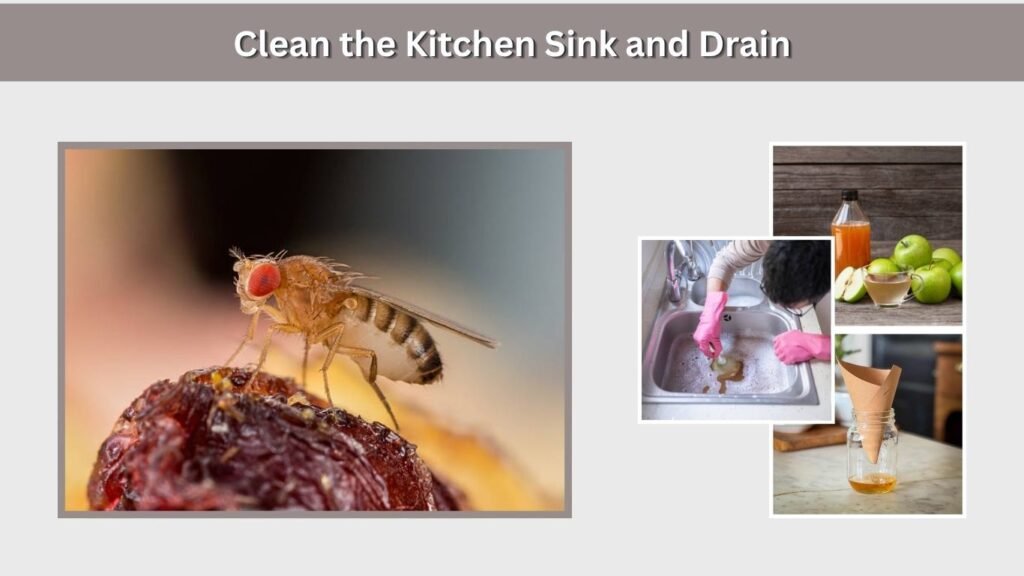
Fruit flies may feed and breed in food residue around kitchen drains and garbage disposals. However, flies repeatedly emerging directly from a drain may actually be drain flies.
Remove the sink strainer and scrub away visible buildup. Use a long drain brush to clean the sides of the drain opening where organic film can collect.
Clean the Garbage Disposal
Before cleaning a garbage disposal, turn it off and disconnect the power.
Lift the rubber splash guard and scrub underneath it with warm, soapy water. Food particles commonly become trapped in this hidden area.
Remove accessible residue and clean around the disposal opening. An enzyme-based drain cleaner can help break down organic buildup when used according to the product instructions.
Pouring boiling water or bleach down the drain may kill some exposed insects, but it may not remove the material supporting the larvae.
Never mix bleach with vinegar, ammonia, drain opener, or another household cleaner.
Step 6: Make an Apple Cider Vinegar Trap
An apple cider vinegar trap is one of the easiest ways to catch adult fruit flies. The fermented smell attracts them, while dish soap prevents them from standing on the liquid.
How to Make the Trap
Pour approximately half an inch of apple cider vinegar into a small bowl, cup, or jar. Add one or two drops of liquid dish soap and stir gently.
Place the trap near:
- The kitchen sink
- The trash can
- The fruit storage area
- The recycling bin
- The compost container
Replace the mixture every one or two days. Several small traps may work better than one large trap when flies are active in different parts of the kitchen.
Apple cider vinegar usually works better than plain white vinegar because its smell resembles fermenting fruit.
Step 7: Use a Paper Funnel Trap
A paper funnel trap allows fruit flies to enter a jar while making it difficult for them to escape.
Place a small amount of apple cider vinegar, wine, beer, or overripe fruit inside a jar. Roll a sheet of paper into a cone with a small opening at the bottom.
Insert the funnel into the jar without allowing it to touch the bait. Tape it in position and close any large gaps around the edge.
The flies follow the smell through the narrow opening and become trapped inside. Empty and reset the jar as needed.
This method catches adults but does not eliminate eggs and larvae, so it must be combined with cleaning.
Step 8: Clean Kitchen Surfaces Daily
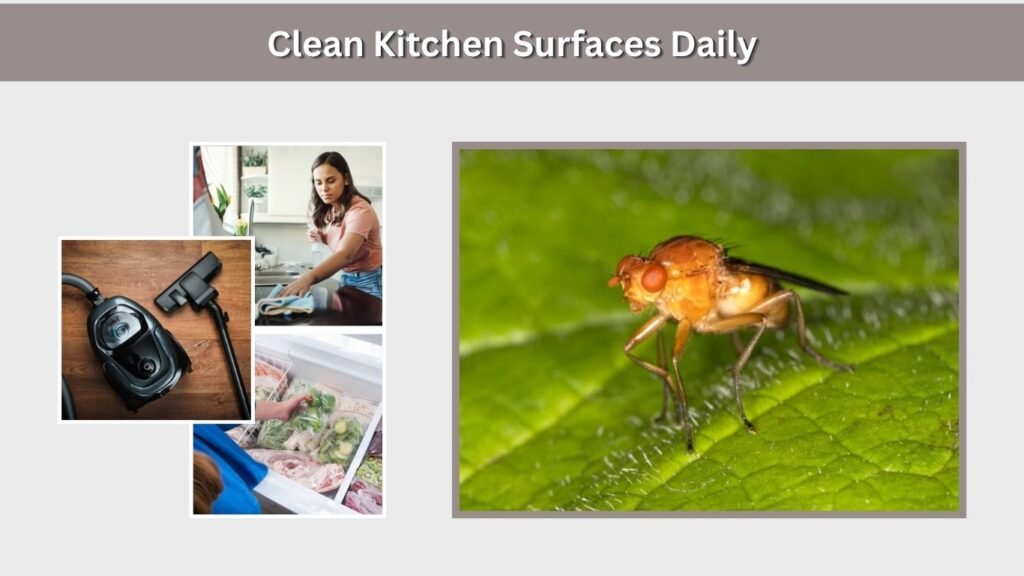
Fruit flies can survive on thin layers of sugary material that may be difficult to see. Wipe counters, tables, cabinet doors, and appliance surfaces every day until the infestation disappears.
Pay special attention to:
- Areas around juice machines
- Coffee stations
- Cutting boards
- Under fruit baskets
- Bottle caps
- Syrup containers
- Blender bases
- Floor edges
- Areas beneath trash bins
Wash dirty dishes promptly and avoid leaving food residue in the sink overnight. Clean damp sponges, dishcloths, and mop heads because they may contain small amounts of organic material.
Dry the sink and counters before going to bed.
Step 9: Vacuum the Remaining Adults
A vacuum cleaner can quickly remove fruit flies resting on walls, windows, ceilings, and cabinets. Use the hose attachment to capture as many adults as possible.
Empty the vacuum outside or seal its contents immediately afterward.
Sticky traps may also catch adults near windows, garbage containers, and other active areas. Keep sticky products away from children, pets, and uncovered food.
Vacuuming provides fast relief, but it will not stop the infestation unless the breeding material has already been removed.
Step 10: Store Food Properly
Keep ripe produce in the refrigerator whenever possible. Store cut fruit, juice, jam, sauces, and other sweet foods in sealed containers.
Wipe sticky residue from the outside of bottles and jars before returning them to cabinets. Fruit flies may be attracted to syrup or juice around the cap even when the container is closed.
Bread, baked goods, and snacks containing fruit should also be covered. Wash pet food bowls daily and avoid leaving wet food out for long periods.
Proper storage removes the smells and food sources that attract adult flies.
How to Get Rid of Fruit Flies Naturally
The most effective natural approach combines sanitation with homemade traps. Chemical sprays are rarely necessary for a kitchen infestation.
Use these methods together:
- Remove overripe produce.
- Refrigerate ripe fruit.
- Clean trash and recycling containers.
- Scrub sink drains and garbage disposals.
- Wipe up spills immediately.
- Use apple cider vinegar traps.
- Vacuum visible adults.
Avoid pouring vinegar directly onto counters made from natural stone because the acid may damage the surface. Keep traps where children and pets cannot drink from them.
How Long Does It Take to Remove Fruit Flies?
You may notice a major reduction within two or three days after removing the breeding sources. However, complete elimination may take one to two weeks because eggs, larvae, and pupae can remain hidden.
Continue cleaning and trapping until you have not seen any fruit flies for at least seven consecutive days.
When flies continue appearing after two weeks, inspect for a hidden source such as rotting produce, dirty recycling, food beneath an appliance, or organic material inside a drain.
Fruit Flies in a Restaurant or Commercial Kitchen
Fruit fly control is especially important in restaurants because food waste and sugary liquids are constantly present.
Commercial kitchens should clean floor drains, beverage stations, bottle storage areas, mop sinks, garbage containers, and equipment every day. Bar mats, soda dispensers, and beer taps require regular cleaning because fermented residue can develop underneath them.
Food should remain covered, and waste should be removed before closing. Persistent commercial infestations may require an inspection by a licensed pest control professional or plumber.
How to Prevent Fruit Flies in the Kitchen
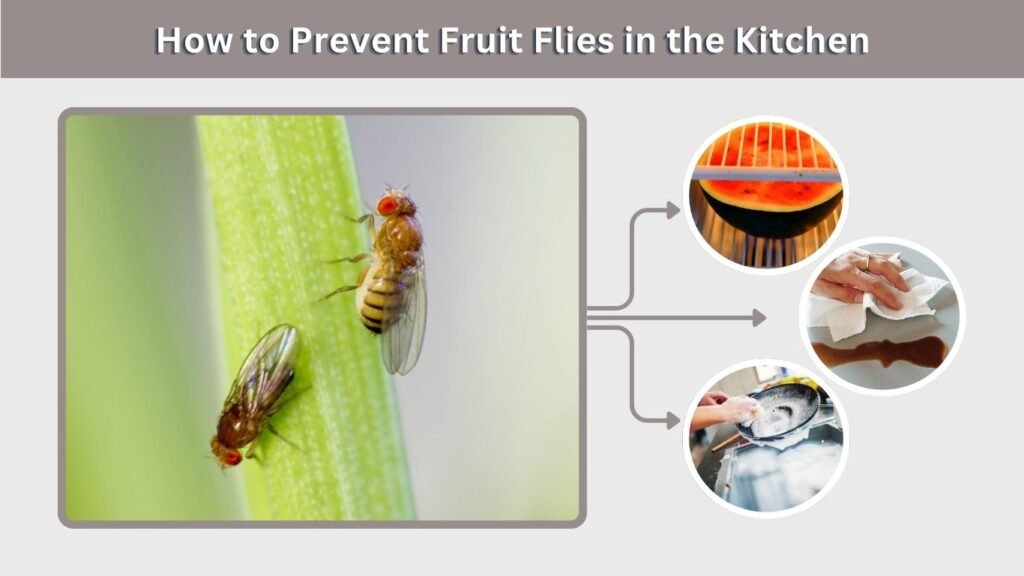
Prevention depends on keeping the kitchen clean, dry, and free from exposed fermenting material.
- Refrigerate ripe produce.
- Check potatoes and onions regularly.
- Empty food waste frequently.
- Rinse bottles and cans before recycling.
- Keep compost containers covered.
- Wash dishes after use.
- Clean spills immediately.
- Scrub drains regularly.
- Repair damaged window screens.
- Keep doors closed when possible.
Inspect fruit before bringing it home. Damaged produce may already carry fruit fly eggs or attract adults soon after it enters the kitchen.
FAQs
What is the fastest way to get rid of fruit flies in the kitchen?
Remove rotten produce and food waste first. Clean trash cans, recycling containers, counters, and sink drains. Then place apple cider vinegar and dish soap traps near the areas where flies are most active.
Why are fruit flies coming from my kitchen sink?
They may be feeding on food residue around the drain or garbage disposal. Scrub the drain opening and underside of the splash guard. Fuzzy flies emerging directly from the pipe may be drain flies rather than fruit flies.
Does vinegar kill fruit flies?
Apple cider vinegar attracts fruit flies but does not always kill them by itself. Adding a small amount of dish soap breaks the surface tension, causing flies that land on the mixture to sink.
Will fruit flies disappear on their own?
They may disappear when their breeding material dries out or is removed. However, they will continue reproducing as long as fermenting food, sugary residue, trash, or moisture remains available.
Can fruit flies make you sick?
Fruit flies do not normally bite, but they may move between decaying material and food preparation surfaces. Removing them and maintaining proper kitchen sanitation helps reduce contamination concerns.