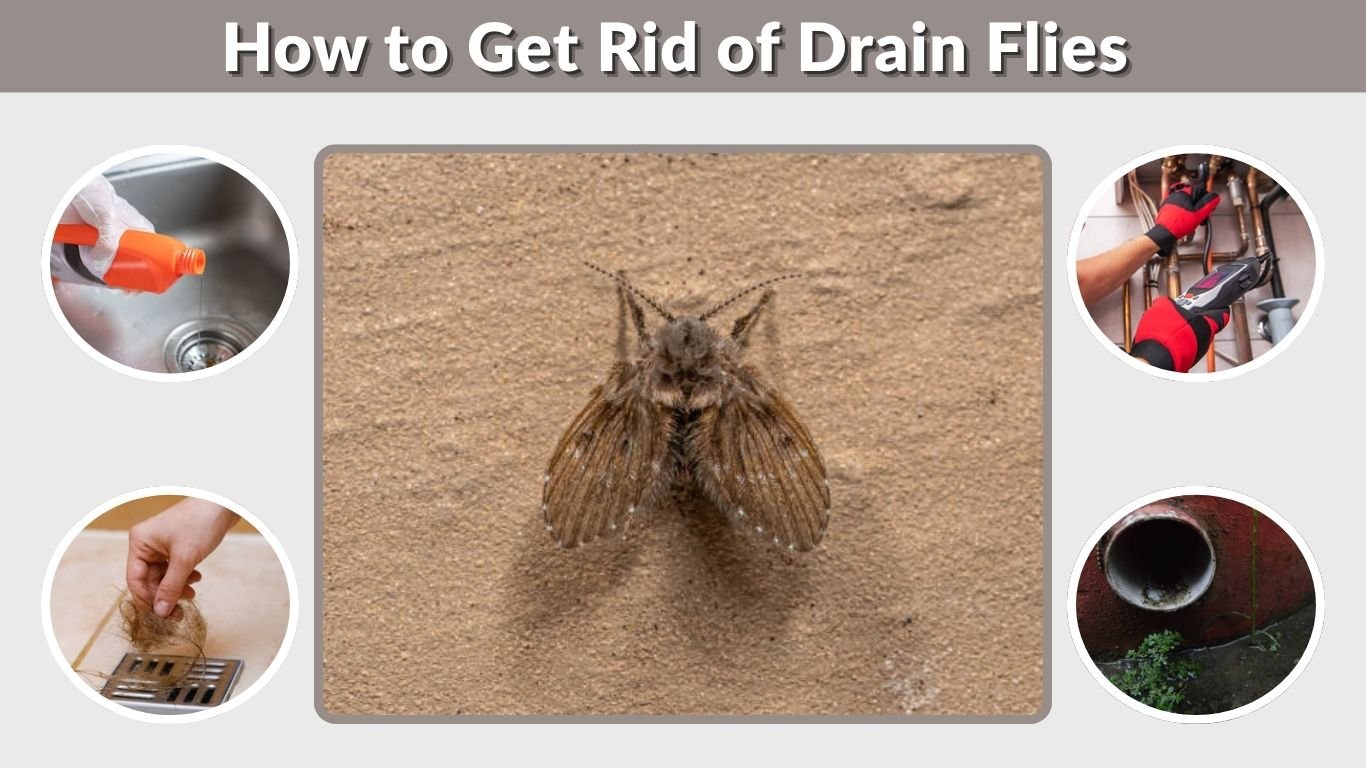
Drain flies are tiny, fuzzy insects that commonly gather around bathroom sinks, showers, toilets, walls, and ceilings. Although adults are easy to kill, they will continue returning while eggs and larvae remain inside moist organic buildup. The most effective solution is to find the breeding source and physically remove the slimy material lining the affected drain. Simply spraying visible flies or pouring bleach into the sink rarely eliminates the infestation. This guide explains how to identify drain flies, test bathroom drains, clean sinks and showers properly, address toilet or ceiling activity, and prevent the insects from returning.
What Are Drain Flies?
Drain flies, also known as moth flies, sink flies, sewer flies, or filter flies, are small members of the fly family Psychodidae. Adults are usually dark gray or black and covered with fine hairs, giving them a fuzzy, mothlike appearance. Their broad wings rest rooflike over the body, and they usually fly only a few feet at a time.
How to Identify Drain Flies
- Approximately 1/8 to 1/5 inch long
- Fuzzy gray, brown, or black body
- Broad, leaf-shaped or heart-shaped wings
- Wings held like a roof while resting
- Short, weak, hopping flight
- Commonly rests on bathroom walls and ceilings
- Usually found close to sinks, tubs, or showers
Drain flies do not normally bite. Their presence is mainly a nuisance, although a large infestation may signal excessive organic buildup, stagnant water, faulty plumbing, or a damaged sewer line.
Why Are Drain Flies in Your Bathroom?
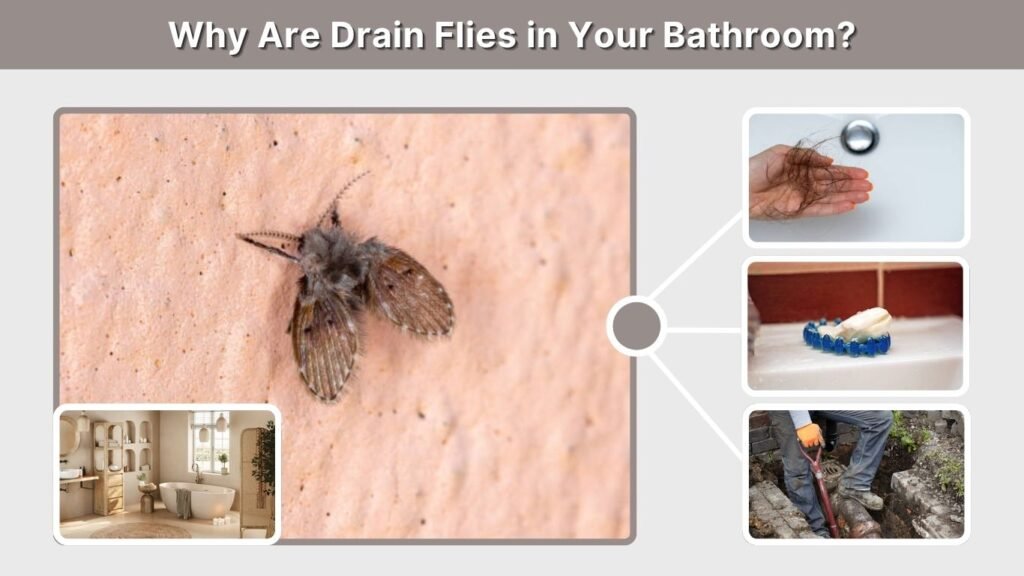
Adult females lay eggs in wet, decaying organic matter. Inside a bathroom, larvae commonly develop in the gelatinous film coating drains, traps, overflow openings, and other persistently damp areas.
Their breeding material may contain:
- Hair
- Soap residue
- Skin oils
- Bacteria
- Fungi and algae
- Sewage material
- Other decomposing debris
Bathroom sinks, shower drains, tubs, floor drains, infrequently used toilets, loose floor tiles, and leaking plumbing can all support drain fly development.
How to Find the Breeding Drain
Do not automatically assume that the nearest sink is responsible. Test every possible bathroom source, including the sink, shower, tub, floor drain, toilet area, and overflow opening.
Perform the Tape Test
Place a strip of clear tape across part of the drain opening with the sticky side facing downward. Leave part of the opening uncovered so air can continue moving through it.
Check the tape the following morning. Drain flies stuck to the underside indicate that adults are emerging from that drain. Repeat the test for several nights when necessary because adults may not emerge from every drain each night.
| Where flies gather | Probable source |
| Around the bathroom sink | Sink drain, trap or overflow hole |
| Around the shower | Shower drain or standing water |
| Near the toilet | Toilet seal, bowl rim or nearby floor drain |
| On the ceiling | A nearby drain or hidden moisture problem |
| Around loose tiles | Water and organic matter below the flooring |
How to Get Rid of Drain Flies in a Bathroom
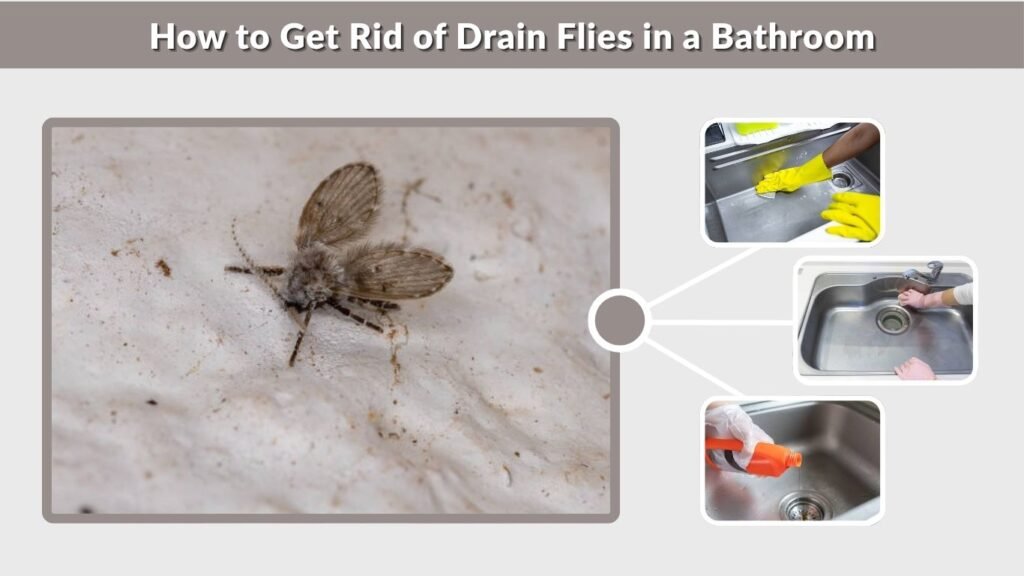
The following process targets both the visible adults and the developing larvae.
1. Remove the Drain Cover
Take out the sink stopper or shower-drain cover when possible. Remove visible hair, soap residue, and debris using gloves or an appropriate drain-cleaning tool.
Clean the underside of the cover as well. Organic buildup beneath a stopper or drain grate may support larvae even when the visible sink looks clean.
2. Scrub Inside the Drain
Use a stiff, long-handled drain brush to scrub the inside walls of the pipe. Reach as deeply as safely possible, paying particular attention to the upper pipe, bends, edges, and other areas where slime adheres.
Physical scrubbing is the most important step because it removes the gelatinous material on which the larvae feed. Pouring liquid through the center of the pipe may leave this film attached to the sides.
3. Clean the Sink Overflow Opening
Bathroom sinks commonly have a small overflow opening near the upper edge of the basin. Water, bacteria, and debris can collect inside this passage.
Use a narrow brush suitable for the opening. Clean it without damaging the fixture. Treating the main drain while ignoring the overflow channel may allow the infestation to continue.
4. Flush Away Loosened Debris
After scrubbing, flush the drain with water to remove loosened material. Hot water may help carry debris away after mechanical cleaning, but hot or boiling water alone is not a dependable treatment because it does not necessarily remove biofilm attached to the pipe.
Be cautious with boiling water around PVC plumbing, porcelain fixtures, and splash-sensitive surfaces.
5. Apply a Biological Drain Cleaner
A biological or bacterial drain product can help break down remaining organic material. Choose one labeled for the type of drain and plumbing system you have, and follow its directions regarding quantity, contact time, and repeated applications.
Check product compatibility carefully when your home uses a septic system.
6. Repeat the Cleaning
One treatment may not remove every section of buildup. Repeat brushing and product application according to the cleaner’s label until adult activity stops.
Drain flies pass through egg, larval, pupal, and adult stages, so a few adults may remain visible temporarily after the breeding material has been removed. Adult sprays may reduce visible flies, but they do not eliminate larvae developing inside dirty drains.
7. Remove Remaining Adults
Vacuum adults from bathroom walls, ceilings, and windows, or use sticky traps to monitor their numbers. Killing adults provides temporary relief and helps prevent some additional egg-laying, but cleaning the breeding source remains essential.
How to Get Rid of Drain Flies in a Bathroom Sink
Remove the stopper and clean its underside, linkage, and surrounding drain opening. Scrub the drain walls and clean the overflow passage.
If activity continues, inspect the P-trap beneath the sink. A slow drain, leak, or heavy buildup inside the trap may require disassembly by someone familiar with plumbing or attention from a plumber.
Avoid relying on vinegar traps. They may catch fruit flies but usually do not solve a drain fly infestation because the larvae remain inside the drain film.
How to Get Rid of Drain Flies in a Shower
Remove hair from beneath the shower grate and scrub both the grate and pipe. Clean the surrounding grout and any channels that remain wet after bathing.
Check whether water drains slowly or pools around the opening. A blockage may allow more organic material to accumulate. Also inspect cracked grout, damaged seals, and loose tiles because water trapped beneath the shower floor can create a hidden breeding site.
How to Get Rid of Drain Flies Near a Toilet
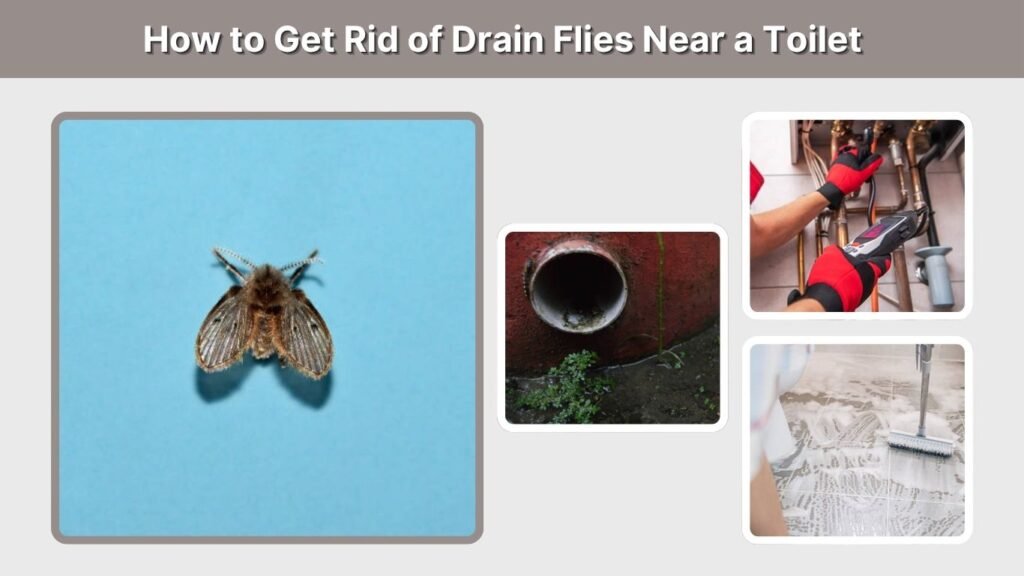
Drain flies near a toilet do not always originate inside the bowl. Examine:
- The toilet’s base and seal
- The bowl rim and overflow passages
- A nearby floor drain
- Leaking supply connections
- Damp flooring around the toilet
- Toilets that are rarely flushed
A failed toilet seal can permit moisture and contaminated material to collect beneath the fixture. Persistent flies around the base, sewage odors, or damp flooring justify an inspection by a plumber.
Why Are Drain Flies on the Bathroom Ceiling?
Drain flies often rest on ceilings because they are weak fliers and prefer nearby shaded surfaces. Their presence on the ceiling does not necessarily mean they are breeding there.
Search the drains directly below or nearby. When no drain tests positive, inspect the ceiling for moisture stains, plumbing leaks, condensation, or an opening connected to a damp wall void. Flies continuing after every accessible drain has been cleaned may indicate a hidden leak or damaged sewer pipe.
Drain Fly Treatments to Avoid
Bleach Alone
Bleach may kill some exposed organisms but often passes through the middle of the pipe without removing the slime attached to its walls. It is therefore not a substitute for brushing.
Mixing Cleaning Chemicals
Never mix bleach with ammonia, caustic drain cleaners, acids, or other household chemicals. Dangerous gases or violent chemical reactions can result. Texas A&M specifically warns that applying bleach after a caustic drain cleaner can produce hazardous chlorine gas.
Insect Spray Down the Drain
Do not spray an insecticide into plumbing unless its label specifically permits that use. Indoor flying-insect sprays may temporarily kill adults but do not remove the breeding material. Always use pesticides only as directed and keep children and pets away from treated areas.
How to Prevent Drain Flies Permanently
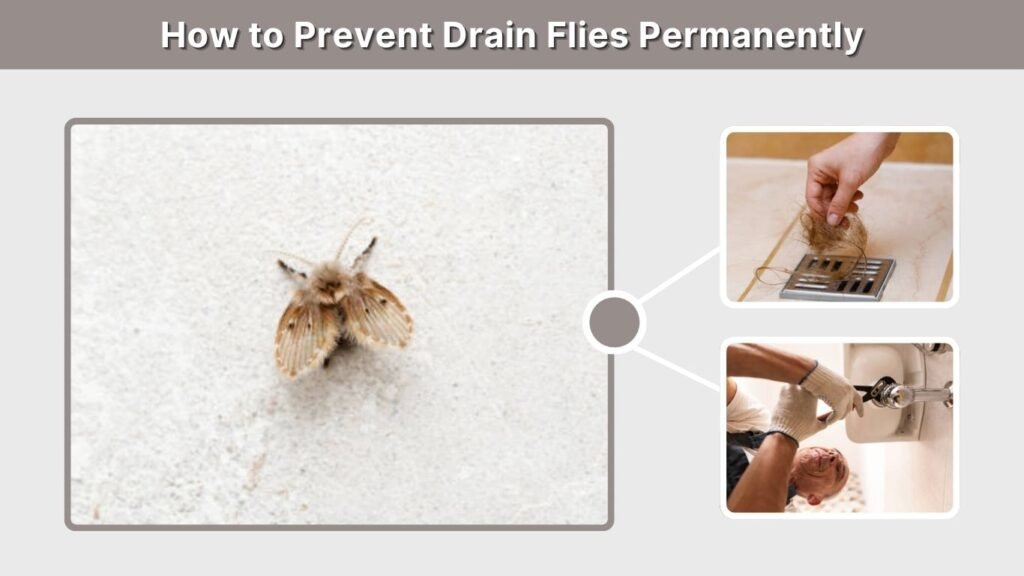
Clean frequently used drains before heavy slime develops. Remove trapped hair, repair slow drains, fix leaking faucets or toilets, and ventilate the bathroom after showers.
Run water periodically in infrequently used sinks, tubs, and floor drains so traps do not dry out. Keep bathroom floors dry and investigate recurring moisture around tiles or fixtures. Pest prevention should begin by removing food, water, and shelter rather than depending on widespread pesticide treatment.
FAQs
How long does it take to eliminate drain flies?
Adult numbers should begin declining after the breeding material is removed, but complete control may take several days or longer. Continue monitoring and cleaning because immature flies already developing may still emerge temporarily.
Will baking soda and vinegar kill drain flies?
They may loosen minor residue, but they are unlikely to remove thick biofilm completely. Scrubbing the pipe with a stiff drain brush is more dependable because it physically removes the material supporting eggs and larvae.
Can drain flies come from a clean bathroom?
Yes. Visible bathroom surfaces may be clean while organic film remains inside a pipe, overflow channel, trap, floor drain, leaking seal, or hidden plumbing area.
Are bathroom drain flies harmful?
They do not normally bite and are primarily nuisance insects. However, their presence can indicate dirty drains, sewage contamination, excess moisture, or damaged plumbing that should be corrected.
When should you call a plumber?
Call a plumber when flies persist after thorough drain cleaning, sewage odors are present, drains repeatedly back up, flooring remains wet, or activity appears concentrated around a toilet base, wall, or ceiling.