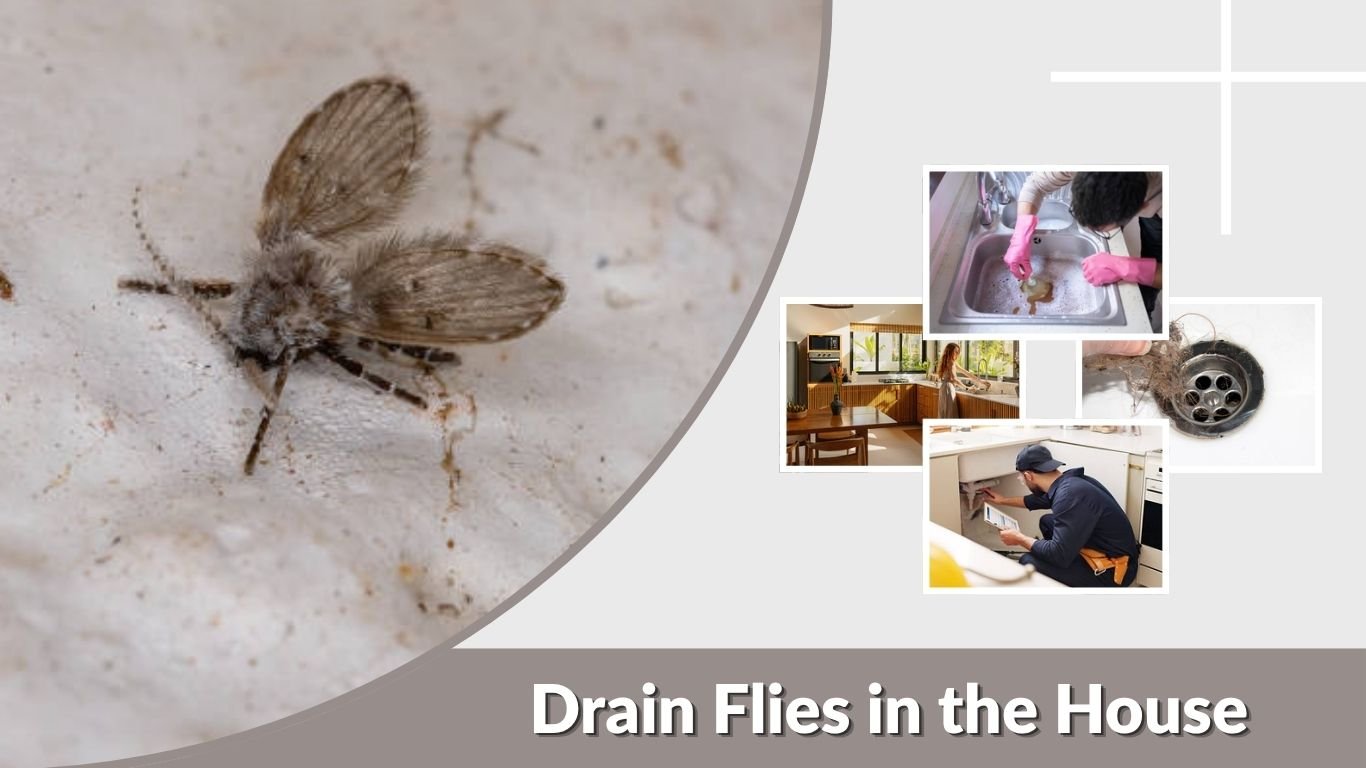
Drain flies are tiny, fuzzy insects that often appear around sinks, showers, floor drains, toilets, laundry rooms, and other damp areas. Killing the adults provides quick relief, but it will not stop the infestation unless you remove the slimy organic buildup where their eggs and larvae develop. To get rid of drain flies immediately, vacuum visible adults, identify the breeding drain, remove hair and debris, and scrub the inside of the pipe thoroughly. Continue cleaning and controlling moisture for several days to prevent newly developing flies from replacing the adults you eliminated.
What Do Drain Flies Look Like?
Drain flies are also called moth flies, sink flies, sewer flies, or filter flies. They are extremely small and may initially be confused with fungus gnats or fruit flies.
Identification
- Small body measuring roughly 1/8 inch long
- Gray, brown, or nearly black color
- Broad, heart-shaped wings
- Fuzzy body and wings
- Wings held rooflike over the body
- Short, weak, irregular flight
- Often rests on walls near plumbing
- May appear to hop rather than fly
Drain flies usually remain close to their breeding location. If numerous fuzzy flies are resting beside a sink or shower, the nearby drain is a likely source.
Why Are Drain Flies in Your House?
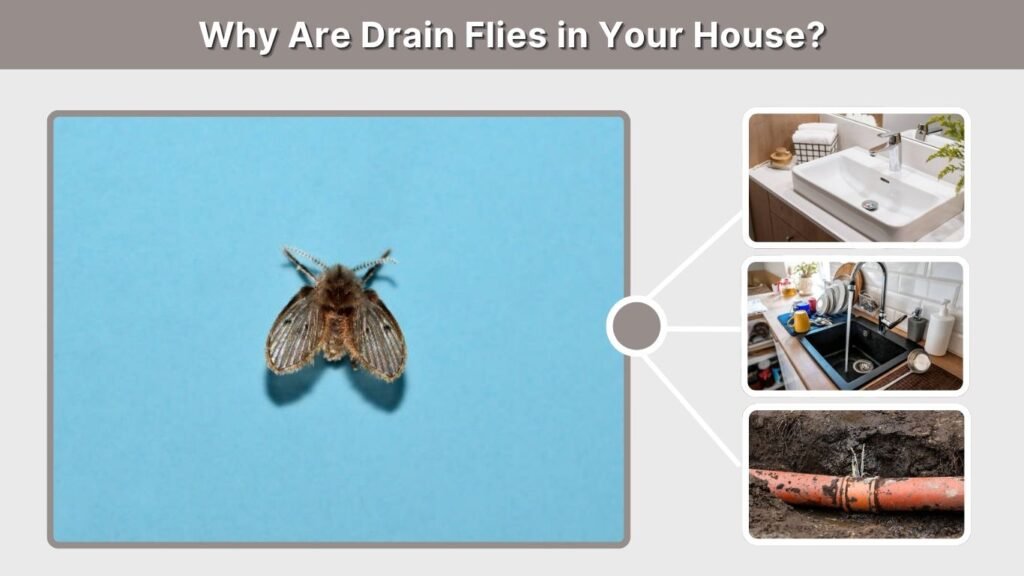
Drain flies reproduce in moist organic matter. Inside a home, the larvae commonly live in the gelatinous film that develops along the walls of dirty or slow-moving drains.
This buildup may contain soap residue, hair, grease, food particles, bacteria, fungi, skin oils, and other decomposing material.
Common indoor breeding sites include:
- Bathroom sinks
- Shower and bathtub drains
- Kitchen sinks
- Garbage disposals
- Floor drains
- Laundry drains
- Sump pumps
- Air-conditioner drain pans
- Mop buckets
- Leaking sewage pipes
- Rarely used toilets
- Wet areas beneath appliances
A clean-looking sink can still contain thick organic film deeper inside the pipe or overflow passage.
How to Get Rid of Drain Flies Immediately
Immediate control requires two separate actions: removing adult flies and cleaning the area where the immature flies are developing.
1. Vacuum the Adult Flies
Use a handheld or standard vacuum to remove drain flies from walls, ceilings, windows, cabinets, and areas near plumbing fixtures.
Vacuuming quickly reduces the number of visible adults and prevents some females from laying additional eggs. Empty the vacuum outdoors afterward.
A fly swatter or sticky trap can also help, but neither method reaches the larvae inside the drain.
2. Find the Breeding Drain
Check every sink, shower, tub, floor drain, and other damp plumbing fixture. Do not assume the closest drain is automatically responsible.
Place a strip of clear tape over part of each suspected drain with the sticky side facing downward. Leave part of the opening uncovered so airflow continues.
Inspect the tape the next morning. Flies caught underneath the tape suggest that they emerged from that drain. Repeat the test for several nights when necessary.
3. Remove the Drain Cover or Stopper
Take out the sink stopper, shower grate, or drain cover when possible. Wear gloves and remove visible hair, soap buildup, food particles, and other debris.
Clean both sides of the stopper or cover. Drain fly larvae can develop in residue attached to the underside of these parts.
4. Scrub the Inside of the Pipe
Use a long, stiff drain brush to scrub the inner walls of the affected pipe. This is the most important part of drain fly control.
Move the brush around the entire circumference of the pipe rather than simply pushing it through the center. Pay attention to the upper drain walls, edges, bends, and other areas where slime collects.
Drain fly larvae feed within this organic film. Physically removing it destroys their food source and breeding habitat.
5. Clean the Overflow Opening
Bathroom sinks and bathtubs often have overflow channels that remain damp and collect organic residue.
Insert a narrow cleaning brush into the overflow opening and scrub as much of the passage as you can safely reach. Ignoring the overflow channel may allow drain flies to survive even after the main pipe is cleaned.
6. Flush Away the Debris
After brushing, flush the drain with plenty of warm or hot tap water to carry away loosened material.
Hot water can help after physical cleaning, but pouring hot or boiling water into an untreated drain is rarely enough by itself. The water may flow through the center without removing film attached to the pipe walls.
Avoid using boiling water when it could damage plastic pipes, seals, porcelain, or other plumbing materials.
7. Use an Enzyme or Biological Drain Cleaner
Apply an enzyme-based or biological drain treatment designed to break down organic matter. Follow the product instructions carefully, including its recommended amount and contact time.
These products work best after brushing has removed the heaviest buildup. Several applications may be necessary.
Check whether the product is suitable for septic systems when applicable.
How to Remove Drain Flies From Different Areas
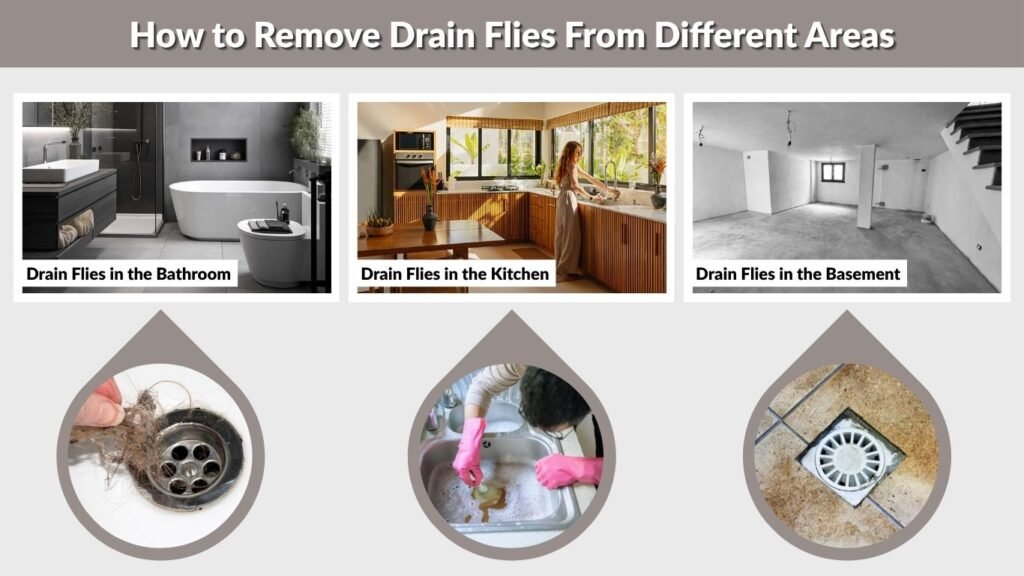
The breeding source may vary depending on where the flies are most noticeable.
Drain Flies in the Bathroom
Inspect the sink drain, overflow hole, shower, bathtub, toilet area, and floor drain. Remove hair and soap residue from shower drains and check whether water remains pooled after bathing.
Examine cracked grout, loose tiles, and damp flooring. Moist organic material beneath a shower floor can support an infestation that ordinary surface cleaning will not reach.
Drain Flies in the Kitchen
Clean the sink drain, garbage disposal, overflow area, and pipes beneath the basin. Remove grease, food residue, and sludge around rubber disposal guards.
Also inspect recycling containers, trash cans, wet mops, refrigerator drip pans, and leaks beneath the dishwasher or sink.
Kitchen insects may sometimes be fruit flies rather than drain flies. Fruit flies have smoother, more compact bodies and are usually associated with fermenting produce, spills, or food waste.
Drain Flies in the Basement
Basements frequently contain floor drains, sump pits, utility sinks, sewage ejector systems, and condensation lines. These areas may remain wet for long periods.
Clean rarely used drains, check for sewage odors, and inspect walls or flooring for hidden moisture. A dry plumbing trap may also allow flies and sewer odors to enter from the drain system.
Drain Flies Near the Toilet
Flies around a toilet may originate from a nearby floor drain rather than the toilet bowl.
Inspect the base of the toilet for moisture, staining, movement, or sewage odor. A damaged wax seal can allow contaminated water and organic matter to accumulate beneath the fixture.
Persistent flies around the toilet base usually require professional plumbing inspection.
Do Home Remedies Kill Drain Flies?
Some home remedies may kill or capture a few adult flies, but they usually do not remove the breeding material.
Baking Soda and Vinegar
Baking soda and vinegar may loosen light residue and create bubbling action inside the drain. However, they are not dependable substitutes for physically scrubbing away thick biofilm.
They may be used as a supporting cleaning method after visible debris has been removed.
Apple Cider Vinegar Traps
Vinegar traps are more effective against fruit flies than drain flies. Drain flies may occasionally enter them, but the trap will not affect eggs and larvae inside plumbing.
Bleach
Bleach may kill organisms that it directly contacts, but it often flows through the center of a pipe without removing the organic film attached to its walls.
Bleach alone therefore rarely solves an established drain fly infestation.
Never mix bleach with vinegar, ammonia, acidic products, or commercial drain cleaners. Dangerous gases and chemical reactions can occur.
Insect Spray
Flying-insect spray may kill visible adults, but it does not eliminate the breeding source. Do not spray pesticides into a drain unless the label specifically permits that use.
How Long Does It Take to Eliminate Drain Flies?
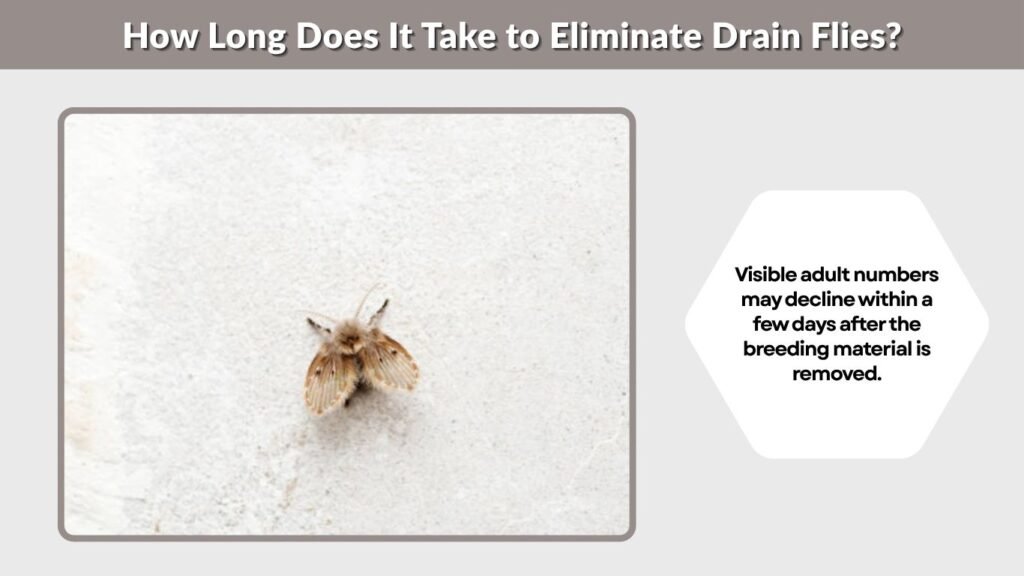
Visible adult numbers may decline within a few days after the breeding material is removed. However, larvae and pupae already developing in untreated areas may continue producing adults temporarily.
Continue cleaning and monitoring for approximately one to two weeks. If new flies keep appearing, another breeding location is probably present.
Check every drain and moisture source instead of repeatedly treating only one sink.
How to Get Rid of Drain Flies Permanently
Permanent control depends on keeping drains clean and correcting moisture problems.
Clean sink stoppers, shower grates, and garbage disposals regularly. Remove trapped hair before thick buildup develops. Flush rarely used drains periodically and keep plumbing traps filled with water.
Repair leaking faucets, toilet seals, pipes, and appliance connections. Improve ventilation in bathrooms and laundry rooms, and avoid leaving wet mops or standing water indoors.
Drain flies cannot continue reproducing when their damp organic breeding material has been removed.
When Should You Call a Plumber or Pest Professional?
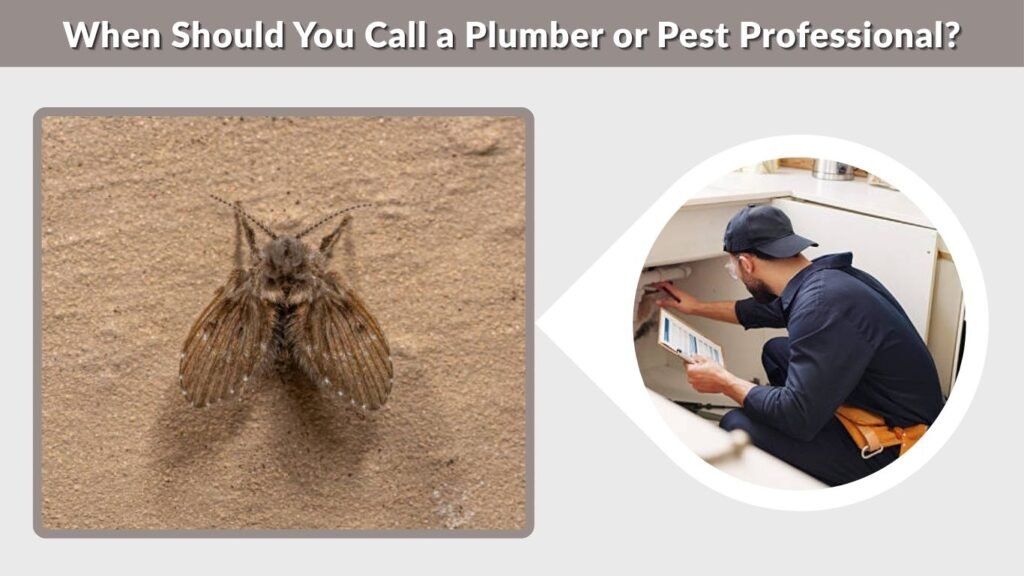
Professional assistance may be needed when:
- Flies continue after thorough drain cleaning
- Sewage odors are present
- Several drains back up simultaneously
- Flies emerge from walls or flooring
- The toilet base remains damp
- A pipe may be cracked or leaking
- Drain flies appear in large numbers throughout the house
- You cannot locate the breeding source
A plumber can inspect concealed pipes, toilet seals, sewer lines, and drainage systems. A pest professional can help identify the insect and locate less obvious breeding areas.
FAQs
What kills drain flies instantly?
Vacuuming, swatting, or an appropriately labeled indoor flying-insect spray can kill adult drain flies immediately. However, these methods do not kill the larvae inside drains. Scrubbing away organic buildup is necessary to stop new adults from emerging.
Why do drain flies keep coming back?
They return when eggs, larvae, or organic film remain inside a drain or another damp location. A second untreated breeding source, such as a floor drain, overflow channel, leaking pipe, or wet appliance pan, may also be responsible.
Can drain flies come from clean drains?
Yes. A drain may look clean at the opening while slime remains deeper inside the pipe, trap, overflow passage, or garbage disposal. Hidden leaks and damaged sewage lines can also support drain flies.
Are drain flies dangerous?
Drain flies do not normally bite or sting. They are mainly nuisance pests, but a large infestation may indicate unsanitary buildup, sewage contamination, or a persistent moisture problem that should be corrected.
Can drain flies infest the entire house?
Adult flies can spread into several rooms, especially when multiple breeding locations exist. However, they usually remain close to damp organic material. Inspect all drains, plumbing fixtures, appliance pans, and hidden moisture sources when they appear throughout the house.