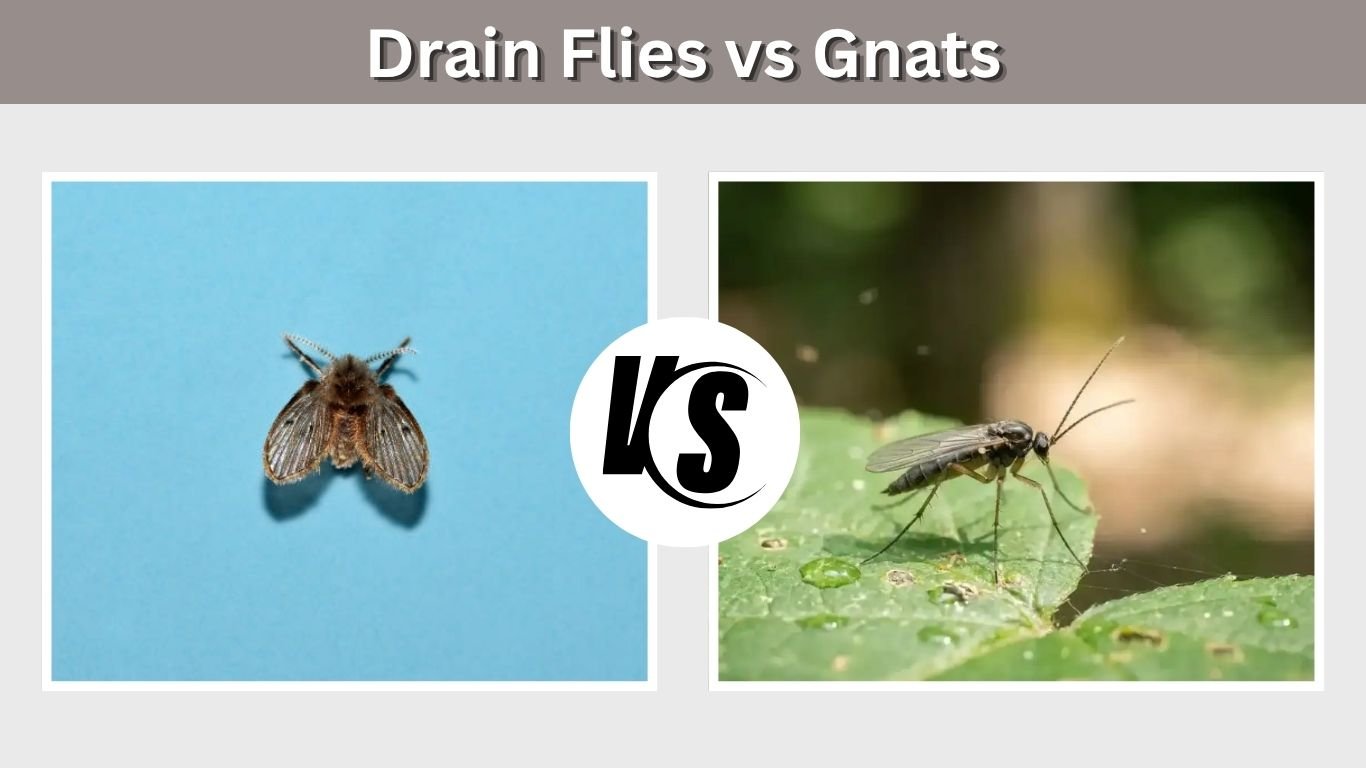
Drain flies and gnats are tiny flying insects commonly noticed around sinks, bathrooms, kitchens, houseplants, and damp indoor spaces. Although they can look similar from a distance, they have different body shapes, breeding sites, and control methods. Drain flies usually develop in organic buildup inside drains, while the gnats found indoors are often fungus gnats breeding in moist potting soil. Fruit flies may also be confused with both pests. Correct identification is important because cleaning a drain will not eliminate fungus gnats, while drying plant soil will not solve a drain fly infestation.
Drain Flies vs Gnats: Quick Differences
The easiest way to distinguish these insects is to examine their appearance, flight behavior, and the area where they gather. Drain flies look fuzzy and mothlike, whereas fungus gnats resemble delicate miniature mosquitoes.
| Feature | Drain Flies | Fungus Gnats |
| Typical size | About 1.5–5 mm | About 2–4 mm |
| Appearance | Fuzzy, broad wings | Slender body and long legs |
| Common location | Sinks, showers, drains | Houseplants and moist soil |
| Flight | Short, weak, hopping flights | Slow flight around plants |
| Breeding material | Drain slime and organic buildup | Damp potting soil |
| Main food source | Decaying organic matter | Fungi and decaying plant material |
| Bite humans | No | No |
| Main control | Scrub and clean drains | Dry soil and treat plants |
What Are Drain Flies?
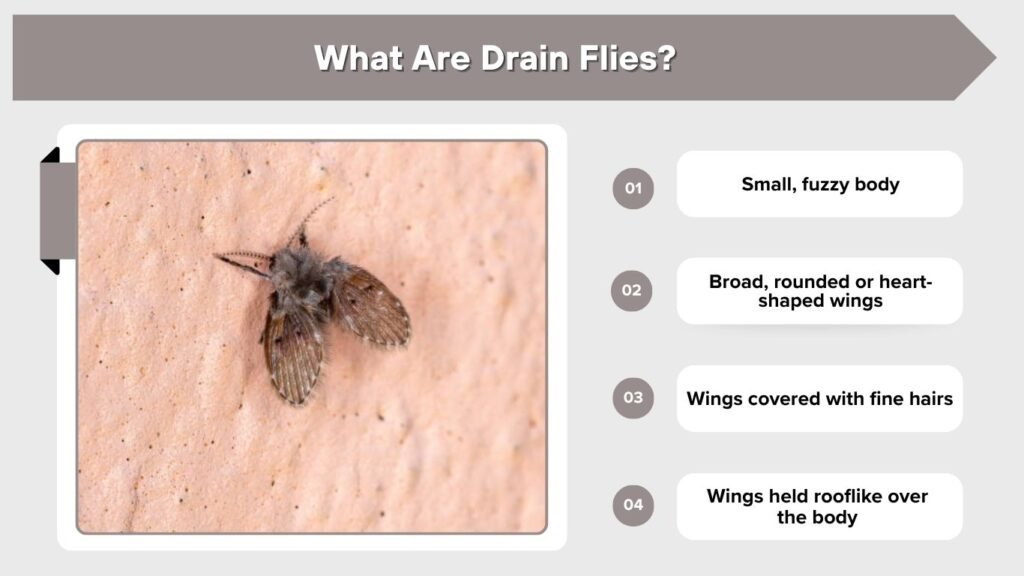
Drain flies are small insects belonging to the moth fly family. They are also called sewer flies, sink flies, filter flies, or moth flies because their hairy bodies and wings resemble those of tiny moths.
Drain Fly Identification
- Small, fuzzy body
- Broad, rounded or heart-shaped wings
- Gray, tan, brown, or nearly black coloring
- Wings covered with fine hairs
- Wings held rooflike over the body
- Short antennae
- Weak, irregular flight
- Often rests on walls beside drains
Unlike many other flies, drain flies do not usually travel far from their breeding source. They may fly a short distance before landing again on a nearby wall, sink, mirror, or cabinet.
Where Drain Flies Come From
Drain flies develop in damp, gelatinous organic material. This buildup may contain bacteria, hair, grease, soap residue, food particles, and other decaying matter.
Common breeding areas include:
- Bathroom sink drains
- Shower and bathtub drains
- Kitchen sinks
- Floor drains
- Garbage disposals
- Sewage lines
- Sump pumps
- Condensation pans
- Mop buckets
- Leaking plumbing
Adult drain flies are often most visible during the evening or early morning.
What Are Gnats?
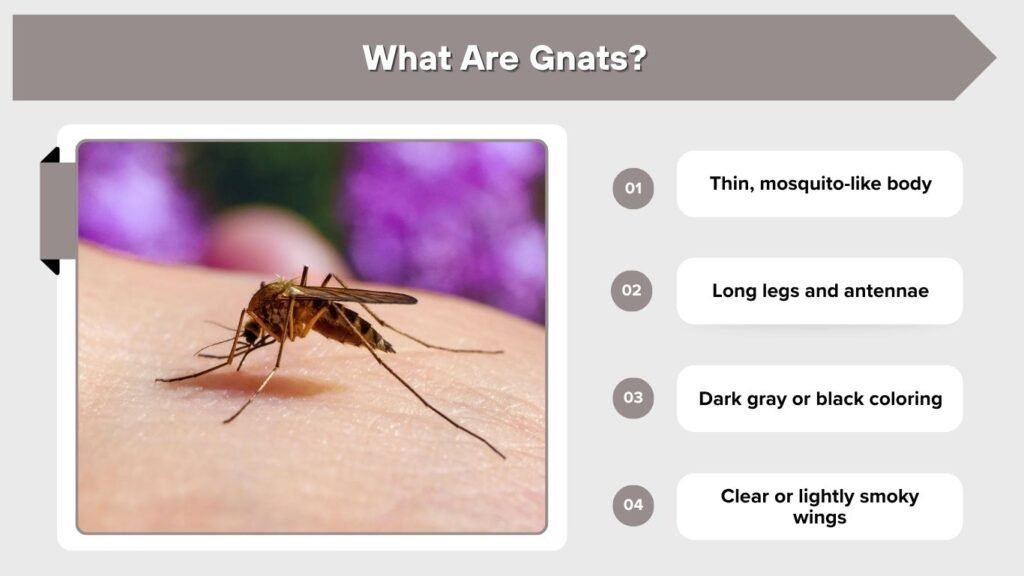
The word “gnat” is a general term for several kinds of tiny flying insects. In homes, people commonly use it to describe fungus gnats, fruit flies, and sometimes drain flies.
When small dark flies gather around houseplants, they are usually fungus gnats. These insects have slender bodies, long legs, and delicate wings.
Fungus Gnat Identification
- Thin, mosquito-like body
- Long legs and antennae
- Dark gray or black coloring
- Clear or lightly smoky wings
- Wings marked with a Y-shaped vein
- Small rounded head
- Slow, weak flight
- Commonly walks across potting soil
Adult fungus gnats frequently fly near plant leaves, windows, lamps, and computer screens. When disturbed, they may run or flutter across the soil surface.
Where Fungus Gnats Come From
Fungus gnats breed in moist organic material, especially damp potting mix. Their larvae live beneath the soil surface, where they feed mainly on fungi, algae, decaying roots, and organic debris.
They are often associated with:
- Overwatered houseplants
- Seed-starting trays
- Greenhouses
- Compost-rich potting soil
- Plant drainage saucers
- Bags of damp potting mix
- Terrariums
- Indoor herb gardens
Repeated watering keeps the upper soil moist and creates ideal conditions for eggs and larvae.
Drain Fly vs Fungus Gnat Identification
Location is useful, but appearance provides a more dependable identification. A drain fly may wander near a plant, and a fungus gnat may fly into a bathroom.
| Identification clue | Drain Fly | Fungus Gnat |
| Overall shape | Broad and mothlike | Thin and mosquito-like |
| Body texture | Noticeably hairy | Mostly smooth |
| Wings | Wide and fuzzy | Narrow and transparent |
| Legs | Shorter and less visible | Long and delicate |
| Resting posture | Wings spread or roof-shaped | Wings folded over body |
| Movement | Short hops and fluttering | Slow hovering and running |
| Most likely source | Drain or plumbing area | Damp plant soil |
Check the Drain
Place a clear cup or a strip of transparent tape loosely over the suspected drain overnight. Do not completely seal the drain. If adult flies appear beneath the cup or become stuck to the tape, the drain may be an active breeding source.
Check Plant Soil
Gently tap the pot or disturb the top layer of soil. Fungus gnats may immediately crawl or fly upward. Yellow sticky cards placed near the plant can also reveal adult activity, although they will not eliminate larvae in the soil.
Drain Flies vs Fungus Gnats in the Bathroom
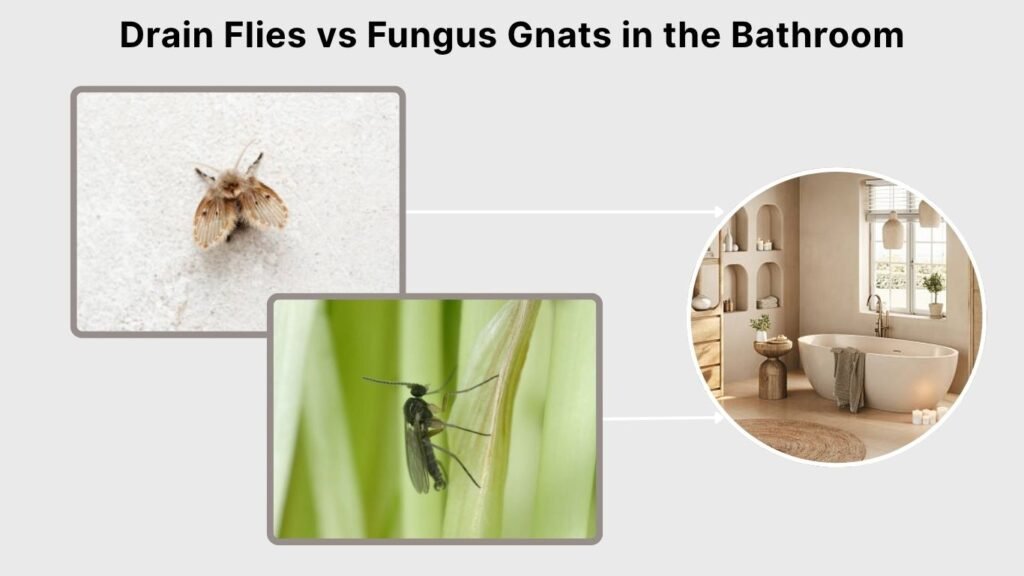
Drain flies are more common in bathrooms because they breed in the organic film inside sinks, showers, tubs, and floor drains. They often rest on walls close to plumbing fixtures.
Fungus gnats can also appear in bathrooms when houseplants are present. Moist soil, high humidity, and limited evaporation can support their development. A fungus gnat infestation is especially likely when most insects gather around a bathroom plant rather than the drain.
Check for plumbing leaks if insects continue appearing after the visible drains have been cleaned. A broken pipe, leaking toilet seal, or hidden wet area may provide another breeding site.
Drain Flies vs Fruit Flies vs Gnats
Fruit flies are another common source of confusion. They usually gather around fermenting fruits, vegetables, recycling containers, spills, and food waste.
| Feature | Drain Fly | Fungus Gnat | Fruit Fly |
| Body shape | Fuzzy and broad | Thin and long-legged | Rounded and compact |
| Common color | Gray or brown | Dark gray or black | Tan or yellow-brown |
| Eyes | Dark | Dark | Often red |
| Main source | Drain buildup | Moist potting soil | Fermenting food |
| Common room | Bathroom or kitchen | Rooms with plants | Kitchen |
| Flight behavior | Weak, hopping flight | Slow hovering | Faster and more active |
| Best first action | Scrub the drain | Let soil dry | Remove food source |
Fruit flies are usually smoother and more rounded than fungus gnats. Their red eyes may be visible at close range, although some species have darker eyes.
How to Get Rid of Drain Flies
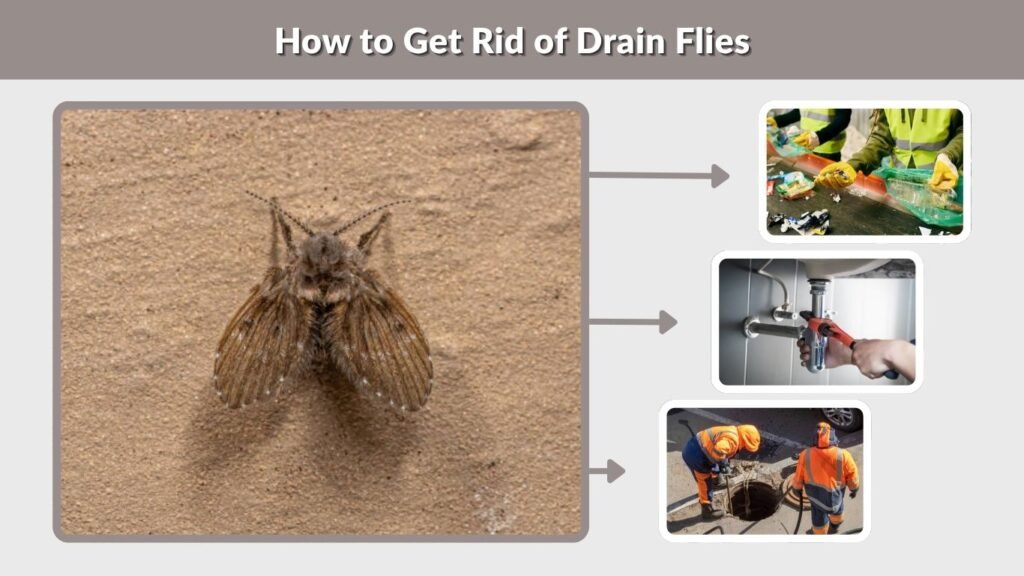
Killing adult drain flies provides only temporary relief. The organic material supporting the eggs and larvae must be removed.
Clean the Breeding Drain
Remove the drain cover and scrub the inside of the drain with a stiff, long-handled brush. Clean the drain walls, trap, overflow opening, garbage disposal, and underside of removable parts.
Flush loosened material with warm water. An enzyme-based drain cleaner may help break down remaining organic buildup when used according to the product directions.
Pouring bleach alone is often ineffective because it may pass through the drain without removing the thick film attached to the pipe walls.
Repair Moisture Problems
Fix leaking faucets, pipes, toilet seals, and condensation problems. Clean rarely used drains and keep floor drains from becoming stagnant. Empty standing water from trays, buckets, and cleaning equipment.
Adult drain flies should gradually disappear after the larvae’s breeding material has been removed.
How to Get Rid of Fungus Gnats
Fungus gnat control requires changes to plant care as well as treatment of the larvae living in the potting soil.
Let the Soil Dry
Allow the top 1–2 inches of potting soil to dry before watering again, when the plant can tolerate it. Fungus gnat eggs and larvae survive best in continuously moist soil.
Watering from the bottom may keep the upper soil drier. Empty excess water from drainage saucers and improve airflow around crowded plants.
Control Adults and Larvae
Place yellow sticky cards near affected plants to capture adults and monitor activity. Sticky cards reduce egg-laying adults but do not reach larvae.
A biological larvicide containing Bacillus thuringiensis israelensis can be applied through irrigation water according to label directions. Beneficial nematodes may also help control larvae in heavily infested plant collections.
Repot plants with fresh, clean potting mix when the existing soil remains waterlogged, smells sour, or drains poorly.
Are Drain Flies or Gnats Dangerous?
Drain flies and fungus gnats do not normally bite or sting people. Most household infestations are primarily a nuisance.
Large drain fly populations may indicate unsanitary organic buildup, sewage leakage, or persistent moisture. Fungus gnat larvae can damage tender roots when their numbers become high, especially in seedlings, cuttings, and young plants.
Neither insect should be ignored when it continues reproducing indoors. The infestation usually points to an underlying moisture or sanitation problem that needs correction.
How to Prevent Them From Returning
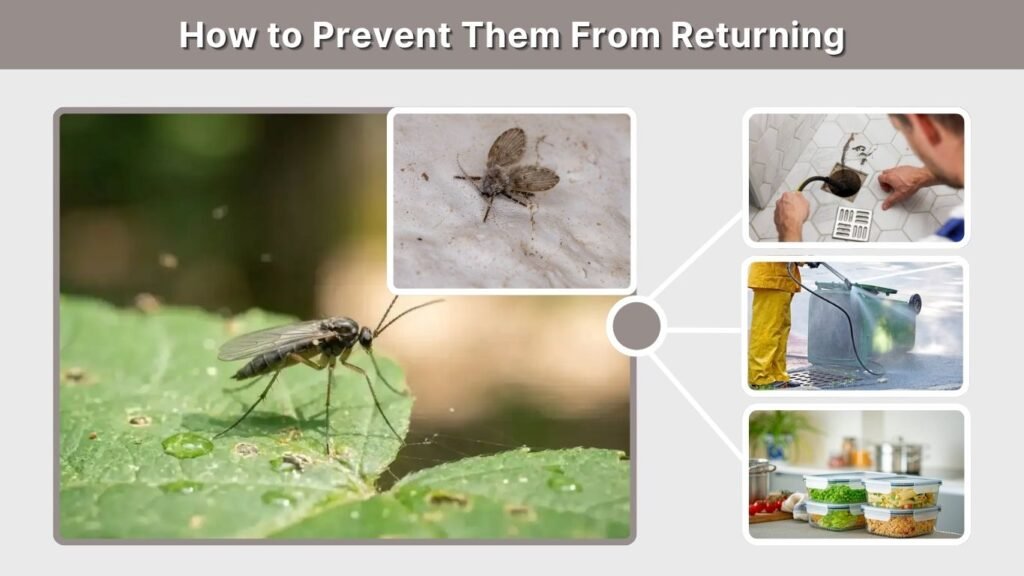
Keep drains clean, repair leaks, and prevent organic debris from accumulating inside sinks and garbage disposals. Flush and inspect rarely used drains regularly.
Avoid overwatering houseplants. Use pots with drainage holes, discard standing water, and store unused potting soil in a dry, sealed container. Remove overripe produce, clean recycling bins, and wipe up sugary or fermented spills to prevent fruit flies from joining the infestation.
FAQs
How can I tell whether I have drain flies or gnats?
Drain flies have fuzzy, broad wings and usually rest near sinks, showers, or floor drains. Fungus gnats have slender bodies and long legs and are commonly found around houseplants. Checking where the insects gather and examining their body shape normally provides the clearest identification.
Can fungus gnats live inside drains?
Fungus gnats generally breed in moist soil, decaying vegetation, or similar organic material rather than household drains. However, they may occasionally develop in heavily decomposed material near plumbing. Fuzzy insects repeatedly emerging from a sink or shower are more likely to be drain flies.
Will vinegar kill drain flies and fungus gnats?
Vinegar traps may capture some adult flies, especially fruit flies, but they rarely eliminate drain flies or fungus gnats completely. Successful control requires removing drain buildup for drain flies and treating moist potting soil for fungus gnats. Traps should be used only as a supporting measure.
Why do tiny flies keep appearing in my bathroom?
The most common causes are organic buildup inside a drain, hidden plumbing leaks, standing water, or an overwatered bathroom plant. Inspect each drain and plant rather than assuming all bathroom flies have the same source. Persistent activity may indicate moisture beneath flooring or behind fixtures.
Which is harder to eliminate, drain flies or fungus gnats?
Both can persist when their breeding sites remain untreated. Drain flies usually disappear after the affected plumbing is thoroughly cleaned. Fungus gnats may take longer because eggs and larvae are spread among multiple plant pots, and watering practices must be adjusted throughout their life cycle.