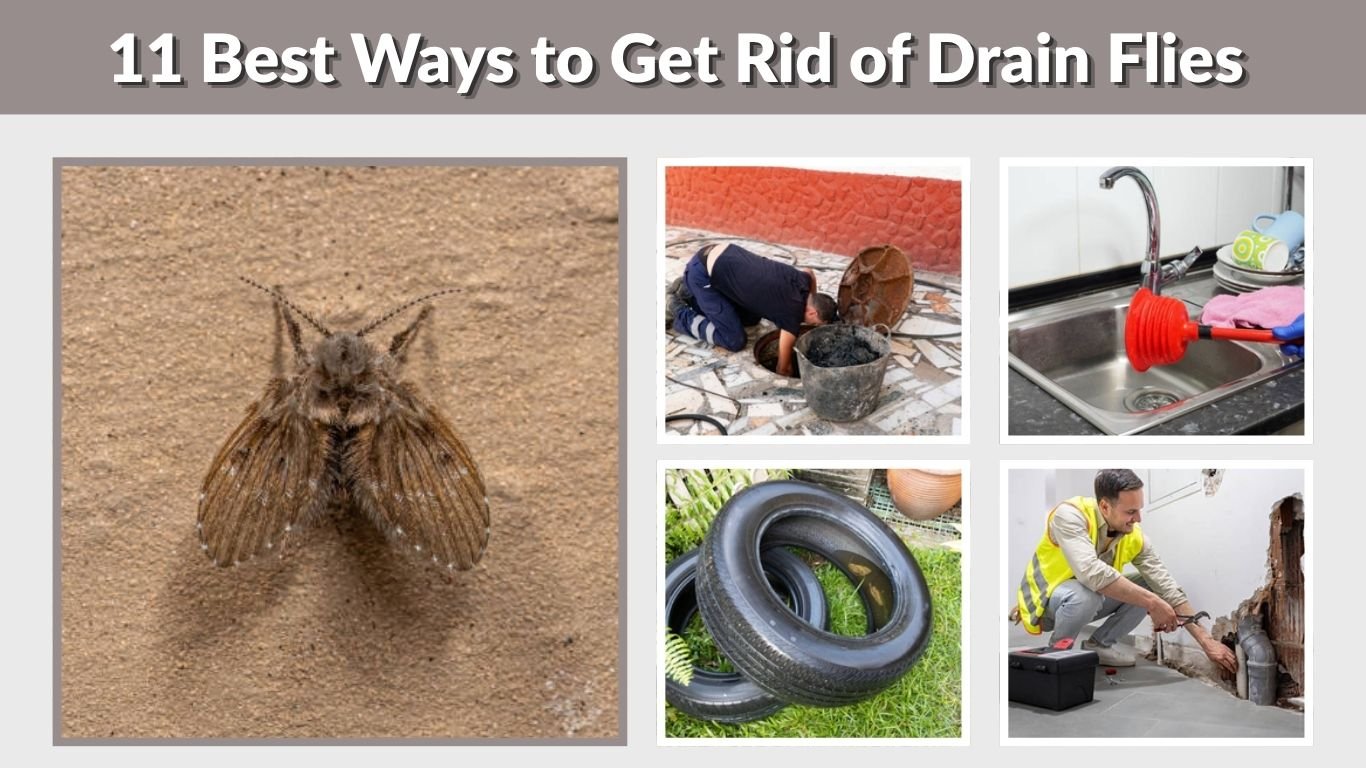
Drain flies reproduce in the moist organic slime that develops inside drains, pipes, and other damp locations. Killing the visible adults provides only temporary relief because eggs and larvae remain hidden in the breeding material. Permanent control requires removing this buildup, treating overlooked drains, eliminating standing water, and repairing plumbing leaks. The following methods will help you locate the source, break the drain fly life cycle, and prevent another infestation.
1. Scrub the Inside of Every Drain
Scrubbing your drains is one of the most effective ways to eliminate drain flies permanently. Their eggs and larvae live inside the sticky organic film coating drainpipes. Removing this film destroys the breeding area and takes away the larvae’s food source.
Why Drain Scrubbing Works
Running water cannot remove the thick layer of grease, hair, soap residue, bacteria, and food particles attached to pipe walls. Drain fly larvae remain protected inside this buildup. A stiff drain brush physically removes the organic film along with hidden eggs and larvae.
Drains You Should Clean
Inspect and clean every possible breeding location, including:
- Bathroom and kitchen sink drains
- Shower and bathtub drains
- Floor drains
- Garbage disposals
- Toilet overflow channels
- Washing-machine standpipes
- Sump and appliance drain lines
How to Scrub a Drain Properly
Remove the drain cover and clear away visible hair, grease, and debris while wearing gloves. Insert a stiff, long-handled drain brush and scrub the sides of the pipe thoroughly. Pay special attention to areas above the normal water line, where organic slime frequently remains untouched.
Clean the underside of the drain cover and accessible overflow openings as well. After brushing, flush away the loosened material with warm water.
How Often to Repeat the Process
Scrub the affected drains daily for several days during an active infestation. After the flies disappear, clean high-use drains every two to four weeks. Regular drain maintenance prevents new organic film from developing and keeps female drain flies from finding a suitable place to lay their eggs.
2. Use an Enzyme-Based Drain Cleaner
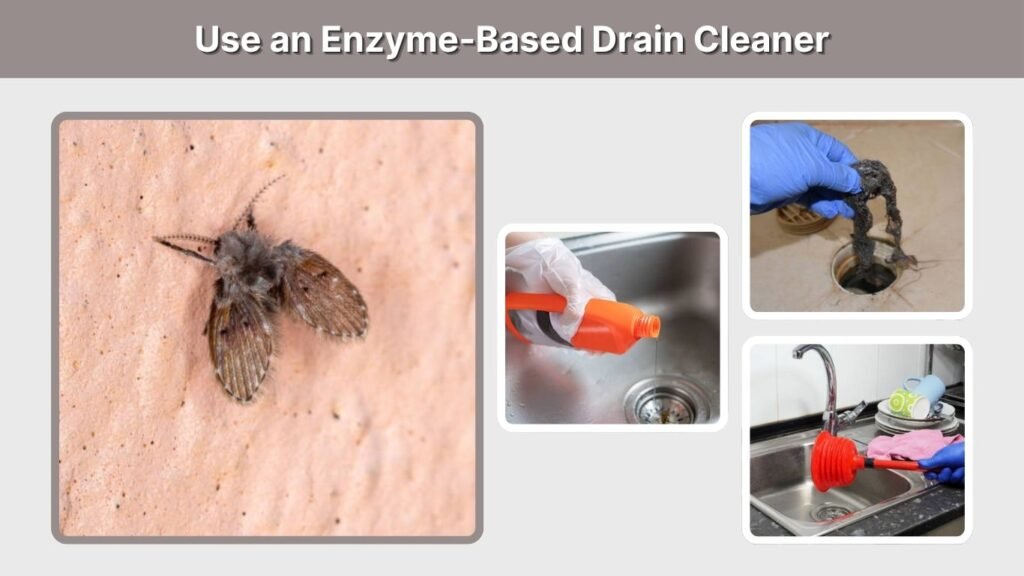
An enzyme-based drain cleaner breaks down the organic slime that drain fly eggs and larvae depend on. It reaches areas that may be difficult to scrub manually and provides better long-term control than bleach, insect spray, or boiling water alone.
How Enzyme Cleaners Work
These cleaners contain enzymes or beneficial bacteria that digest grease, food particles, soap residue, and other organic materials. Removing this buildup eliminates the larvae’s food supply and leaves female drain flies with nowhere suitable to lay eggs.
Choosing the Right Product
Look for the following features when selecting a cleaner:
- Specifically designed for organic drain buildup
- Foaming formula for coating pipe walls
- Safe for your type of plumbing
- Compatible with septic systems when necessary
- Clear application and contact-time instructions
How to Apply It Correctly
Use the cleaner after manually brushing the drain. Apply the recommended amount when the drain will not be used for several hours, such as before bedtime. This allows the formula to remain in contact with the pipe walls and digest the remaining material.
Repeat the treatment according to the product label. Never mix an enzyme cleaner with bleach, ammonia, vinegar, acid, or caustic drain-opening chemicals.
Maintaining Clean Drains
After the infestation disappears, apply the cleaner periodically according to its label. Regular treatment can prevent new film from accumulating, particularly in kitchen sinks, floor drains, garbage disposals, and other locations that frequently receive organic waste.
3. Remove Hair, Grease, and Organic Slime
Hair, grease, soap, and food residue combine to form a moist layer inside drains. This material supports bacteria and fungi that drain fly larvae consume. Removing it is essential because flies can continue reproducing as long as the buildup remains.
Why Organic Material Attracts Drain Flies
Female drain flies look for wet surfaces rich in decaying material. Once eggs are deposited, the newly hatched larvae immediately begin feeding on microorganisms inside the slime. Even a relatively thin layer can support repeated generations.
Materials You Need
Prepare a few basic cleaning items:
- Protective rubber gloves
- Long-handled drain brush
- Plastic drain-cleaning tool
- Rubbish bag
- Disposable cleaning cloth
- Enzyme-based drain cleaner
Removing the Buildup
Take off the drain cover and pull out visible hair and solid debris. Place it directly into a sealed rubbish bag rather than washing it farther into the pipe. Scrub the drain opening, pipe walls, cover, stopper, and accessible overflow channels.
Kitchen drains may contain hardened grease that requires repeated brushing and enzyme treatment. Avoid pushing large clumps deeper into the plumbing, where they could cause a blockage.
Preventing New Accumulation
Use a drain strainer to capture hair and food particles before they enter the pipe. Never pour cooking fat or oil into a sink. Remove captured material frequently and clean drain covers before residue becomes thick enough to support another infestation.
4. Clean Sink and Bathtub Overflow Channels
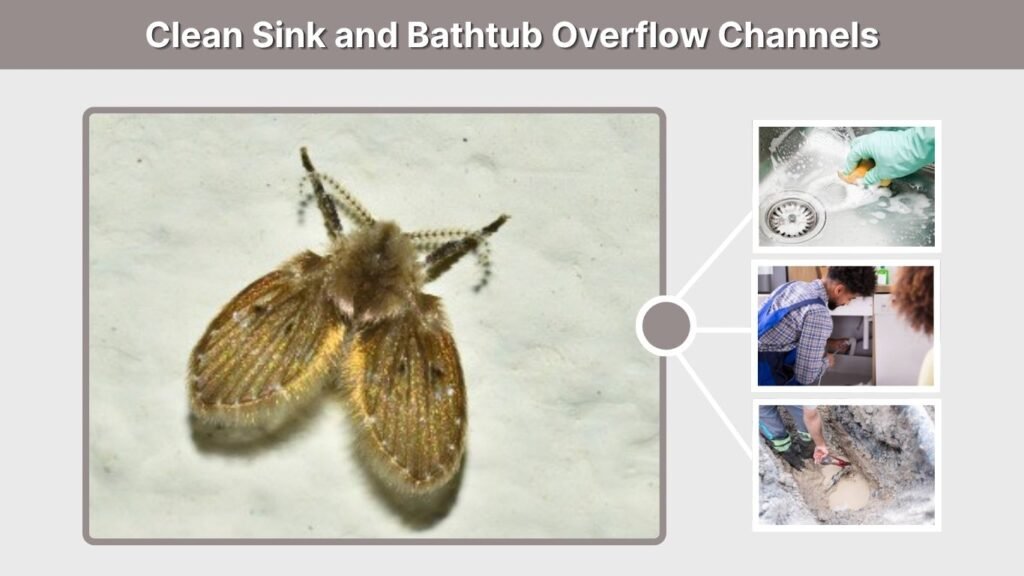
Overflow channels are commonly overlooked breeding sites. These hidden passages remain damp and can collect soap, toothpaste, skin cells, and bacteria. Cleaning the main drain without treating the overflow may allow drain flies to survive and return.
Why Overflow Channels Become Infested
Water occasionally enters an overflow opening but may not flush the channel thoroughly. Moisture and organic residue remain on its inner surfaces, creating a protected location for drain fly eggs and larvae.
Signs of Overflow Activity
Possible warning signs include:
- Drain flies resting near the overflow opening
- Adults returning after the main drain is cleaned
- Dark slime around the overflow cover
- Musty or unpleasant odours
- Larvae visible near the opening
How to Clean the Channel
Remove the overflow cover only when it can be done safely without damaging the fixture. Use a narrow flexible brush to loosen residue inside the channel. Clean the cover and surrounding surface before replacing it.
Apply a suitable enzyme cleaner according to its label if the product permits treatment of overflow passages. Avoid forcing tools too deeply or using objects that could become trapped inside the plumbing.
Continuing Overflow Maintenance
Include overflow openings whenever sinks and bathtubs receive routine cleaning. Periodic brushing prevents organic film from becoming established. If flies continue emerging despite cleaning, a plumber may need to inspect an inaccessible or damaged overflow connection.
5. Repair Leaking or Damaged Drainpipes
A leaking drainpipe can create a concealed breeding site beneath floors, behind walls, or inside cabinets. Cleaning visible drains will not stop the infestation if wastewater continues feeding larvae in an inaccessible area.
How Leaks Support Drain Flies
Wastewater contains soap, food particles, grease, and other organic materials. When it escapes from a pipe, it keeps nearby surfaces continuously damp. Drain flies can then reproduce inside wall cavities, crawl spaces, or gaps beneath flooring.
Warning Signs of a Hidden Leak
Look for the following signs:
- Persistent sewage or musty odour
- Water stains beneath sinks
- Damp cabinets or walls
- Loose tiles or damaged flooring
- Flies emerging from cracks
- Repeated infestations after drain cleaning
- Unexplained moisture in a basement or crawl space
Finding and Repairing the Problem
Inspect exposed pipe connections for moisture, corrosion, cracks, or loose fittings. Minor accessible issues may involve a worn seal, but damaged wastewater lines require professional assessment.
A licensed plumber can use cameras, pressure testing, or other diagnostic equipment to inspect hidden sections. The pipe must be repaired before the contaminated area is cleaned and dried.
Why Repair Provides Permanent Control
Surface sprays cannot reach larvae living beneath concrete or inside a wall. Once the wastewater source is stopped, the affected material can be removed or sanitised and allowed to dry. This eliminates the moisture and food required for continued reproduction.
6. Eliminate Standing Water and Excess Moisture
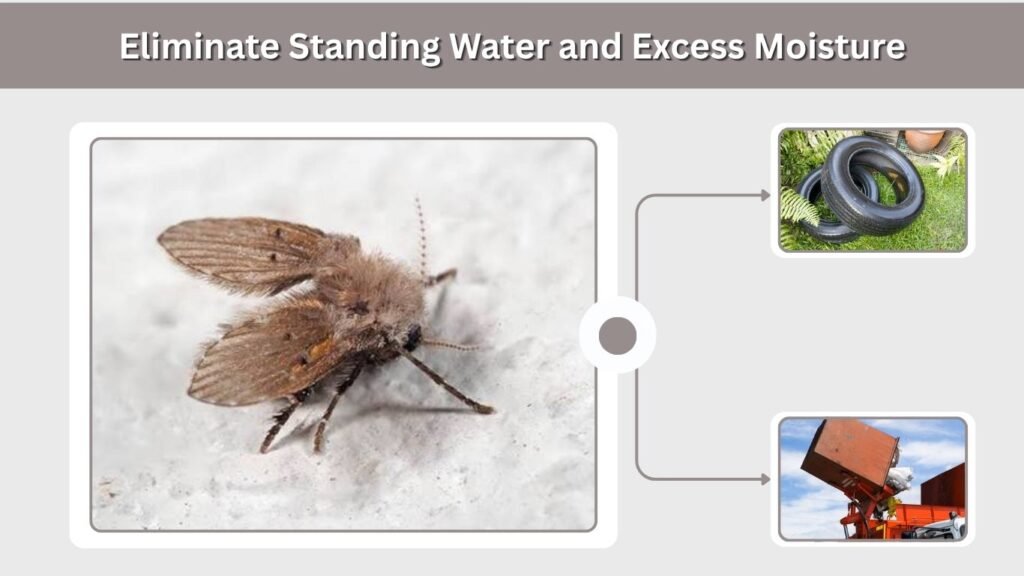
Drain flies need continuous moisture to complete their development. Standing water around appliances, plumbing fixtures, and storage areas can support larvae even when the household drains are clean.
Common Moisture Sources
Frequently overlooked sources include:
- Refrigerator drain pans
- Air-conditioner condensate lines
- Wet mop buckets
- Leaking taps
- Sump pits
- Washing-machine pans
- Water beneath loose tiles
- Continuously damp rubbish containers
Removing Standing Water
Empty containers and clean away any slime or decaying material. Dry the surrounding surfaces thoroughly and improve ventilation when possible. Repair dripping fixtures and ensure that appliance drainage systems work correctly.
A dehumidifier may help control general basement or crawl-space moisture, but it cannot solve a leaking pipe or sewage problem.
Managing Rarely Used Drains
A rarely used drain should contain enough water in its trap to block sewer gases and insects. However, the drain opening and pipe must remain free from organic buildup. Flush it periodically and clean it before slime has time to develop.
Maintaining a Dry Environment
Inspect moisture-prone areas weekly during treatment. Keep mops, cloths, and cleaning equipment dry between uses. Correcting excess moisture prevents drain flies from moving to another breeding site after their original drain has been cleaned.
7. Clean Garbage Disposals Thoroughly
Garbage disposals can collect grease, food particles, and bacterial slime beneath the rubber splash guard and around the grinding chamber. This moist organic buildup provides an excellent breeding location for drain fly eggs and larvae.
Disconnect the Power First
Turn off the disposal and disconnect its power before cleaning any accessible part. Do not rely only on the wall switch. Never place your hand or a cleaning tool near the grinding components while the unit is connected to electricity.
Areas That Need Cleaning
Pay attention to these commonly overlooked areas:
- Underside of the rubber splash guard
- Drain opening
- Removable disposal cover
- Accessible chamber walls
- Pipe connecting the disposal to the drain
- Nearby dishwasher drain connection
How to Clean the Disposal
Lift each section of the splash guard and scrub its underside with a small stiff brush and suitable cleaner. Remove visible food residue with a disposable cloth or tool. Use a long-handled brush for accessible parts of the drain opening.
After cleaning, apply an enzyme-based drain treatment if its label permits use in garbage disposals. Follow the disposal manufacturer’s cleaning instructions to avoid damaging its internal parts.
Preventing Another Infestation
Run sufficient water while using the disposal and continue briefly afterward to move food waste through the system. Avoid pouring grease, fat, oil, or fibrous food into the unit. Clean the splash guard regularly before thick residue develops.
8. Sanitize Floor Drains and Drain Traps
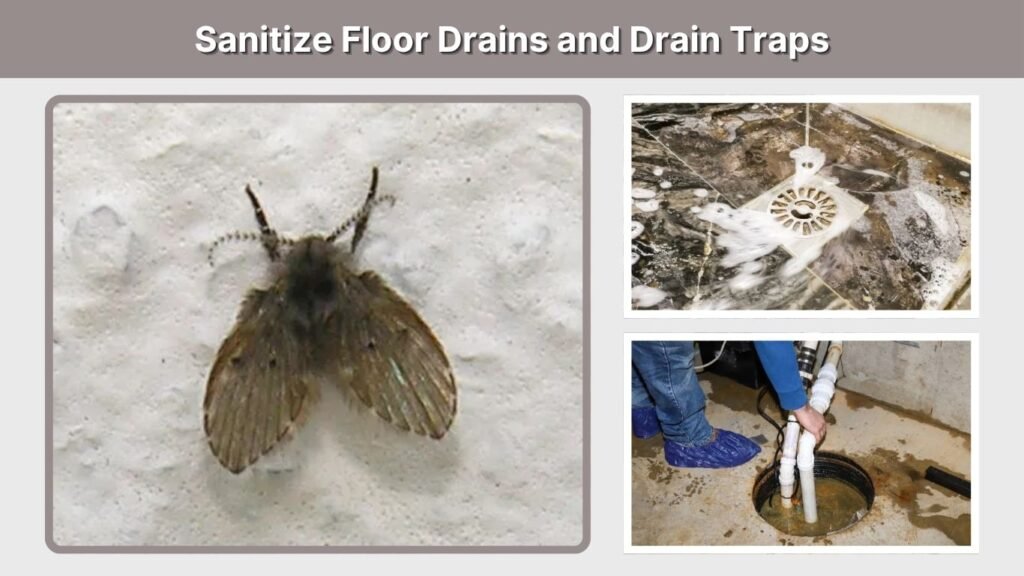
Floor drains in basements, laundry rooms, garages, and commercial buildings are frequent drain fly breeding sites. Because they are often ignored during routine cleaning, organic slime can remain inside them for long periods.
Why Floor Drains Become Infested
Floor drains collect dirty water, dust, hair, soap residue, and other debris. Infrequent water flow allows this material to remain inside the drain and support bacteria, fungi, eggs, and larvae.
What to Inspect
Examine the following areas carefully:
- Drain cover and underside
- Inner pipe walls
- Water inside the trap
- Nearby floor cracks
- Grout surrounding the drain
- Sediment collected below the opening
Cleaning the Floor Drain
Wear gloves and remove the drain cover. Clear away solid debris before scrubbing the cover and accessible pipe walls with a stiff drain brush. Apply an appropriate enzyme cleaner according to its instructions and allow the required contact time.
If the trap is dry, restore its water barrier after cleaning. A functioning water seal prevents adult flies and sewer gases from travelling through the plumbing.
Keeping the Trap Functional
Check rarely used floor drains regularly. Refill evaporated trap water and address any cracks or damaged plumbing connections. If the trap repeatedly dries out or releases a sewage odour, ask a plumber to inspect the drainage system.
9. Clean Sump Pits and Condensate Lines
Sump pits and appliance condensate lines can remain wet throughout the year. When algae, dirt, and organic debris accumulate, drain flies may use these overlooked areas instead of ordinary household drains.
How These Areas Support Larvae
A sump pit may contain stagnant water, sediment, insects, and plant material. Air-conditioner condensate lines and drain pans can develop bacterial or fungal slime when they remain wet or become partially blocked.
Areas to Check
Inspect these possible breeding locations:
- Sump-pump pit
- Sump discharge line
- Air-conditioner drain pan
- Condensate tubing
- Dehumidifier reservoir
- Refrigerator drain pan
- Furnace condensate system
Cleaning Safely
Disconnect electrical equipment according to its manufacturer’s instructions before cleaning. Remove accessible debris and clean approved surfaces without damaging pumps, sensors, tubing, or electrical parts.
Only use cleaners permitted by the equipment manufacturer. Never add bleach, pesticide, or drain-opening chemicals to a sump or condensate system without confirming that the product and application are safe.
Correcting Drainage Problems
Ensure that pumps operate correctly and condensate lines discharge freely. Repair blocked tubing, standing-water problems, and leaks. If sewage has entered a sump pit or crawl space, arrange professional cleaning and plumbing repairs.
10. Seal Cracks Around Pipes and Drains
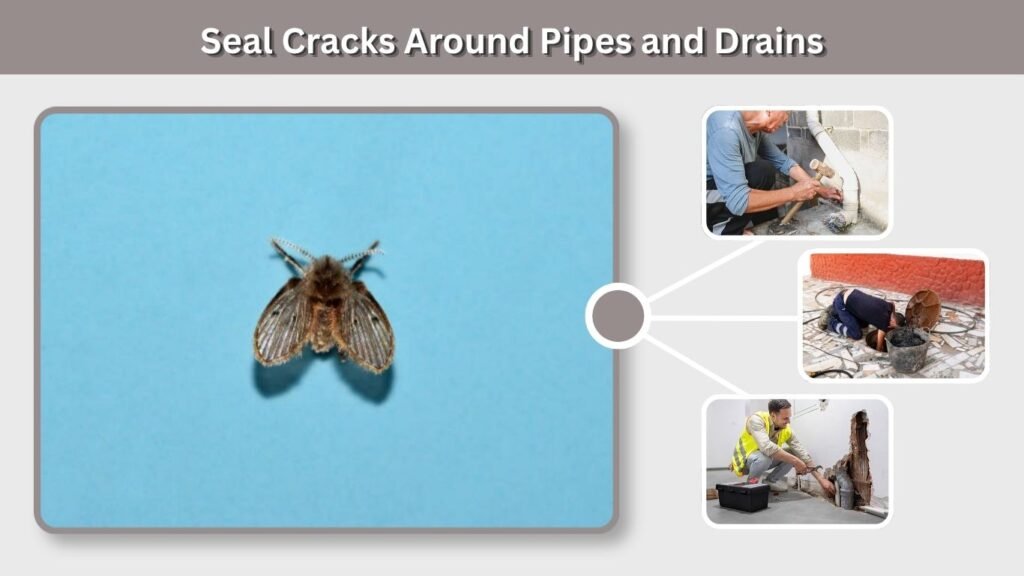
Drain flies sometimes emerge through gaps around plumbing, damaged grout, wall openings, and cracks in concrete. Sealing these entry points can prevent adult flies from entering living areas after the hidden moisture source has been corrected.
Why Flies Appear Through Cracks
A leaking wastewater pipe can allow organic material to collect beneath flooring or inside a wall. Adult flies developing there may follow small openings into bathrooms, kitchens, basements, and other rooms.
Places to Inspect
Check for openings around:
- Pipes entering walls or cabinets
- Floor-drain edges
- Bathtub and shower bases
- Loose floor tiles
- Cracked grout
- Concrete floor joints
- Toilet plumbing connections
- Utility openings in basements
How to Seal the Openings
Clean and dry the surrounding surface before applying a sealant suitable for the material and location. Use appropriate caulk around ordinary gaps and arrange professional repair for damaged concrete, grout, flooring, or plumbing penetrations.
Do not seal an opening while wastewater remains underneath. Trapping moisture inside a structure can worsen mould, odour, and building damage.
Sealing as Part of Permanent Control
Sealing alone does not kill eggs or larvae. It becomes effective only after the leak is repaired and contaminated material is removed. Combined with moisture control, proper sealing blocks access and reduces opportunities for another infestation.
11. Hire a Plumber for Hidden Sewer Leaks
Professional plumbing inspection is the best permanent solution when drain flies continue returning despite thorough cleaning. Persistent activity may indicate a broken drainpipe, failed seal, or sewage buildup in an inaccessible space.
When Professional Help Is Necessary
Contact a plumber if you notice:
- Flies emerging from floors or walls
- Persistent sewage odours
- Water beneath tiles or flooring
- Several affected rooms
- Repeated infestations after treatment
- Dampness in a crawl space
- Slow or frequently blocked drains
- Activity in multiple apartments
How a Plumber Finds the Source
A plumber may inspect the drainage system with a pipe camera, pressure test, smoke test, or other diagnostic equipment. These methods can locate cracks, failed joints, blockages, and leaks beneath concrete or behind finished walls.
Finding the exact source prevents unnecessary demolition and repeated unsuccessful pest treatments.
Repairing and Cleaning the Area
The damaged pipe or connection must be repaired before pest control can succeed. Sewage-contaminated materials may also need to be removed, sanitised, and dried. Depending on the location, restoration may involve flooring, drywall, insulation, or cabinet repairs.
Why Pest Spray Is Not Enough
Pesticide may kill exposed adult flies, but it cannot repair plumbing or remove wastewater beneath a structure. Once the leak and contaminated breeding material are eliminated, the larvae lose their food and moisture, allowing the infestation to end permanently.
FAQs
What is the fastest way to get rid of drain flies?
The fastest method is to scrub the inside of every affected drain and apply an enzyme-based drain cleaner. This removes the organic slime containing eggs and larvae. Vacuuming visible adults can provide temporary relief while the source treatment breaks their life cycle.
Why do drain flies keep coming back?
Drain flies return when organic buildup, standing water, or a hidden plumbing leak remains untreated. Overflow channels, garbage disposals, floor drains, sump pits, and condensate lines are commonly overlooked. Persistent activity may indicate an inaccessible sewage leak requiring professional plumbing inspection.
Does bleach permanently eliminate drain flies?
Bleach may kill some exposed eggs or larvae, but it usually flows through the pipe without removing the organic slime attached to its walls. Physical scrubbing and enzyme treatment provide better control. Never mix bleach with vinegar, ammonia, acid, or other drain cleaners.
How long does it take to eliminate drain flies?
A minor infestation may decline within several days, but complete control can take one to three weeks. Existing larvae and pupae may continue producing adults after cleaning begins. Continue treating and monitoring drains until no new flies appear for at least one week.
When should I call a professional for drain flies?
Call a plumber or pest-management professional when flies remain after two weeks of thorough treatment, emerge from walls or floors, affect multiple rooms, or accompany sewage odours and water damage. These signs may indicate broken plumbing or a concealed breeding source.