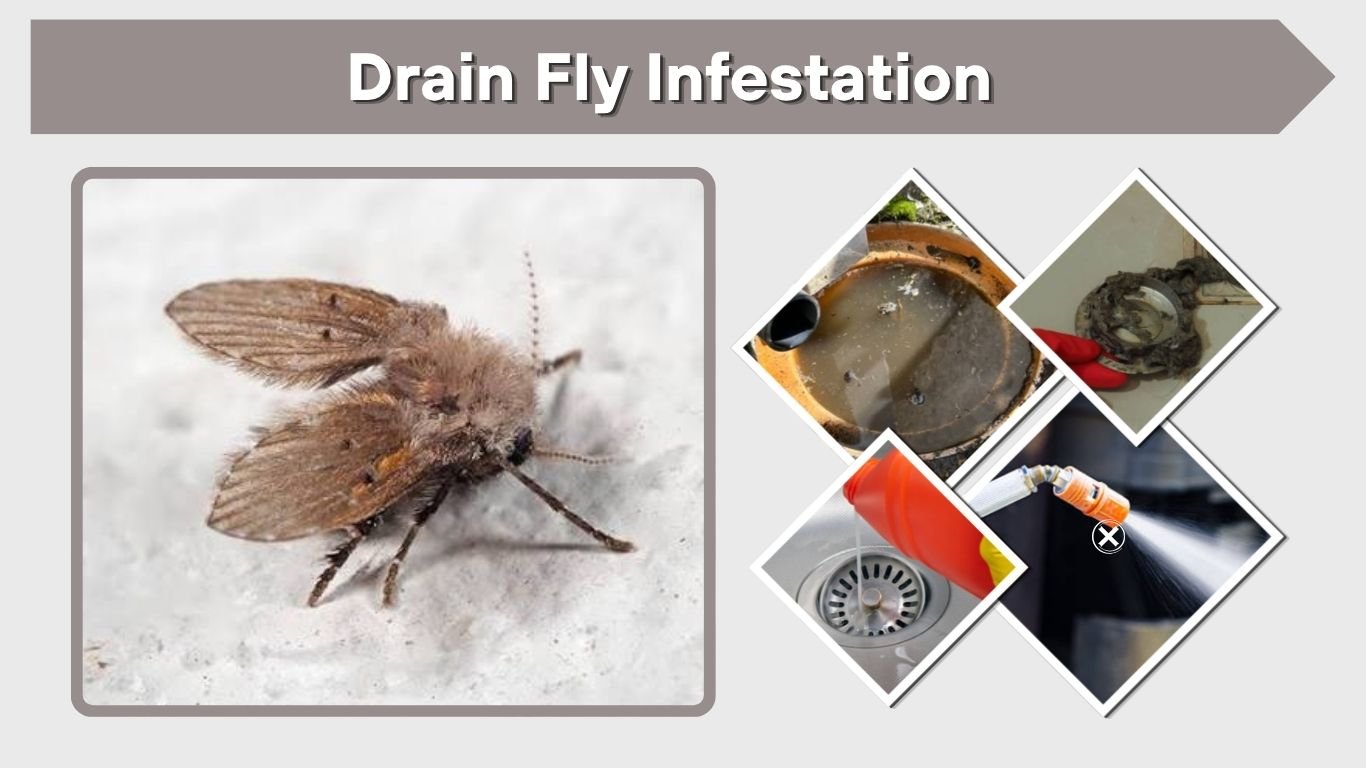
A drain fly infestation develops when moisture and decaying organic material remain available long enough for flies to reproduce. The visible adults are only part of the problem; eggs, larvae and pupae usually remain hidden inside drain slime, sewage residue or another continuously wet location. Sprays and homemade traps may reduce adult numbers temporarily, but lasting control requires locating and cleaning every breeding source. Severe or recurring infestations can indicate leaking plumbing, damaged sewer lines or contaminated spaces beneath floors.
What Is a Drain Fly Infestation?
Drain flies are tiny, fuzzy insects with broad, hairy wings. They are also called moth flies, sewer flies or filter flies. Adults are weak fliers and usually remain close to the wet material where they developed.
There is no official number that defines an infestation. Seeing one drain fly may mean that an adult entered from outside or emerged from a nearby pipe. Repeatedly finding several flies every day, particularly around the same drain, suggests active breeding.
| Level of activity | Possible meaning |
| One isolated fly | Accidental visitor or early activity |
| Several flies near one drain | Likely local breeding source |
| Flies appearing daily | Established egg and larval population |
| Flies in multiple rooms | Multiple sources or shared plumbing |
| Heavy activity from cracks | Possible hidden leak or broken pipe |
Signs of a Drain Fly Infestation
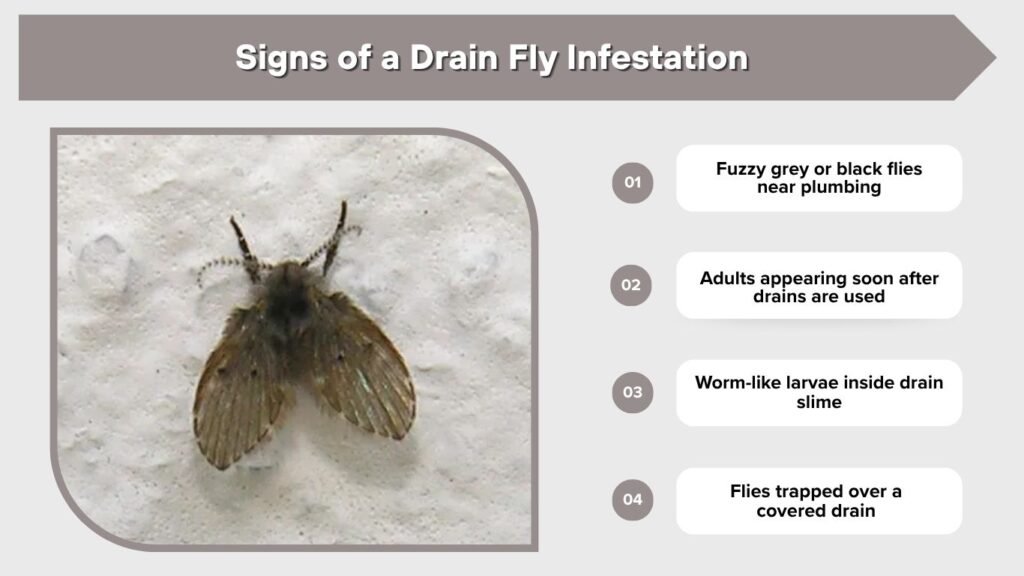
Adult drain flies normally rest on walls near sinks, showers and floor drains. They may also gather around windows and lights after moving away from their breeding location.
Other signs include:
- Fuzzy grey or black flies near plumbing
- Adults appearing soon after drains are used
- Worm-like larvae inside drain slime
- Flies trapped over a covered drain
- Persistent activity after surface cleaning
- Sewage or musty odours
- Slow drainage
- Water stains beneath sinks or around floors
- Flies emerging from wall or floor cracks
Large numbers do not always come from the nearest visible drain. The source may be a concealed plumbing leak, sump pit, toilet overflow channel or wastewater trapped under flooring.
What Causes Drain Fly Infestations?
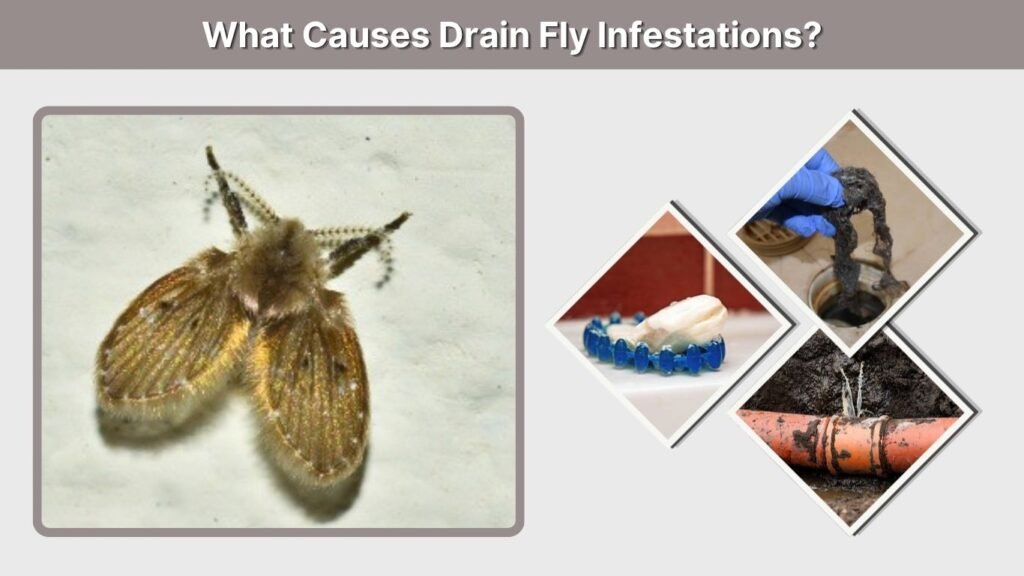
Drain fly larvae feed on bacteria, fungi, algae and organic particles. These microorganisms grow inside the slimy film coating wet drains and pipes.
Common materials supporting larvae include soap residue, hair, grease, food particles, skin cells and sewage waste. The flies do not eat the pipe itself and generally cause no structural damage.
Common Breeding Locations
Drain flies may reproduce in:
- Bathroom and kitchen sink drains
- Shower and bathtub drains
- Floor drains
- Garbage disposals
- Toilet overflow channels
- Sump pumps and sump pits
- Septic lines
- Washing-machine standpipes
- Refrigerator drain pans
- Air-conditioner condensate lines
- Aquarium filters
- Wet rubbish containers
- Mop buckets
- Leaking sewage pipes
- Spaces beneath loose tiles
- Moist crawl spaces
Penn State Extension recommends removing the organic material in sinks, drainpipes and traps because this material supports the immature stages.
Drain Fly Larvae Infestation
Females deposit masses of eggs in wet organic film. The eggs may hatch within approximately 48 hours, producing pale, legless larvae with darker ends.
Larvae generally feed for 8–24 days before becoming pupae. The pupal stage may last only one or two days. This rapid development allows populations to increase when a drain remains continuously wet and dirty.
Larvae do not bite, sting or infest humans. They remain in their wet breeding material. Adults are also non-biting nuisance pests.
How to Find the Breeding Source
Correctly locating the source is the most important part of treatment. Cleaning the wrong drain allows development to continue elsewhere.
Perform the Tape Test
Place a strip of clear tape across part of a suspected drain with the sticky side facing downward. Do not seal the entire opening because some airflow must remain.
Leave the tape overnight and inspect it the next morning. Adult drain flies attached to the tape indicate activity inside that drain. Repeat the test for several nights and test all nearby drains separately.
Inspect Hidden Locations
If drain tests produce no adults, examine less obvious sources. Look beneath sinks for leaks, inspect appliance drain pans and check floor drains, toilet overflows, sump pits and condensate lines.
Flies emerging from gaps between tiles, concrete cracks or baseboards may indicate moisture beneath the surface. Sewage odours provide another warning that a concealed pipe could be damaged.
How to Get Rid of a Drain Fly Infestation
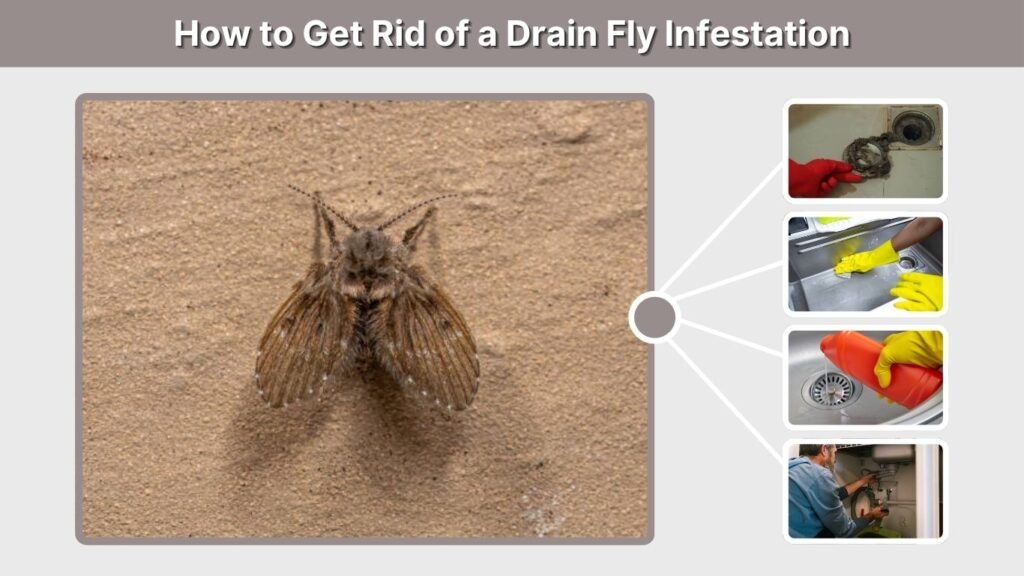
Successful treatment must remove the eggs and larvae along with the organic material they consume. Killing adults without cleaning the source will not end the infestation.
1. Remove Visible Debris
Take off the drain cover when possible. Wear gloves and remove hair, grease, food and other material from the opening. Place the waste in a sealed rubbish bag.
For garbage disposals, disconnect power before performing any accessible cleaning. Never place a hand inside the unit.
2. Scrub the Drain
Use a stiff, long-handled drain brush to scrub the pipe’s inner walls. Clean the underside of the drain cover and accessible overflow passages.
Focus on areas above the normal water line because slime can remain where ordinary flushing does not reach. Mechanical cleaning removes eggs, larvae and their food simultaneously.
3. Apply an Enzyme Drain Cleaner
Use an enzyme-based or bacterial cleaner designed to digest organic drain buildup. Foaming formulas may contact more of the pipe wall than a thin liquid.
Follow all label instructions, including the required amount, contact time and treatment frequency. Choose a septic-safe formula when necessary. The EPA recommends cleaning drains and using enzyme cleaners rather than relying primarily on pesticides.
4. Repeat the Treatment
One application may not remove a thick or extensive film. Repeat brushing and enzyme treatment according to the product directions. Continue until no adult flies appear on monitoring tape.
Existing pupae may still produce adults for several days after cleaning. A few remaining flies do not automatically mean that treatment failed.
5. Eliminate Moisture
Repair leaking pipes, dripping taps and loose drain connections. Empty and clean appliance pans, mop buckets and other wet containers.
Rarely used drains need water in their traps to block insects and sewer gases. However, the drain and trap should also be cleaned so that standing water does not contact decaying material.
Treating a Severe Infestation
A severe infestation involving several rooms often requires more than ordinary sink cleaning. Multiple drains may be breeding sites, or flies may be moving through shared sewer lines.
Inspect and treat every drain rather than focusing only on the room with the most adults. Vacuum visible adults to reduce numbers while the source treatment takes effect.
Professional help is appropriate when:
- Hundreds of flies appear
- Activity continues beyond two weeks
- Flies emerge from walls or floors
- A sewage odour is present
- Water appears beneath flooring
- Several apartments are affected
- The infestation returns repeatedly
- A pipe beneath concrete may be broken
A plumber can inspect inaccessible pipes using cameras, pressure tests or other diagnostic methods. Pest-management professionals can identify the fly and locate breeding material, but structural leaks must still be repaired.
Drain Fly Infestation in an Apartment
Apartment infestations may originate from a private drain, a neighbouring unit or shared plumbing. Clean and test all drains within the apartment, then document continuing activity with photographs and dates.
Notify the property manager when multiple rooms are affected or treatment does not work. Shared drain stacks, basement floor drains and utility areas may require building-wide inspection. Treating one apartment cannot eliminate larvae developing elsewhere in the plumbing system.
Drain Flies in Basements and Crawl Spaces
Basements provide several possible breeding sources, including floor drains, sump pits, condensation and sewage leaks. Crawl spaces can hold wastewater from a damaged pipe without making the problem immediately visible upstairs.
Inspect for damp soil, standing water, mould, musty odours and stained building materials. A dehumidifier may reduce general moisture, but it cannot correct a leaking sewage line. Repair the water source and remove contaminated organic material.
Drain Flies in Sump Pumps
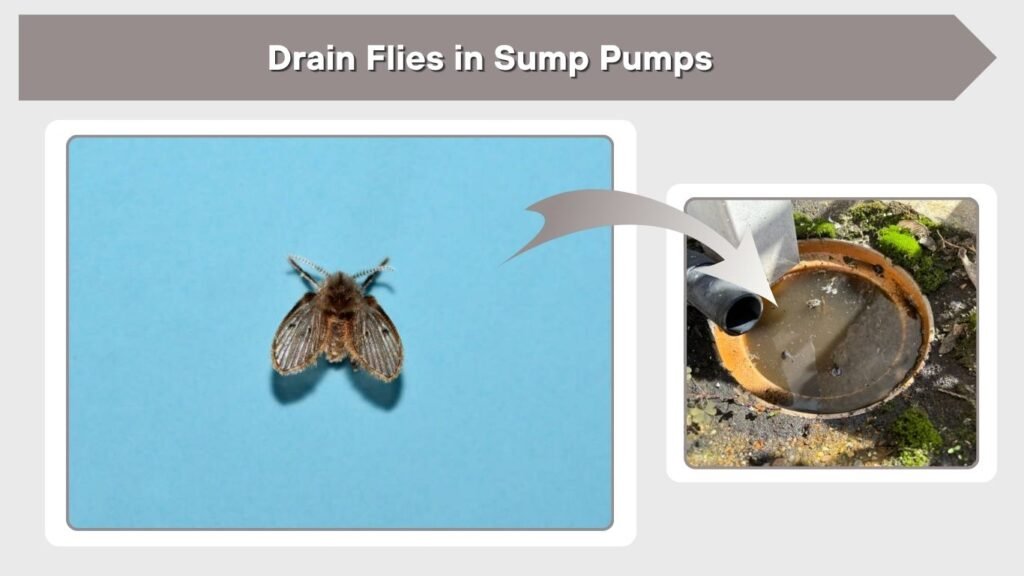
A sump pit containing stagnant water, algae or decaying debris can support larvae. Disconnect equipment safely according to its instructions before cleaning any accessible surfaces.
Remove debris, clean the pit and ensure that the pump operates correctly. Do not add bleach, pesticides or enzyme products unless they are approved for the equipment, discharge system and intended use. A plumber may be needed for a heavily contaminated or malfunctioning system.
Drain Flies Around Washing Machines
The flies may breed in a washing-machine standpipe, drain hose, floor drain, lint residue or stagnant water inside a drain pan. Clean accessible components according to the appliance manufacturer’s directions.
Check for leaks behind and beneath the machine. Avoid pouring pesticide into the standpipe. If sewage backs up or water remains around the drain connection, arrange a plumbing inspection.
Can an Aquarium Cause an Infestation?
Drain fly larvae can develop in continuously wet filters or containers containing organic residue. An aquarium may therefore provide a breeding location, although the nearby sink or floor drain may be the true source.
Clean filters and equipment using aquarium-safe methods that protect fish and beneficial bacteria. Never add household drain cleaner, bleach or insecticide to an operating aquarium.
Do Home Remedies Work?
Baking soda and vinegar produce visible foam but may not remove established slime from pipe walls. Bleach may kill some exposed organisms yet usually passes through before breaking down the breeding film.
Hot or boiling water alone is also unreliable and may create burn risks or damage some plumbing materials. Physical brushing followed by a suitable enzyme cleaner is more dependable.
Never combine bleach with vinegar, ammonia, acid or caustic drain products. The mixture may release poisonous gases or generate dangerous heat.
Should You Use Drain Fly Spray?
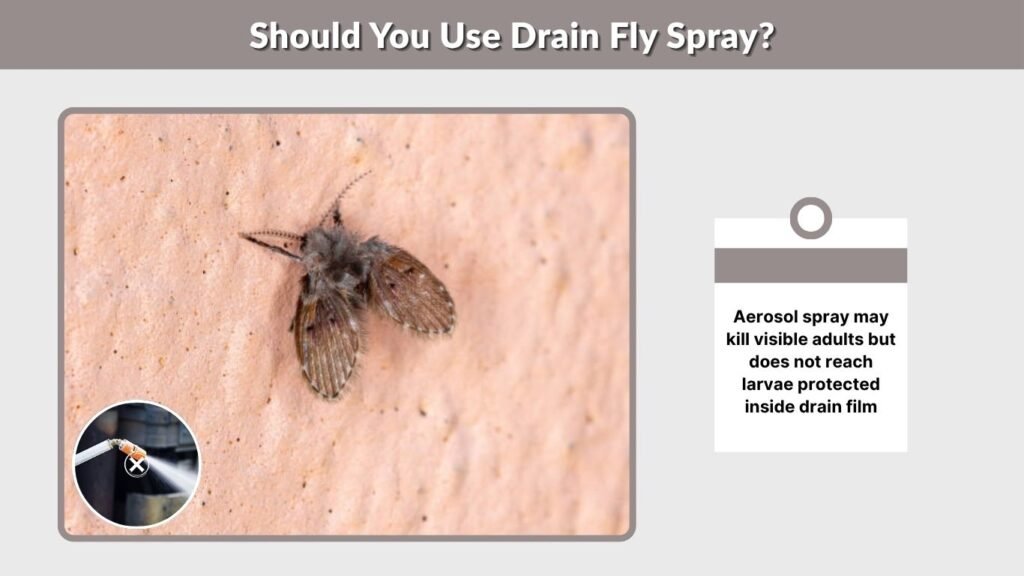
Aerosol spray may kill visible adults but does not reach larvae protected inside drain film. It should only be considered a temporary supplement.
Never pour or spray an insecticide into plumbing unless its label specifically permits drain use. Foggers are generally unnecessary. Source removal, sanitation and leak repair provide the lasting solution.
How Long Does Treatment Take?
Adult numbers may decline within several days after successful cleaning. Complete control often takes one to three weeks because hidden pupae and larvae can continue developing.
Monitor drains throughout this period. If fly numbers do not decline, another source remains. Reinspect overflow channels, appliance drains, floor cracks, sump areas and concealed plumbing.
FAQs
Can drain flies infest humans?
No. Drain flies cannot infest human skin, hair or internal organs under ordinary household conditions. Adults and larvae do not feed on blood or living tissue. Their normal habitat is wet organic material inside plumbing and sewage systems.
Does one drain fly mean an infestation?
One fly does not necessarily confirm an infestation. However, repeated sightings near the same drain suggest active breeding. Use the overnight tape test for several days to determine whether adults are emerging from that drain.
Why is my bathroom full of drain flies?
The most likely source is organic film inside a sink, shower, bathtub or floor drain. Toilet overflow channels and hidden plumbing leaks are also possible. Test each opening individually and clean every confirmed breeding location.
Can fruit flies infest a sink drain?
Yes. Fruit flies may reproduce in food and beverage residue trapped inside a drain or garbage disposal. Unlike fuzzy drain flies, fruit flies have smooth tan bodies and often red eyes. Remove fermenting residue and clean nearby rubbish and recycling containers.
When should I call a professional?
Call a plumber or pest professional when flies continue after two weeks of thorough treatment, emerge from structural cracks, affect multiple apartments or accompany sewage odours and water damage. These signs may indicate inaccessible breeding material or broken plumbing.