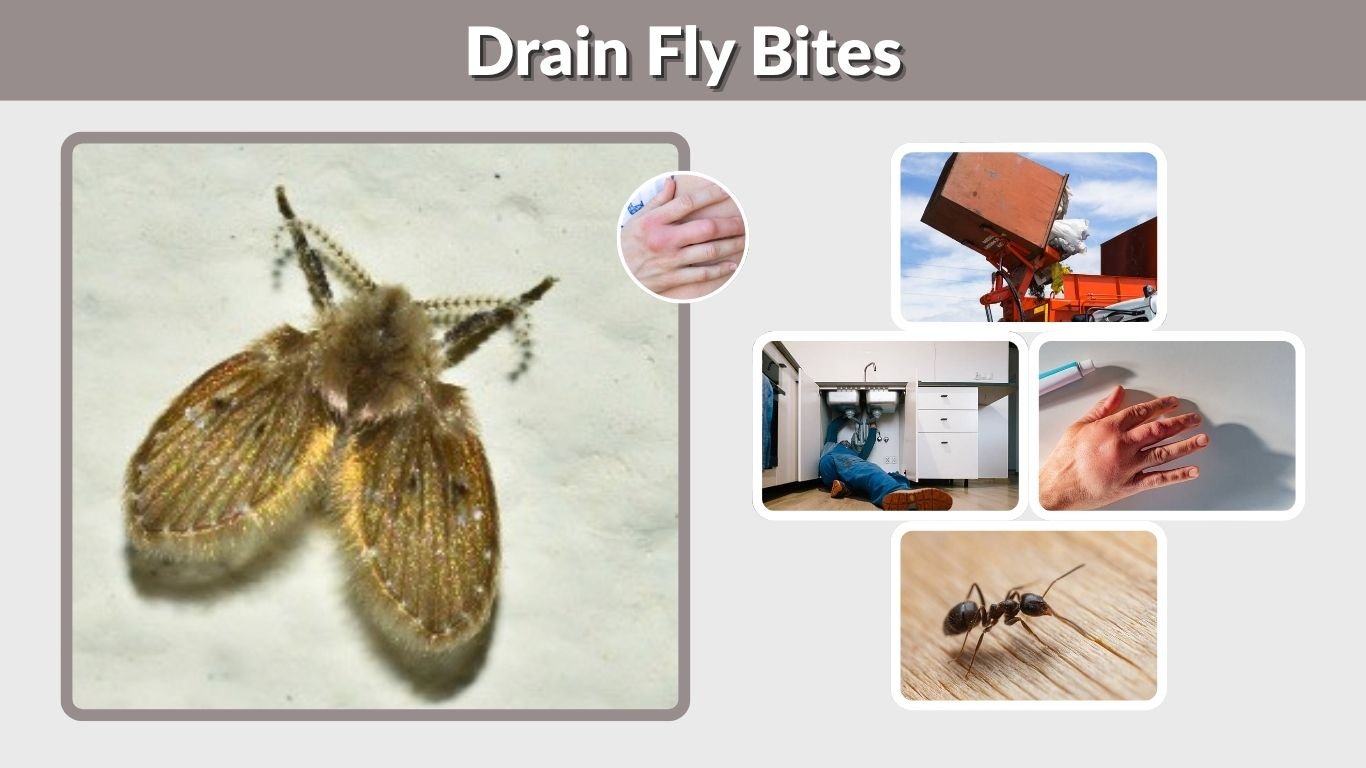
Drain flies do not bite or sting humans. These tiny, fuzzy insects have mouthparts designed for feeding on moisture and liquid substances—not for piercing skin or drinking blood. Their larvae also cannot bite people or pets. If red, itchy bumps appear while drain flies are present, another insect or a skin condition is likely responsible. Although drain flies are non-biting nuisance pests, their presence can reveal organic buildup, leaking plumbing or a hidden sewage problem that should be corrected.
Can Drain Flies Bite You?
Common household drain flies, also known as moth flies or sewer flies, belong to the family Psychodidae. They are small, fuzzy insects commonly found resting on bathroom and kitchen walls.
Adult drain flies do not have functional biting mouthparts. Texas A&M AgriLife Extension explicitly states that adult drain flies cannot bite, even when large numbers gather around sinks, showers, windows and floor drains.
| Question | Answer |
| Do adult drain flies bite? | No |
| Do drain fly larvae bite? | No |
| Do drain flies sting? | No |
| Do they drink blood? | No |
| Do black drain flies bite? | No |
| Can they bite pets? | No |
| Are they dangerous? | Generally no, but they indicate a moisture or sanitation issue |
Their colour does not affect their behaviour. Grey, tan, brown and black drain flies are all non-biting.
Why Do People Report Drain Fly Bites?
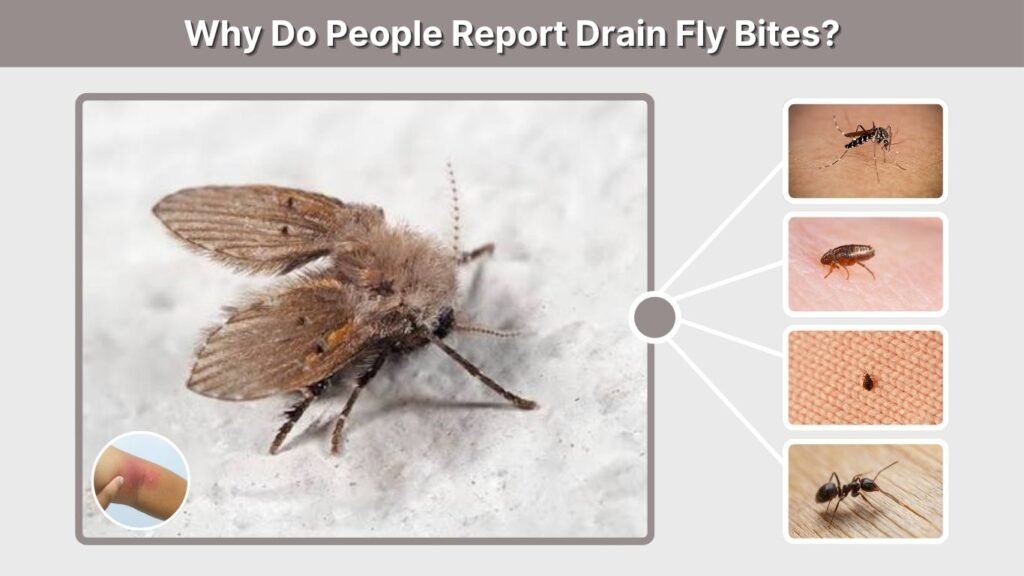
People often assume that any small insect found near an unexplained skin mark caused it. Drain flies may be noticeable around a bathroom at the same time that an unrelated insect or skin irritation appears.
A drain fly infestation can also occur alongside mosquitoes, fleas or other pests because all may be attracted to moisture. Finding a drain fly near a red bump does not prove that it produced the mark.
Common Causes of Bite-Like Marks
Red or itchy bumps attributed to drain flies may actually come from:
- Mosquitoes
- Fleas
- Bed bugs
- Biting midges
- Mites
- Chiggers
- Ants
- Allergic contact dermatitis
- Irritation from soap or cleaning products
- Inflamed hair follicles
- Bacterial or fungal skin infections
- Heat rash
Bites cannot always be identified from their appearance. The location, timing, pattern and presence of a correctly identified insect provide more useful evidence than comparing the mark with online pictures.
What Would a Drain Fly Bite Look Like?
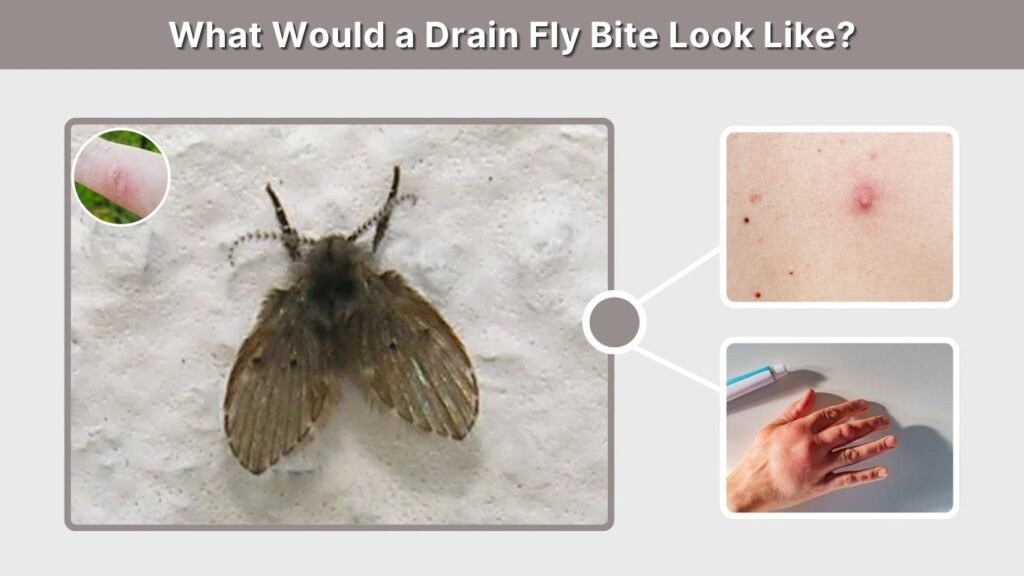
There is no characteristic drain fly bite mark because drain flies do not bite. Therefore, pictures labelled as “drain fly bites” are likely showing an unrelated insect bite, allergic reaction or skin condition.
An unexplained mark may appear as:
- A small red bump
- An itchy patch
- Local swelling
- Multiple bumps in a line or group
- A blister
- An inflamed or painful area
These signs are not specific to any single pest. For example, flea bites frequently affect the ankles and lower legs, while bed bug bites may appear after sleeping. Mosquito bites can occur anywhere that skin is exposed.
Seek medical advice if a mark becomes increasingly painful, hot, swollen or filled with pus. Fever, spreading redness, facial swelling, difficulty breathing or dizziness requires prompt medical attention.
Drain Flies vs Biting Sand Flies
Drain flies and sand flies belong to the same broad insect family, Psychodidae, but they are not the same type of fly. This family relationship sometimes causes confusion about whether drain flies can bite.
Female sand flies in the subfamily Phlebotominae feed on blood and can bite humans and animals. Some species transmit diseases in tropical and subtropical regions. Household drain flies are different, non-biting insects that develop in wet organic material.
| Feature | Drain fly | Biting sand fly |
| Typical location | Sinks, showers and floor drains | Outdoor tropical or subtropical habitats |
| Food | Liquid carbohydrates and moisture | Females of some species take blood meals |
| Bites humans | No | Yes |
| Breeding habitat | Drain slime and sewage material | Soil, animal shelters and organic ground debris |
| Indoor behaviour | Rests near plumbing | May enter to find a host |
| Appearance | Broad, fuzzy, heart-shaped wings | Narrower, hairy body with longer legs |
A fuzzy fly emerging directly from an indoor drain is far more likely to be a non-biting moth fly than a sand fly.
Do Drain Fly Larvae Bite?
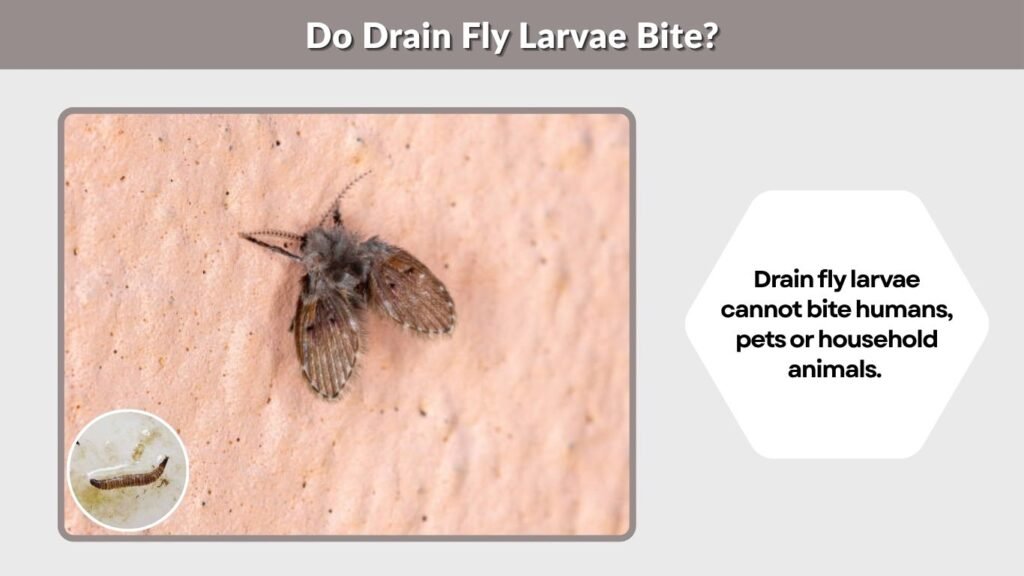
Drain fly larvae cannot bite humans, pets or household animals. They are small, legless organisms that live inside the gelatinous organic film coating wet drains and pipes.
The larvae feed on:
- Bacteria
- Fungi
- Algae
- Microscopic organisms
- Soap residue
- Food particles
- Decaying organic material
They do not seek blood or living tissue. Most remain hidden inside plumbing until they transform into pupae and later emerge as adult flies.
Occasionally, larvae may become visible near a drain opening. They have pale, segmented bodies with darker ends and a small breathing tube near the rear. Their unpleasant appearance does not mean that they are parasitic or capable of attacking people.
Do Drain Flies Bite Dogs or Cats?
Drain flies do not bite dogs, cats or other pets. Their larvae also cannot live in an animal’s fur or feed on its skin.
A pet that is scratching or developing red bumps may have fleas, mites, allergies or another medical condition. Inspect the animal’s bedding and fur, but do not assume visible bathroom flies are responsible.
Contact a veterinarian if a pet has persistent itching, hair loss, sores, swelling or behavioural changes. Removing drain flies will improve household sanitation but will not treat a separate parasite or skin disorder.
Are Drain Flies Harmful to Humans?
Drain flies are generally classified as nuisance pests rather than biting or medically dangerous insects. They do not inject venom, drink blood or normally transmit disease through bites.
However, their presence can indicate that bacteria-rich organic material is accumulating inside a drain. Large populations may also signal a leaking pipe, damaged sewage line or continuously wet area beneath a floor.
Adult flies can move from dirty breeding material to walls, counters and other surfaces. This makes infestations undesirable in kitchens, restaurants, hospitals and food-processing facilities.
Heavy exposure to insect fragments may also irritate sensitive individuals, although this is different from being bitten. The main response should be removing the breeding source rather than treating the skin for nonexistent drain fly bites.
How to Confirm You Have Drain Flies
Adult drain flies are usually 2–5 mm long. Their bodies and wings are densely covered with fine hairs, giving them a moth-like appearance. The wings are broad or heart-shaped and rest like a roof over the body.
They are weak fliers and often move through short hops. Adults commonly remain close to the drain where they developed.
Test the Drain
Place a strip of clear tape across part of a suspected drain with the sticky side facing downward. Leave part of the opening uncovered so air can continue moving through it.
Check the tape the following morning. Fuzzy adult flies attached to it indicate an active breeding source. Repeat the test for several nights and examine all nearby sink, shower and floor drains.
How to Get Rid of Drain Flies
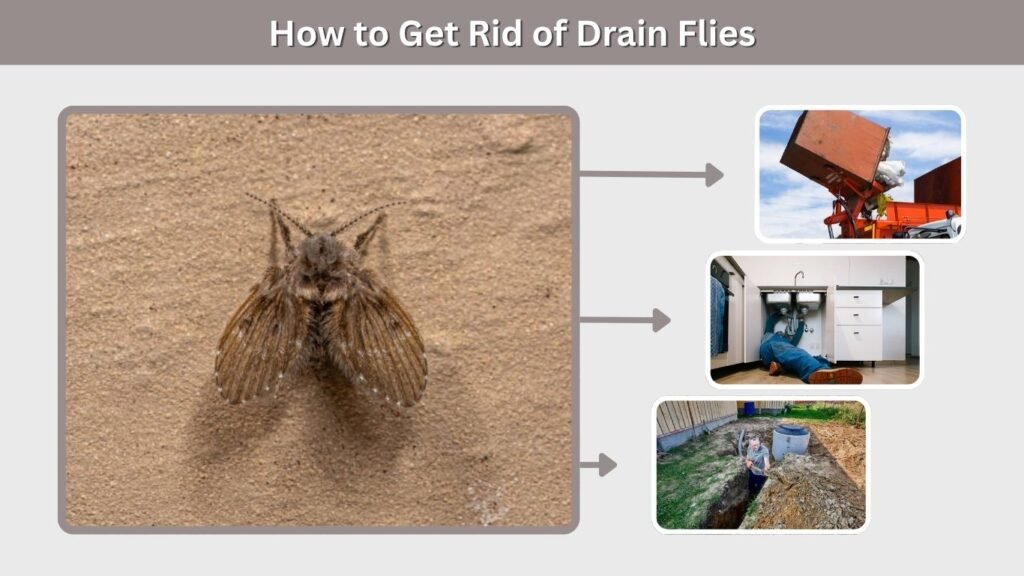
Killing adult flies will not eliminate eggs and larvae developing inside plumbing. Successful treatment requires removing the organic film they use for food.
Clean the Organic Buildup
Remove the drain cover and clear out visible hair, food, grease and debris. Use a stiff, long-handled drain brush to scrub the inside walls of the pipe, the underside of the cover and accessible overflow channels.
Physical brushing is important because drain slime adheres to areas that normal water flow does not reach.
Apply an Enzyme Drain Cleaner
After brushing, apply an enzyme-based or bacterial drain cleaner designed to digest organic buildup. Foaming products can coat more of the pipe’s interior. Follow the label regarding application amount, contact time and repeated treatments.
Do not mix bleach, ammonia, vinegar, acids or caustic drain cleaners. Mixing cleaning chemicals can release toxic gases or create dangerous heat.
Fix Hidden Moisture Problems
Inspect other possible breeding locations, including:
- Garbage disposals
- Toilet overflow channels
- Floor drains
- Sump pits
- Refrigerator drain pans
- Air-conditioner condensate lines
- Wet rubbish containers
- Leaking sewage pipes
- Areas beneath loose floor tiles
Persistent activity after repeated cleaning may indicate an inaccessible leak or broken pipe requiring a plumber.
Do Mosquito Bits Kill Drain Flies?
Mosquito Bits and similar products contain Bacillus thuringiensis israelensis or Bti. These products are primarily labelled for mosquito larvae, and some formulations are also labelled for fungus gnats.
Do not place a Bti product or any pesticide in a household drain unless its label specifically permits drain application and lists the target pest. Even when a product affects larvae, it will not remove the organic slime supporting future generations. Mechanical cleaning and enzyme drain treatment remain the primary controls.
How Long Does Removal Take?
Adult numbers may begin declining within several days after the breeding material is removed. However, flies can continue emerging for one to three weeks if eggs, larvae or pupae remain in overlooked areas.
Continue brushing, treating and monitoring the affected drains. If the infestation does not improve after approximately two weeks, confirm the insect’s identity and inspect for hidden plumbing or sewage problems.
FAQs
Why do drain flies land on people?
Drain flies may accidentally land on skin because they are weak, poorly controlled fliers. They may also be attracted to moisture. Landing does not mean they are attempting to bite, feed on blood or lay eggs on a person.
Can black drain flies bite humans?
No. Black drain flies have the same non-biting feeding structures as grey or brown individuals. Colour differences may reflect species, age or lighting, but they do not indicate a blood-feeding fly. A biting insect near a drain is probably another species.
Can drain flies cause itchy skin?
Drain flies do not create itchy bites. Sensitive people might experience irritation around heavy insect debris, but itching is more likely caused by mosquitoes, fleas, mites, dermatitis or another condition. Persistent or worsening skin symptoms should receive medical assessment.
Do drain flies carry disease?
Drain flies are not known for transmitting disease through bites because they cannot bite. However, adults emerge from bacteria-rich organic material and can land on nearby surfaces. Their presence should be addressed through drain cleaning, sanitation and moisture control.
Should I use insect spray for drain flies?
Insect spray may kill visible adults but will not remove eggs and larvae inside drain slime. Long-term control requires brushing the pipe and digesting the remaining organic film with a suitable enzyme cleaner. Never apply pesticides inside drains unless the label specifically permits it.