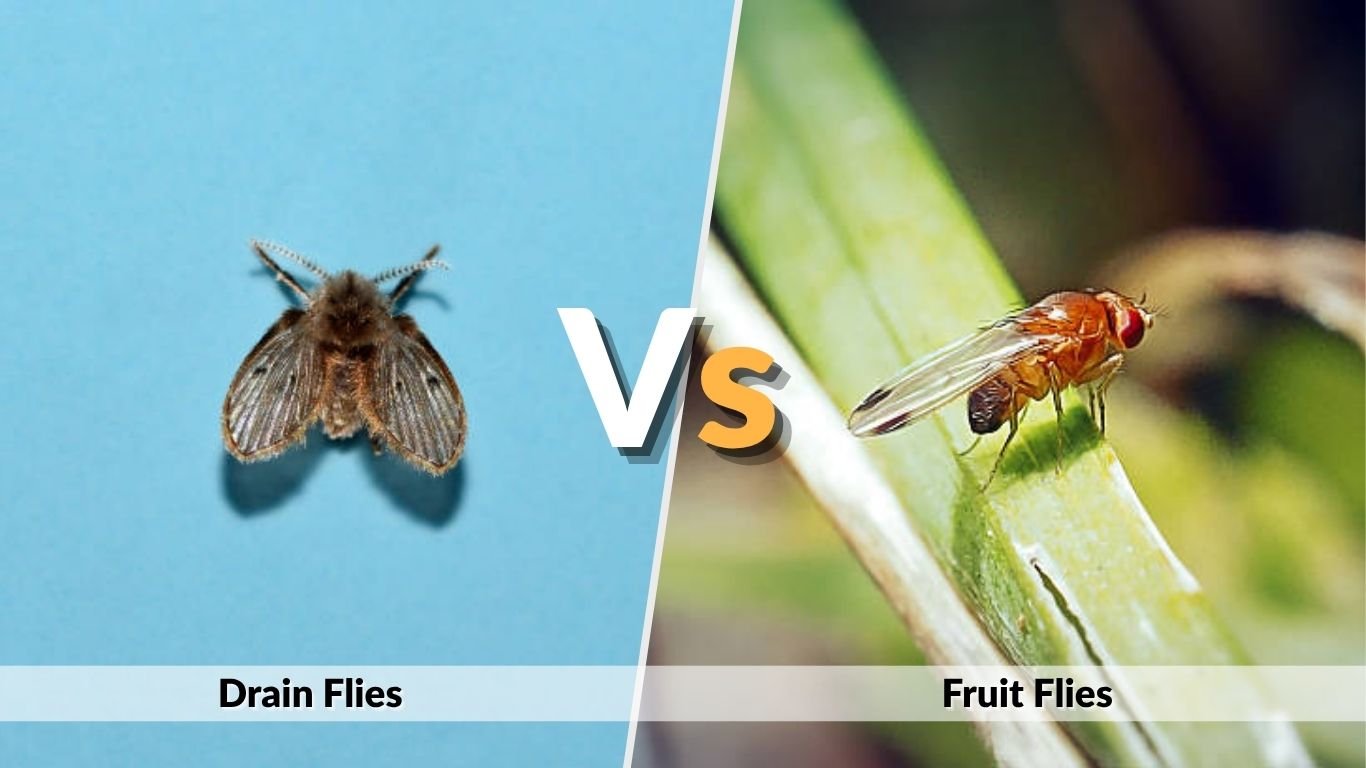
Drain flies and fruit flies are tiny household pests commonly found in kitchens and bathrooms, but they look different and breed in different materials. Drain flies develop in the organic slime coating pipes, while fruit flies reproduce in fermenting food and beverage residues. Fungus gnats add further confusion because they resemble small flies but usually originate from damp houseplant soil. Correct identification is essential: a vinegar trap may catch fruit flies but will not remove drain fly larvae or fungus gnats.
Drain Fly vs Fruit Fly: Quick Differences
Drain flies have fuzzy, moth-like bodies and broad wings. Fruit flies have smoother, rounded bodies and commonly possess noticeable red eyes.
| Feature | Drain fly | Fruit fly | Fungus gnat |
| Average size | 2–5 mm | 2–4 mm | 2–4 mm |
| Body shape | Fuzzy and moth-like | Rounded and compact | Thin and mosquito-like |
| Colour | Grey, brown or black | Tan, yellow-brown or dark brown | Grey or black |
| Eyes | Dark and less noticeable | Usually red or orange | Dark |
| Wings | Hairy and heart-shaped | Clear and smooth | Clear or smoky |
| Legs | Short to moderate | Short | Long and slender |
| Flight | Weak, short hops | Quick hovering flight | Erratic flight |
| Main location | Drains and wet plumbing | Fruit, rubbish and recycling | Houseplants and windows |
| Breeding material | Organic drain slime | Fermenting food | Moist potting soil |
How to Identify Drain Flies
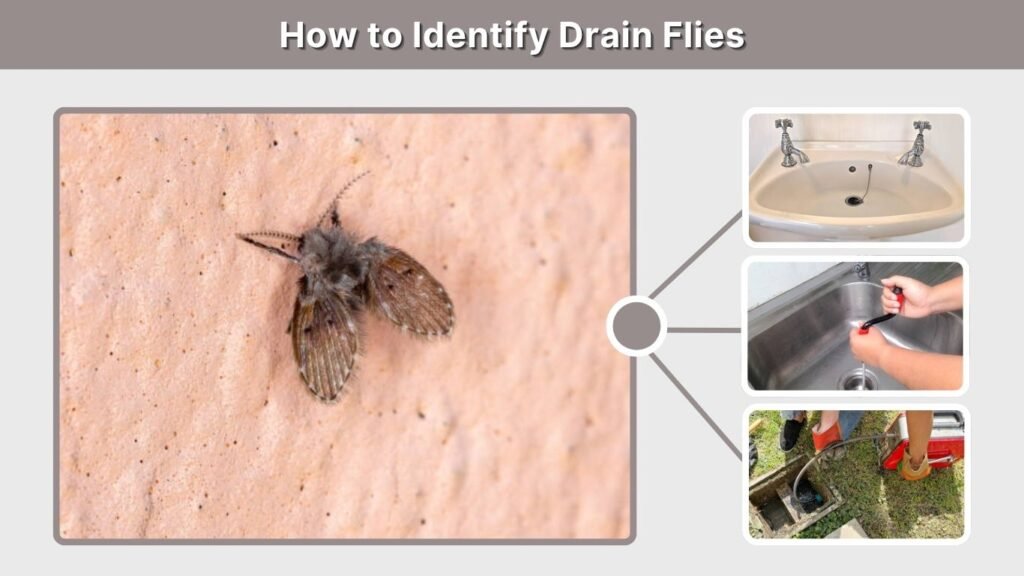
Drain flies, also called moth flies or sewer flies, belong to the family Psychodidae. Their bodies and wings are covered with fine hairs, producing a fuzzy appearance.
At rest, they hold their broad wings over the body like a roof. From above, the wings may look heart-shaped. Drain flies are weak fliers and normally make short, hopping movements before landing on a wall.
Where Drain Flies Gather
Drain flies are commonly seen near:
- Bathroom sinks
- Shower and bathtub drains
- Kitchen drains
- Floor drains
- Toilets that are rarely used
- Garbage disposals
- Sump pits
- Sewage leaks
- Air-conditioner drain lines
- Refrigerator drain pans
Their larvae live in the gelatinous layer of bacteria, fungi and organic debris coating continuously wet plumbing. Colorado State University Extension identifies this bacterial film as the primary indoor breeding material.
How to Identify Fruit Flies
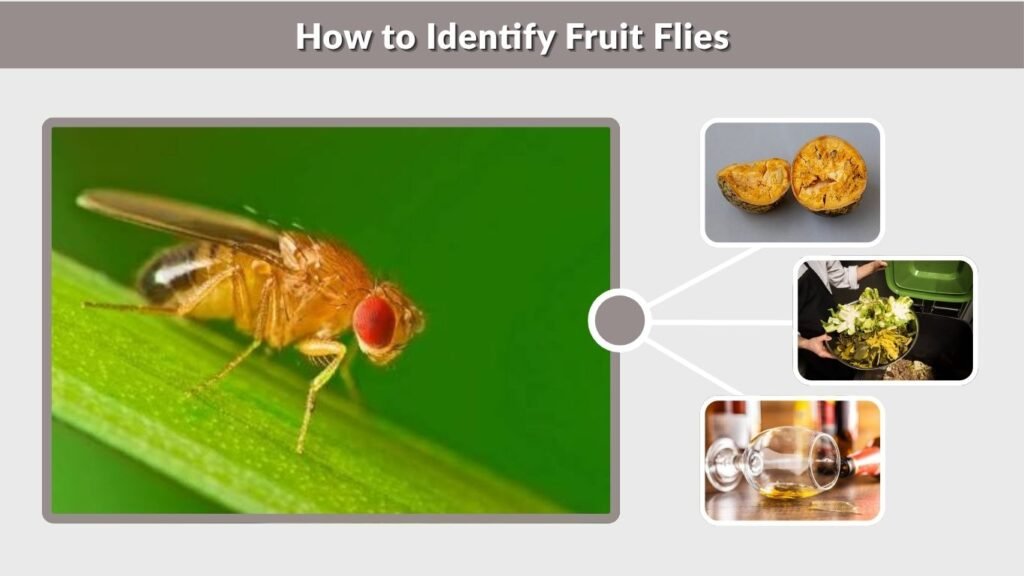
Fruit flies, often called vinegar flies, generally belong to the genus Drosophila. They have small, smooth bodies that are usually tan, yellow-brown or light brown. Many common species have prominent red or orange eyes, although some have darker eyes.
Their bodies are more compact and rounded than those of fungus gnats. They fly actively around food, beverage containers and rubbish rather than resting flat on bathroom walls.
Where Fruit Flies Gather
Common locations include:
- Overripe bananas and other fruit
- Cut or damaged produce
- Rubbish bins
- Recycling containers
- Empty beer, wine and soft-drink bottles
- Spilled juice
- Compost containers
- Dirty mops and cleaning cloths
- Food residue beneath appliances
- Garbage disposals
Fruit flies are attracted to yeasts growing on fermenting organic material. Eliminating this material is more effective than relying exclusively on traps.
How to Identify Fungus Gnats
Fungus gnats have narrow black or dark-grey bodies, long antennae and noticeably long legs. Their mosquito-like shape distinguishes them from rounder fruit flies and fuzzy drain flies.
They often fly around houseplants or gather on nearby windows. Adult fungus gnats are weak and somewhat erratic fliers, sometimes running across the soil before taking flight.
Their pale, transparent larvae have dark head capsules and live in damp potting soil. They mainly eat fungi and decaying plant material but may feed on fine roots when populations become large.
Where Each Fly Lays Its Eggs
Finding the breeding source provides a more reliable identification than judging a tiny moving insect from a distance.
| Pest | Egg-laying site | What the larvae eat |
| Drain fly | Slime inside drains and wet pipes | Bacteria, fungi, algae and organic debris |
| Fruit fly | Fermenting fruit, liquids and food waste | Yeast and decaying food |
| Fungus gnat | Damp potting soil | Fungi, decaying roots and organic matter |
Drain fly eggs can hatch within approximately 48 hours. Fruit flies can also reproduce rapidly when food and warm conditions are available. Fungus gnats may complete their development continuously in overwatered indoor plants.
Drain Flies vs Fruit Flies in the Bathroom
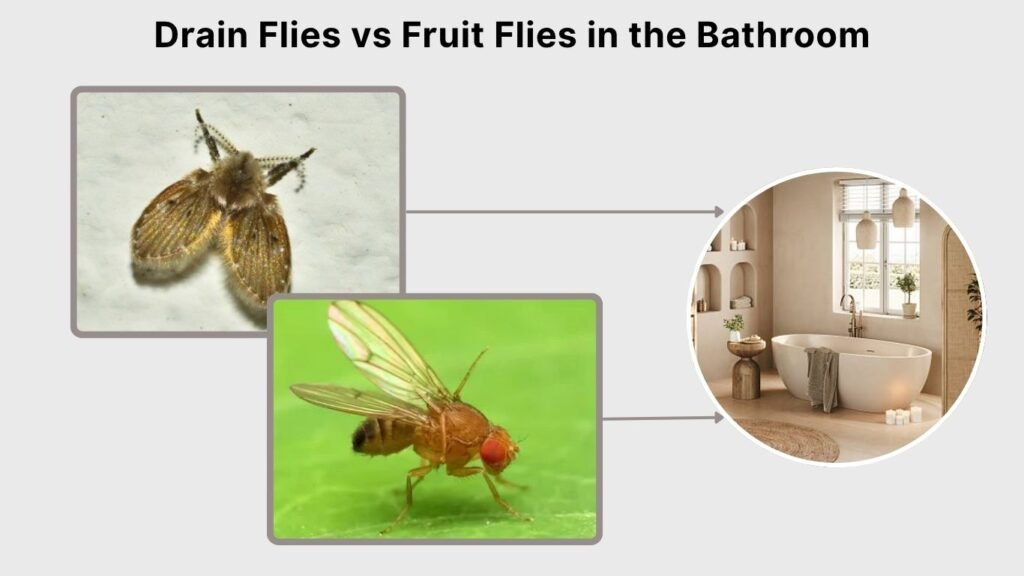
A fuzzy fly resting near a shower or sink is probably a drain fly. However, location alone does not prove the identification. Fruit flies may visit bathrooms when residues from sweet drinks, cosmetics or organic waste are available.
Cover part of a suspected drain with clear tape, placing the sticky side downward. Leave some of the opening uncovered so air can pass through. Flies trapped while emerging overnight indicate that the drain is an active source.
If the flies ignore drains but gather around a rubbish bin or empty beverage container, fruit flies are more likely. Long-legged insects near potted plants are probably fungus gnats.
Do Drain Flies and Fruit Flies Bite?
Drain flies, fruit flies and fungus gnats do not bite or sting people. They are primarily nuisance pests.
Fruit flies can move between decaying material, rubbish and kitchen surfaces, making their presence undesirable around exposed food. Large drain fly populations may indicate a sanitation, sewage or plumbing problem. Fungus gnat larvae can affect seedlings or weak houseplants when present in high numbers.
Drain Flies vs Fruit Flies Treatment
The best product or method depends on where the pest reproduces. Adult traps can reduce visible numbers, but control will remain temporary unless the larvae’s food source is removed.
| Pest | Primary treatment | Helpful secondary control |
| Drain fly | Scrub away organic drain film | Enzyme or bacterial drain cleaner |
| Fruit fly | Remove fermenting food and residue | Vinegar-based fruit fly trap |
| Fungus gnat | Allow soil to dry appropriately | Yellow sticky cards and labelled Bti treatment |
How to Get Rid of Drain Flies
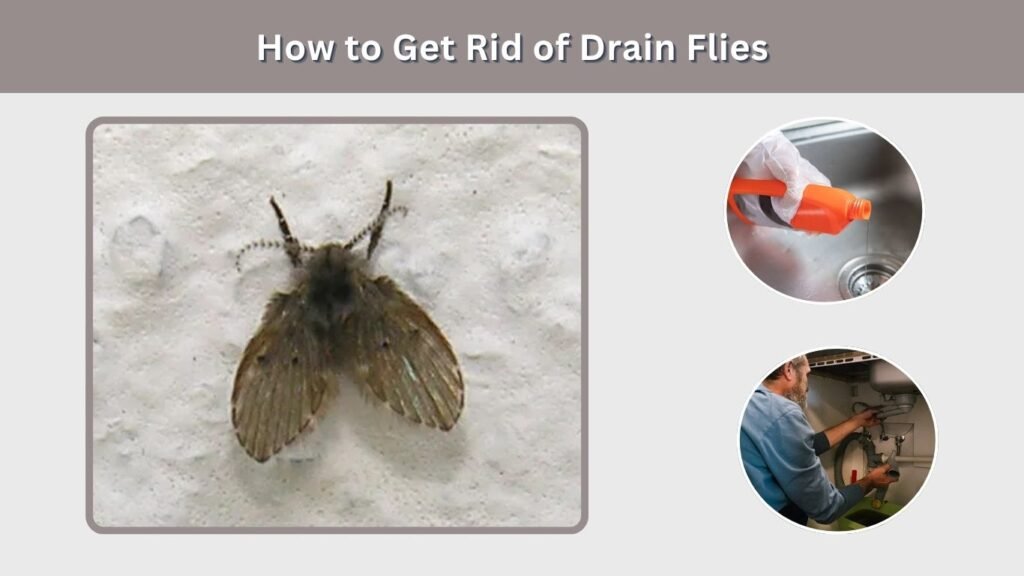
Drain fly treatment must target the slime attached to the inside of a drain. Pouring bleach, hot water or insecticide into the opening without cleaning the pipe rarely provides lasting control.
Clean the Drain Mechanically
Remove the drain cover and clear away visible hair, food and debris. Use a stiff, long-handled drain brush to scrub the pipe’s sides, underside of the cover and accessible overflow channels.
Scrubbing physically removes eggs, larvae and their food. Flushing alone may leave the breeding film attached above the normal water level.
Use an Enzyme Drain Cleaner
Apply a foaming enzyme-based or bacterial drain cleaner designed to digest organic buildup. Follow the label regarding application amount, contact time and frequency. Check that the product is suitable for septic systems when necessary.
The EPA recommends cleaning drains and using enzyme cleaners as central measures for drain fly management. Never mix drain cleaners with bleach, vinegar, ammonia or other chemicals.
Correct Moisture Problems
Repair leaking pipes, empty drain pans and clean wet containers. Persistent flies after repeated drain treatment may indicate a broken sewage line or a concealed leak beneath the floor. A plumber or pest-management professional may be needed.
How to Get Rid of Fruit Flies
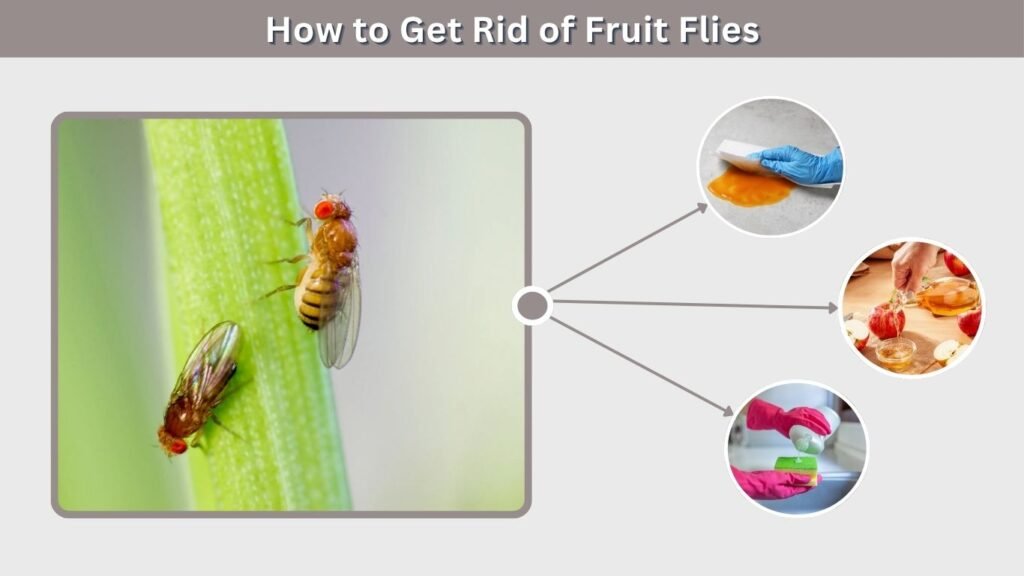
Remove overripe or damaged produce and refrigerate susceptible fruit while the infestation is active. Clean rubbish bins, recycling containers, compost buckets and the spaces beneath appliances.
Wash beverage containers before storing them for recycling. Clean spilled juice, beer, wine and soft drinks, including residue beneath bin liners and around bottle caps.
Use a Fruit Fly Trap
Place a small amount of apple cider vinegar or wine in a container and add a drop of dish soap. The scent attracts adult fruit flies, while the soap reduces the liquid’s surface tension.
Traps reduce adult numbers but cannot overcome an overlooked breeding source. Continue cleaning until no flies appear for at least a week.
How to Get Rid of Fungus Gnats
Allow the upper layer of potting soil to dry between waterings when the plant can safely tolerate it. Empty saucers, improve drainage and remove dead leaves from the soil surface.
Yellow sticky cards placed close to the soil capture adults and help monitor activity. For continuing infestations, use a product containing Bacillus thuringiensis israelensis that is specifically labelled for fungus gnat larvae in potting soil. Follow its directions exactly.
Do not use a fruit fly trap as the main fungus gnat treatment. It may catch a few adults but will not affect larvae developing around plant roots.
Why the Flies Keep Returning
Returning flies usually indicate that the breeding source remains. Drain film may extend deeper into a pipe, fruit juice may be trapped beneath an appliance, or fungus gnat larvae may occupy several plant pots.
Existing eggs and pupae can also produce new adults after cleaning begins. Continue source removal and monitoring for approximately two weeks. Persistent activity may require professional identification because phorid flies and other small species can be mistaken for drain flies.
FAQs
Are drain flies and fruit flies the same?
No. Drain flies are fuzzy moth-like insects whose larvae develop inside wet plumbing. Fruit flies are smoother, rounded flies attracted to fermenting fruit and liquids. They require different treatments because their eggs and larvae occupy different materials.
Which flies come from bathroom drains?
Drain flies are the most common fuzzy insects emerging from bathroom drains. Phorid flies may also breed in drains or sewage leaks. Fruit flies can visit bathrooms but usually originate from fermenting food, rubbish or beverage residue elsewhere in the building.
Will vinegar kill drain flies?
Vinegar traps are mainly useful for attracting fruit flies. They do not remove drain fly eggs and larvae protected inside pipe slime. Drain fly control requires brushing away the organic coating and treating remaining buildup with a suitable enzyme-based drain cleaner.
How can I tell a fungus gnat from a fruit fly?
Fungus gnats are thin, dark and mosquito-like, with long legs and antennae. Fruit flies have shorter legs, rounder tan bodies and often red eyes. Gnats gather near damp plant soil, while fruit flies hover around produce, rubbish and fermenting liquids.
Can one house have all three flies?
Yes. Drain flies may reproduce in bathroom plumbing, fruit flies in kitchen waste and fungus gnats in overwatered plants simultaneously. Inspect drains, food-storage areas and plant soil separately, then use the treatment designed for each breeding source.