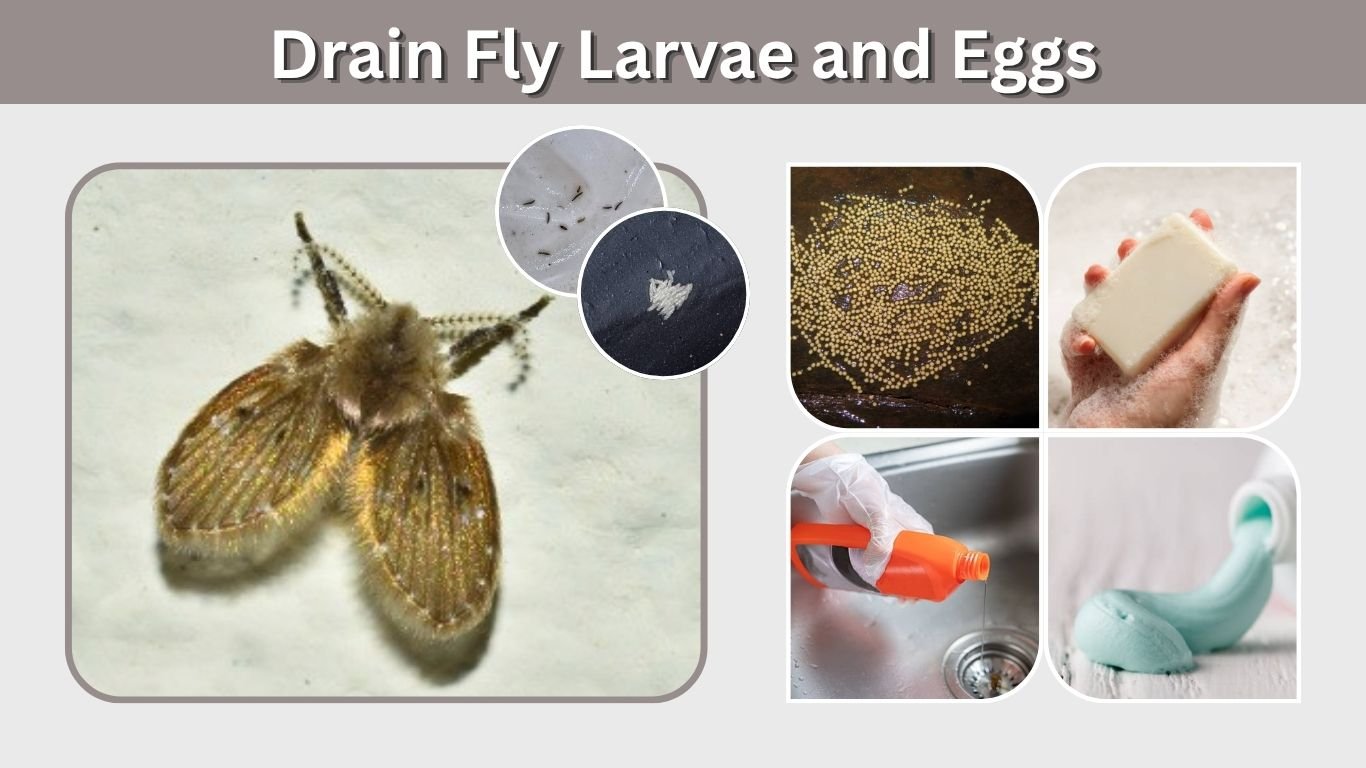
Drain fly larvae and eggs develop inside the moist organic film that accumulates in drains, pipes and other wet areas. The adults are tiny, fuzzy flies commonly seen around bathroom sinks, showers and floor drains. Killing the visible adults provides only temporary relief because eggs, larvae and pupae may continue developing inside the plumbing. Effective control requires finding the breeding location and physically removing the slimy material that provides food and shelter for the immature flies.
What Are Drain Flies?
Drain flies belong to the family Psychodidae and are also called moth flies, sewer flies or filter flies. Adult drain flies have fuzzy bodies and hairy, heart-shaped wings that make them resemble tiny moths.
They are weak fliers and normally move only a short distance from their breeding location. Adults resting on walls near a sink or shower usually indicate that larvae are developing somewhere nearby.
| Life stage | Appearance | Typical duration |
| Egg | Tiny, pale and difficult to see | Less than 48 hours |
| Larva | Pale, slender and worm-like | Approximately 8–24 days |
| Pupa | Small, dark and inactive | About 1–2 days |
| Adult | Fuzzy, moth-like fly | Several days to three weeks |
Development time varies according to temperature, moisture, food availability and species. In favourable indoor conditions, drain flies may produce multiple generations throughout the year.
What Do Drain Fly Eggs Look Like?
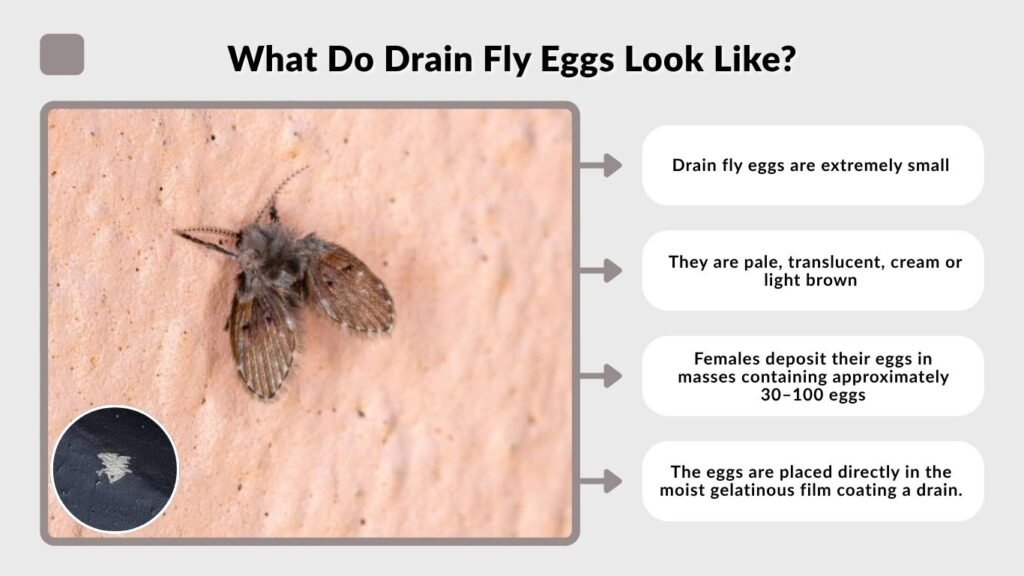
Drain fly eggs are extremely small and usually cannot be seen easily without magnification. They are pale, translucent, cream or light brown and have an elongated or oval shape.
Females deposit their eggs in masses containing approximately 30–100 eggs. The eggs are placed directly in the moist gelatinous film coating a drain or another wet surface. This film protects them from drying out and provides immediate food for the larvae after hatching.
Where Are Drain Fly Eggs Found?
Common egg-laying sites include:
- Bathroom sink drains
- Kitchen sink drains
- Shower and bathtub drains
- Floor drains
- Toilet overflow channels
- Garbage disposals
- Septic lines
- Sump pits
- Air-conditioner drain lines
- Refrigerator drain pans
- Leaking sewage pipes
- Wet mop buckets
- Areas beneath loose floor tiles
- Moist organic waste
Drain fly eggs are generally attached to slime rather than floating freely in clean water. Simply flushing a drain may not remove them because the organic film adheres tightly to the pipe walls.
What Do Drain Fly Larvae Look Like?
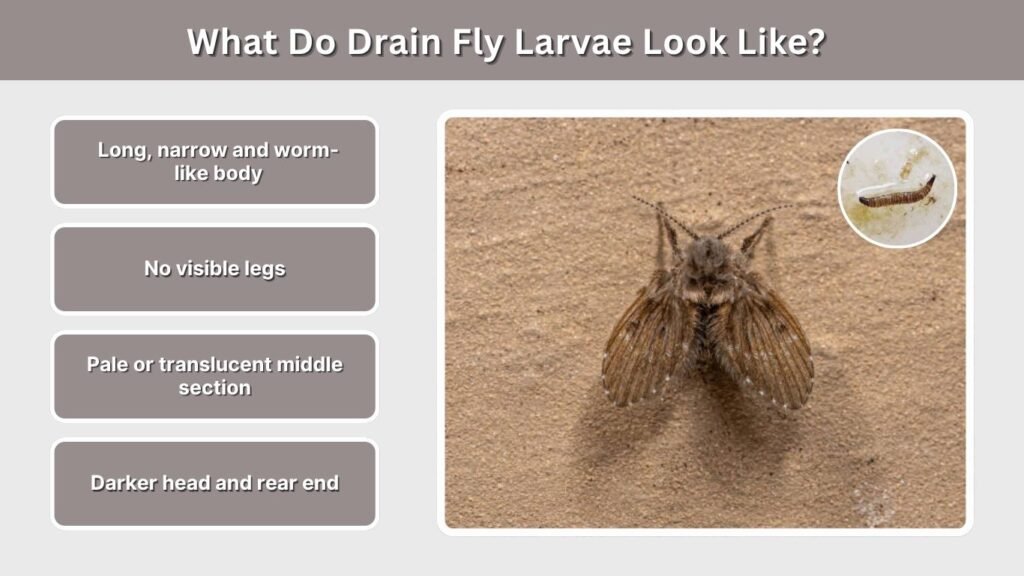
Drain fly larvae are legless, slender and worm-like. Depending on their age and species, they may measure several millimetres and reach approximately 10 mm when fully developed.
The middle of the body is usually pale, cream, grey or nearly transparent. The head and rear end may appear darker. Their segmented body can have small hairs or plates that become noticeable under magnification.
Identification Features
- Long, narrow and worm-like body
- No visible legs
- Pale or translucent middle section
- Darker head and rear end
- Clearly segmented appearance
- Small breathing tube near the tail
- Wriggling movement through drain slime
- Usually found with wet organic material
The larvae can survive in environments containing relatively little oxygen. A breathing tube at the rear allows them to obtain air while most of the body remains submerged in wet organic material.
Drain fly larvae may be mistaken for fungus gnat larvae, small worms or other fly maggots. Their location inside a slimy drain and the presence of fuzzy adult moth flies provide the strongest identification clues.
What Do Drain Fly Larvae Eat?
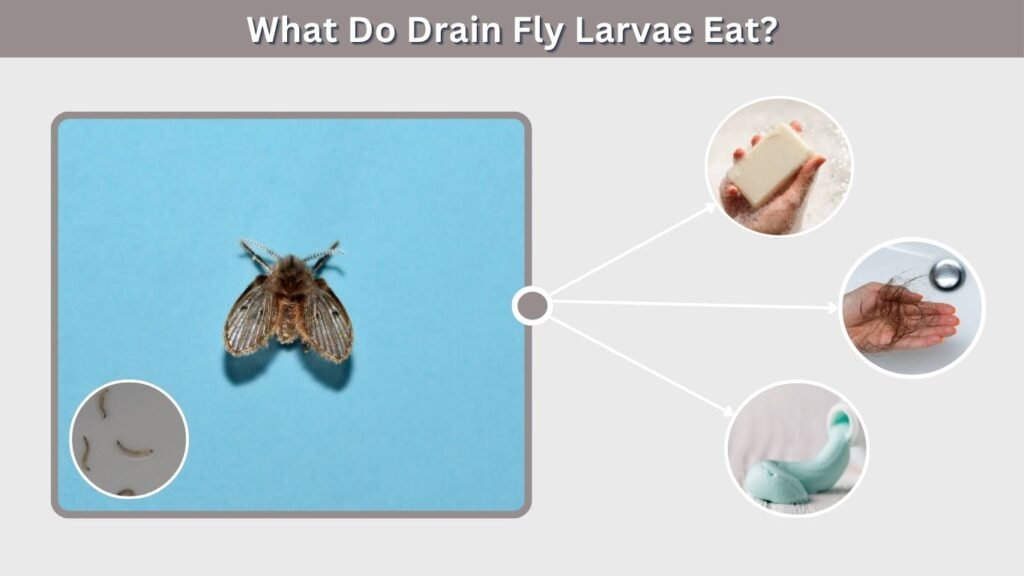
Drain fly larvae consume microorganisms and decaying material within the slime coating a pipe. Their food can include bacteria, fungi, algae and microscopic organic particles.
The larvae do not normally feed on clean metal or plastic plumbing. Therefore, they do not directly damage pipes. However, their presence indicates that enough organic buildup and moisture exist to support continuing development.
The material may include residues from:
- Soap
- Hair
- Skin cells
- Toothpaste
- Food particles
- Grease
- Shampoo and conditioner
- Sewage
- Other organic waste
Removing this buildup deprives the larvae of food and eliminates the surfaces on which females deposit new eggs.
Drain Fly Life Cycle
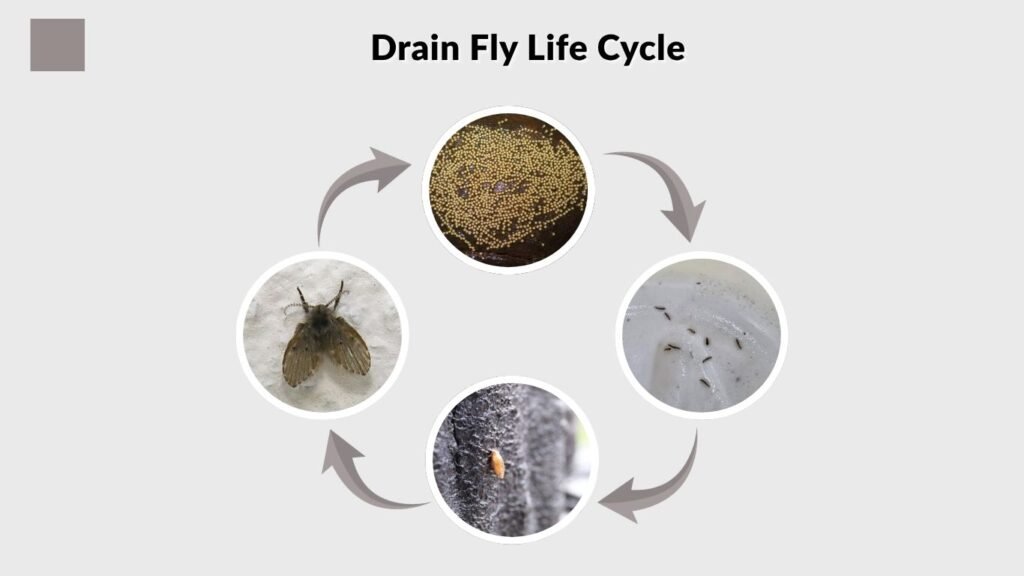
Drain flies undergo complete metamorphosis through four stages: egg, larva, pupa and adult.
Egg Stage
A female lays her eggs in a moist film containing decaying organic material. Under favourable conditions, the eggs hatch in less than 48 hours.
Larval Stage
The larvae feed and grow inside the film for approximately 8–24 days. Temperature and food availability strongly influence the length of this stage. Warm, continuously wet drains allow faster development.
Pupal Stage
A mature larva transforms into a pupa near the surface of its breeding material. The pupal stage generally lasts one or two days before the adult fly emerges.
Adult Stage
Adult drain flies rest on nearby walls and are most active during the evening. They are weak fliers and often make short, hopping flights. Adults may survive for one to three weeks when liquid food is available.
Texas A&M AgriLife Extension reports that the eggs can hatch within 48 hours and that the larval stage may continue for 8–24 days. This explains why adults can continue appearing after cleaning has started.
Are Drain Fly Eggs and Larvae Harmful?
Drain fly eggs and larvae do not bite or sting people or pets. They are primarily nuisance pests and do not damage plumbing, clothing, furniture or stored food.
However, a large infestation can indicate a hidden sanitation, drainage or moisture problem. Larvae developing beneath floors or behind walls may point to a leaking drainpipe or damaged sewage line.
Adult flies can move from dirty breeding material onto counters, sinks and food-contact surfaces. Kitchens, restaurants, hospitals and other sensitive facilities should therefore address infestations promptly.
How to Find the Breeding Drain
The adult flies may rest near one drain even when they are emerging from another nearby source. Testing each suspected drain helps locate the actual breeding site.
Place a strip of clear tape across part of the drain opening with the sticky side facing downward. Do not seal the opening completely because some airflow should remain. Leave the tape overnight and inspect it the following morning.
Adult flies attached to the tape indicate activity in that drain. Repeat the test for several nights because adults may not emerge every evening.
Test all nearby sinks, showers, floor drains and tubs. If none produces flies, inspect garbage disposals, toilet overflows, drain pans, sump pits and locations where plumbing may be leaking.
How to Get Rid of Drain Fly Larvae and Eggs
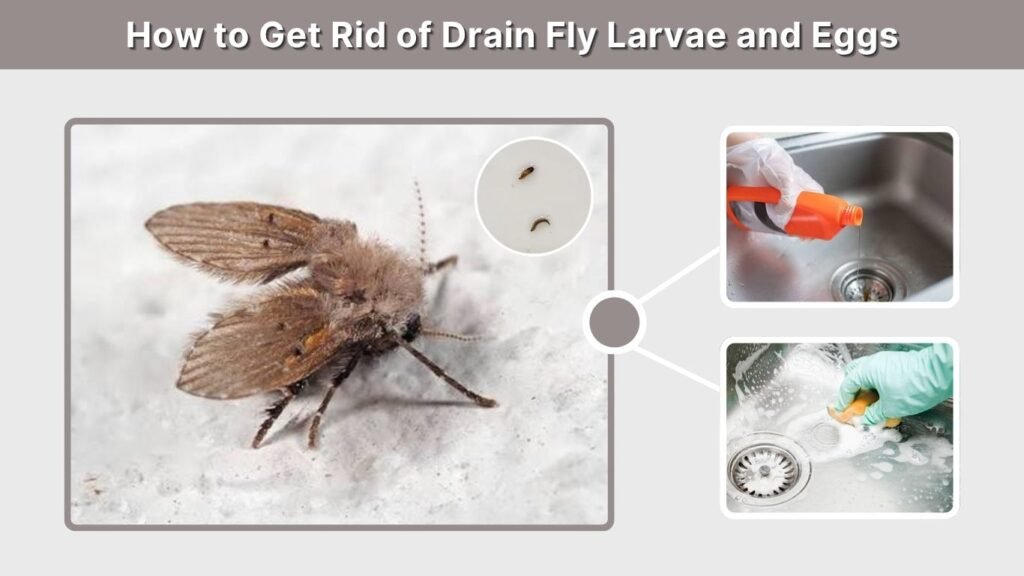
The most effective treatment is removing the organic film where the immature flies live. Pouring liquid into a drain without scrubbing may not reach buildup attached above the normal water line.
Step 1: Remove Visible Debris
Take out the drain cover when possible. Remove hair, food particles, grease and other visible material. Wear gloves and dispose of the debris in a sealed rubbish bag.
Step 2: Scrub the Drain
Use a stiff, long-handled drain brush to scrub the pipe’s inner walls. Pay particular attention to the upper pipe, drain opening, underside of the cover and overflow channel.
Mechanical brushing breaks apart the gelatinous layer containing eggs and larvae. Colorado State University Extension identifies thorough scraping and brushing as a primary way to eliminate the bacterial film supporting drain flies.
Step 3: Apply an Enzyme Drain Cleaner
Use an enzyme-based or bacterial drain treatment labelled for organic drain buildup. These products gradually digest the material the larvae consume. Follow all label directions regarding the amount, contact time and frequency.
Choose a septic-safe product if the building uses a septic system. Foaming formulas may provide better contact with the sides of the pipe than liquids that immediately flow through the centre.
Step 4: Flush and Repeat
Flush away loosened material after the cleaner has completed its labelled contact period. Repeat brushing and treatment as directed until no more adults appear.
Hot water alone may kill a few exposed larvae but usually does not remove the attached organic film. It should not replace physical cleaning.
Step 5: Eliminate Other Moisture Sources
Repair dripping taps, loose drain connections and leaking pipes. Empty wet containers, clean condensate pans and allow mops to dry. A drain that is rarely used should receive enough water to keep its trap from drying out, but it should not contain decaying material.
Methods That Do Not Provide Lasting Control
Several popular approaches kill some flies without eliminating their breeding habitat.
Bleach may affect exposed eggs or larvae, but it moves quickly through the pipe and usually leaves much of the organic film behind. Insect sprays can kill adult flies but will not reach immature stages inside a drain.
Baking soda and vinegar create a foaming reaction, but their ability to remove established drain film is limited. Sticky traps can help monitor adults but cannot end the life cycle on their own.
Never pour pesticides into a drain unless the product label specifically allows that use. Do not mix bleach with ammonia, acids, vinegar or drain-opening chemicals. Dangerous gases and heat-producing reactions may result.
How Long Does It Take to Eliminate Them?
A minor infestation may begin declining within several days after thorough cleaning. However, adults can continue appearing for one to three weeks because pupae or larvae may survive in areas that were initially missed.
Continue monitoring the drains after treatment. If flies remain active after two weeks of repeated cleaning, another breeding site may exist. Persistent or widespread activity can indicate a broken sewage pipe, contaminated floor void or inaccessible plumbing problem that requires a plumber or pest-management professional.
FAQs
Can drain fly larvae live outside a drain?
Yes. They can develop anywhere that moisture and decaying organic material remain together. Possible locations include sump pits, sewage leaks, drain pans, wet rubbish containers, septic areas, aquarium filters and spaces beneath floors where wastewater has collected.
Will boiling water kill drain fly eggs?
Very hot water may kill exposed eggs and larvae, but it generally does not remove the organic film supporting the infestation. Boiling water may also damage some pipes or cause burns. Scrubbing followed by a suitable enzyme cleaner provides more reliable control.
Can drain fly larvae crawl out of the drain?
Larvae usually remain inside their moist breeding film, but some may become visible near the drain opening or on wet surfaces. Adults are more commonly seen leaving the drain. Visible larvae indicate a well-established source that needs thorough mechanical cleaning.
Does bleach kill drain fly larvae and eggs?
Bleach may kill some organisms it contacts, but it normally passes through too quickly to remove the thick slime attached to pipe walls. It is therefore an unreliable long-term solution. Never combine bleach with other cleaners because toxic gases may form.
Why do drain flies return after cleaning?
Returning flies usually mean organic film remains inside the pipe or another breeding source was overlooked. Overflow channels, floor drains, garbage disposals, drain pans and hidden sewage leaks are common missed locations. Existing pupae can also produce adults after initial cleaning.