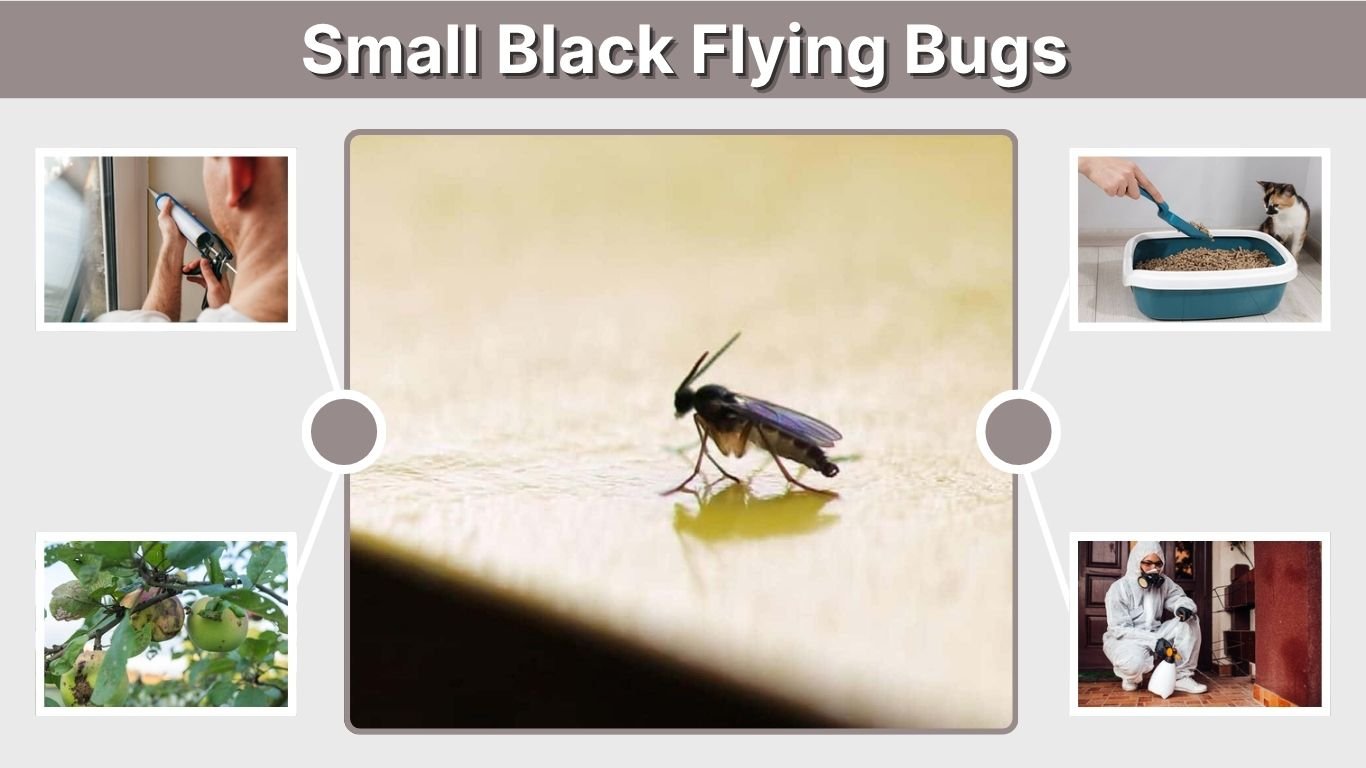
Small black flying bugs inside a house are often fungus gnats, drain flies, phorid flies, fruit flies, or tiny beetles. Larger black flies may be house flies, cluster flies, blow flies, or flesh flies. Because these insects reproduce in different places, correct identification is essential. A treatment that works for flies breeding in plant soil may do nothing against insects developing inside a drain, garbage bin, or wall. Their size, flight pattern, location, and breeding source can help you determine what they are and how to eliminate them.
What Are the Small Black Flying Bugs in My House?
Several insects may look like tiny black flies from a distance. Observe where they gather and how they move before selecting a control method.
Fungus Gnats
Fungus gnats are among the most common little black flying bugs found around houseplants. Adults are usually about 1/8 inch long, with slender bodies, long legs, and narrow wings. They resemble tiny mosquitoes and often make short, weak flights close to the soil.
Their larvae live in damp potting mix, where they feed on fungi, decaying plant material, and sometimes delicate roots. A few adults are mainly annoying, but a large population may affect seedlings and young plants.
Signs of fungus gnats include:
- Tiny black flies hovering over potting soil
- Adults resting on plant pots or nearby windows
- Increased activity after watering
- Small, pale larvae in consistently wet soil
- Yellow sticky cards collecting many slender flies
Allowing the upper layer of soil to dry is one of the most effective ways to interrupt their development.
Drain Flies
Drain flies are small, dark insects covered with fine hairs. Their broad wings create a fuzzy, moth-like appearance. They usually make short, hopping flights and rest on walls near sinks, showers, floor drains, or toilets.
They reproduce in the slimy organic film that builds up inside plumbing. Killing the visible adults will not stop the problem if their larvae remain in a dirty drain.
Place a piece of clear tape over a suspected drain overnight with the sticky side facing downward. Leave a small opening for airflow. Flies caught beneath the tape may confirm that the drain is the source.
Phorid Flies
Phorid flies are tiny flies with arched backs. They are sometimes called scuttle flies because they frequently run across surfaces instead of immediately flying.
They may breed in:
- Decaying food
- Garbage
- Dirty drains
- Damaged sewer lines
- Moist organic matter
- Dead animals
- Contaminated soil beneath flooring
A persistent phorid fly problem can sometimes indicate hidden plumbing or sanitation issues. Professional inspection may be necessary when large numbers continue appearing after ordinary cleaning.
Fruit Flies
Fruit flies are generally tan, brown, or yellowish rather than truly black, but their small size can make them appear dark. They gather around ripe fruit, sugary drinks, alcohol, recycling containers, and garbage disposals.
Fruit flies have compact bodies and often hover around kitchens. If the insects are concentrated near bananas, onions, potatoes, juice, or empty beverage cans, fruit flies are more likely than fungus gnats.
Small Black Flying Bugs That Are Not Fruit Flies
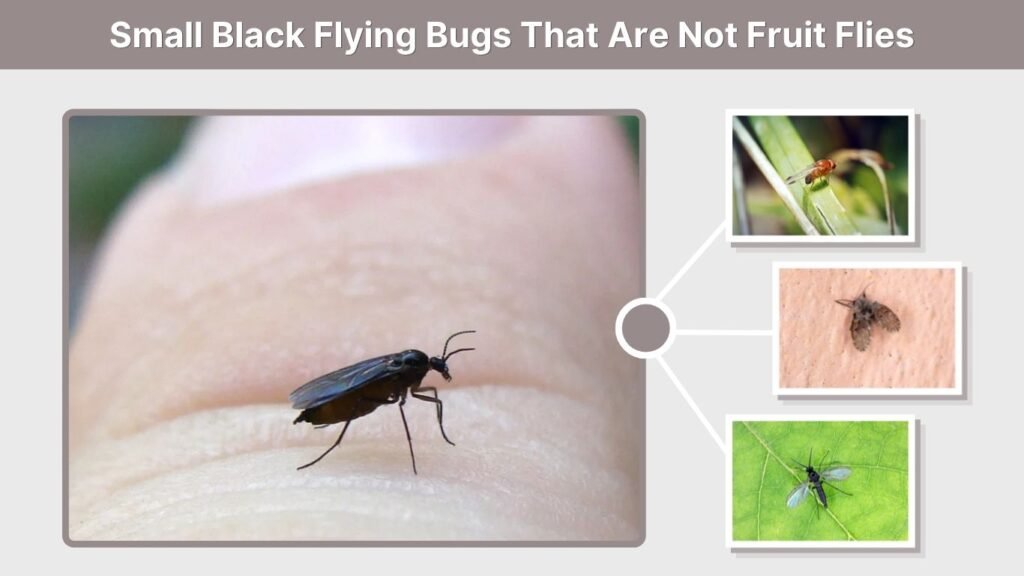
Not every tiny fly in a kitchen is a fruit fly. Their preferred location often provides the best identification clue.
| Insect | Common appearance | Where it is usually found |
| Fungus gnat | Slender and mosquito-like | Houseplants and damp soil |
| Drain fly | Fuzzy with broad wings | Sinks, showers, and drains |
| Phorid fly | Small with an arched back | Drains, garbage, or hidden decay |
| Fruit fly | Tan or brown with a compact body | Fruit, drinks, and recycling |
| Flying ant | Narrow waist and bent antennae | Windows, walls, or wooden areas |
| Small beetle | Hard wing covers and rounded body | Pantry products, fabrics, or windows |
Flying Ants
Flying ants can be mistaken for black flies. They have a narrow waist, bent antennae, and two pairs of wings. The front wings are usually longer than the rear wings.
A sudden appearance of winged ants may mean that a mature colony is located outdoors, beneath flooring, or inside a wall. Carpenter ants are particularly important to identify because they may nest in damp or damaged wood.
Small Flying Beetles
Some tiny beetles fly toward windows and lights. Carpet beetles, drugstore beetles, cigarette beetles, and pantry beetles may all be mistaken for little black flies.
Unlike true flies, beetles have hard wing covers and a more rounded or oval body. Finding them near stored food, wool, carpets, dried flowers, or animal-based materials may reveal their source.
Why Are There Suddenly Lots of Black Flies in the House?
A sudden outbreak usually means that many insects completed development at approximately the same time. The size and behavior of the flies can help locate the source.
Big Black Flies Appearing Suddenly
Large, dark flies may be cluster flies, blow flies, flesh flies, or common house flies. Multiple large flies emerging within a short period can indicate:
- An open garbage container
- Spoiled food
- Animal waste
- A dead rodent or bird
- An uncleaned chimney
- Organic matter trapped in a wall or attic
- Overwintering cluster flies becoming active
Metallic blue or green flies are often blow flies. Their sudden appearance may point to meat waste or a dead animal. Gray flies with dark stripes may be house flies or flesh flies.
If the flies continue emerging from a vent, wall opening, fireplace, or ceiling fixture, inspect the surrounding area for a hidden source.
Black Flies During Winter
Large, slow-moving flies gathering around sunny windows in winter are often cluster flies. They enter buildings through exterior cracks during late summer or autumn and remain protected inside attics or wall spaces.
Warm indoor temperatures or winter sunlight may cause them to become active. Cluster flies do not usually reproduce inside houses. Vacuuming visible adults and sealing exterior openings are more useful than treating indoor drains or garbage.
Small Flies Appearing Around Plants
A sudden increase around houseplants is commonly caused by overwatering. Constantly moist potting soil allows fungus, algae, and decaying organic matter to develop, providing food for fungus gnat larvae.
Newly purchased plants or bags of potting mix may also introduce eggs or larvae. Isolate affected plants when possible and inspect nearby pots.
What Attracts Black Flies Inside the House?
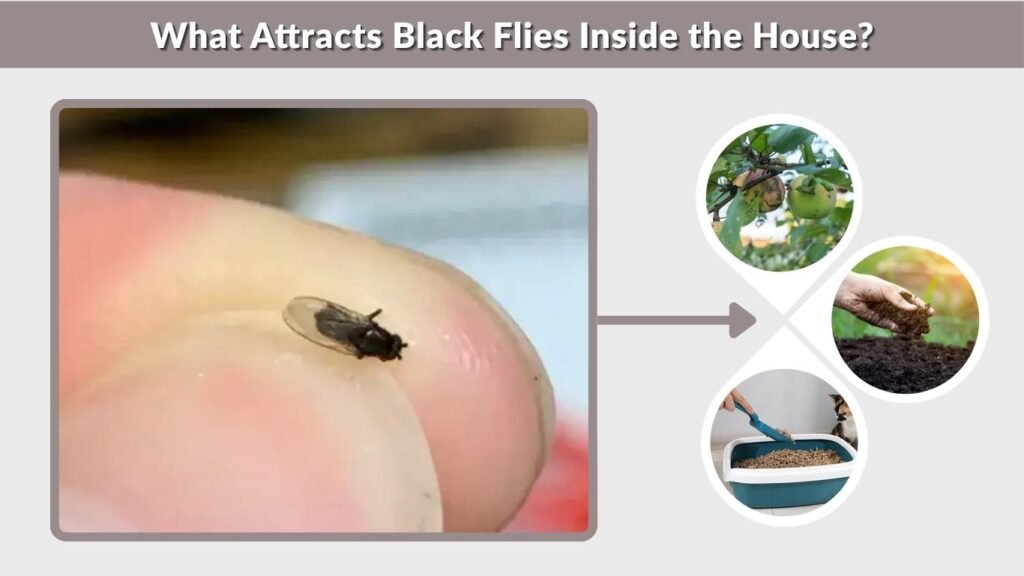
Indoor flying insects are attracted to places that provide food, moisture, warmth, shelter, or breeding material.
Common attractants include:
- Overripe fruit and vegetables
- Garbage and recycling residue
- Wet potting soil
- Organic buildup inside drains
- Pet waste and dirty litter boxes
- Food beneath appliances
- Spilled juice, syrup, or alcohol
- Damp mops, sponges, and cleaning cloths
- Dead animals in inaccessible spaces
- Bright windows and indoor lights
Adult flies may enter through open doors and windows, but a continuing infestation usually means that they have found a suitable indoor breeding source.
How to Get Rid of Small Black Flies in the House
The most successful treatment targets both the adults and the immature insects developing at the source.
Remove Fungus Gnats From Houseplants
Reduce watering and allow the top one to two inches of soil to dry before watering again. Empty saucers beneath pots and make sure every container has suitable drainage.
Remove dead leaves and decaying plant matter from the soil surface. Yellow sticky cards can capture adults and help you measure whether the population is decreasing.
For persistent infestations, replace heavily contaminated potting soil or use a product containing beneficial nematodes or Bacillus thuringiensis israelensis according to its label.
Eliminate Drain Flies
Remove the drain cover and scrub the inside of the pipe with a long, stiff drain brush. The goal is to remove the organic film where larvae feed.
An enzyme-based drain cleaner may help break down remaining organic material. Repeat cleaning over several days and inspect overflow openings, floor drains, garbage disposals, and rarely used fixtures.
Do not mix bleach with vinegar, ammonia, or other cleaning products. Dangerous gases can form when household chemicals are combined.
Control Fruit and Phorid Flies
Throw away spoiled produce and refrigerate ripe fruit temporarily. Wash recycling containers and clean beneath garbage bags. Check potatoes, onions, and other produce stored inside cabinets.
A small dish containing apple cider vinegar and a drop of dish soap can reduce adult fruit flies. However, traps will not solve the infestation unless the breeding material is removed.
Phorid flies require especially thorough inspection. Clean drains, repair leaks, remove decaying material, and investigate damaged sewer lines when the problem persists.
Remove Large Black Flies
Use a vacuum cleaner to remove flies resting on windows, walls, and ceilings. Empty the vacuum outside immediately afterward.
Clean garbage cans, dispose of meat scraps, remove animal waste, and check attics, chimneys, crawl spaces, and wall voids when large flies continue appearing. A pest-control or wildlife-removal professional may be needed to locate an inaccessible dead animal.
How to Prevent Black Flying Bugs From Returning
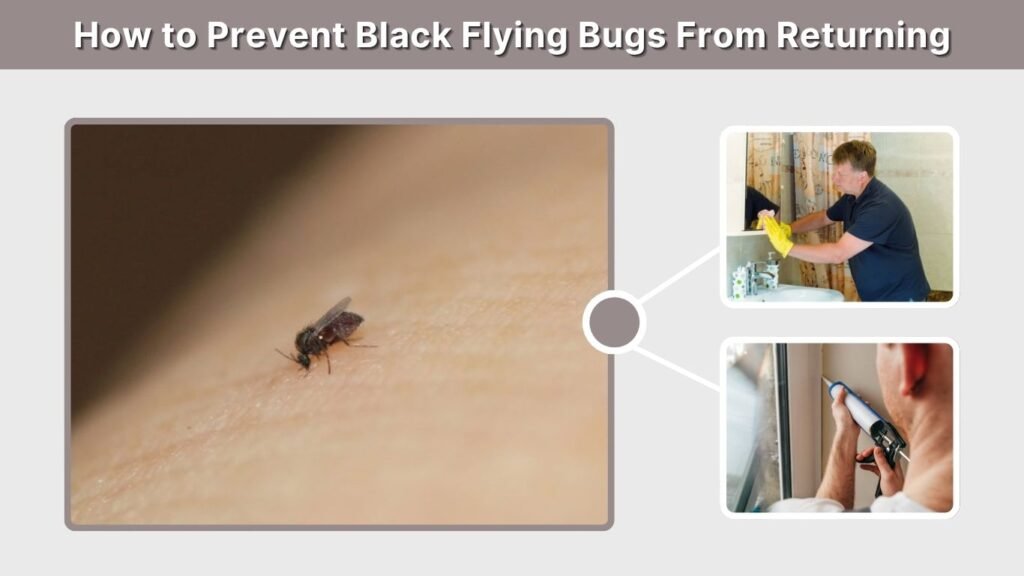
Prevention depends on removing breeding materials and blocking entry points.
Keep Indoor Areas Clean and Dry
Store food in sealed containers and clean spills promptly. Empty garbage frequently and wash bins before residue accumulates. Rinse cans and bottles before placing them in recycling.
Avoid leaving wet mops, sponges, or cloths in dark areas. Repair plumbing leaks and clean drains regularly before heavy organic buildup develops.
Protect Houseplants
Water plants according to their actual needs rather than following a fixed daily schedule. Use pots with drainage holes and avoid allowing water to remain in saucers.
Quarantine new plants for one or two weeks before placing them near an established indoor collection. Inspect new potting soil and keep opened bags dry and securely closed.
Seal Exterior Openings
Repair damaged window screens, add door sweeps, and seal cracks around siding, pipes, vents, utility cables, and window frames. Exterior sealing is especially important for preventing cluster flies and flying ants.
When Should You Call a Professional?
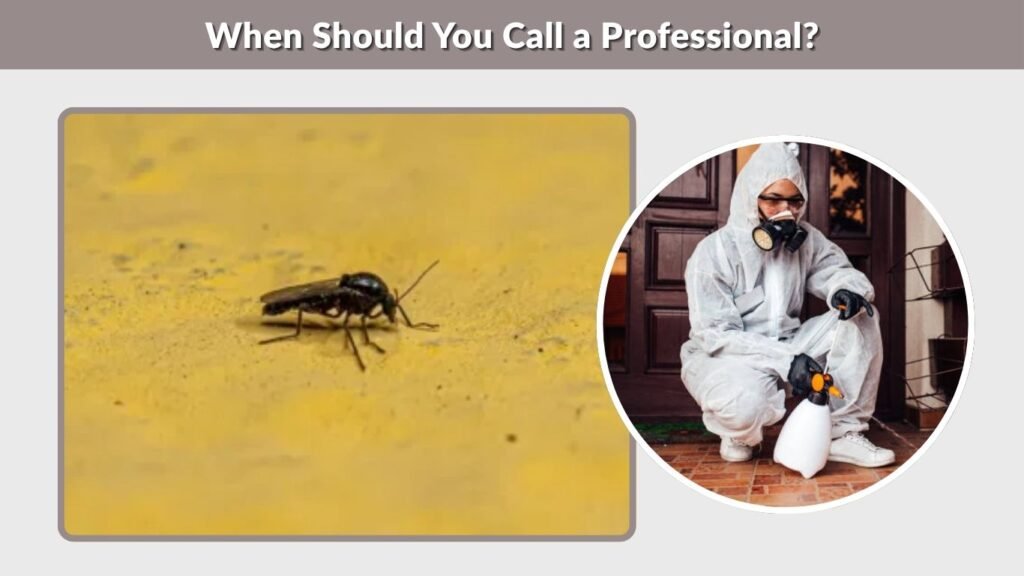
Professional assistance may be necessary when flies continue appearing after all visible food, moisture, and waste have been removed.
Request an inspection when:
- Large flies emerge from walls or vents.
- A strong odor suggests a dead animal.
- Phorid flies may be linked to a sewer leak.
- Flying ants appear repeatedly from wooden structures.
- Drain flies are present throughout the building.
- The infestation continues for several weeks.
- The breeding source cannot be safely accessed.
FAQs
Are small black flying bugs dangerous?
Most fungus gnats and drain flies do not bite people. However, flies that develop in contaminated material may carry microbes onto nearby surfaces. Their presence may also reveal excess moisture, dirty plumbing, spoiled food, or another sanitation problem.
Why are tiny black flies gathering near my windows?
Adult insects are attracted to natural light and may fly toward windows while trying to leave. Their breeding source may be elsewhere, including houseplant soil, drains, garbage, an attic, or a wall space.
Can vinegar eliminate small black flies?
Vinegar traps can capture fruit flies and some other adults, but they do not kill larvae developing in soil, drains, or decaying material. The breeding source must be found and removed for complete control.
Why do I have big black flies in winter?
They may be cluster flies that entered the building during autumn and became active when indoor temperatures or sunlight warmed the wall or attic. Vacuum the adults and seal exterior gaps before the next cold season.
How long does it take to eliminate black flies?
A minor problem may improve within several days after the source is removed. Established infestations can take one to three weeks because eggs, larvae, and pupae may continue developing before the life cycle is fully interrupted.