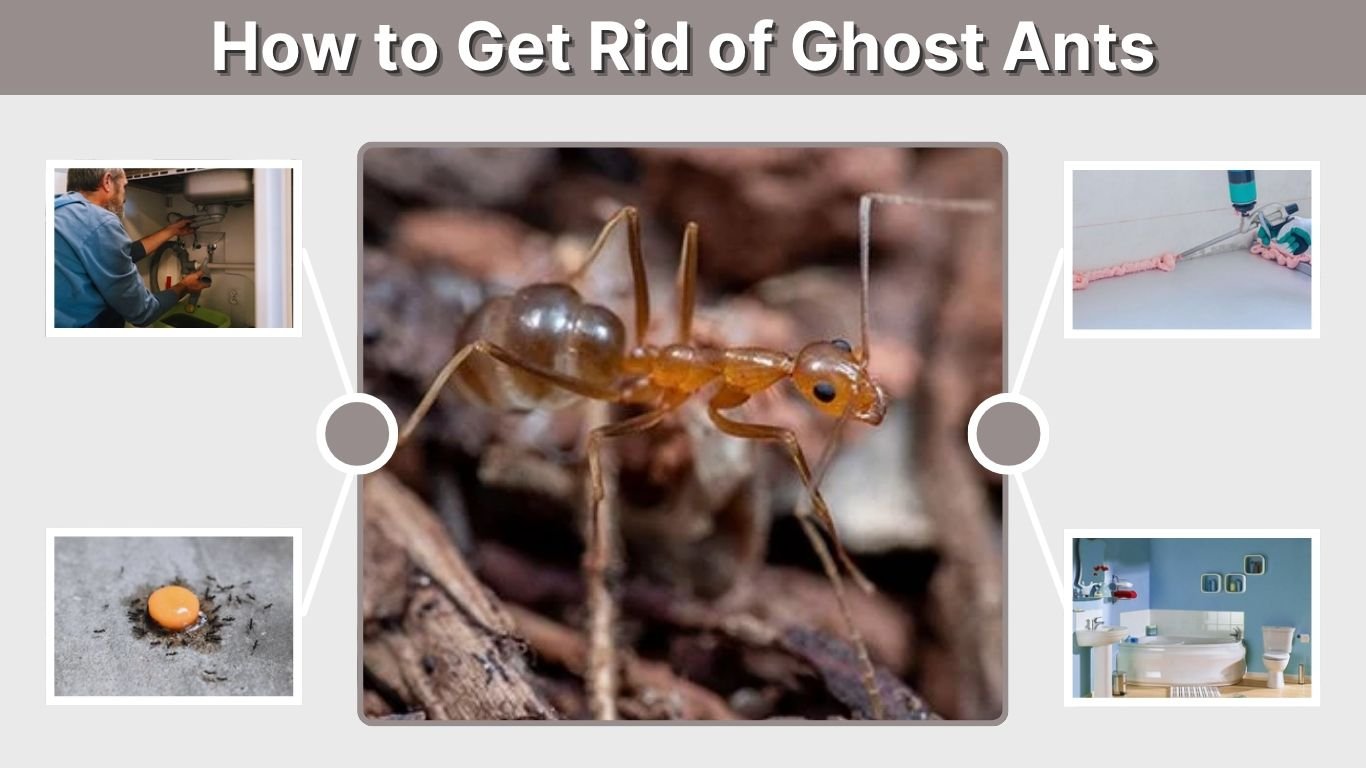
Ghost ants are tiny household pests with dark heads and pale, almost transparent abdomens. They commonly appear around sinks, countertops, bathrooms, potted plants and food-storage areas. Killing the workers you see will not eliminate the hidden queens and nests. The most effective approach combines slow-acting ant bait with sanitation, moisture control, trail removal and exclusion. Spraying visible ants may provide quick relief, but it can interfere with baiting and leave the main colony untouched.
Identify Ghost Ants Before Treatment
Ghost ants, Tapinoma melanocephalum, measure approximately 1.3–1.5 millimeters long. Their heads and thoraxes are dark brown, while their legs and abdomens are pale or milky white. This coloration can make them appear as tiny moving dark spots.
Common Identification Features
Look for:
- Extremely small workers
- Dark heads and middle body sections
- Pale, translucent abdomens and legs
- Fast, irregular movement
- Long trails around food or moisture
- Several trails appearing in different rooms
- A coconut-like odor when workers are crushed
Ghost ants often establish multiple connected nests with several queens. This colony structure is one reason infestations can return after visible ants are killed.
Best Way to Get Rid of Ghost Ants
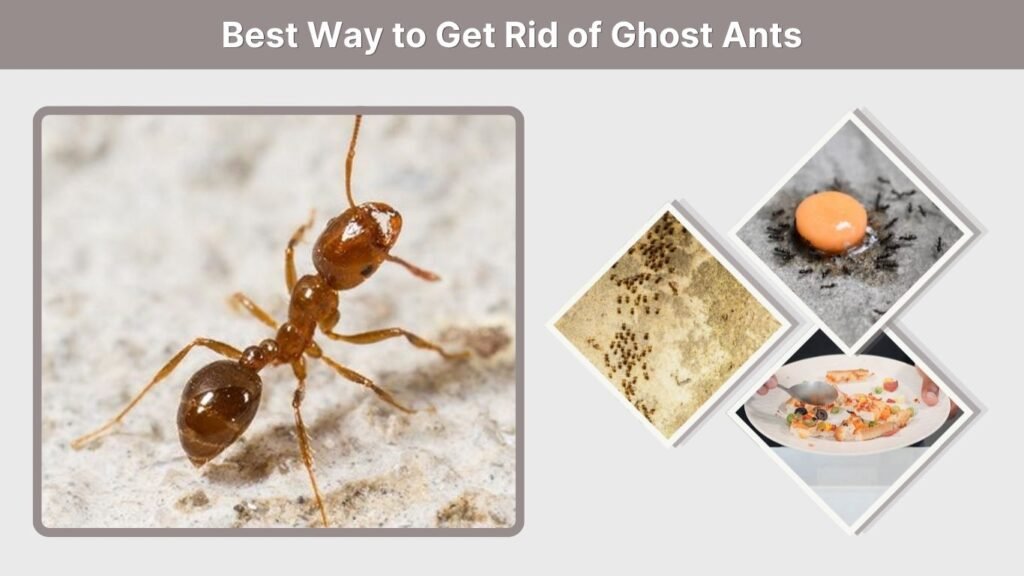
The best method is to place slow-acting bait where workers are already traveling. The ants feed on it and carry it back to hidden nesting areas, where it can be shared with queens, larvae and other workers.
1. Follow the Ant Trails
Before cleaning, observe the ants and determine where they are coming from. Check around:
- Sink pipes
- Cabinet edges
- Baseboards
- Electrical outlets
- Windows and doors
- Appliances
- Bathroom fixtures
- Potted plants
Place bait close to active trails without blocking the ants’ path. Baits work best when workers can find and carry them back to the nest.
2. Choose a Slow-Acting Ant Bait
Ghost ants are often attracted to sugary foods, so liquid or gel bait may work well. The product should be labeled for indoor ants and used exactly as directed.
Common bait active ingredients may include:
- Boric acid or borates
- Fipronil
- Avermectin
- Hydramethylnon
The insecticide must act slowly. A product that kills workers immediately prevents them from sharing it with the rest of the colony. Place bait where children and pets cannot reach it.
3. Test Different Baits
Ant food preferences can change depending on the colony’s needs and available food. Some workers may prefer sweets, while others respond better to protein- or grease-based formulations.
When ants ignore the bait:
- Move it closer to the trail
- Replace dried or contaminated bait
- Remove nearby food sources
- Test another labeled formulation
- Avoid touching bait with cleaning chemicals
Offering different formulations can help reveal what the colony currently prefers.
4. Allow Time for the Bait to Work
Do not expect the infestation to disappear overnight. A visible reduction may begin within approximately 5–10 days, but complete control can take several weeks when numerous nests are present.
Continue replacing empty or dried bait until trails disappear. Seeing more ants around a fresh station may initially be a positive sign because workers are collecting the bait.
How to Get Rid of Ghost Ants in the Kitchen
Kitchens offer sugar, grease, crumbs and water. These competing resources can make bait less attractive.
Remove Food Sources
Clean:
- Sugary spills
- Grease around appliances
- Crumbs beneath cabinets
- Drink residue
- Pet-food dishes
- Rubbish containers
- Food residue inside cupboards
Store food in sealed containers rather than open packaging or thin bags. Empty rubbish regularly and clean recycling containers before storing them indoors.
Control Moisture
Repair leaking taps and pipes. Dry the sink before bedtime and empty water from plant saucers, appliance trays and wet sponges.
Ghost ants frequently travel near plumbing because moisture is essential to their survival. Removing water will not eliminate the colony alone, but it can make bait more attractive.
Clean Trails Without Contaminating Bait
Wipe unwanted trails with soapy water to remove the scent chemicals ants use for navigation. Do not clean directly around an active bait station while workers are feeding.
Avoid spraying perfume, disinfectant or insecticide close to bait. Chemical residues may cause workers to avoid the area.
How to Get Rid of Ghost Ants Naturally
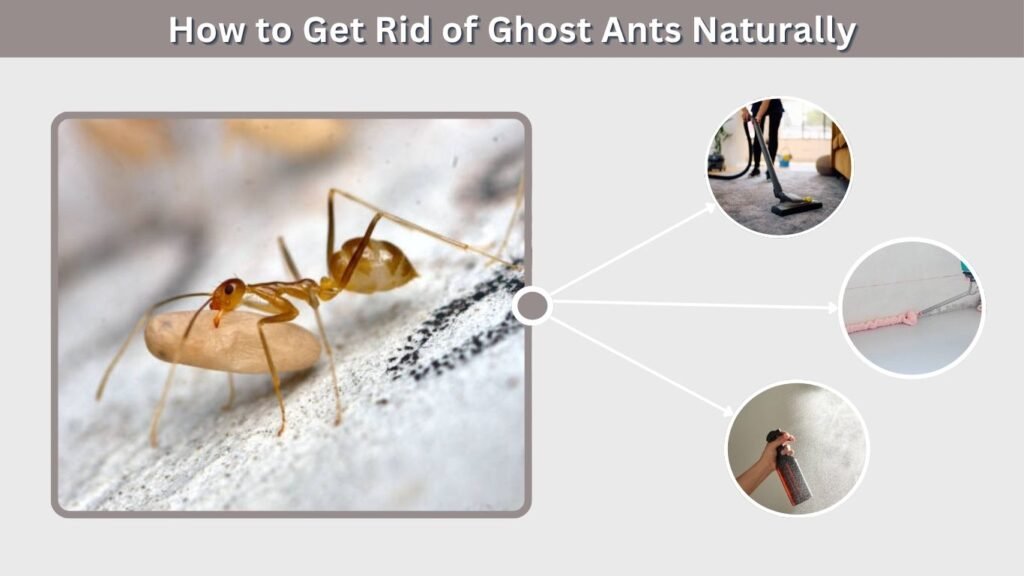
Natural methods can remove visible workers and reduce attractants, but they may not eliminate queens hidden inside walls.
| Natural method | What it can do | Limitation |
| Soapy water | Removes ants and scent trails | Does not reach hidden colonies |
| Vacuuming | Quickly removes visible workers | Ants may return from the nest |
| Food sanitation | Reduces available food | Must be combined with baiting |
| Moisture control | Makes rooms less attractive | Does not kill queens |
| Sealing gaps | Reduces future entry | Should follow colony control |
| Essential-oil sprays | May kill or repel exposed ants | Limited residual colony control |
Some plant-oil products can kill ants on contact, but their effect is generally temporary. Repelling workers may also redirect trails without eliminating the colony.
Does Borax Get Rid of Ghost Ants?
Borax or boric acid is included in some commercially prepared ant baits. However, homemade mixtures can be unreliable. If the concentration is too strong, workers may die before returning to the nest; if it is too weak, control may fail.
A ready-to-use, labeled bait provides clearer instructions and safer placement than an improvised mixture. Never place borax solutions where children or animals could drink them.
What Not to Do
Do Not Spray Active Trails
Contact sprays kill only the ants they touch. The queens and developing ants remain protected inside hidden nests.
Sprays can contaminate nearby bait and prevent workers from feeding. Indoor sprays are usually unnecessary when ants can be managed through sanitation, exclusion and baiting.
Do Not Place Bait Beside Repellent Products
Avoid using insecticide sprays, strong cleaners or essential-oil repellents around bait stations. The purpose of bait is to attract workers, not drive them away.
Do Not Seal Every Gap Immediately
Sealing entry points is important, but first allow indoor workers to find the bait. Closing one route too early may cause ants to emerge from another crack.
After activity declines, seal gaps around pipes, doors, windows, wiring and foundations.
Ghost Ants in Bathrooms
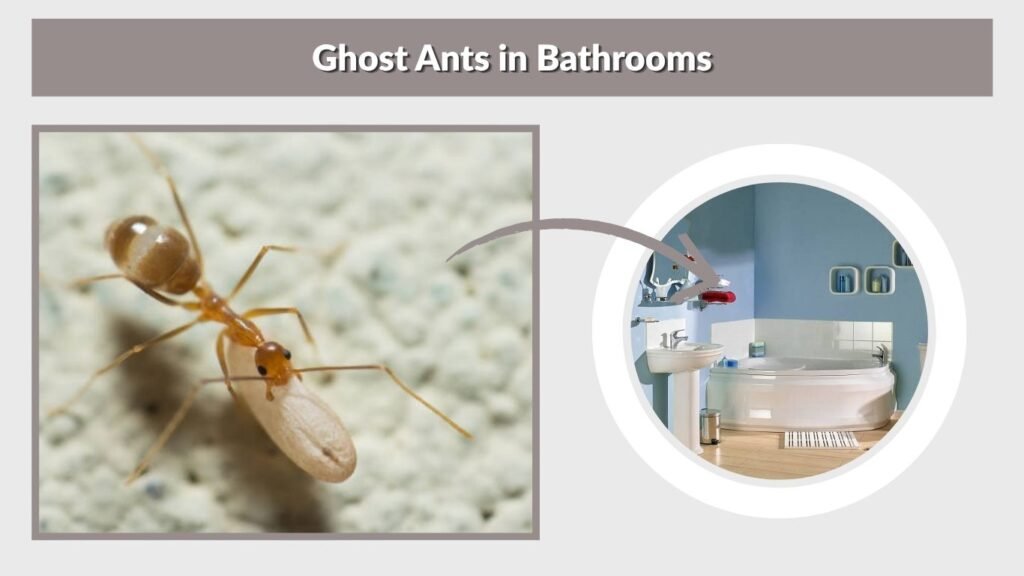
Bathrooms attract ghost ants because they provide water, warmth and hidden wall spaces. Inspect around taps, drains, toilets, pipes, cabinets and damp baseboards.
Repair leaks, improve ventilation and place labeled bait near trails but away from splashing water. Do not pour insecticide down drains unless the label specifically permits that use.
Ghost Ants in Potted Plants
Potted plants may contain entire ghost-ant nests. Check beneath containers, inside drainage holes and around the soil surface.
Move an infested outdoor plant away from the building. UC IPM recommends taking infested potted plants outside and, when appropriate, treating them using a method specifically labeled for plants. Do not pour ordinary household ant killer into potting soil.
How to Get Rid of Ghost Ants in a Car
Ghost ants may enter a car because of food residue or because the vehicle is parked near an outdoor nest.
Remove them by:
- Taking out rubbish and food packaging.
- Vacuuming seats, carpets and storage areas.
- Cleaning cup holders and sugary spills.
- Checking items transported in the vehicle.
- Moving the car away from the suspected nest.
- Using only bait labeled for the intended location.
Avoid applying household sprays throughout an enclosed passenger compartment.
How to Prevent Ghost Ants From Returning
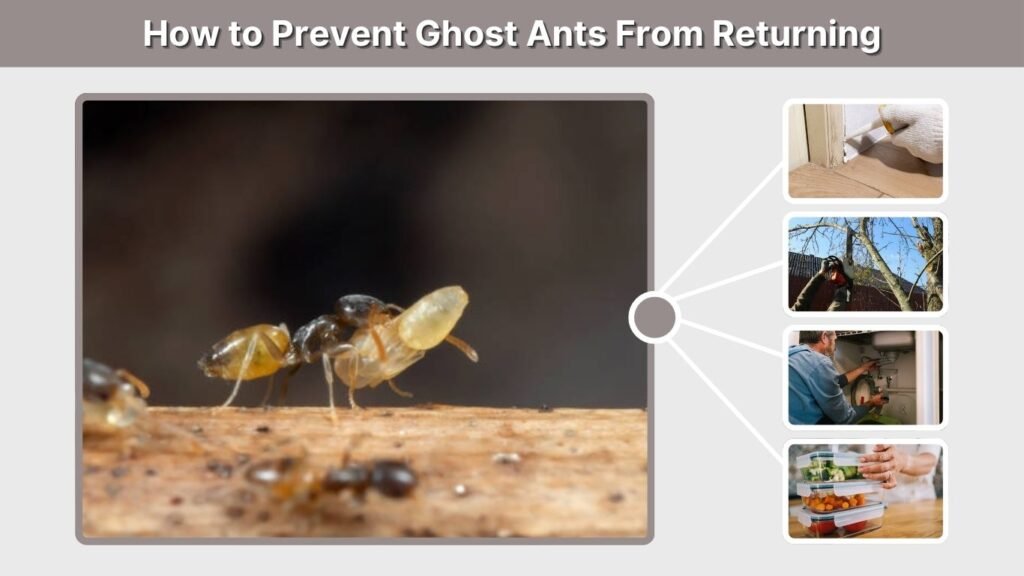
After ant activity has stopped:
- Seal cracks around windows and doors
- Caulk openings around pipes and cables
- Repair damaged screens
- Trim branches touching the house
- Keep plants and mulch away from the foundation
- Store food in airtight containers
- Repair plumbing leaks
- Inspect new potted plants before bringing them inside
- Clean counters and floors regularly
Sanitation and exclusion should continue after baiting because complete outdoor ant elimination is generally unrealistic. The practical goal is to prevent colonies from entering and nesting inside buildings.
When to Call an Exterminator
Contact a pest professional when ants continue appearing after several weeks of correct baiting, trails are present throughout multiple rooms or nests appear to be inside inaccessible wall spaces.
Professional treatment may also be needed in apartments, condominiums and shared buildings where colonies can move between units. Ask the provider about identification, baiting and targeted treatments rather than relying only on routine spraying.
FAQs
What is the fastest way to get rid of ghost ants?
Clean food spills, remove water sources and place slow-acting bait beside active trails. Visible workers can be wiped away with soapy water, but permanent control requires the bait to reach hidden queens and larvae.
Why are ghost ants so hard to eliminate?
Colonies can contain multiple queens and several connected nesting sites. Killing workers on the counter leaves the reproductive ants protected, allowing the infestation to continue or reappear.
How long does ghost-ant bait take to work?
The number of visible ants may decline within 5–10 days, but a large infestation can take several weeks. Keep bait fresh and continue until all trails disappear.
Can I use essential oils against ghost ants?
Some formulated plant-oil products kill or repel exposed ants, but they have limited residual effect and may not reach the colony. Keep repellents away from bait stations.
Why is my ant bait not working?
The bait may be dry, contaminated, poorly placed or unsuitable for the ants’ current food preference. Remove competing food, move it closer to the trail and test another labeled bait.