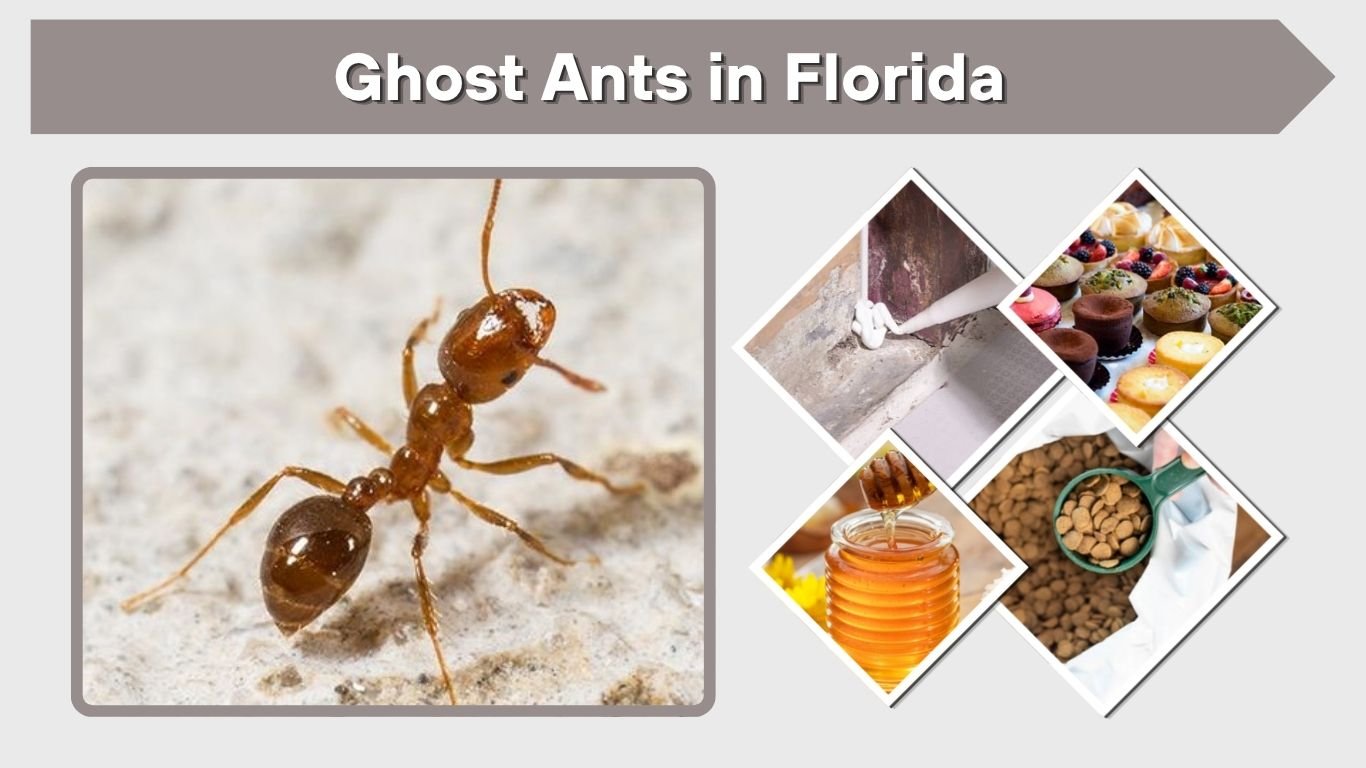
Ghost ants are among Florida’s most common indoor ant pests, particularly in the central and southern parts of the state. These insects have dark heads and nearly transparent legs and abdomens, making them difficult to notice on light-colored surfaces. They frequently invade kitchens, bathrooms, potted plants and wall spaces while searching for sweets and moisture. Because colonies contain multiple queens and connected nesting sites, slow-acting bait is usually more effective than spraying visible workers.
Florida Ghost Ant Quick Facts
Ghost ants are tropical insects that can live outdoors year-round in much of Florida. They are especially established from the Sarasota and Orlando areas southward, although populations have also been reported farther north.
| Feature | Information |
| Scientific name | Tapinoma melanocephalum |
| Worker size | About 1.3–1.5 millimeters |
| Head and thorax | Dark brown |
| Abdomen and legs | Pale or milky white |
| Preferred food | Sweets, honeydew and insects |
| Common locations | Kitchens, bathrooms and potted plants |
| Nest structure | Multiple queens and connected subcolonies |
| Bite risk | Very low |
| Best control | Slow-acting ant bait |
What Do Ghost Ants Look Like?
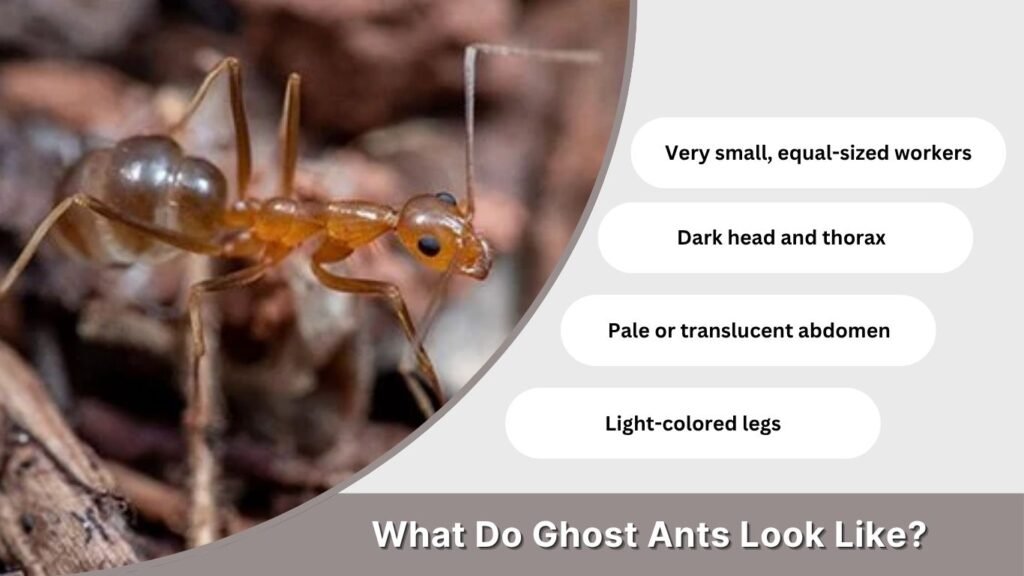
Ghost ant workers are extremely small, measuring approximately 1.3–1.5 millimeters long. Their heads and middle body sections are dark brown, while their legs and abdomens are pale, opaque or milky white. This two-toned appearance can make the abdomen seem invisible when the ant crosses a countertop or wall.
Identification Features
Look for these characteristics:
- Very small, equal-sized workers
- Dark head and thorax
- Pale or translucent abdomen
- Light-colored legs
- Twelve-segmented antennae
- No spines on the thorax
- One waist node hidden beneath the abdomen
- Rapid, irregular movement when disturbed
When crushed, ghost ants may produce an odor resembling rotten coconut. They are smaller and more lightly colored than odorous house ants.
Where Do Ghost Ants Live in Florida?
Florida’s warm, humid conditions allow ghost ants to establish nests both indoors and outdoors. They are especially important household pests in central and South Florida, although they can also be transported to new locations in plants, soil and other materials.
Outdoor Nesting Sites
Outside, ghost ants may nest in:
- Flowerpots and potting soil
- Damp grass
- Hollow plant stems
- Spaces beneath loose bark
- Leaf litter and garden debris
- Soil beneath stones or outdoor objects
- Bases of palm fronds
- Cracks near foundations
Plants and tree branches touching a building can provide convenient bridges into the home. Outdoor workers may also enter through tiny gaps around doors, windows, plumbing and utility lines.
Indoor Nesting Sites
Inside Florida homes, ghost ants frequently establish small nests in:
- Wall voids
- Kitchen cabinets
- Spaces behind baseboards
- Electrical outlets and switch plates
- Potted plants
- Bathroom walls
- Gaps around sinks and pipes
- Spaces between books or stored materials
Colonies are commonly divided into several subcolonies that exchange workers, queens and developing ants along established scent trails.
Why Are Ghost Ants in Florida Kitchens?
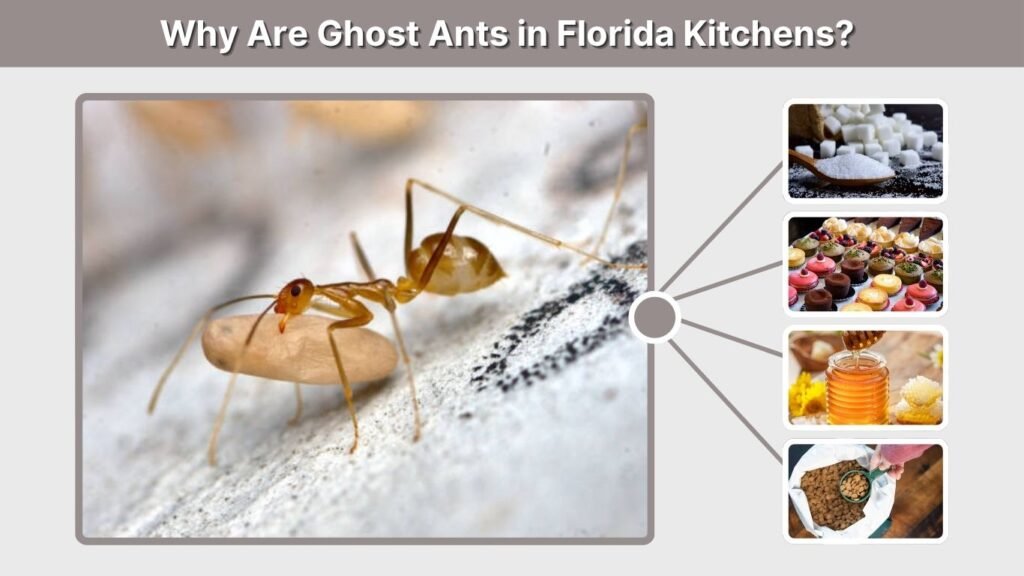
Ghost ants commonly invade kitchens because these rooms provide food, moisture and protected nesting spaces. Workers may form trails around counters, sinks, cupboards, dishwashers and refrigerators.
They are particularly attracted to:
- Sugar
- Syrup and honey
- Cakes and baked foods
- Fruit and juice
- Soft drinks
- Sweet spills
- Pet food
- Grease and food residue
- Water around sinks
- Leaking pipes
Outdoors, ghost ants also feed on dead or living insects and collect sugary honeydew produced by aphids, scales, whiteflies and other sap-feeding pests.
Do Ghost Ants in Florida Bite?
Ghost ants are not considered medically significant biting or stinging ants. They lack stingers, and their extremely small mandibles are unlikely to produce a noticeable injury. Their presence is mainly a sanitation and nuisance problem rather than a direct physical danger.
A small itchy bump noticed after seeing ants may have been caused by another pest, such as a mosquito, flea, mite or bed bug. There is no distinctive skin mark that can reliably identify a ghost ant bite.
Wash any irritated skin with soap and water and use a cold compress for mild discomfort. Seek medical attention when swelling, pain or redness becomes progressively worse.
Are Florida Ghost Ants Dangerous?
Ghost ants do not eat wood or cause termite-like structural damage. However, they can crawl across rubbish, sinks and other contaminated surfaces before entering cupboards or food containers.
Their ability to establish numerous nests makes an infestation difficult to control. Colonies have multiple reproductive females and can spread through budding, a process in which queens and workers leave an established nest to create another nearby colony.
How to Get Rid of Ghost Ants in Florida
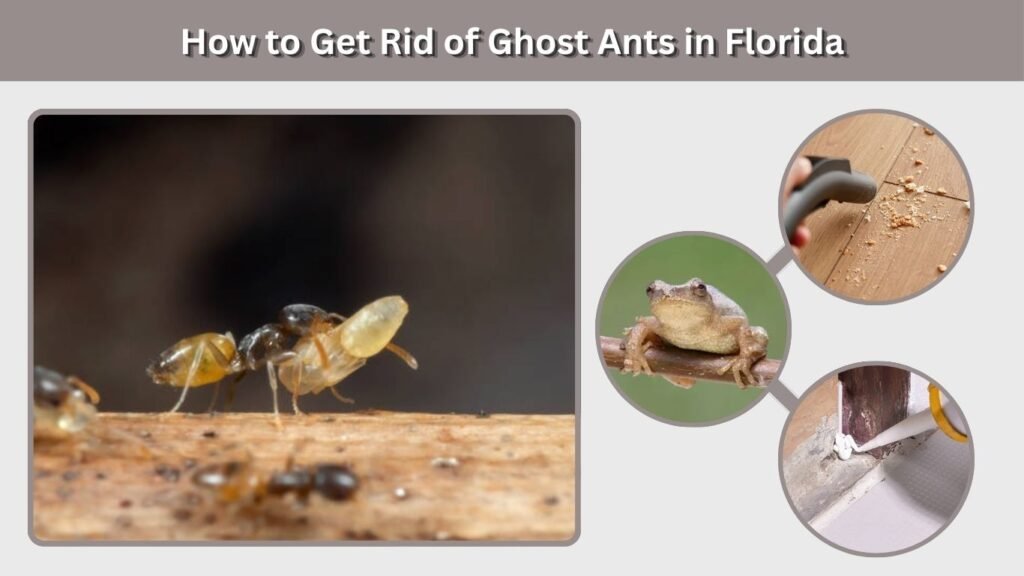
Successful control requires eliminating queens and hidden colonies rather than killing only the workers seen on countertops.
1. Follow the Ant Trails
Watch the ants before cleaning or disturbing their trails. Determine where they enter walls, cabinets or exterior openings.
Check around:
- Sinks and plumbing
- Counter edges
- Windows and doors
- Baseboards
- Appliances
- Electrical outlets
- Potted plants
- Exterior foundations
Finding major nesting or entry areas improves the effectiveness of bait placement.
2. Remove Food and Water
Clean crumbs, grease and sugary spills from counters and floors. Store food in tightly sealed containers and avoid leaving pet food out overnight.
Repair leaking pipes and dripping taps. Empty plant saucers, appliance trays and other sources of standing water. Managing food and moisture makes the property less attractive to ghost ants and improves bait performance.
3. Use Slow-Acting Ant Bait
Place a labeled liquid or gel ant bait close to active trails, cracks and suspected nesting areas. Ghost ants commonly prefer sweet foods, so a sugar-based bait is often a useful starting point.
Workers consume the bait and carry it back to the nest, where it can be shared with larvae, queens and other workers. The insecticide must act slowly enough for this transfer to occur.
Check bait within one or two days. When ants ignore it:
- Move it closer to an active trail
- Replace dried or contaminated bait
- Try another labeled formulation
- Remove competing food sources
Place all pesticides where children and pets cannot access them, and follow the product label exactly.
4. Do Not Spray the Trail
Contact sprays may kill visible workers quickly but usually do not reach the queens. Disturbing a budding species can also encourage ants to relocate and establish additional nesting sites.
Avoid spraying insecticide, bleach or household cleaner around bait. Strong odors or residues can prevent workers from feeding and carrying the bait back to the colony. Baits generally provide better long-term colony control than treatments aimed only at visible workers.
5. Inspect Potted Plants
Potted plants are common ghost ant nesting sites in Florida. Examine the soil, drainage holes and areas beneath containers for moving workers.
Move infested outdoor pots away from the house. Indoor plants may require a treatment specifically labeled for use around plants. Do not apply ordinary household insecticide directly to potting soil unless the label allows it.
6. Seal Entry Points
Once ant activity has declined, seal gaps around windows, doors, pipes, cables, baseboards and siding. Repair damaged screens and trim branches or shrubs touching the building.
Exclusion cannot remove an established indoor colony, but it can reduce repeated invasions from nests outside.
Ghost Ants in Florida Cars
Ghost ants may enter vehicles searching for food, moisture or shelter. They may also be transported inside potted plants, groceries, boxes or other items.
To remove them:
- Remove all food wrappers and rubbish.
- Vacuum seats, carpeting and storage areas.
- Clean sugary spills and drink holders.
- Check where the vehicle is regularly parked.
- Use only an ant bait labeled for the intended location.
Avoid spraying the passenger compartment with products that are not approved for vehicle interiors. An infestation may return when the car is parked beside an active outdoor colony.
Ghost Ants vs. Sugar Ants in Florida
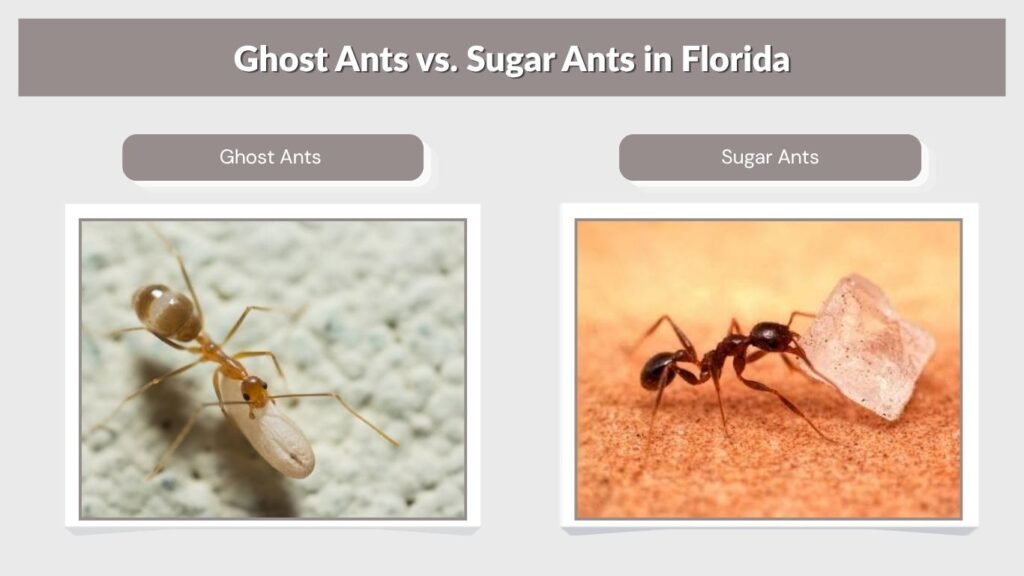
“Sugar ant” is a general nickname used for several ants attracted to sweet foods. A Florida sugar-ant complaint may involve ghost ants, odorous house ants, Pharaoh ants or another small species.
| Feature | Ghost ant | General sugar ant |
| Color | Dark head with pale abdomen | Varies by species |
| Size | About 1.3–1.5 mm | Small to medium |
| Preferred food | Sweets and honeydew | Usually sugary foods |
| Nesting | Indoors and outdoors | Depends on species |
| Identification | Distinct two-toned body | Not a specific species |
When to Call an Exterminator
Professional pest control may be needed when ants remain after several weeks of careful baiting, appear throughout multiple rooms or repeatedly emerge from wall voids.
Apartment and condominium infestations can be especially difficult because connected colonies may extend between units. A professional can identify the species, locate activity areas and apply bait throughout every affected section of the building.
FAQs
Why are ghost ants so common in Florida?
Florida provides the warm temperatures and high humidity this tropical species needs. Ghost ants can live outdoors year-round and readily enter homes in search of food, moisture and nesting sites.
What is the best bait for Florida ghost ants?
A slow-acting sweet liquid or gel bait is often effective. However, food preferences can change, so try another labeled bait when workers ignore the first option.
How long does ghost ant bait take to work?
Visible activity may begin declining within several days, but large infestations can take several weeks to eliminate. Continue refreshing the bait until all trails disappear.
Can ghost ants damage a Florida home?
Ghost ants do not eat wood or create structural galleries. They use existing cracks, wall spaces and other protected cavities as nesting sites.
Should I kill ghost ants on the counter?
You can wipe individual workers away with soapy water, but killing visible ants will not eliminate the colony. Place bait near the trail so workers can carry it back to the hidden queens.