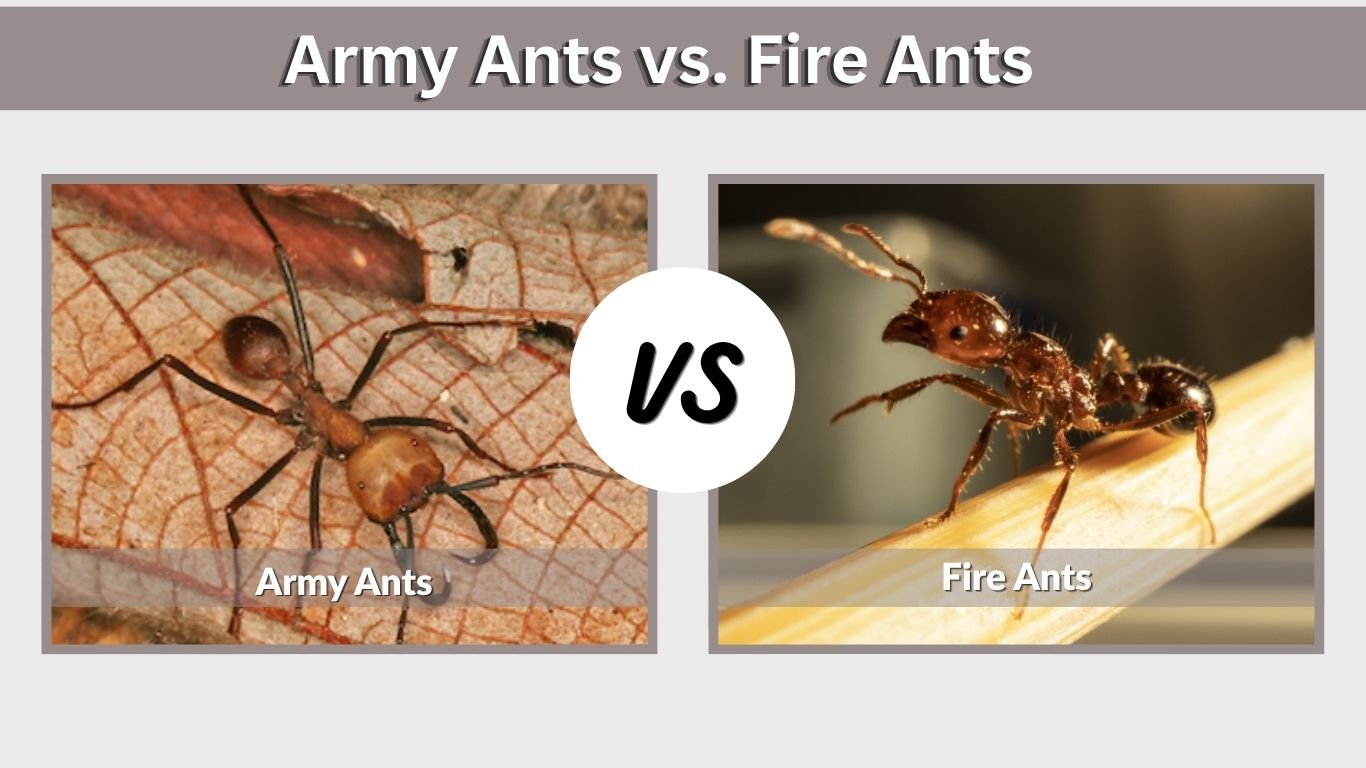
Army ants and fire ants are both aggressive social insects, but they live and fight in remarkably different ways. Army ants are nomadic predators famous for conducting enormous coordinated raids. Fire ants establish permanent underground colonies and fiercely defend their mounds with painful, venomous stings. Although either group can overwhelm small animals through sheer numbers, they differ significantly in appearance, habitat, diet, nesting behavior, and danger to humans.
Army Ants vs. Fire Ants: Quick Comparison
Army ants are primarily tropical hunters, whereas fire ants are adaptable mound-building ants commonly found in warm, open environments. The term “army ant” includes more than 200 predatory species, while “fire ant” usually describes species belonging to the genus Solenopsis.
| Feature | Army ants | Fire ants |
|---|---|---|
| Ant group | Numerous genera and species | Primarily Solenopsis species |
| Typical habitat | Tropical forests | Lawns, fields, roadsides and disturbed soil |
| Nest | Temporary living bivouac | Permanent underground nest and mound |
| Main defense | Powerful mandibles and mass attack | Biting followed by venomous stinging |
| Diet | Insects, spiders and other ants | Insects, seeds, oils and sugary substances |
| Colony movement | Frequently nomadic | Usually remains around an established nest |
| Human danger | Low unless directly encountered | Significant because workers readily sting |
What Are Army Ants?
Army ants are nomadic, highly organized predators found mainly in tropical regions of Africa, Asia, Central America, and South America. Well-known examples include Eciton army ants in the Americas and Dorylus driver ants in Africa.
Instead of sending out individual scouts, many species hunt in coordinated columns or broad swarms. Smithsonian researchers describe raids containing as many as 200,000 ants hunting spiders, crickets, and other arthropods. Some army ants specialize in invading other ant colonies and carrying away their larvae and pupae.
Appearance
Army ants vary considerably between species. Workers may be reddish brown, dark brown, or nearly black. Many have relatively long legs and streamlined bodies that help them travel rapidly.
Soldiers are usually larger than ordinary workers and possess enlarged, curved mandibles. Some underground species have greatly reduced eyes or are completely eyeless because they navigate mainly with scent and physical contact.
Temporary Nests
Army ants generally do not build permanent soil mounds. Thousands of workers link their legs and bodies together to form a temporary living nest called a bivouac. It shelters the queen, eggs, larvae, and developing pupae.
The colony alternates between stationary and nomadic phases. When food demands increase, the ants dismantle their living nest, transport their young, and relocate to another hunting area.
What Are Fire Ants?
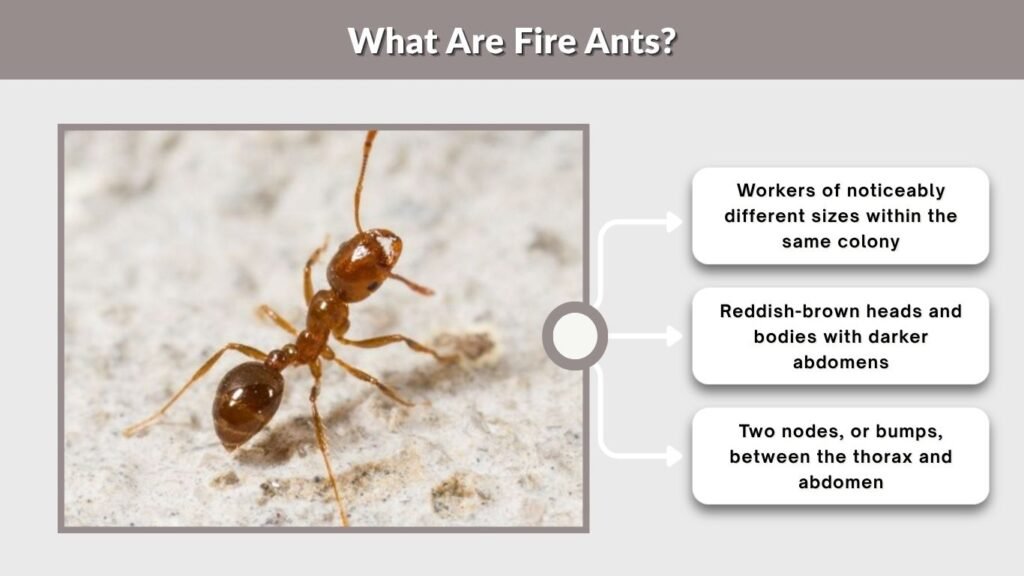
Fire ants are small but highly defensive ants named for the burning sensation produced by their stings. Red imported fire ants, Solenopsis invicta, are particularly well known because they have become invasive pests in several regions outside their native South American range.
Fire ants build extensive underground nests, often marked by loose, dome-shaped soil mounds. A colony can rapidly mobilize large numbers of workers when the nest is disturbed.
Identification
Important fire ant identification features include:
- Workers of noticeably different sizes within the same colony
- Reddish-brown heads and bodies with darker abdomens
- Two nodes, or bumps, between the thorax and abdomen
- Elbowed antennae ending in a two-part club
- Soil mounds that may lack an obvious central entrance
- Aggressive workers that climb onto objects disturbing the nest
Correct identification can be difficult because numerous small red ants resemble fire ants.
How Fire Ants Attack
A fire ant holds the target with its mandibles and repeatedly drives its stinger into the skin. Its venom causes immediate burning or intense itching, often followed by small, blister-like pustules.
When a mound is disturbed, hundreds of ants may emerge, climb upward, and sting almost simultaneously. The USDA notes that imported fire ants respond rapidly and aggressively to nest disturbance and can inflict numerous painful stings.
Major Behavioral Differences
The clearest distinction involves how the two groups obtain food and protect their colonies.
| Behavior | Army ants | Fire ants |
|---|---|---|
| Foraging style | Organized mass raids | Trails of workers leaving a permanent nest |
| Colony strategy | Movement and continuous hunting | Territorial defense and resource collection |
| Response to prey | Overwhelm and dismember it | Bite, sting and carry it away |
| Nest defense | Soldiers use large mandibles | Workers swarm and repeatedly sting |
| Interaction with other ants | Often raid their nests | Compete with or displace nearby colonies |
Army ants are offensive specialists. Their survival depends on moving together and capturing large quantities of prey. Fire ants are more flexible omnivores and defensive territorial competitors.
Fire ants also use venom to immobilize prey and repel intruders. USDA research indicates that their venom additionally helps suppress pathogens within the colony, giving it a role beyond attack and defense.
Differences in Diet
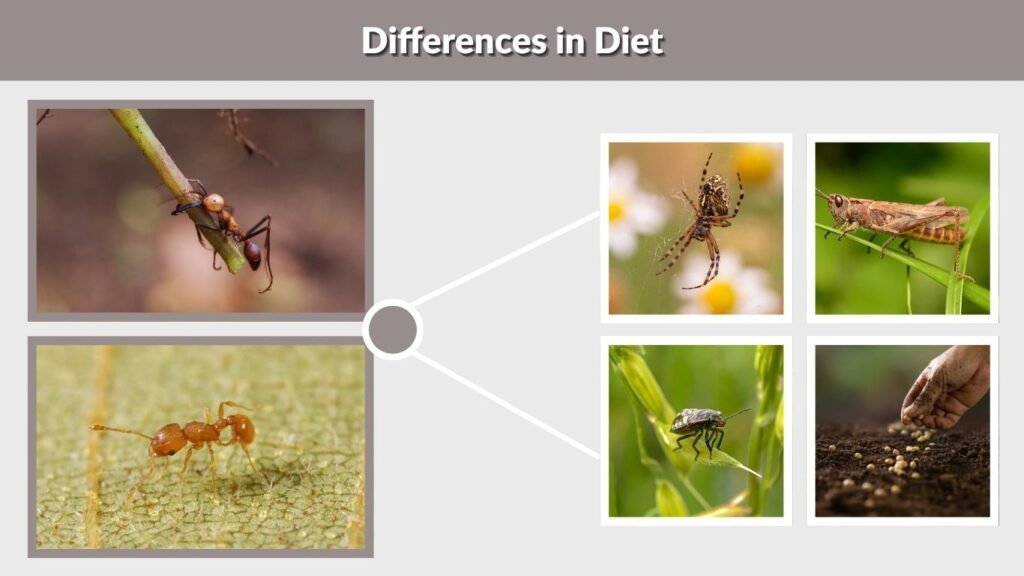
Both ants eat animal prey, but army ants are generally more specialized predators.
What Army Ants Eat
Army ants commonly consume:
- Other ants and their brood
- Spiders
- Crickets and grasshoppers
- Beetles and their larvae
- Cockroaches
- Scorpions and other small arthropods
Some large colonies may attack small vertebrates that cannot escape, but popular stories about army ants consuming healthy people or large animals are greatly exaggerated. Most mobile animals simply move away from an approaching raid.
What Fire Ants Eat
Fire ants have a broader omnivorous diet. They eat insects, dead animals, seeds, oily materials, honeydew, and sweet foods. Workers can kill small prey with venom but also scavenge anything useful that they discover.
Their flexible diet is one reason invasive fire ants thrive around farms, urban developments, lawns, and other disturbed environments.
Army Ants vs. Fire Ants: Which Are More Dangerous?
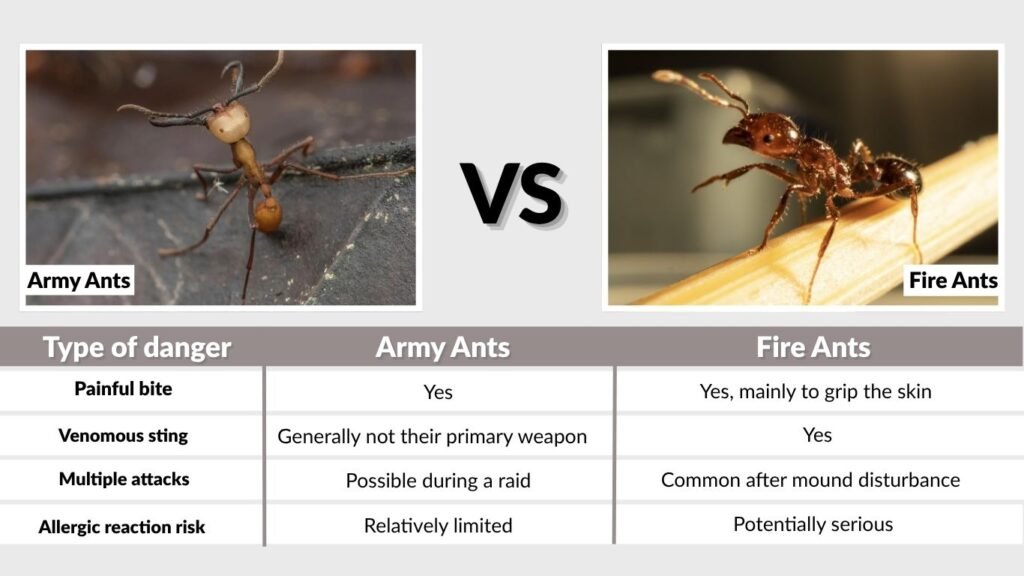
For an average person, fire ants are usually more dangerous. People commonly encounter their hidden mounds in yards, parks, fields, and pastures. One accidental step can provoke dozens or hundreds of stings.
Army ants appear frightening because of their enormous raids, but they generally live in forests and do not defend permanent mounds in lawns. Their workers can bite, and the larger soldiers may cut skin with their mandibles, but routine human encounters are relatively uncommon.
| Type of danger | Army ants | Fire ants |
|---|---|---|
| Painful bite | Yes | Yes, mainly to grip the skin |
| Venomous sting | Generally not their primary weapon | Yes |
| Multiple attacks | Possible during a raid | Common after mound disturbance |
| Allergic reaction risk | Relatively limited | Potentially serious |
| Common around homes | Uncommon for most species | Common in infested regions |
Anyone who develops difficulty breathing, facial swelling, dizziness, or widespread hives following ant stings needs immediate medical assistance.
Army Ants vs. Fire Ants: Who Would Win?
In a direct colony battle, there is no guaranteed winner. The outcome would depend on the species, number of workers, location, and whether one group was attacking the other’s nest.
Army ants would likely have the advantage during a moving raid. Their columns are designed to penetrate insect nests, surround defenders, and carry away brood. Large soldiers possess formidable mandibles, while an immense workforce can continuously replace ants at the front.
Fire ants would have a stronger chance around their own mound. They could recruit thousands of defenders from underground chambers, sting attackers, and use narrow tunnels to protect the queen and brood. Their venom could be particularly effective against individual army ants.
Overall, an enormous army-ant swarm would probably overwhelm a smaller exposed fire-ant colony. A large, established fire-ant colony defending deep underground chambers could resist effectively. Therefore, colony size and battlefield conditions matter more than the ants’ names.
Army Ants vs. Other Aggressive Ants
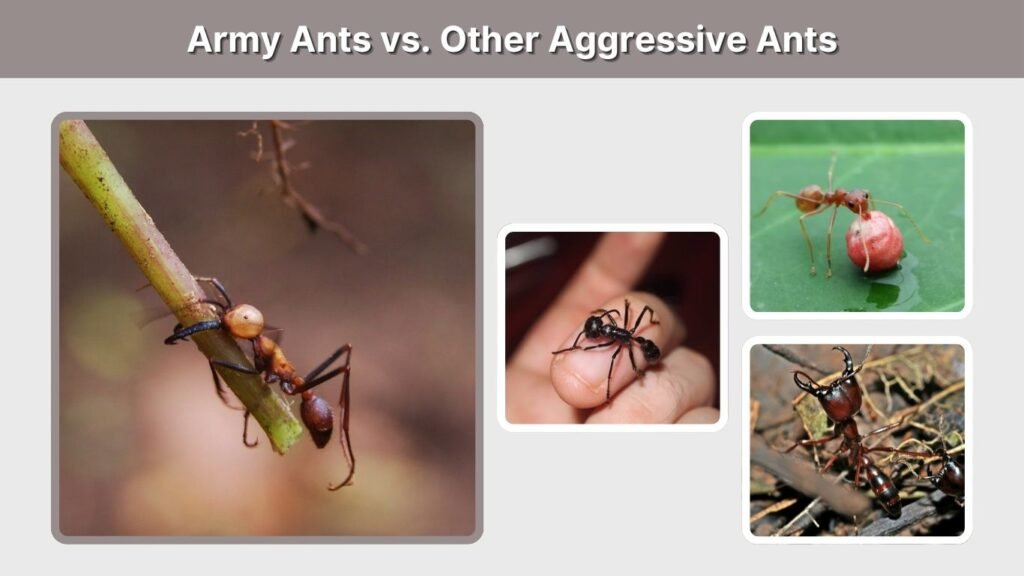
Army ants are sometimes compared with bullet ants, weaver ants, leafcutter ants, and driver ants.
Driver ants are actually African army ants rather than a completely separate group. Weaver or green ants construct nests from leaves and aggressively defend territories in trees. Bullet ants rely on exceptionally painful individual stings but do not conduct army-ant-style mass raids. Leafcutter ants gather vegetation to cultivate fungus and maintain permanent underground colonies.
These groups can all be formidable, yet their lifestyles and reasons for fighting are very different.
FAQs
Are army ants the same as fire ants?
No. Army ants are nomadic predators that conduct coordinated raids and often create temporary nests from their bodies. Fire ants establish permanent underground colonies, collect a wider variety of food, and use venomous stings to defend themselves and immobilize prey.
Do army ants sting like fire ants?
Most familiar army ants primarily use strong mandibles rather than the painful defensive sting associated with fire ants. Some army-ant species can sting, but bites and cutting mandibles are generally their more noticeable weapons. Fire ants deliberately bite the skin and then sting repeatedly.
Can army ants invade a fire-ant colony?
Army ants frequently invade the nests of other social insects, so an encounter is biologically possible where their ranges overlap. Whether they could capture a fire-ant colony would depend on the species, colony sizes, nest depth, and strength of the defending workers.
Which ant has the more painful attack?
Fire ants generally deliver the more medically significant attack because they can sting repeatedly and inject venom that causes burning, itching, and pustules. Army-ant soldiers can produce painful cuts with their large mandibles, but their bites do not typically create the characteristic fire-ant reaction.
Are army ants or fire ants more aggressive?
Army ants are more aggressive as coordinated hunters, while fire ants are more aggressive toward creatures disturbing their nest. An army-ant raid actively searches for animal prey. Fire ants usually remain around their territory but respond explosively when their mound or food resources are threatened.