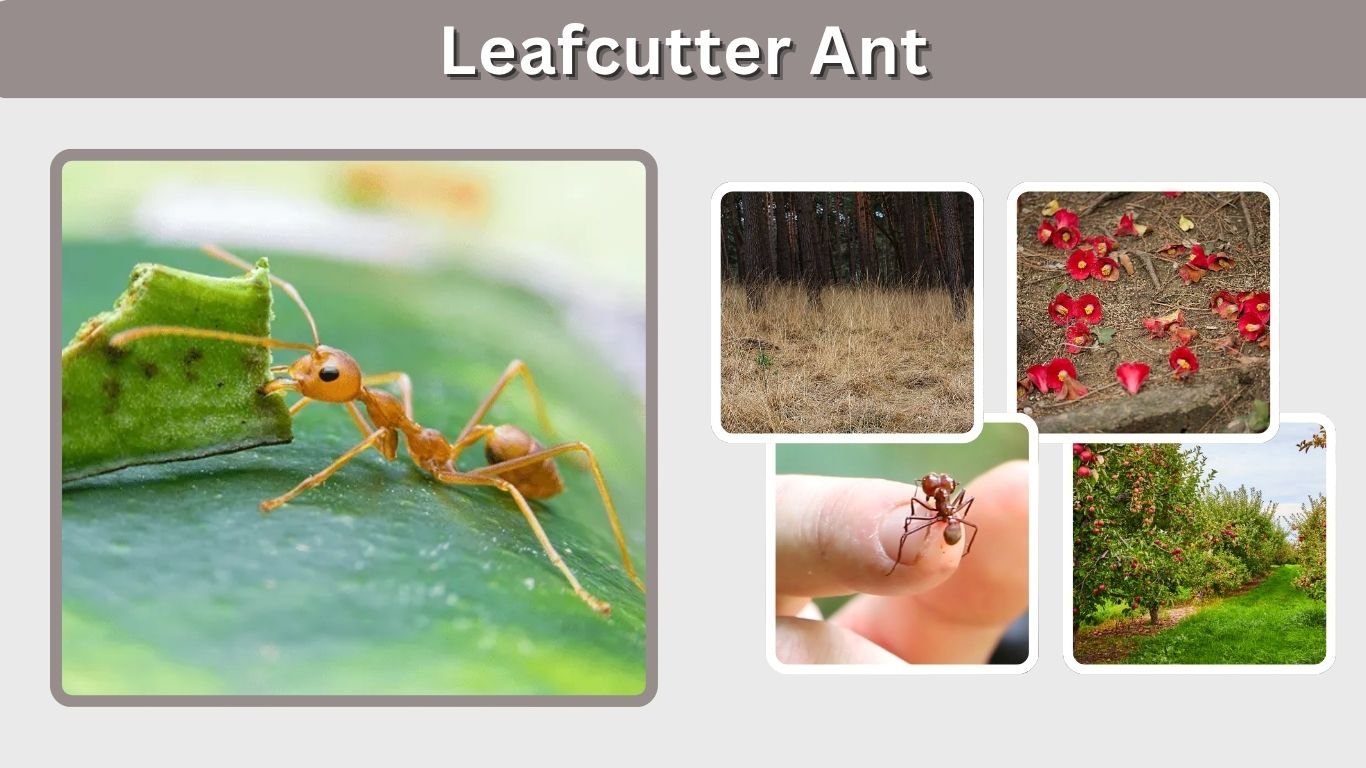
Leafcutter ants are remarkable insects known for carrying neatly cut pieces of leaves along busy forest trails. Despite their name, they do not usually eat the leaves directly. Instead, they take plant material into underground chambers and use it to cultivate a special fungus that feeds the colony. Leafcutter ants live only in the Americas and form highly organized societies containing gardeners, nurses, foragers, soldiers, waste workers, males, and a reproductive queen. Mature colonies may contain millions of individuals working together as one complex community.
Leafcutter Ant Overview
The name “leafcutter ant” describes numerous fungus-growing species belonging mainly to the genera Atta and Acromyrmex. Every colony depends on a partnership between the ants and their cultivated fungus. The ants provide fresh vegetation and protection, while the fungus converts the plant material into food the colony can digest.
| Characteristic | Description |
| Common name | Leafcutter ant |
| Main genera | Atta and Acromyrmex |
| Worker size | Approximately 2–14 mm, depending on caste |
| Queen size | Up to about 20–30 mm in large species |
| Color | Rusty red, reddish brown, dark brown, or blackish |
| Habitat | Forests, grasslands, farms, gardens, and scrublands |
| Distribution | Southern United States, Mexico, Central America, and South America |
| Main diet | Cultivated fungus |
| Development | Egg, larva, pupa, and adult |
| Colony size | Thousands to several million ants |
Leafcutter Ant Size
Leafcutter ants vary dramatically in size, even within the same colony. Workers are divided into differently sized groups suited to particular tasks. In large Atta colonies, the heaviest soldiers can weigh around 200 times more than the smallest garden workers.
Small Workers
The smallest workers may measure only a few millimeters long. They remain mainly inside the nest, where they care for eggs and larvae, clean the fungus, remove contaminants, and prepare tiny pieces of vegetation for the garden.
Their small bodies allow them to move through delicate fungal structures without causing damage.
Medium Workers
Medium-sized workers perform most of the visible cutting and carrying. Their jaws are powerful enough to slice through leaves, flowers, grasses, and other plant material.
Different workers may cut the vegetation, transport it, clean it, or reduce it into smaller pieces after it reaches the nest.
Soldiers
Soldiers are the largest workers. They have broad heads and exceptionally strong mandibles used to protect foraging trails and nest entrances.
Worker sizes vary among species. Texas leafcutter ant workers, for example, range from approximately 1.5 to 13 millimeters, while the queen can reach about 19 millimeters. In the tropical species Atta cephalotes, queens may grow to nearly 30 millimeters.
What Color Are Leafcutter Ants?
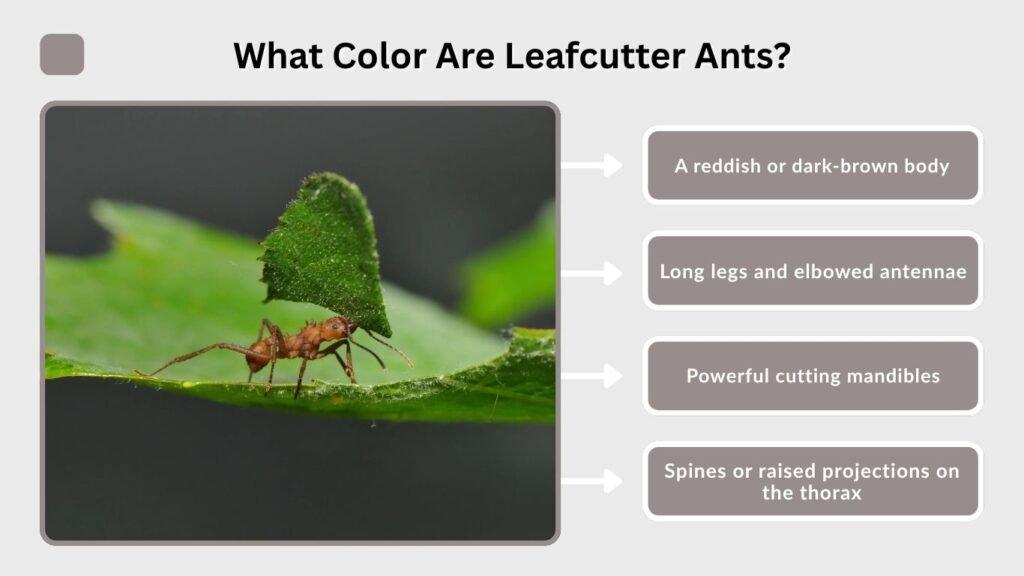
Most leafcutter ants are rusty red, orange-brown, reddish brown, or dark brown. Some species appear almost black, while smaller workers may look lighter than mature soldiers.
Newly emerged adults are initially pale because their outer skeleton has not fully hardened. Their bodies darken as they mature.
Leafcutter Ant Identification
Typical identifying features include:
- A reddish or dark-brown body
- Long legs and elbowed antennae
- Powerful cutting mandibles
- Spines or raised projections on the thorax
- Workers of noticeably different sizes
- Long, organized trails leading to a nest
- Workers carrying round or crescent-shaped leaf pieces
Leaf-carrying behavior is the easiest sign to recognize. However, not every ant seen carrying plant material is necessarily a true leafcutter ant.
Where Do Leafcutter Ants Live?
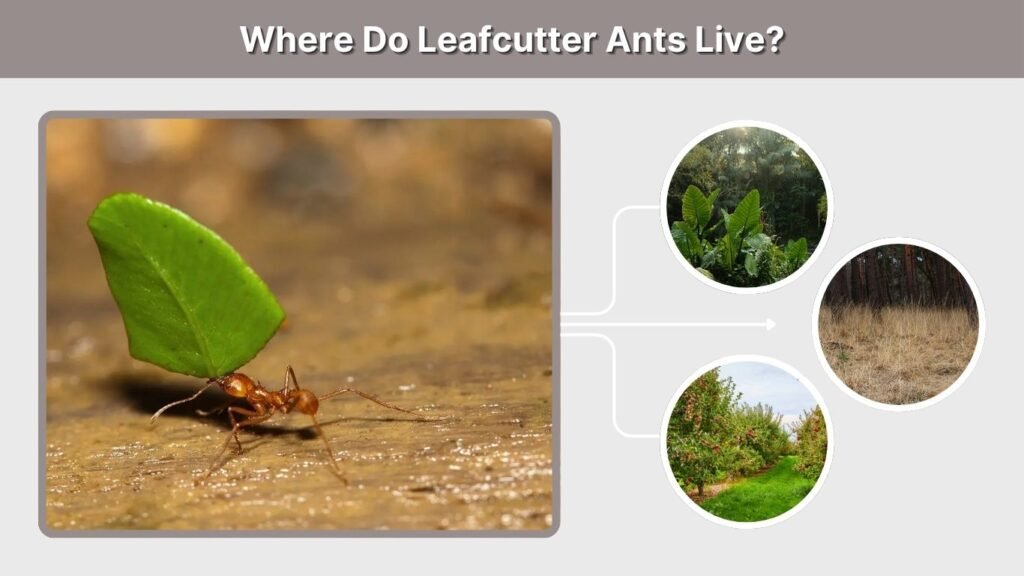
Leafcutter ants are native to the New World. Their range extends from the southern United States through Mexico and Central America into much of South America. They are especially diverse in tropical and subtropical regions.
They can inhabit:
- Tropical rainforests
- Dry forests
- Grasslands and savannas
- Scrub habitats
- Farms and orchards
- Parks and gardens
- Roadsides and disturbed land
Many species thrive in areas with young, rapidly growing vegetation because soft leaves are easier to cut and may provide suitable material for their fungus gardens.
Underground Nests
Leafcutter ants construct permanent underground nests containing interconnected tunnels and chambers. Separate rooms may hold fungus gardens, developing brood, the queen, or discarded waste.
Some mature nests extend several meters below the ground and contain hundreds or thousands of chambers. Large colonies may house millions of ants and occupy a substantial area beneath the soil.
Nest entrances are often surrounded by loose soil and plant debris. Clear foraging trails may radiate from the colony toward trees and other vegetation.
What Do Leafcutter Ants Eat?
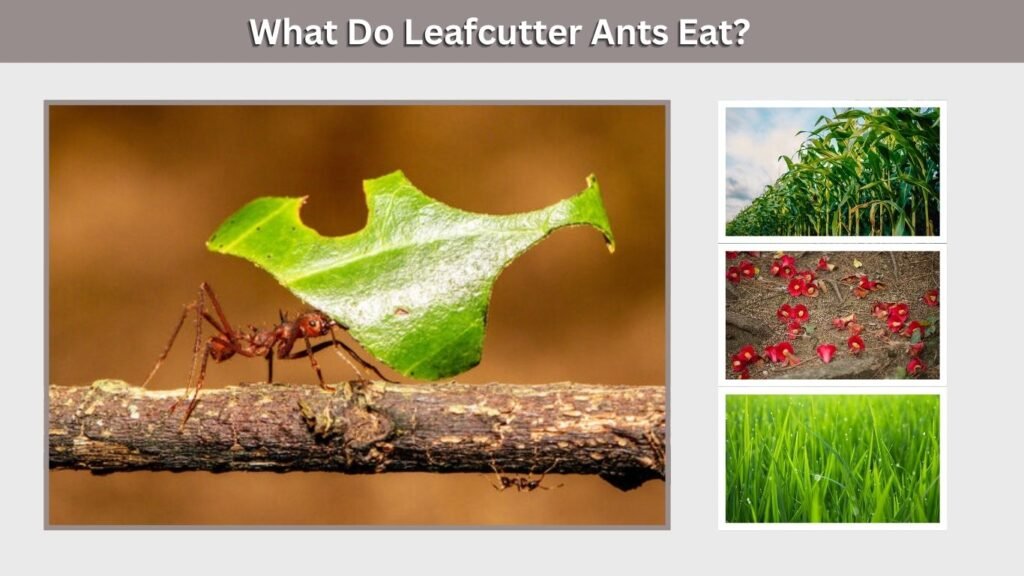
Leafcutter ants mainly eat a fungus they cultivate inside their nests. They do not carry leaves underground simply to chew and consume them. The vegetation becomes the growing material for their fungal crop.
The ants commonly collect:
- Fresh leaves
- Flower petals
- Grass blades
- Small stems
- Fruit pieces
- Fallen flowers
- Plant buds
- Seedling material
- Crop leaves
- Other soft vegetation
Workers clean the collected vegetation, chew it into pulp, and add fungal material. The fungus breaks down substances that the ants cannot efficiently digest and produces nutrient-rich structures eaten by workers and larvae.
Adult foragers may also obtain some energy by drinking sap or plant juices released while cutting fresh vegetation. However, the cultivated fungus remains the central food resource supporting the colony.
How Do Leafcutter Ants Grow Fungus?
Leafcutter ants operate an agricultural system with several carefully organized stages.
Harvesting Vegetation
Foragers locate suitable plants and use their mandibles to cut sections from leaves or flowers. They carry the pieces home along chemical scent trails.
Colonies can maintain heavily used trails for months, and some ants may travel considerable distances between the nest and harvesting sites.
Preparing the Garden
Inside the nest, smaller workers clean and chew the vegetation. They turn it into a soft substrate and place pieces of their cultivated fungus onto it.
The ants constantly weed, groom, and inspect the garden. Contaminated material is removed before harmful molds or microorganisms can spread.
Managing Waste
Old fungus, dead ants, contaminated plant matter, and other waste are transferred to dedicated disposal chambers or external refuse piles.
Waste handling is important because discarded garden material can contain organisms dangerous to both the ants and their fungus. Some workers specialize almost entirely in waste management and avoid direct contact with the healthy garden.
Leafcutter Ant Life Cycle
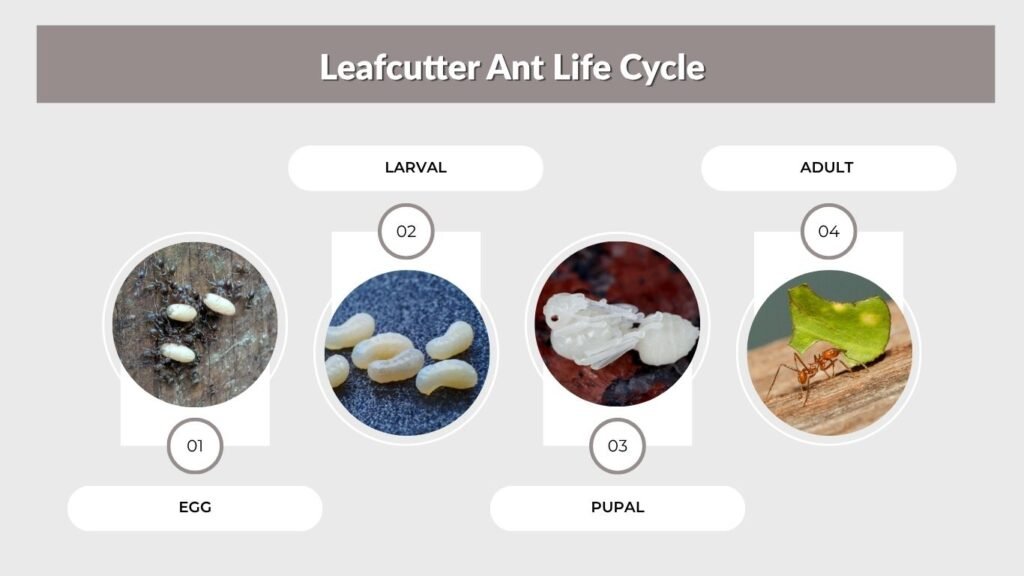
Leafcutter ants undergo complete metamorphosis through four stages: egg, larva, pupa, and adult.
Egg Stage
Nearly every ant in the colony begins as an egg laid by the queen. Workers move the eggs, clean them, and keep them in protected nursery chambers.
Whether an egg develops into a worker, queen, or male depends on biological and nutritional factors.
Larval Stage
The eggs hatch into soft, legless larvae. Larvae cannot care for themselves, so nurse workers feed, clean, and reposition them.
They spend much of this stage within or near the fungus garden, eating fungal food and growing through several developmental stages.
Pupal Stage
After reaching full larval size, the ant enters the pupal stage. During this period, its body transforms into the recognizable adult form with six legs, antennae, mandibles, and a hardened exoskeleton.
Adult Stage
New adults emerge pale and soft but gradually harden and darken. Female workers begin performing tasks according to their size, age, and the colony’s needs.
Small workers tend gardens and brood, medium ants process vegetation and forage, and the largest soldiers defend the colony.
How a New Colony Begins
During the reproductive season, winged queens and males leave mature colonies for mating flights. After mating, a queen lands, removes her wings, and begins digging a small nest.
Before leaving her original colony, she carries a small piece of the parent colony’s fungus. She uses this fungal starter to establish her first garden, ensuring that her future offspring have food.
The queen initially raises the first brood alone. Once the first workers mature, they begin collecting vegetation, enlarging the nest, caring for larvae, and expanding the fungus garden. A successful colony may continue growing for many years.
Leafcutter Ant Colony Structure
A mature colony operates through an advanced division of labor.
Queen
The queen is the colony’s reproductive female and is considerably larger than the workers. She remains in a protected underground chamber and may produce millions of eggs over her lifetime.
Gardeners and Nurses
The smallest workers care for the fungal crop, feed larvae, clean the queen, and remove harmful material from nursery chambers.
Foragers and Cutters
Medium workers locate vegetation, cut it into transportable sections, and carry it back to the nest.
Soldiers
The largest workers guard trails, defend nest entrances, and attack animals that threaten the colony. Their mandibles can deliver a painful bite and may break human skin.
Are Leafcutter Ants Harmful?
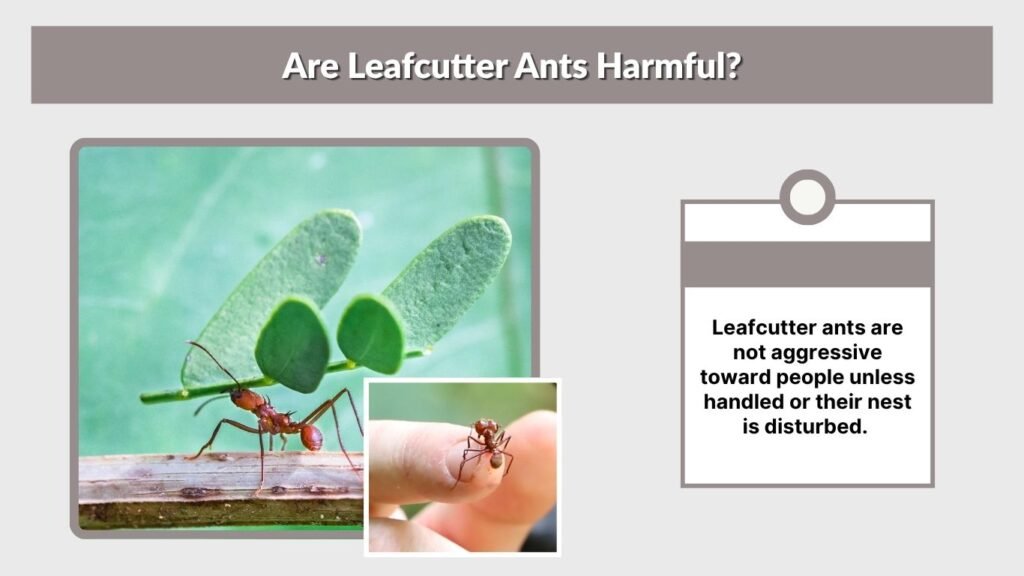
Leafcutter ants are not aggressive toward people unless handled or their nest is disturbed. They do not hunt humans, and they are not known for medically significant venom. However, large soldiers can bite forcefully.
Their main impact comes from vegetation removal. A large colony can strip leaves from garden plants, young trees, crops, and ornamental vegetation. Leafcutter ants are therefore considered serious agricultural pests in parts of their range, even though they also play valuable ecological roles.
Why Are Leafcutter Ants Important?
Leafcutter ants help break down plant material, move nutrients through soil, and improve soil aeration through their extensive tunnels. Their abandoned chambers may create spaces for roots, water, and other organisms.
They are also among the most advanced nonhuman farmers. The ants cultivate their crop, control diseases, remove waste, divide labor, and maintain stable growing conditions underground.
FAQs
Do leafcutter ants actually eat leaves?
Leafcutter ants generally do not eat the leaf pieces they transport. Workers chew the vegetation and use it as a growing medium for a specialized fungus. The ants and their larvae then consume nutrient-rich parts of that cultivated fungus.
How big is a leafcutter ant queen?
Queen size varies by species, but queens are much larger than ordinary workers. A mature queen may measure approximately 19–30 millimeters long. Her enlarged abdomen allows her to store sperm and produce large numbers of eggs throughout her life.
How many ants live in a leafcutter colony?
Small or developing colonies may contain only hundreds or thousands of ants. Mature colonies of large Atta species can contain several million individuals performing specialized jobs such as gardening, nursing, cutting, transporting, defense, and waste disposal.
Can leafcutter ants bite humans?
Yes. Workers can bite when trapped, handled, or disturbed. Small workers usually cause little harm, but large soldiers have powerful mandibles capable of producing a painful pinch or breaking the skin. They do not normally seek out people to attack.
How long does a leafcutter ant colony live?
A successful colony can survive for many years, often as long as its queen remains healthy and productive. During that time, the colony may expand from a single queen and tiny fungus garden into an underground society containing millions of workers.