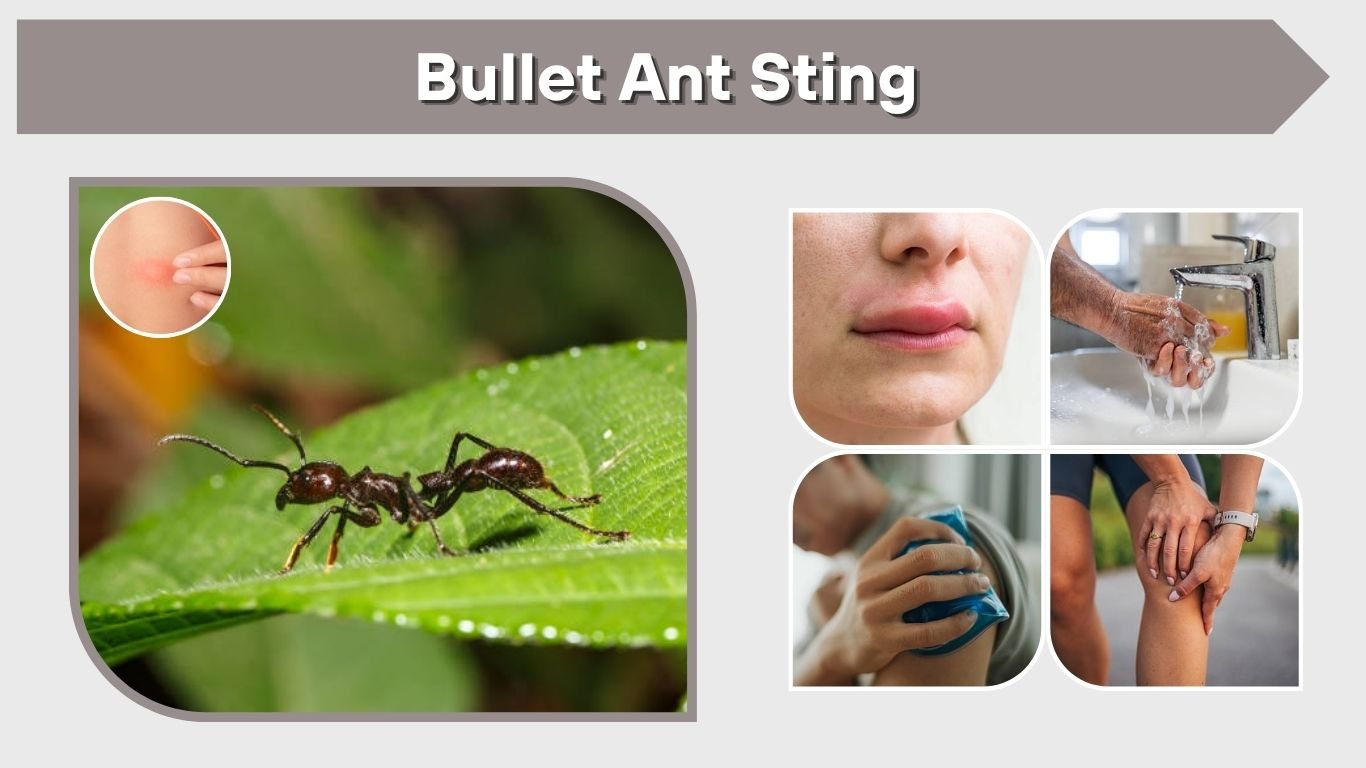
A bullet ant sting is famous for causing some of the most severe pain associated with any insect. The bullet ant (Paraponera clavata) lives in the humid forests of Central and South America and normally stings when handled, trapped, stepped on, or disturbed near its nest. Although one sting is not usually life-threatening, the pain may remain intense for many hours. Allergic reactions and numerous stings require immediate medical attention.
What Does a Bullet Ant Sting Feel Like?
People commonly describe the sting as an immediate, overwhelming burning or throbbing sensation. The pain may spread beyond the original sting site and arrive in repeated waves rather than remaining at one constant level.
On the Schmidt Sting Pain Index, the bullet ant belongs to level 4—the highest category on the four-level scale. However, this index is a subjective comparison created from personal sting experiences, not a medical tool for predicting injury or allergic reactions.
How painful is the sting?
The initial pain can feel much stronger than an ordinary bee, wasp, or fire ant sting. A person may have difficulty concentrating, walking normally, or using the affected limb because of the severe burning and throbbing.
Pain varies according to:
- The location of the sting
- The amount of venom injected
- The number of stings
- The person’s sensitivity to insect venom
- Age, body size, and general health
A sting on a finger, hand, foot, face, or another sensitive area may feel especially intense.
Why is it so painful?
Bullet ant venom contains a peptide called poneratoxin. Research shows that pain-producing ant venom peptides affect voltage-gated sodium channels in sensory nerves. These channels help nerves transmit electrical signals, including pain signals.
Poneratoxin can keep pain-sensing nerves active longer than they normally would be. This prolonged nerve stimulation helps explain why the pain may continue in powerful waves for hours after the ant has moved away.
Do Bullet Ants Bite or Sting?
Bullet ants possess strong mandibles that they use for gripping, carrying food, and defending themselves. However, their famous painful injury comes primarily from a venomous stinger located at the rear of the abdomen.
An ant may use its mandibles to hold onto skin while positioning its abdomen to sting. Unlike honey bees, ants can generally deliver more than one sting because their stinger is not normally left embedded in the skin.
| Action | Purpose | Does it inject venom? |
| Biting with the mandibles | Gripping or defending | No |
| Stinging with the abdomen | Defense and venom delivery | Yes |
| Repeated stinging | Continued defense when trapped | Yes |
Bullet ants are not known for hunting people. Most encounters occur when someone accidentally contacts an ant, handles one, or disturbs a colony.
Bullet Ant Sting Symptoms
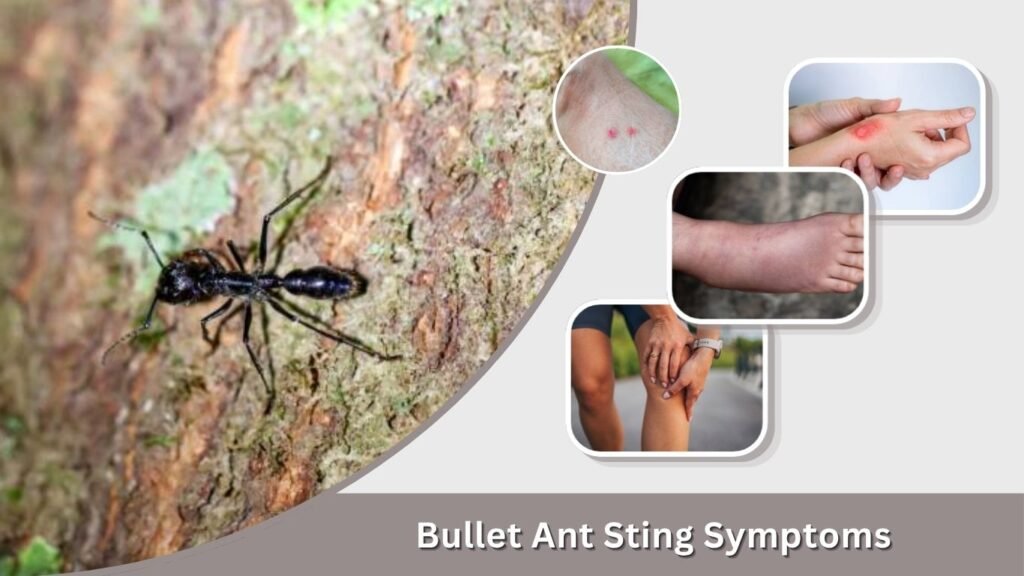
The severity of a reaction can differ greatly between individuals. Pain is usually the most noticeable symptom, but local swelling and other reactions may also occur.
Common local symptoms
A typical localized reaction may include:
- Immediate burning or piercing pain
- Redness around the puncture
- Swelling and warmth
- Throbbing or pulsating discomfort
- Tenderness when the area is touched
- Tingling or temporary numbness
- Difficulty moving the affected hand, foot, or limb
The visible wound may appear surprisingly small compared with the amount of pain it causes. There may be only a tiny puncture, red mark, or swollen patch.
Possible widespread symptoms
Some people may experience sweating, nausea, shaking, dizziness, weakness, headache, or an unusually rapid heartbeat. These symptoms deserve medical evaluation, particularly when they are strong, continue worsening, or follow multiple stings.
Severe allergic reactions to insect venom can develop rapidly and should never be treated as an ordinary local reaction.
How Long Does a Bullet Ant Sting Last?
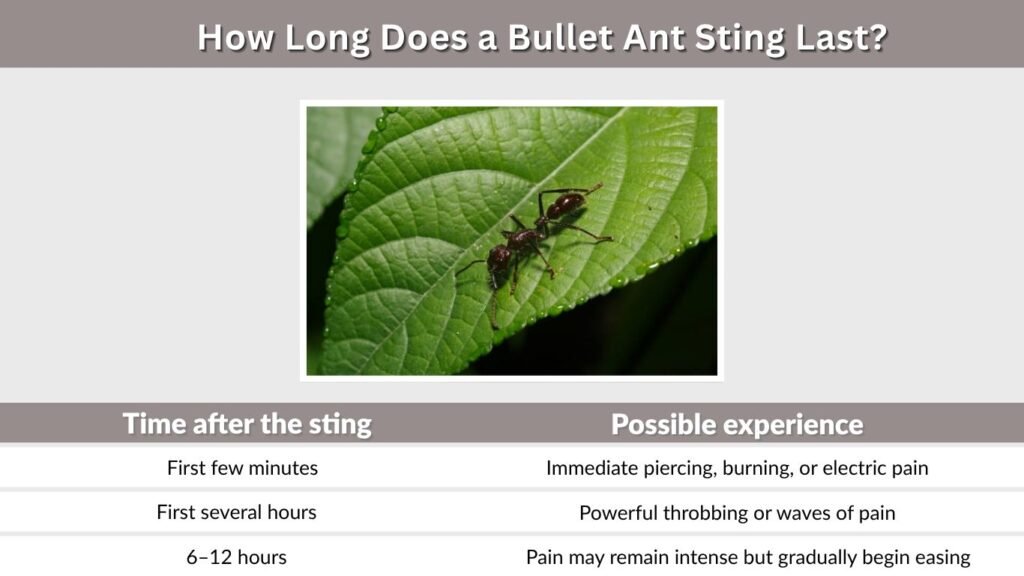
The worst pain may continue for several hours. Reports commonly describe symptoms lasting approximately 12 hours, while severe discomfort may sometimes persist for as long as 24 hours. This long duration is reflected in regional names for the insect that refer to a “24-hour ant.”
| Time after the sting | Possible experience |
| First few minutes | Immediate piercing, burning, or electric pain |
| First several hours | Powerful throbbing or waves of pain |
| 6–12 hours | Pain may remain intense but gradually begin easing |
| Up to 24 hours | Residual aching, swelling, tenderness, or weakness |
| Following days | Minor swelling or irritation may remain |
Persistent or worsening pain should not automatically be blamed on the venom. Increasing redness, warmth, drainage, fever, or swelling after the first day could suggest infection or another complication and should be assessed by a healthcare professional.
How to Treat a Bullet Ant Sting
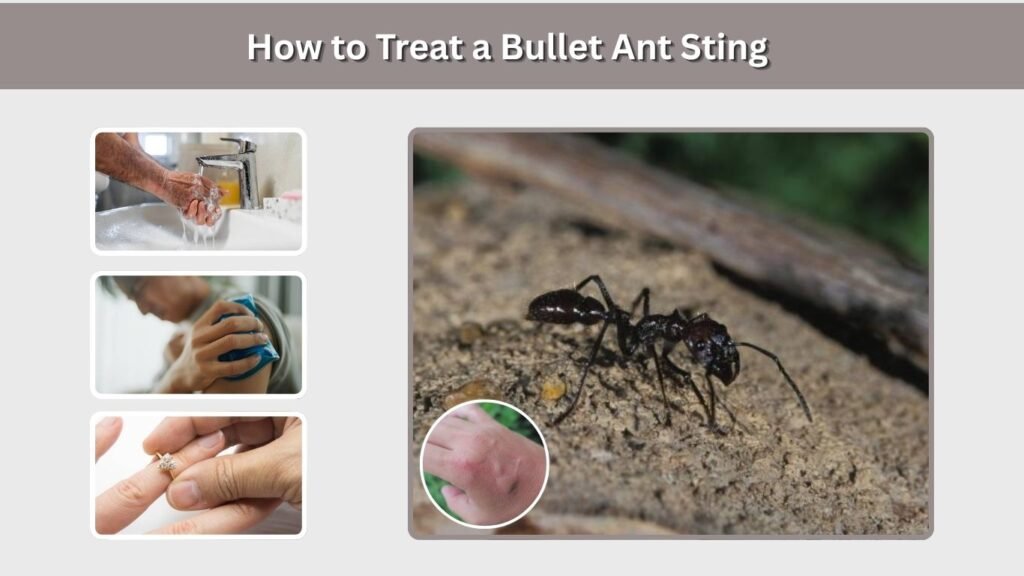
There is no commonly available bullet-ant-specific antidote. Treatment focuses on controlling pain and swelling while watching closely for an allergic or systemic reaction.
Immediate first aid
- Move away from the ants. Additional ants may be nearby, especially around a nest or tree base.
- Remove the ant from the skin. Avoid crushing it against your body because it may sting again.
- Wash the area. Gently clean the sting with soap and water.
- Apply a cold compress. Use an ice pack wrapped in cloth for 10–20 minutes. Never place ice directly against the skin.
- Elevate the limb. Raising a stung arm or leg may help limit swelling.
- Remove tight jewelry. Rings, watches, or bracelets should be removed before swelling increases.
These steps follow standard medical first-aid guidance for painful insect stings.
Medicines for pain and swelling
An over-the-counter pain reliever may help, provided it is safe for the affected person and used according to its label. An antihistamine or topical hydrocortisone may help itching and swelling, but it may not fully control the nerve-related pain caused by bullet ant venom.
People who are pregnant, take prescription medication, have kidney or liver problems, have stomach ulcers, or are treating a child should consult a pharmacist or doctor before using medicine.
Do not cut the wound, attempt to suck out venom, apply extreme heat, or use an improvised tourniquet. These actions do not reliably remove venom and may cause additional injury.
Are Bullet Ant Stings Deadly?
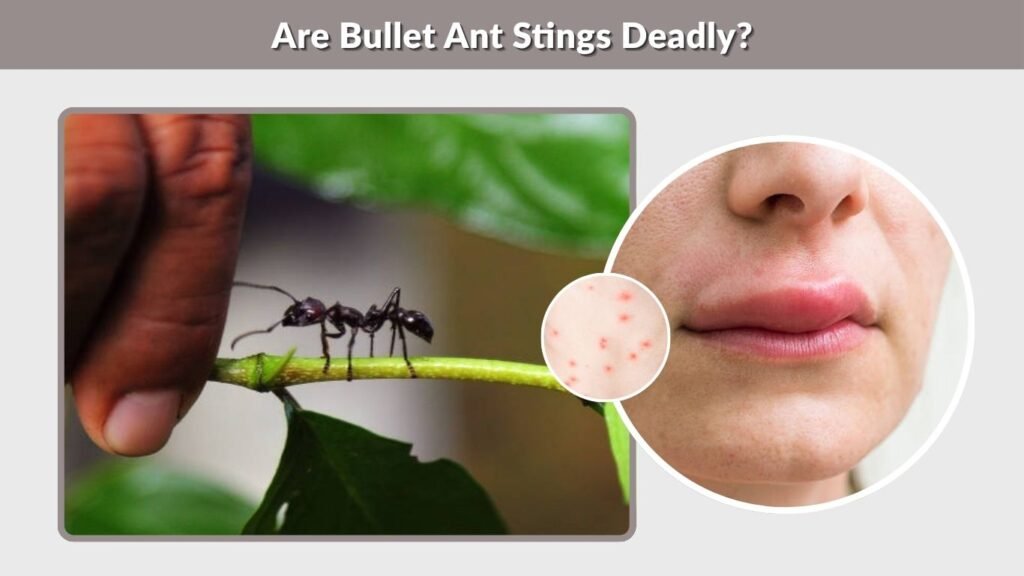
A single bullet ant sting is generally known more for extraordinary pain than for causing death. Nevertheless, no insect sting should be considered completely harmless.
A sting can become dangerous when a person develops anaphylaxis, receives numerous stings, is stung inside the mouth or throat, or has an underlying heart or breathing condition. There is no dependable number of bullet ant stings that can be said to kill a human; risk depends on the individual and the circumstances.
Get emergency help immediately for:
- Difficulty breathing or wheezing
- Swelling of the lips, tongue, face, or throat
- Trouble swallowing or speaking
- Widespread hives
- Fainting, confusion, or extreme weakness
- Repeated vomiting
- Numerous stings
- Rapidly worsening symptoms
A person prescribed an epinephrine auto-injector should use it as directed and still obtain emergency care. Anaphylaxis can progress quickly and requires urgent treatment.
FAQs
Is the bullet ant sting the most painful insect sting?
It is placed in the highest category of the Schmidt Sting Pain Index and is widely considered one of the most painful insect stings. Pain rankings remain subjective, however, and cannot precisely determine how every person will react.
What does a bullet ant sting look like?
The site may show a small puncture, redness, localized swelling, and warmth. Its appearance is not always dramatic, even when the pain is severe. Expanding redness, drainage, fever, or worsening swelling should be checked by a medical professional.
Can a bullet ant sting cause paralysis?
Venom may cause temporary weakness, shaking, numbness, or difficulty moving the affected area. Dramatic or persistent paralysis is not a normal minor reaction and requires urgent medical evaluation, especially after multiple stings.
Does a bullet ant leave its stinger behind?
Bullet ants do not normally leave a barbed stinger and venom sac in the skin in the way honey bees can. They may remain attached with their mandibles and deliver repeated stings until removed or able to escape.
Should you go to a hospital after one sting?
A healthy person with only localized pain and swelling may be able to manage the sting with first aid while carefully monitoring symptoms. Seek medical care for unbearable pain, worsening symptoms, widespread reactions, facial or throat swelling, breathing problems, or any sting involving a child or vulnerable person.