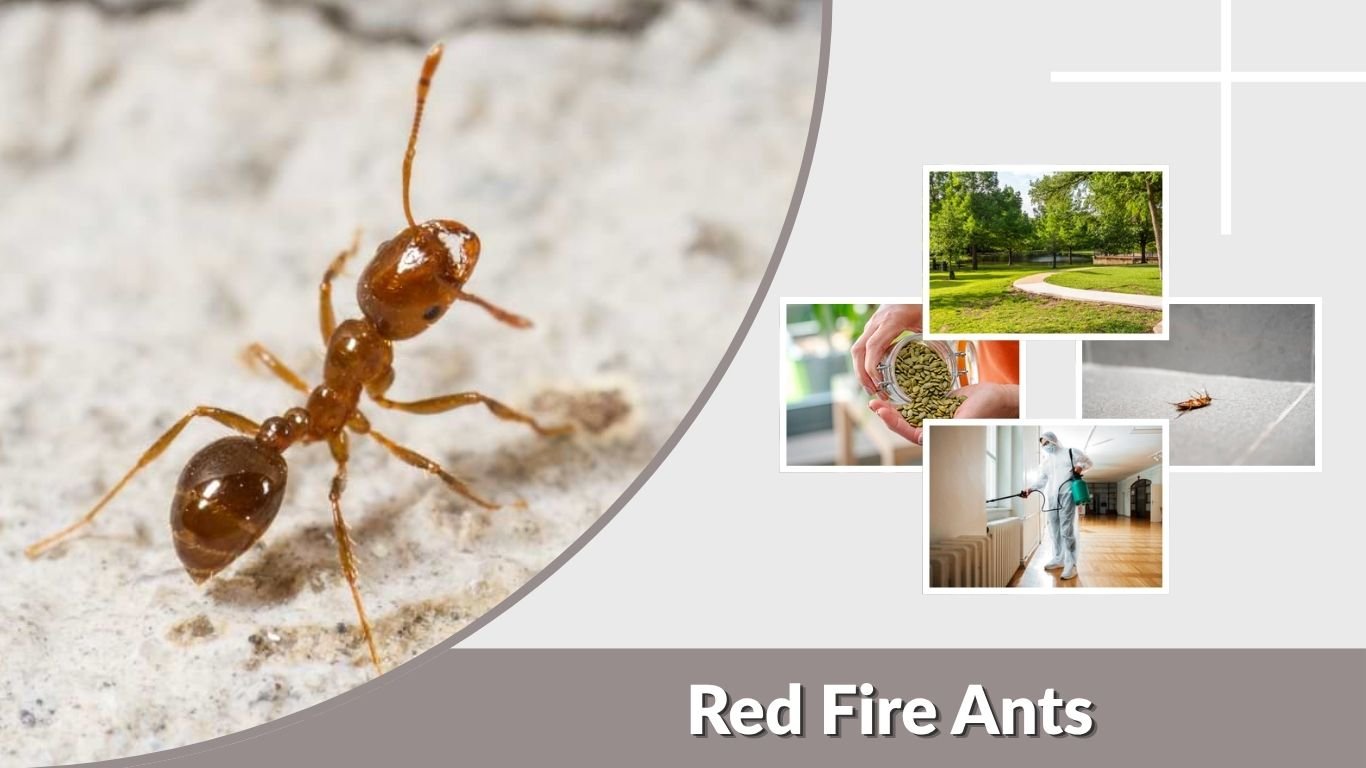
Red fire ants are aggressive stinging ants best known for painful bites, raised mounds, and fast-moving colonies. In the United States, “red fire ant” usually refers to the red imported fire ant, an invasive species with the scientific name Solenopsis invicta. These ants are not the same as every red ant you see in the yard. Knowing the difference helps you avoid stings, protect pets, and choose the right control method.
What Are Red Fire Ants?
Red fire ants are small to medium ants that live in colonies underground and defend their mounds aggressively. The most important species in many U.S. lawns and pastures is the red imported fire ant, which is native to South America and now causes problems in urban, agricultural, and disturbed natural areas.
Red Fire Ant Scientific Name
The red imported fire ant’s scientific name is Solenopsis invicta. It is often written as Solenopsis invicta Buren because Buren described the species. In common use, people may call it red fire ant, imported red fire ant, or red imported fire ant.
Are All Fire Ants Red?
No, all fire ants are not bright red. Red imported fire ants are usually reddish brown with a darker abdomen. Some fire ants may look red, brown, blackish, or red and black depending on the species, age, and lighting. The University of Texas field station notes that invasive fire ant workers are generally dark, with the abdomen darker than the rest of the body.
Red Fire Ant Identification
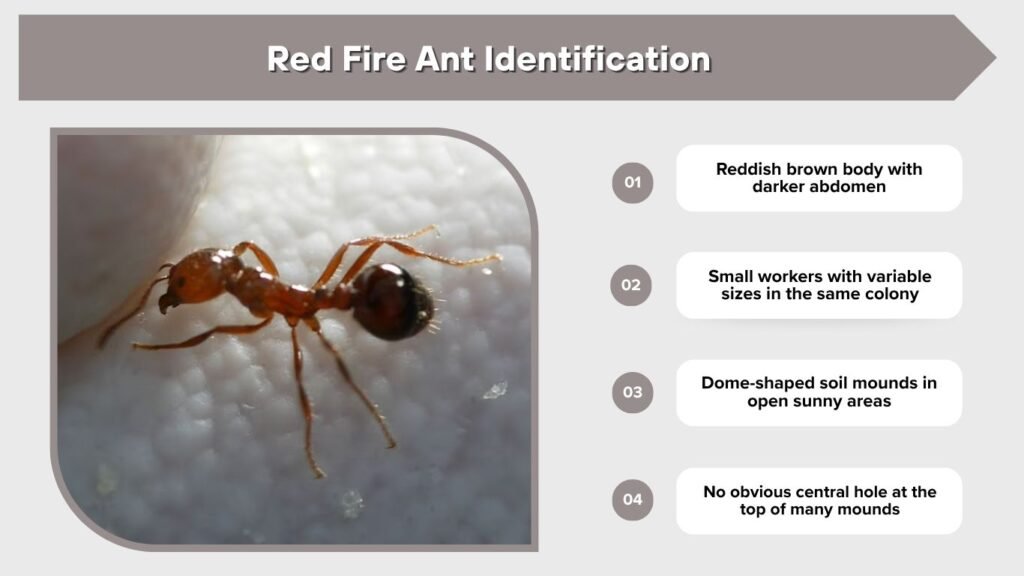
Red fire ants are often identified by their aggressive behavior, mound-building habit, and painful stings. They are smaller than carpenter ants but usually more dangerous to step on because many workers can attack at once.
Key Identification Signs
- Reddish brown body with darker abdomen
- Small workers with variable sizes in the same colony
- Dome-shaped soil mounds in open sunny areas
- No obvious central hole at the top of many mounds
- Fast, aggressive swarming when the mound is disturbed
- Painful stings that burn and may form pustules
Fire ant mounds are often found in open, sunny areas. USDA APHIS says imported fire ants are found throughout the Southern United States and in parts of California and Puerto Rico, and they are commonly associated with open, sunny areas.
Red Ants vs Fire Ants
Not all red ants are fire ants. “Red ant” is a broad common name that can refer to many reddish ants, including harmless or less aggressive species. “Fire ant” refers to ants known for painful venomous stings, especially imported fire ants in many U.S. areas.
| Feature | Red Fire Ants | Other Red Ants |
| Color | Reddish brown, often darker abdomen | Red, orange, brown, or mixed |
| Sting | Painful, venomous, repeated stings | Varies by species |
| Behavior | Highly aggressive when disturbed | Often less aggressive |
| Nest | Soil mounds, underground tunnels | Soil, wood, cracks, plants, or other sites |
| Main concern | Stings, mounds, invasive spread | Depends on species |
Fire Ants vs Red Ants Bite
The biggest difference is the sting. Fire ants bite to grip the skin and then sting, injecting venom that causes a burning feeling. CDC/NIOSH says fire ants are aggressive when stinging, inject venom, and can cause red bumps that become white fluid-filled pustules within a day or two.
Red Fire Ant Bites and Stings
People often say “red fire ant bites,” but the painful reaction mainly comes from the sting. Fire ants can attach with their jaws and sting repeatedly. This is why one disturbed mound can cause many marks on the feet, ankles, legs, or hands.
What Do Red Fire Ant Bites Look Like?
Fire ant stings often begin with burning pain, then redness and itchy welts. Cleveland Clinic says fire ant stings can cause burning, itchy welts, and blisters; most mild cases can be treated at home with cold compresses, antihistamines, and over-the-counter steroid creams.
When to Get Medical Help
Most fire ant stings are painful but not life-threatening. However, some people can have severe allergic reactions. Seek urgent medical care if there is trouble breathing, swelling of the lips or throat, dizziness, fainting, chest tightness, or widespread hives after a sting. NCBI notes that severe reactions can include generalized urticaria, angioedema, bronchospasm, loss of consciousness, and anaphylaxis.
Where Do Red Fire Ants Live?
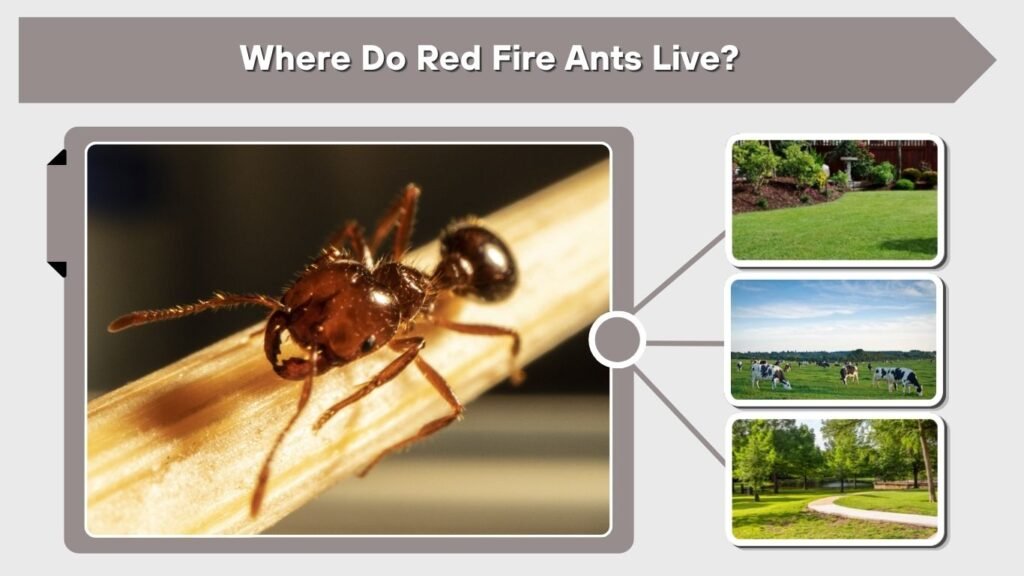
Red fire ants live mostly underground in colonies. Their mounds may appear in lawns, parks, pastures, roadsides, gardens, fields, playgrounds, and disturbed soil. They prefer warm regions and are a major problem in the southern U.S. USDA APHIS reports that imported fire ants are now found throughout the Southern United States and in parts of California and Puerto Rico.
Common Habitat Areas
- Lawns and yards
- Pastures and fields
- Roadsides
- Parks and playgrounds
- Gardens and landscape beds
- Open sunny soil
- Around sidewalks, driveways, and foundations
- Disturbed ground after construction or flooding
Fire ants may also move after heavy rain or flooding. Research has shown that fire ants can form floating rafts during floods, which helps colonies survive and move to new areas.
What Do Red Fire Ants Eat?
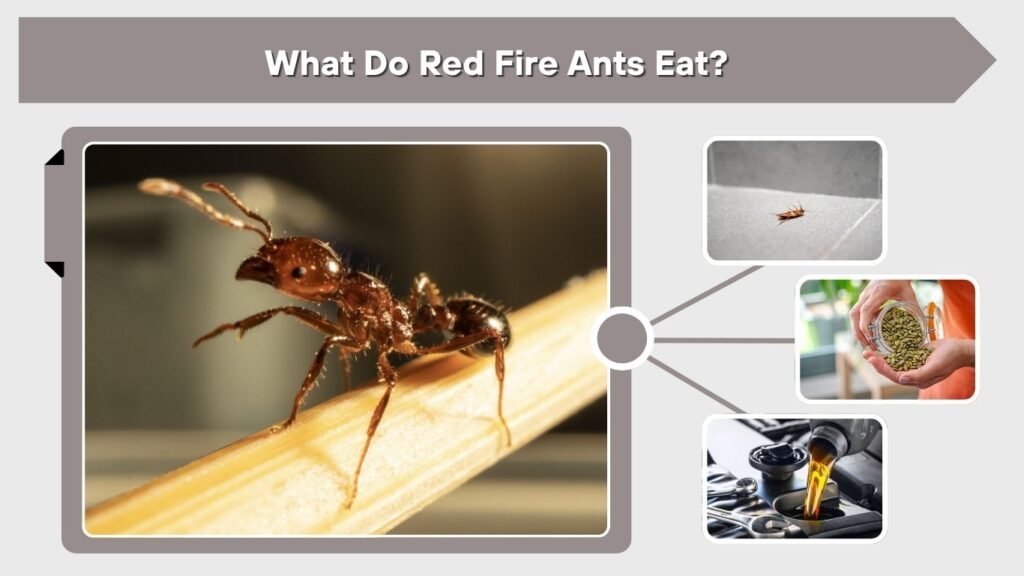
Red fire ants are omnivores. They feed on carbohydrates, proteins, oils, insects, meat, fruit, sugars, grease, and honeydew. University of Florida IFAS says fire ants eat carbohydrates such as fruits and sugars, proteins such as insects and meat, and also feed on grease and oil more than many other ants.
Common Food Sources
- Dead insects
- Small animals or animal remains
- Seeds and plant material
- Fruits and sugary foods
- Meat scraps
- Grease and oils
- Honeydew from aphids
- Pet food outdoors
Their flexible diet helps explain why red imported fire ants spread well in lawns, farms, gardens, and human-disturbed habitats.
Red Imported Fire Ant Queen and Life Cycle
A red imported fire ant colony depends on one or more queens. Queens lay eggs, while workers care for the brood, defend the nest, forage, and expand the mound. Texas Imported Fire Ant Research and Management Project notes that areas with multiple-queen colonies may contain 200 or more mounds and 40 million ants per acre.
Colony Growth
A mature colony can contain many workers, and winged reproductives may leave the nest during warm seasons to mate and start new colonies. The National Park Service says red imported fire ant colonies may have 300,000 to 500,000 workers, with workers foraging as far as about 100 yards.
| Colony Part | Role |
| Queen | Lays eggs and maintains colony growth |
| Workers | Forage, defend, build tunnels, care for brood |
| Larvae | Developing young ants |
| Winged males and females | Reproduction and new colony formation |
| Mound | Soil structure above underground tunnels |
Are Red Fire Ants Invasive?
Yes, red imported fire ants are invasive outside their native range. They were introduced to the United States from South America decades ago, likely through soil on cargo ships, and now damage ecosystems, displace native ants, reduce wildlife food sources, and sting people and animals.
Their impact is not only a backyard problem. They can affect agriculture, wildlife, pets, electrical equipment, and outdoor work. USDA APHIS notes that imported fire ants damage the environment, displace native ant species, and reduce wildlife food sources.
How to Get Rid of Red Fire Ants
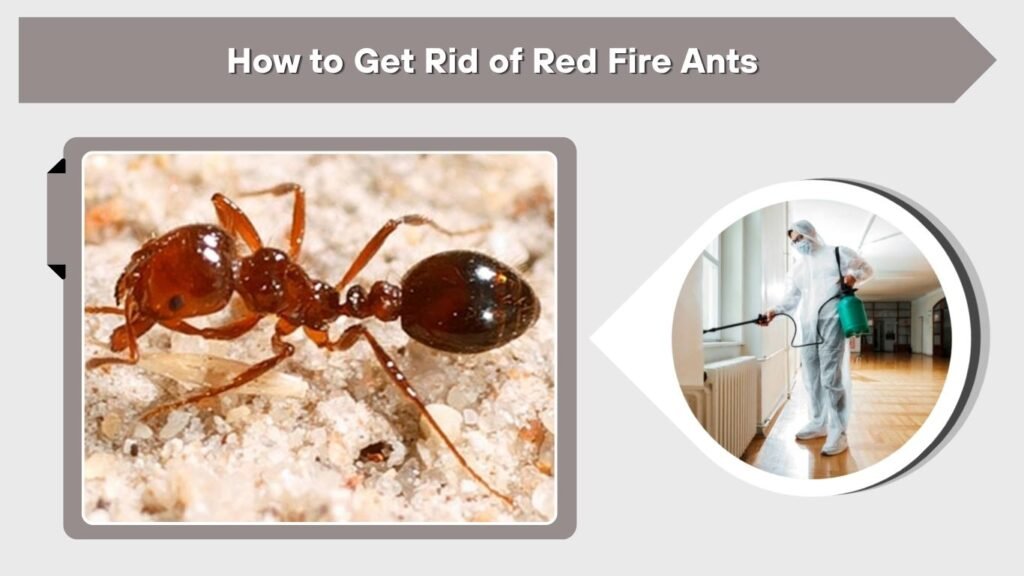
Red fire ant control works best when you target the colony, not just the visible mound. Spraying or disturbing the surface may make ants scatter without solving the queen problem.
Practical Control Steps
- Identify the ant before treating it.
- Avoid disturbing mounds with bare feet or hands.
- Use fire ant bait when workers are actively foraging.
- Treat individual problem mounds when needed.
- Follow all product label directions carefully.
- Keep children and pets away from treated areas until safe.
- Call a pest professional for large infestations or high-risk areas.
Texas A&M’s fire ant program recommends a “Two-Step Method” in heavily infested areas: broadcast bait over the yard, then treat individual problem mounds with an approved mound treatment. Baits are carried back by workers and shared with the colony, but they can take weeks to months for high control.
FAQs
Are red ants and fire ants the same?
No, red ants and fire ants are not always the same. “Red ant” is a broad name for many reddish ants. Fire ants are a specific group known for aggressive behavior and painful venomous stings. Red imported fire ants are one of the most important fire ant pests.
Do red fire ants bite or sting?
Red fire ants do both. They bite first to grip the skin, then sting and inject venom. This can cause burning pain, red bumps, itching, and white pustules. One ant can sting more than once, and many ants may attack if a mound is disturbed.
Where did red imported fire ants come from?
Red imported fire ants are native to South America. They were accidentally introduced into the United States decades ago, likely in soil on cargo ships. They have since spread across much of the southern U.S. and are considered invasive in many areas.
What do red fire ants eat?
Red fire ants are omnivores. They eat insects, meat, fruit, sugars, oils, grease, honeydew, seeds, and other plant or animal material. This broad diet helps them survive in lawns, gardens, farms, roadsides, and disturbed habitats.
How do you get rid of red fire ants?
The best approach is to treat the colony. Fire ant baits can be broadcast over infested areas, and individual problem mounds can be treated separately. Always follow the pesticide label. For heavy infestations, repeated mounds, or playground/pet areas, professional help is often safer.