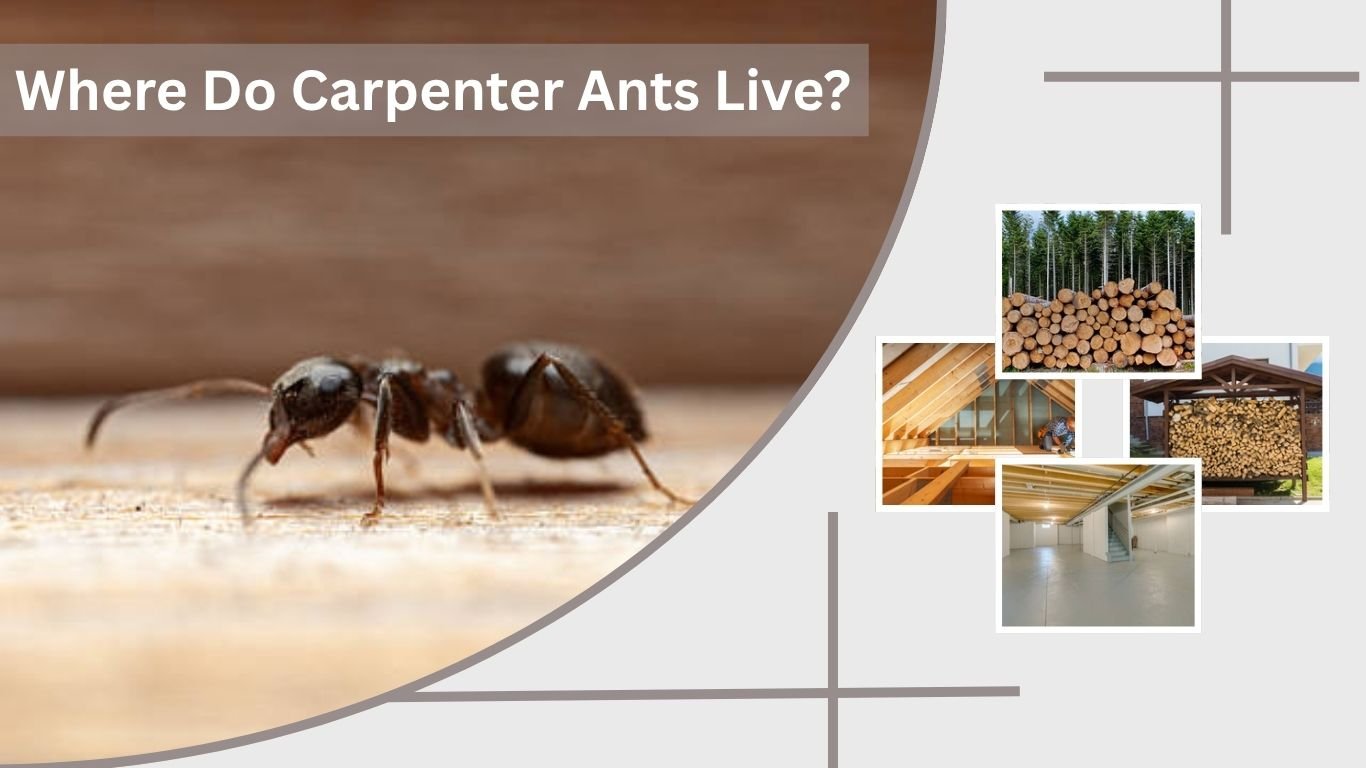
Carpenter ants live in places where they can find wood, moisture, food, and shelter. Outdoors, they commonly nest in trees, stumps, logs, roots, and old woodpiles. Indoors, they may live in damp wall voids, window frames, crawl spaces, roofs, or other wood damaged by leaks. Unlike termites, carpenter ants do not eat wood; they tunnel through it to build smooth nesting galleries. Knowing where they live helps you find the source of an infestation faster.
Where Do Carpenter Ants Live?
Carpenter ants usually live in wood, especially wood that is moist, decaying, hollow, or damaged. Their main colony is often outdoors, but they can create satellite nests inside homes when conditions are suitable. The Illinois Department of Public Health says carpenter ant colonies may include a parent nest outdoors and satellite nests that contain workers and older larvae.
Common Carpenter Ant Nesting Places
- Dead trees
- Living trees with hollow or damaged areas
- Stumps and roots
- Firewood piles
- Old logs and lumber
- Fence posts
- Decks and porches
- Wall voids
- Window and door frames
- Crawl spaces and attics
Carpenter ants prefer wood, but they are not limited to forest areas. They can live around suburban yards, gardens, parks, cabins, sheds, and houses if they find suitable nesting sites.
Where Do Carpenter Ants Live Outside?
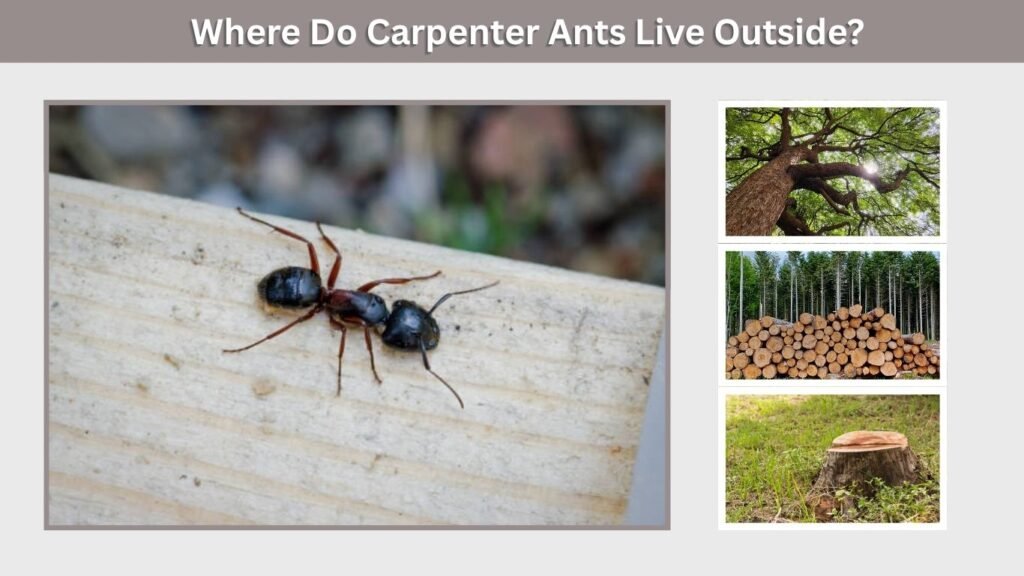
Outside, carpenter ants commonly live in trees, logs, stumps, roots, and other natural wood sources. The University of Minnesota Extension notes that indoor nests are often satellite nests that can be traced back to an outdoor parent colony, with possible nest sites including trees, stumps, roots, fence posts, and firewood.
Outdoor Areas They Like
Carpenter ants are often found where wood stays damp or protected. A rotting stump near the house, stacked firewood against a wall, or an old tree with soft inner wood can support a colony. These outdoor nests may send workers into the home to search for sweets, meat, grease, pet food, or other food sources.
Yard Features That Attract Them
- Tree stumps close to the house
- Firewood stored near siding
- Damp mulch touching foundation walls
- Rotting fence posts
- Wooden landscape borders
- Dead branches touching the roof
- Old decks with water damage
If carpenter ants are entering your home from outside, you may see trails along foundation walls, tree branches, utility lines, fences, or deck rails.
Where Do Carpenter Ants Live in a House?
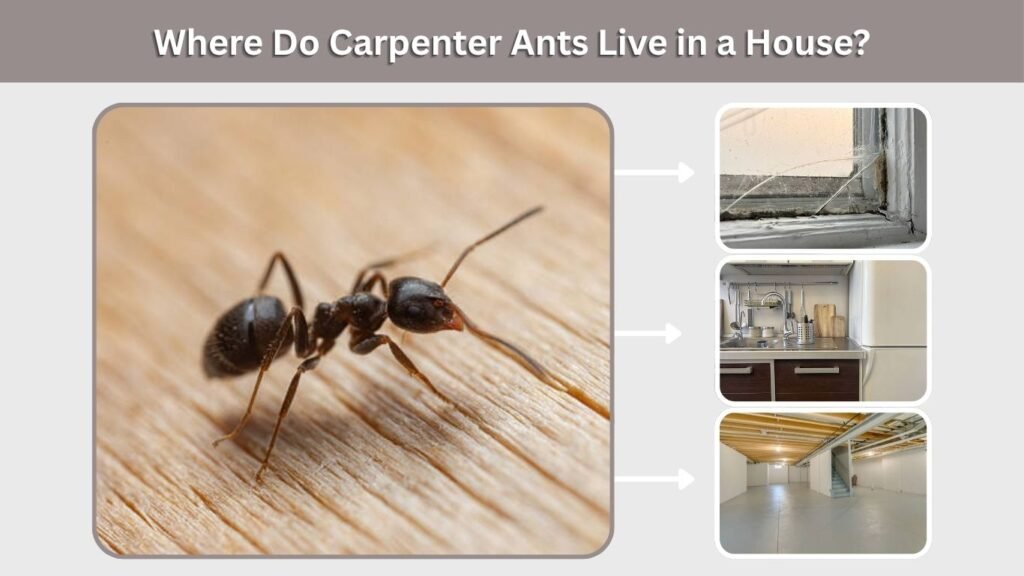
Inside a house, carpenter ants usually live in hidden wood or enclosed spaces. They are strongly linked with moisture problems because damp wood is easier for them to excavate. Orkin explains that carpenter ants can nest indoors or outdoors in moist, decaying, or hollow wood, and homes with leaks or moisture issues are prime targets.
Indoor Nesting Spots
- Wall voids near plumbing leaks
- Window sills and frames
- Door frames
- Bathroom walls
- Kitchen walls near sinks
- Roof edges and soffits
- Attics with moisture damage
- Crawl spaces
- Basements
- Wood around chimneys
- Foam insulation near wood
A house may contain a satellite nest rather than the main parent colony. That means killing visible ants indoors may not solve the full problem if the parent colony is outside.
Why Carpenter Ants Choose Damp Wood
Carpenter ants are often associated with damp, decaying, or previously damaged wood because it is easier to tunnel through. They do not consume the wood as food; instead, they remove it to create galleries and push debris out of the nest. Orkin notes that carpenter ants remove wood and leave small piles of debris outside their nests.
Moisture Problems That Help Carpenter Ants
- Leaking roofs
- Leaky pipes
- Poor bathroom ventilation
- Damp crawl spaces
- Clogged gutters
- Water-damaged window frames
- Wood touching soil
- Poor drainage near the foundation
Fixing moisture is one of the most important steps in carpenter ant prevention. If the wood stays wet, the same area may attract ants again even after treatment.
Where Do Black Carpenter Ants Live?
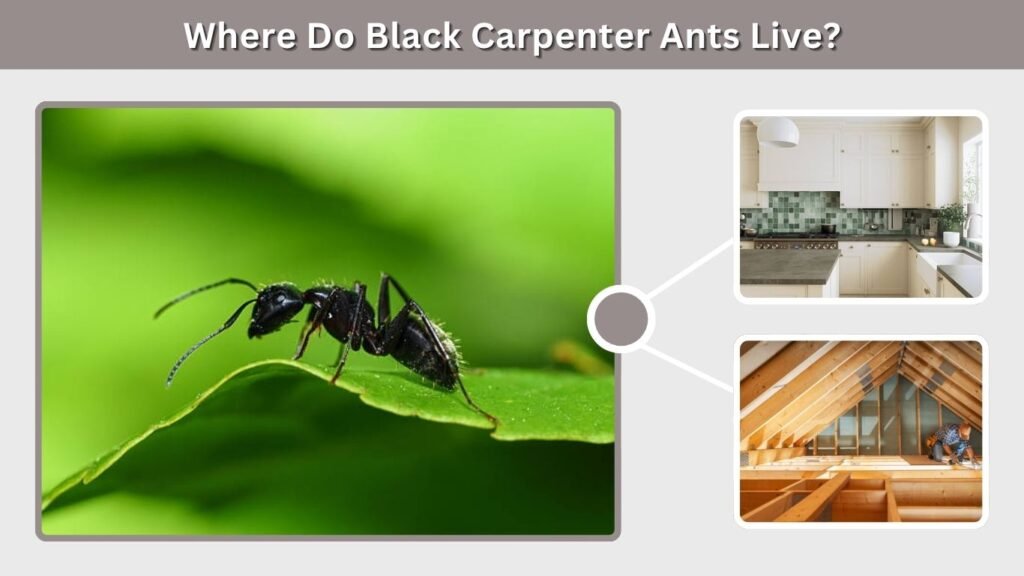
Black carpenter ants live in many of the same places as other carpenter ants. They can nest in trees, logs, stumps, fence posts, decks, and damp structural wood. Indoors, they may appear near kitchens, bathrooms, basements, attics, and windows because these areas often provide moisture or food access.
Black Carpenter Ant Habitat
Black carpenter ants are common in wooded areas and around homes with nearby trees, old wood, or moisture-damaged structures. They often forage at night, so you may see them crossing floors, counters, or walls after dark. If many black carpenter ants appear indoors, inspect both the house and the yard for nest sites.
| Location | Possible Nest Site | Why They Live There |
| Yard | Stumps, logs, roots | Natural wood and moisture |
| House wall | Wall voids, wet framing | Hidden shelter and damp wood |
| Bathroom | Wood near plumbing | Moisture from leaks or humidity |
| Kitchen | Wall voids near sink | Food and water nearby |
| Attic | Roof leaks, damp beams | Protected nesting space |
| Deck | Rotting boards or posts | Outdoor wood close to home |
Where Do Carpenter Ants Live in the Winter?
In winter, carpenter ants stay protected inside their nests. Outdoor colonies may remain in trees, stumps, roots, or insulated wood, while indoor satellite nests can remain active if the house stays warm. Indoor winter activity may be a stronger warning sign because cold outdoor weather usually reduces ant movement.
Why You May See Them Indoors in Winter
If carpenter ants are active inside during winter, they may be nesting in a warm wall void, attic, crawl space, or other protected part of the building. The University of Nebraska–Lincoln Extension notes that the main colony usually needs steady moisture and is often outdoors, while satellite colonies are most common indoors.
Where Do Flying Carpenter Ants Live?
Flying carpenter ants are reproductive ants from a mature colony. They do not live separately as a different kind of ant. They develop inside a colony, leave during swarming periods, mate, and then queens try to start new nests. Orkin explains that winged ants are ready to breed and establish new nests.
What Flying Carpenter Ants Mean
Seeing one flying ant indoors may not prove a serious infestation, but seeing many winged carpenter ants inside is more concerning. The National Pest Management Association says the first appearance of winged males in a home can signal that ants are living inside the house.
Where Do Carpenter Ants Live in the U.S. and Canada?
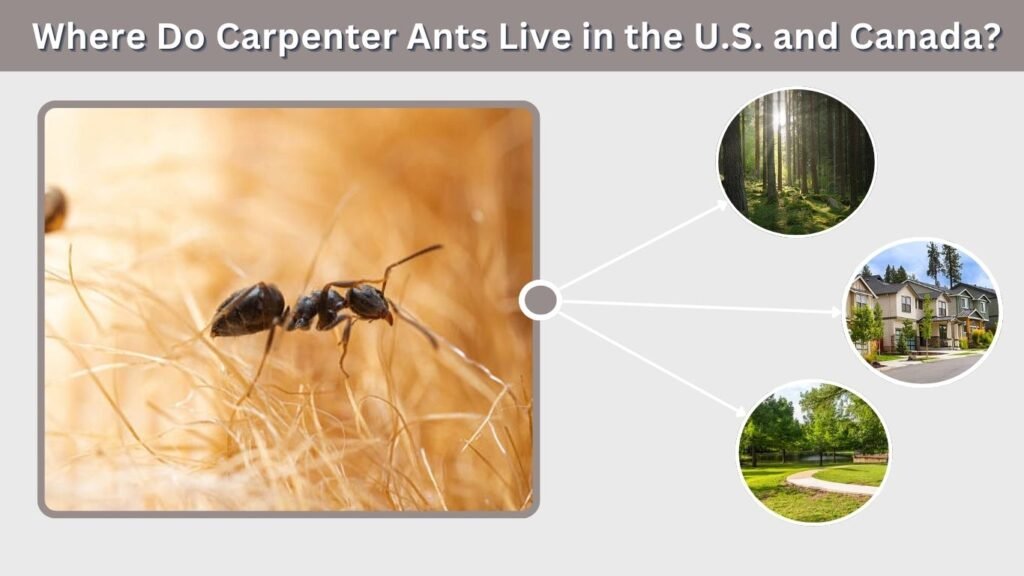
Carpenter ants live across many parts of the United States and Canada, especially where trees, moisture, and wooden structures are common. They are often found in forests, suburbs, rural properties, parks, and homes. Different species may be more common in different regions, but their nesting habits are similar.
Carpenter Ants in Homes by Region
In colder regions, carpenter ants may enter homes for warmth and protected nesting space. In humid regions, moisture-damaged wood can create ideal indoor nesting areas. In wooded states and provinces, outdoor parent nests are common in trees, logs, and stumps close to houses.
Signs Carpenter Ants Are Living Nearby
Carpenter ants are not always easy to find because nests are often hidden. However, they leave clues. The National Pest Management Association says a nest may be indicated by rustling sounds from wall voids or wood where the nest is located.
Common Signs
- Large ants indoors, especially at night
- Winged carpenter ants near windows or lights
- Sawdust-like frass below wood openings
- Rustling sounds inside walls
- Ant trails from yard to house
- Damp or damaged wood
- Ants near kitchens, bathrooms, or basements
If you see repeated signs, the nest may be inside the house or close to the structure outdoors.
How to Prevent Carpenter Ants From Living in Your House
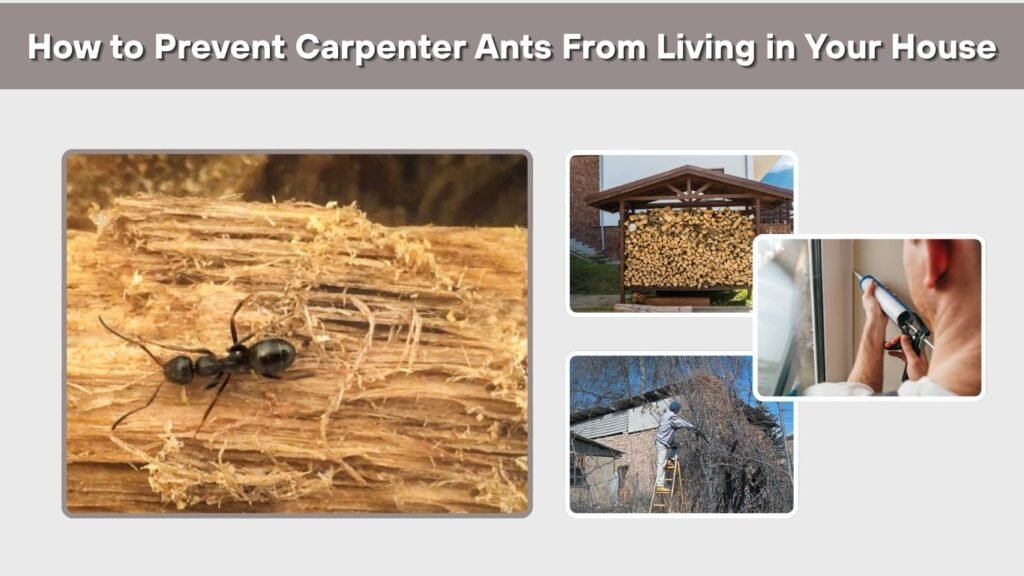
Prevention starts with moisture control and wood management. Repair leaks, improve drainage, clean gutters, remove rotting wood, and keep firewood away from exterior walls. The University of Minnesota Extension advises following pesticide labels carefully when using pest control products, because label directions are legally important and specific to each product.
Prevention Checklist
- Repair roof, pipe, and window leaks
- Replace rotting wood
- Store firewood away from the house
- Trim tree branches away from the roof
- Seal cracks around doors and utility lines
- Keep mulch from touching siding
- Improve crawl space ventilation
- Remove stumps and dead wood near the home
FAQs
Where do carpenter ants usually live?
Carpenter ants usually live in wood, especially damp, decaying, hollow, or damaged wood. Outdoors, they nest in trees, logs, stumps, roots, and firewood. Indoors, they may live in wall voids, window frames, crawl spaces, attics, or moisture-damaged structural wood.
Where do carpenter ants live in a house?
In a house, carpenter ants often live near moisture-damaged wood. Common places include bathroom walls, kitchen walls, window frames, door frames, crawl spaces, basements, attics, and roof edges. They may also build satellite nests indoors while the parent colony remains outside.
Where do carpenter ants live outside?
Outside, carpenter ants live in trees, stumps, logs, roots, fence posts, woodpiles, decks, and other wooden materials. They often choose damp or decaying wood because it is easier to tunnel through and provides protected nesting space.
Where do carpenter ants live in the winter?
During winter, carpenter ants stay inside protected nests. Outdoor colonies may remain in trees, stumps, or insulated wood. If you see carpenter ants active indoors during winter, they may be nesting in a warm wall void, attic, crawl space, or other hidden indoor area.
Do flying carpenter ants live in houses?
Flying carpenter ants can appear in houses when a mature colony produces swarmers. They are reproductive ants, not a separate species. Many winged carpenter ants indoors may mean a colony is living inside or very close to the structure.