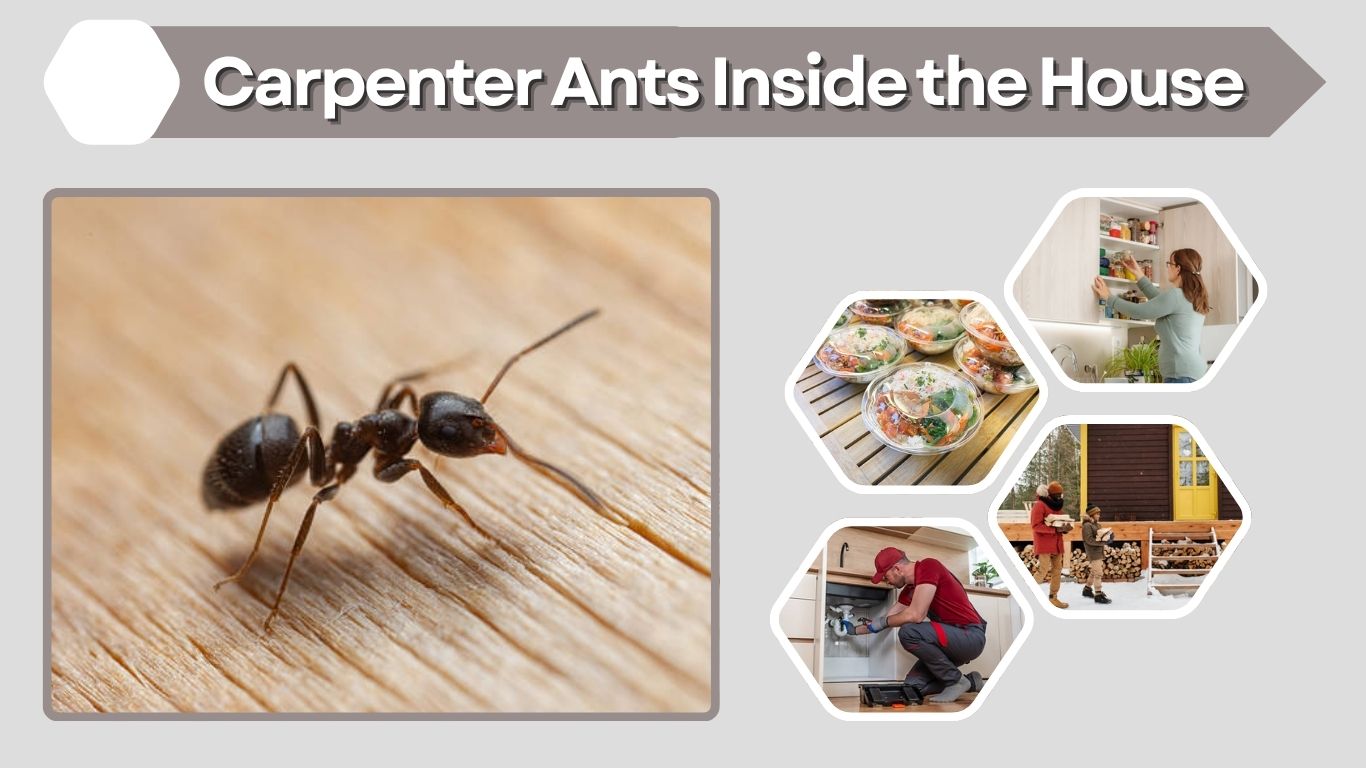
Carpenter ants inside the house can be more than a simple nuisance. These large ants do not eat wood like termites, but they tunnel through wood to create nesting galleries. When they appear indoors, they may be searching for food, entering from an outdoor nest, or nesting inside damp or damaged wood. The key is to identify where they are coming from, fix moisture problems, remove food sources, and target the nest instead of only killing the ants you see.
Why Do Carpenter Ants Come Inside the House?
Carpenter ants come inside because homes can provide food, water, warmth, shelter, and nesting sites. Sometimes they only enter to forage. Other times, they establish a nest inside the structure, especially where wood has been softened by moisture.
Main Reasons They Enter Indoors
Carpenter ants may come indoors through cracks, foundation gaps, windows, doors, vents, utility openings, tree branches, shrubs touching the house, firewood, or stored materials. North Carolina State Extension notes that carpenter ants often invade through cracks and crevices around foundations, windows, doors, and vents, and may use tree limbs or shrubs touching the roof or siding as access routes.
They are also strongly linked with moisture. Michigan State University Extension describes carpenter ants in trees and houses as an indicator of a moisture and decay problem.
Are They Looking for Food or a Nest?
Not every carpenter ant indoors means the nest is inside your house. Workers may travel indoors from an outdoor nest in a stump, tree, log, woodpile, fence, deck, or porch. They may be looking for sweets, grease, meat, crumbs, pet food, or water. However, if you keep seeing ants in the same room, especially near damp wood, wall voids, windows, or bathrooms, there may be an indoor satellite nest.
Do Carpenter Ants Stay Inside the House?
Yes, carpenter ants can stay inside if conditions are right. Indoor nests are more likely in damp wood near leaks, poor ventilation, condensation, roof damage, plumbing problems, or rotting frames. Michigan State University Extension says ants seen inside during late fall, winter, and early spring usually suggest an indoor nest.
Signs of Carpenter Ants Inside the House
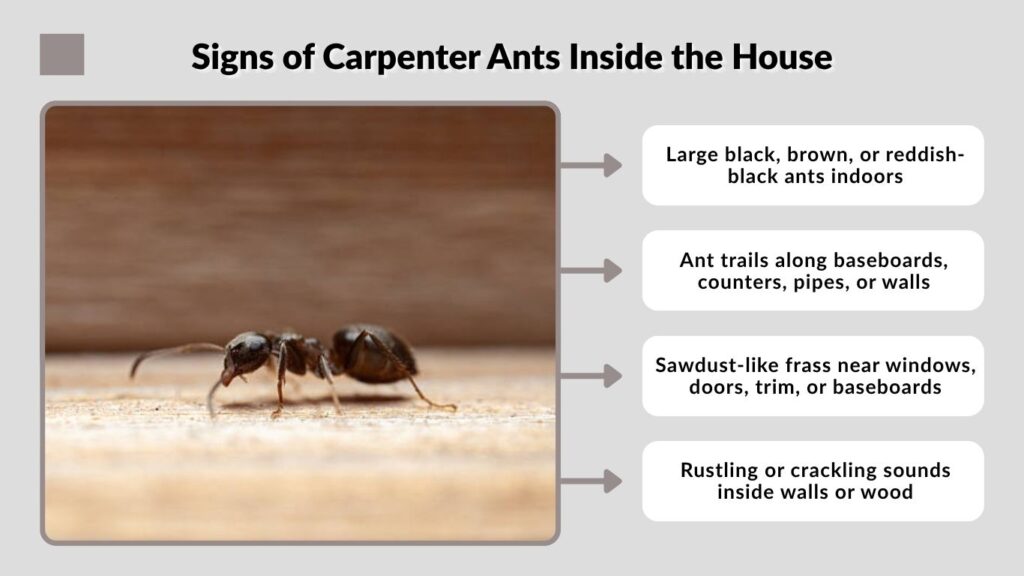
Carpenter ants are often hidden, so you may notice indirect signs before you find the nest. Seeing a few ants can matter, but repeated activity, frass, winged ants, and sounds in walls are stronger warning signs.
Common Indoor Signs
- Large black, brown, or reddish-black ants indoors
- Ant trails along baseboards, counters, pipes, or walls
- Sawdust-like frass near windows, doors, trim, or baseboards
- Rustling or crackling sounds inside walls or wood
- Winged carpenter ants near windows or lights
- Shed wings after a swarm
- Hollow-sounding wood
- Small openings in damaged wood
- Moist or rotting wooden areas
- Repeated sightings in bathrooms, kitchens, basements, or attics
The University of Minnesota Extension says an active colony may make a dry rustling sound, and the best control is to locate and destroy the nest, replace damaged or decayed wood, and eliminate moisture problems.
Carpenter Ant Frass
Frass is one of the most important signs. It looks like small piles of sawdust or wood shavings, often mixed with insect parts or debris. Texas A&M AgriLife Extension explains that carpenter ant frass is pushed out of small holes from nest chambers, and its presence is a good sign that a nest is nearby.
Winged Carpenter Ants Inside
Winged carpenter ants are reproductive ants, also called swarmers. Seeing many of them indoors can be a strong warning sign, especially during cold months or when they appear from walls, ceilings, windows, or light fixtures. The National Pest Management Association notes that the first appearance of winged males in a home can signal that ants are living inside the house.
Where Carpenter Ants Hide Indoors
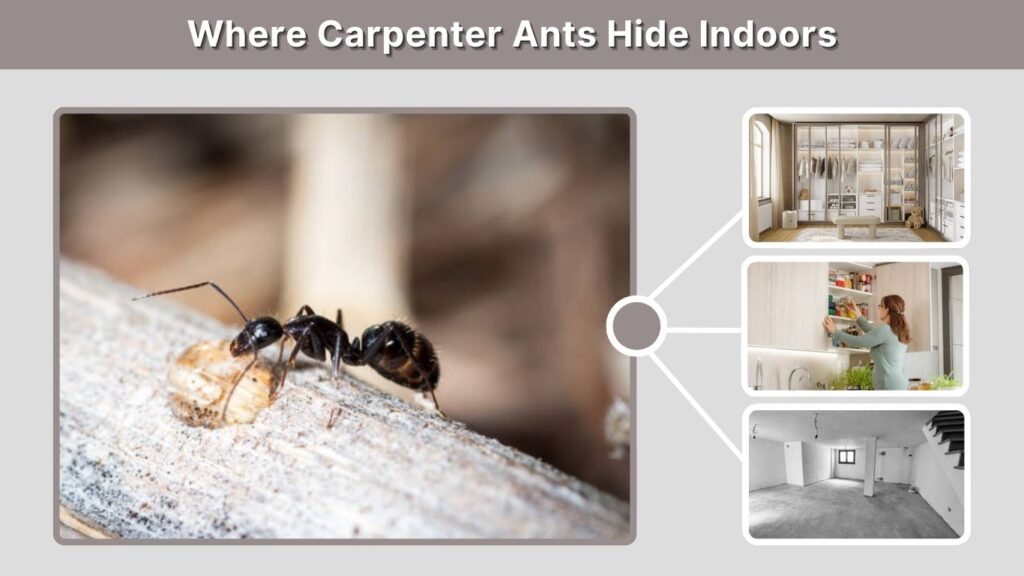
Carpenter ants prefer hidden, protected places. They are especially common in wood that has been weakened by water damage, but they can also travel through wall voids, insulation, cracks, and utility lines.
Common Indoor Nesting Areas
| Indoor Area | Why Carpenter Ants Like It |
| Window frames | Leaks, condensation, and soft wood |
| Door frames | Gaps, moisture, and wood contact |
| Bathroom walls | Plumbing moisture and humidity |
| Kitchen cabinets | Food, water, and leaks |
| Basements | Damp wood and foundation access |
| Crawl spaces | Moisture, low disturbance, and wood contact |
| Attics | Roof leaks and quiet space |
| Wall voids | Hidden travel and nesting areas |
| Deck or porch connections | Outdoor-to-indoor access |
| Around pipes and vents | Entry gaps and moisture |
Carpenter ants prefer wood with higher moisture content, and NCSU Extension says carpenter ant problems are often associated with moisture.
Why Bathrooms and Kitchens Are Common Spots
Bathrooms and kitchens often have the water sources carpenter ants need. Leaky sinks, sweating pipes, damp cabinets, poor ventilation, and wet wall voids can create ideal conditions. If you see ants near a sink, dishwasher, tub, shower, or toilet, check for moisture damage before using sprays.
Can Carpenter Ants Live in Walls?
Yes, carpenter ants can live in walls if there is a suitable void, damp wood, insulation, or nearby food and water. They may travel through wall spaces and appear from tiny cracks around trim, outlets, windows, or plumbing openings. A wall nest may also produce faint rustling sounds, frass, or repeated ant trails.
How to Get Rid of Carpenter Ants Inside the House
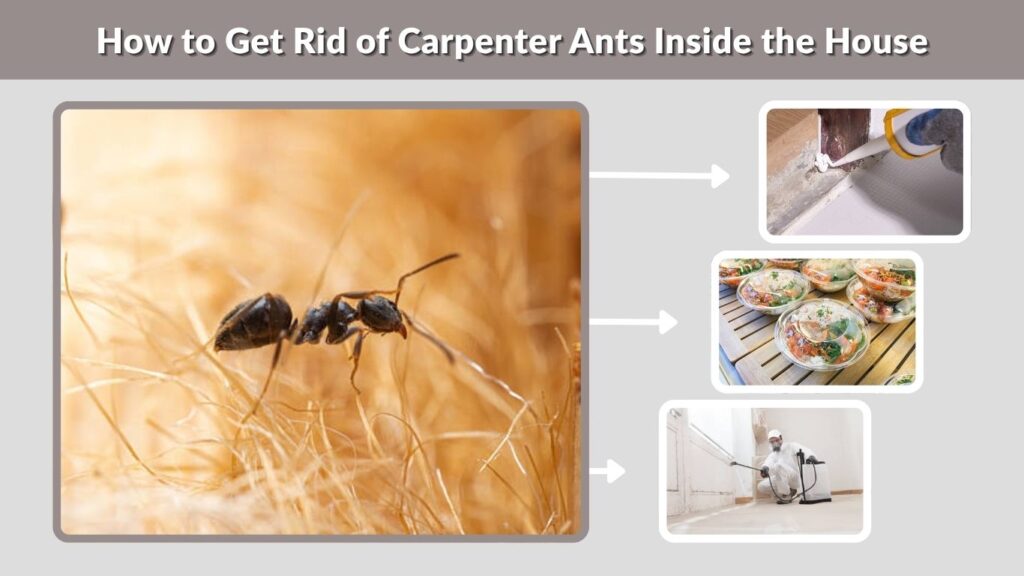
Getting rid of carpenter ants inside the house requires finding the nest or at least identifying where ants are traveling. Spraying visible ants may reduce activity for a short time, but it usually does not solve the source.
Step-by-Step Indoor Control
- Identify the ants correctly before treating.
- Watch ant trails at night to see where they enter and exit.
- Look for frass near windows, baseboards, doors, and wall gaps.
- Check damp wood near bathrooms, kitchens, basements, and crawl spaces.
- Fix leaks, condensation, roof problems, and drainage issues.
- Remove or replace rotting wood.
- Seal cracks around doors, windows, foundations, and utility lines.
- Store food in sealed containers and clean crumbs, grease, and spills.
- Use carpenter ant baits where ants are actively foraging.
- Avoid randomly spraying trails if bait is being used.
- Call a professional if you suspect a hidden wall nest.
The University of Minnesota Extension recommends locating and destroying the nest, replacing damaged wood, and eliminating moisture problems as the best way to control carpenter ants.
What Kills Carpenter Ants Inside the House?
Carpenter ants can be killed with targeted baits, insecticidal dusts, aerosols, and professional treatments, but the method must reach the colony. The University of Georgia Extension says indoor nest sites can be physically removed or treated with indoor-labeled ant insecticides, including dusts or aerosols placed into voids where ants are nesting or foraging.
Baits can also work because foraging ants carry toxic bait back to the colony. However, bait success depends on using the right bait and placing it where ants are actively feeding. Do not spray repellent insecticides near bait placements, because that can stop ants from taking the bait.
Why Killing Only Visible Ants Fails
The ants you see are usually workers. The queen, brood, and main colony may be hidden inside wood, outdoors in a tree, or in a wall void. If you kill only visible workers, the colony can continue producing more ants. Long-term control depends on finding the nest, treating it directly or with bait, and correcting the moisture or entry problem.
How to Find the Nest Inside Your House
Finding the nest is the hardest part of carpenter ant control. The nest may be indoors, outdoors, or split into a parent colony and satellite colonies. A careful inspection is more useful than spraying random areas.
How to Track Carpenter Ants
Carpenter ants are often more active at night. Use a flashlight and look along baseboards, counters, pipes, window frames, and foundation walls. Follow the ants without disturbing them. They may lead you toward a crack, wall gap, cabinet, window frame, or outdoor entry point.
Check Moisture-Damaged Wood
Focus on places with leaks or decay first. Look under sinks, near tubs, behind dishwashers, around windows, in crawl spaces, near roof leaks, and around basement beams. Extension guidance repeatedly links indoor carpenter ant nesting with moist or damaged wood.
Use Sound and Frass Clues
Tap suspected wood and listen for faint rustling. Look for frass below small holes or gaps. If frass reappears after cleaning, the nest may still be active nearby. A professional may use tools such as moisture meters, inspection lights, or listening devices to narrow down the nest location.
How to Keep Carpenter Ants From Coming Inside
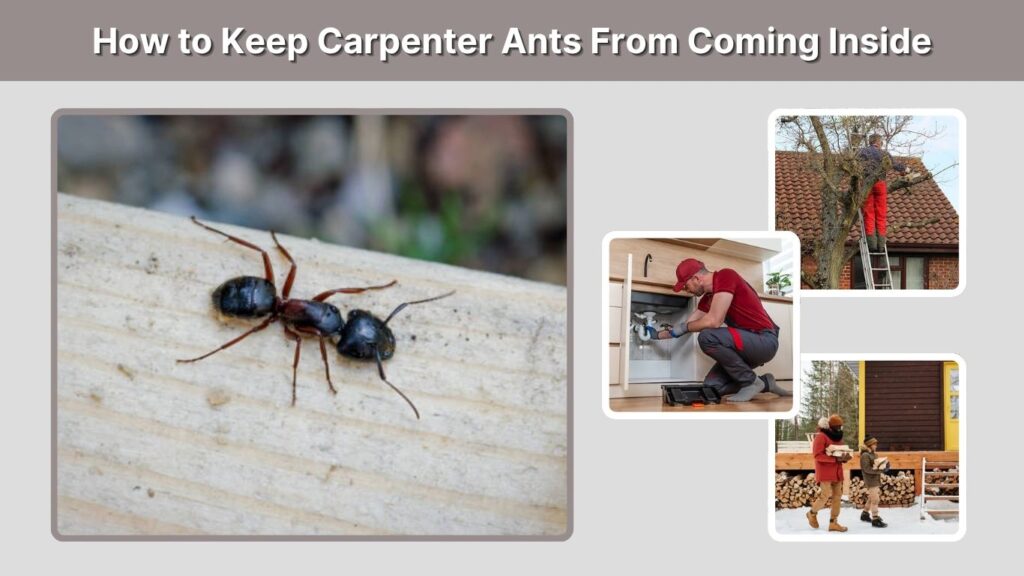
Prevention is about making your home less attractive and harder to enter. Carpenter ants are much less likely to settle indoors when wood is dry, food is sealed, and access points are blocked.
Prevention Checklist
| Prevention Step | Why It Helps |
| Fix plumbing and roof leaks | Removes moisture needed for nesting |
| Improve ventilation | Keeps crawl spaces and attics drier |
| Replace rotting wood | Removes easy nesting material |
| Seal cracks and gaps | Blocks entry routes |
| Trim branches from the roof | Removes bridges into the house |
| Move firewood away | Reduces nearby outdoor nests |
| Store food tightly | Reduces foraging attraction |
| Clean grease and crumbs | Removes food trails |
| Keep gutters clear | Reduces moisture near walls |
| Inspect windows and doors | Finds early damage and access points |
NCSU Extension notes that carpenter ants may enter through foundation cracks, doors, windows, vents, and tree limbs or shrubs touching the house.
Outdoor Sources Matter
A carpenter ant problem may start outside. Check stumps, old logs, firewood piles, rotting fence posts, deck boards, tree cavities, and mulch against the foundation. Removing outdoor nesting sites can reduce indoor ant pressure.
When to Call a Professional
Call a pest professional if you see repeated indoor ants, winged ants, frass, hollow wood, or signs of ants inside walls. Carpenter ants can be difficult to eliminate when nests are hidden. Oklahoma State University notes that carpenter ants can be difficult to control and may require a pest control firm if they are commonly seen.
Carpenter Ants vs Termites Inside the House
Carpenter ants and termites are often confused because both are linked with wood damage. However, they behave differently and need different control methods.
| Feature | Carpenter Ants | Termites |
| Relationship to wood | Tunnel through wood | Eat wood |
| Debris | Push out sawdust-like frass | Often leave mud tubes or pellets, depending on species |
| Body shape | Narrow waist, bent antennae | Broad waist, straight antennae |
| Wings | Front wings longer than back wings | Wings usually equal length |
| Damage type | Smooth galleries | Wood may be packed with mud or eaten internally |
| Control focus | Locate nest and moisture source | Professional termite treatment often needed |
Carpenter ants do not consume wood; they excavate galleries for nesting. Texas A&M describes frass as wood shavings and other material excavated from the ant’s nest.
FAQs
Why do carpenter ants come inside the house?
Carpenter ants come inside for food, water, shelter, warmth, or nesting space. They are especially attracted to damp or damaged wood, leaks, cracks, and areas with sweets, grease, crumbs, or pet food.
How do I get rid of carpenter ants inside the house?
Find where the ants are coming from, look for frass and damp wood, fix moisture problems, seal entry points, use appropriate carpenter ant bait, and target the nest. If activity continues, call a pest control professional.
What kills carpenter ants inside the house?
Carpenter ant baits, insecticidal dusts, aerosols, and professional treatments can kill carpenter ants, but the treatment must reach the colony. Killing only the ants you see usually does not remove the hidden nest.
Do carpenter ants live inside walls?
Yes, carpenter ants can live inside walls, especially near moisture-damaged wood, plumbing leaks, roof leaks, or hidden voids. Signs may include rustling sounds, frass, repeated ant trails, or ants emerging from cracks.
Are winged carpenter ants inside the house bad?
Winged carpenter ants inside the house can be a warning sign of a mature colony. If they appear indoors repeatedly, especially in cold months or near windows and lights, inspect for an indoor nest and moisture damage.