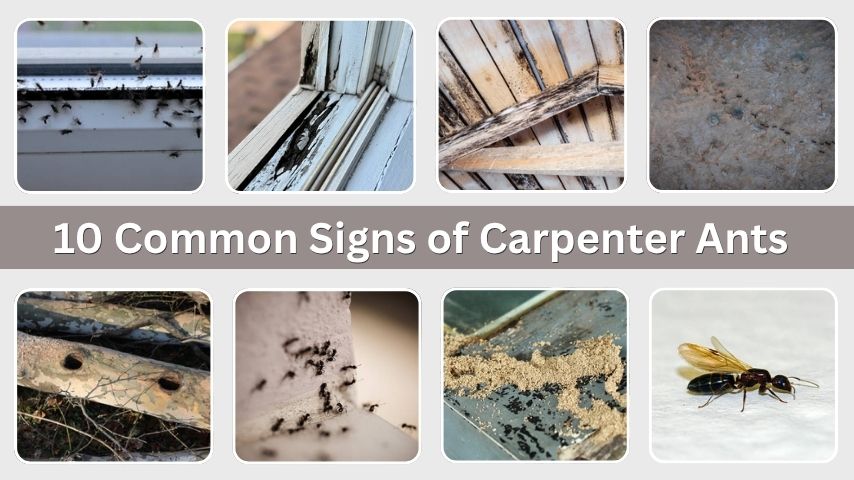
Carpenter ants can be a serious problem when they start nesting inside your home. Unlike termites, they do not eat wood, but they tunnel through it to create hidden galleries. Over time, this activity can weaken wooden structures, especially in moist or damaged areas. Many homeowners miss the early warning signs because the nest is often hidden inside walls, window frames, basements, or crawl spaces. Knowing what to look for can help you act before the damage spreads. Here are ten common signs of carpenter ants in a house and what each one may mean.
1. Sawdust-like Frass
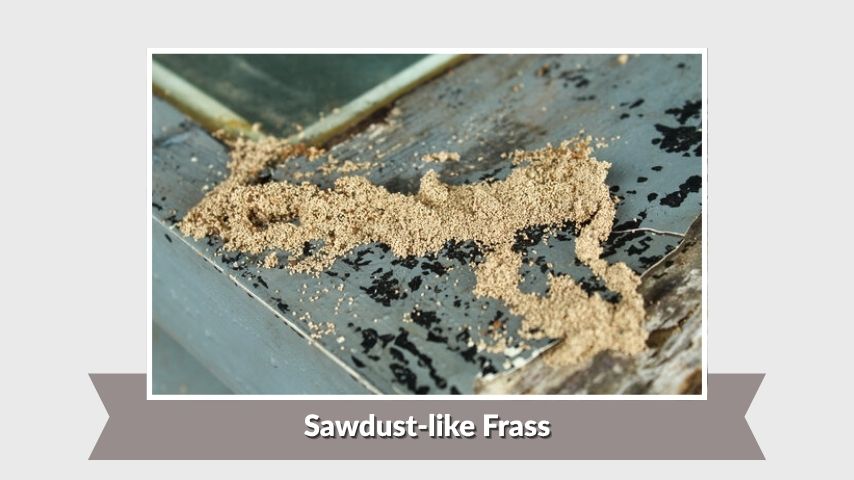
Sawdust-like frass is one of the most common signs of carpenter ants in a house. Unlike termites, carpenter ants do not eat wood. Instead, they tunnel through it to create nesting galleries. As they dig, they push out tiny wood shavings, insect parts, and debris. This material often collects near baseboards, window frames, door frames, crawl spaces, or damaged wooden structures.
Identification
- Looks like fine sawdust or wood shavings
- May appear in small piles near walls, windows, or doors
- Can include dead insect parts or ant body fragments
- Often found below wooden beams, trim, or floorboards
- Usually appears near moist, damaged, or hollow wood
- May return after cleaning if ants are still active
Why Frass Appears in the House
Frass appears because carpenter ants are removing wood from inside their nesting tunnels. They do not swallow the wood like termites. Instead, they chew through it and push the waste material outside the nest. This is why you may see small piles of debris even when the actual nest is hidden behind a wall, under flooring, or inside a wooden frame.
Where You May Find It
You may find carpenter ant frass near window sills, door frames, kitchen cabinets, bathrooms, basements, attics, decks, or crawl spaces. It is especially common around damp or water-damaged wood because carpenter ants prefer softened wood for nesting. If you keep seeing sawdust-like piles in the same area, there may be an active colony nearby.
What You Should Do Next
If you notice frass, clean the area and check whether it comes back. Also inspect nearby wood for moisture, cracks, holes, or hollow sounds. Finding frass repeatedly is a strong warning sign of carpenter ant activity. In that case, you may need to locate the nest, repair moisture problems, and consider professional pest control before the damage spreads.
2. Rustling Noises in Walls
Rustling noises in walls can be a warning sign of carpenter ants in a house, especially when the sounds come from wooden areas at night. Carpenter ants are active inside hidden galleries, where they move, chew, and maintain their nests. These sounds are usually faint, but in quiet rooms, you may hear soft crackling, tapping, or rustling behind walls, ceilings, window frames, or wooden beams.
Identification
- Sounds like faint rustling, tapping, or crackling
- Often heard inside walls, ceilings, or wooden frames
- May become more noticeable at night when the house is quiet
- Usually comes from areas with moisture-damaged wood
- Can happen near bathrooms, kitchens, basements, or window frames
- May appear along with frass, ant trails, or hollow-sounding wood
Why Carpenter Ants Make Noise
Carpenter ants make noise because they are moving through wooden tunnels and expanding their nesting galleries. They do not eat wood, but they chew through it to create space for the colony. As workers remove wood fibers, shift debris, and travel through hidden pathways, they may create soft sounds inside the structure. A large or active colony is more likely to make noticeable noise.
Where the Sounds Usually Come From
These noises often come from damp or weakened wooden areas. Common spots include wall voids near plumbing leaks, window frames, bathroom walls, kitchen cabinets, crawl spaces, attics, and basement beams. If the sound comes from the same area repeatedly, it may indicate a nest nearby. Carpenter ants prefer moist wood, so any area with water damage should be checked carefully.
What You Should Do Next
If you hear rustling noises in walls, try to locate the exact area and inspect nearby wood for frass, small openings, moisture, or ant activity. Avoid breaking open walls without knowing the source. Instead, listen at night, use a flashlight to check nearby baseboards and trim, and look for trails. If the noise continues, a pest control professional can help confirm whether carpenter ants are inside.
3. Large Black Ants Indoors
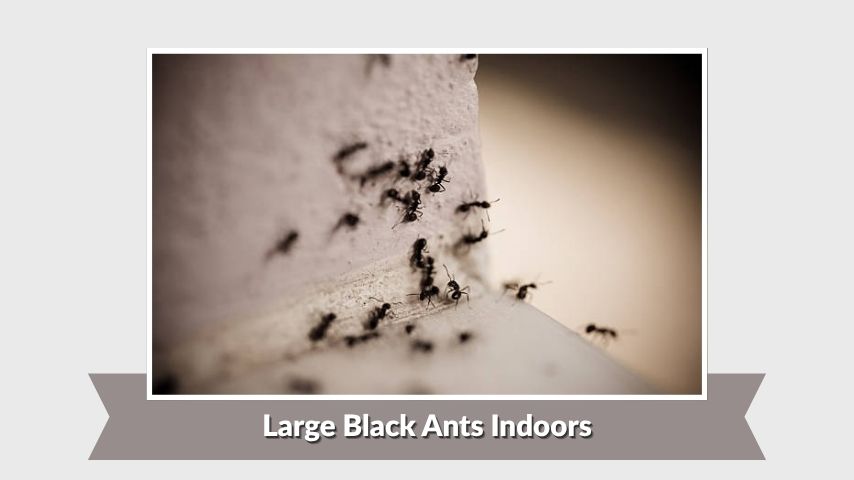
Large black ants indoors can be a strong sign of carpenter ant activity, especially if you see them repeatedly in kitchens, bathrooms, basements, or near wooden structures. Carpenter ants are usually larger than many common house ants, and they may appear black, dark brown, reddish-black, or a mix of colors depending on the species. Seeing one ant may not always mean an infestation, but repeated sightings should be checked carefully.
Identification
- Usually larger than common household ants
- Often black, dark brown, or reddish-black
- May be seen near windows, sinks, baseboards, or doors
- Often active at night while searching for food
- Has a narrow waist and bent antennae
- May appear alone or in small groups indoors
- Repeated sightings may suggest a nearby nest
Why Large Black Ants Appear Inside
Carpenter ants enter homes while searching for food, water, or nesting sites. They are attracted to sweets, grease, meat, crumbs, pet food, and moisture. If they find damp or damaged wood, they may create a nest inside the structure. Unlike termites, they do not eat wood, but they tunnel through it to build galleries. This is why seeing large black ants indoors can point to a hidden wood problem.
Where You May See Them
You may notice carpenter ants in kitchens, bathrooms, laundry rooms, basements, attics, crawl spaces, or around windows and doors. They may also travel along baseboards, pipes, wires, and wall edges. Since carpenter ants often forage at night, you may see them more after dark. Ants near damp areas may suggest moisture-damaged wood nearby.
What You Should Do Next
If you see large black ants indoors, do not only spray the ants you see. Try to track where they are coming from and where they are going. Clean food sources, fix leaks, inspect nearby wood, and look for frass or small openings. If sightings continue, the colony may be nesting inside the house and may need professional treatment.
4. Winged Carpenter Ants
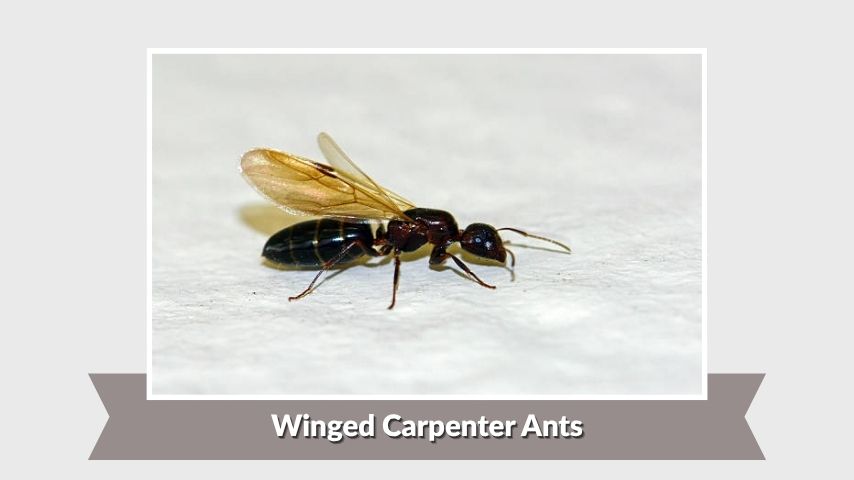
Winged carpenter ants are one of the clearest signs that a mature colony may be nearby. These ants are reproductive ants, also called swarmers. Their job is to leave the nest, mate, and start new colonies. If you see winged carpenter ants inside your house, especially near windows, doors, lights, or walls, it may mean a colony is nesting indoors or very close to the structure.
Identification
- Larger than many common flying ants
- Usually black, dark brown, or reddish-black
- Has two pairs of wings, with the front wings longer than the back wings
- Has a narrow waist and bent antennae
- Often appears near windows, lamps, doors, or bright areas
- May be seen during spring or early summer
- Repeated indoor swarms may suggest a hidden nest
Why Winged Carpenter Ants Appear
Winged carpenter ants appear when a colony is mature enough to produce reproductive ants. These swarmers leave the nest to mate and create new colonies. If they are seen outdoors, it may simply mean there is a nearby colony in a tree, stump, or woodpile. However, if they are found indoors, especially in large numbers, it can suggest that carpenter ants are nesting somewhere inside the house.
Where You May Find Them
You may find winged carpenter ants near windows, sliding doors, light fixtures, vents, baseboards, or attic spaces. They are attracted to light, so they often gather around sunny windows or indoor lamps. In some cases, they may emerge from wall voids, ceiling gaps, or wooden trim. Their presence near damp wood can be a stronger warning sign.
What You Should Do Next
If you find winged carpenter ants indoors, collect a few for identification and inspect the area where they appeared. Look for frass, moisture damage, hollow wood, or small openings nearby. Do not ignore repeated swarms, because they may indicate a colony inside the structure. Fix moisture problems, reduce wood contact around the home, and consider professional inspection if swarmers keep appearing.
5. Shed Wings Near Windows
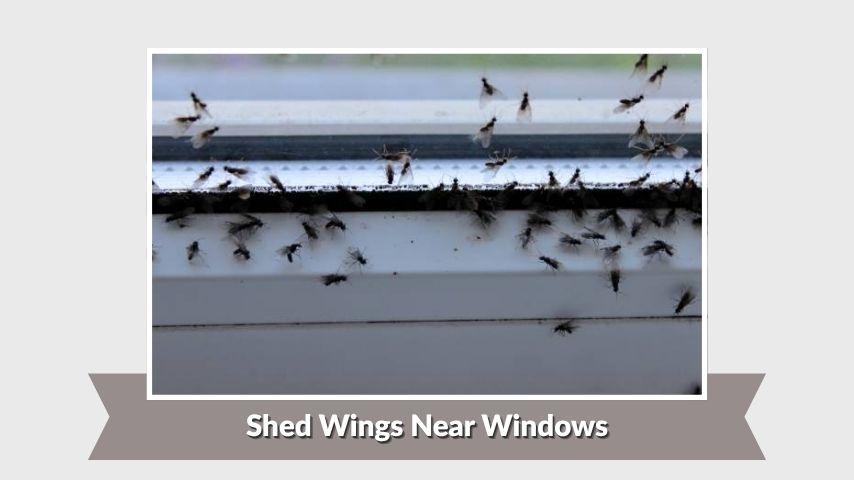
Shed wings near windows can be an important sign of carpenter ants in a house, especially after a swarm. Winged carpenter ants shed their wings after mating or after becoming trapped indoors. If you find small piles of wings near window sills, sliding doors, baseboards, or light fixtures, it may mean swarmers have emerged from a nearby colony.
Identification
- Looks like small, clear, or brownish insect wings
- Often found near windows, doors, lamps, or vents
- May appear in small piles or scattered groups
- Usually seen after winged ants have swarmed indoors
- Can be found near dead winged ants
- May return in the same area during swarm season
- Often appears with other signs like frass or large black ants
Why Shed Wings Appear
Shed wings appear because reproductive carpenter ants lose their wings after swarming. These ants are produced by mature colonies. When they come out indoors, they often move toward light, such as windows or lamps. After they die or drop their wings, the wings may collect around bright areas. This does not always prove the main nest is inside, but repeated shed wings indoors are a warning sign.
Where You May Find Them
You may find shed wings on window sills, near patio doors, around basement windows, under lamps, near vents, or along baseboards. They may also appear in attics, crawl spaces, or rooms with moisture-damaged wood. If the wings are found close to a wall crack, wooden trim, or ceiling gap, the ants may be emerging from a hidden nesting area nearby.
What You Should Do Next
If you find shed wings, do not just sweep them away and ignore them. Check the nearby area for dead winged ants, sawdust-like frass, moisture damage, and small openings in wood. Also look for active ants at night. If wings keep appearing in the same place, a carpenter ant colony may be inside the structure and should be inspected before damage spreads.
6. Hollow-Sounding Wood
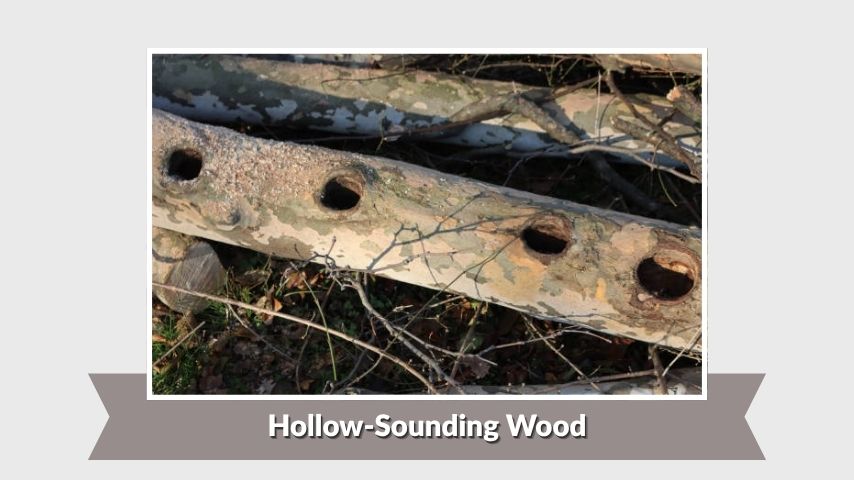
Hollow-sounding wood can be a serious sign of carpenter ants in a house. Carpenter ants do not eat wood like termites, but they tunnel through it to create smooth nesting galleries. Over time, this tunneling can weaken wooden areas and make them sound empty when tapped. This sign is often found near moisture-damaged wood, window frames, doors, walls, floors, and structural beams.
Identification
- Wood sounds hollow when tapped
- May feel weak, soft, or slightly damaged
- Often found near damp or rotting areas
- Can appear around windows, doors, floors, or wall frames
- May come with frass, small holes, or visible ants
- Paint or wood surface may look normal from the outside
- Damage may be hidden inside the wood
Why Wood Sounds Hollow
Wood sounds hollow because carpenter ants remove material from the inside while building their tunnels. The outside surface may still look solid, but the inside can contain empty galleries. This makes the wood lose density and produce a hollow sound when knocked. Since carpenter ants prefer moist or softened wood, hollow sounds are often found near leaks, condensation, or old water damage.
Where You May Notice It
You may notice hollow-sounding wood around bathroom walls, kitchen cabinets, basement beams, crawl spaces, window sills, door frames, decks, porches, and attic supports. Areas close to plumbing leaks, roof leaks, or poor ventilation are especially vulnerable. If the hollow sound appears in the same area where you see ants or frass, the chance of carpenter ant activity is higher.
What You Should Do Next
If you find hollow-sounding wood, inspect the area for moisture, frass, ant trails, and small openings. Press gently to see if the wood feels soft or damaged. Do not ignore the problem, because hidden carpenter ant galleries can grow over time. Repair leaks, replace badly damaged wood, and consider a professional inspection if the hollow area is large or active ants are nearby.
7. Small Holes in Wood
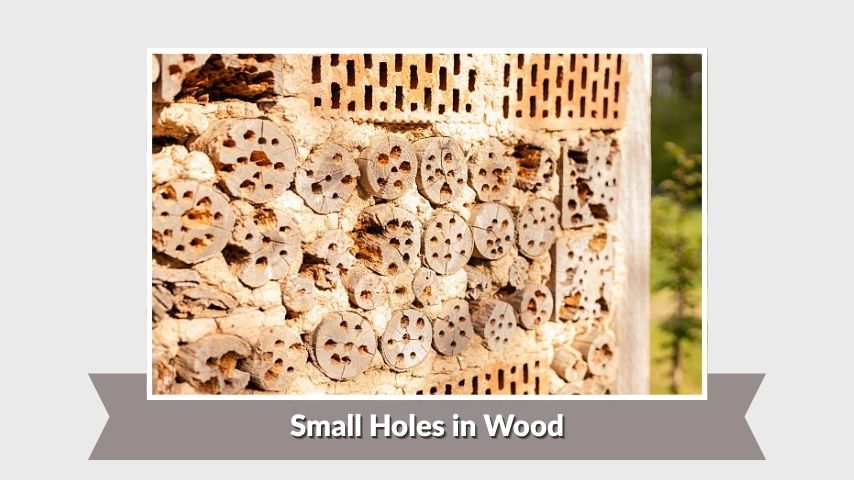
Small holes in wood can be a warning sign of carpenter ants in a house, especially when they appear near frass, moisture damage, or active ants. Carpenter ants create tunnels inside wood and may use small openings to push out debris or move in and out of nesting areas. These holes can be easy to miss because the surface may still look mostly normal.
Identification
- Small round or slit-like openings in wood
- May appear near baseboards, trim, windows, or doors
- Often found close to sawdust-like frass
- Can be located in damp, soft, or rotting wood
- May appear with hollow-sounding wood nearby
- Sometimes found around wall voids or wooden beams
- Repeated ant activity near the holes is a strong clue
Why Small Holes Appear
Small holes appear when carpenter ants create entry and exit points connected to their hidden galleries. These holes may also be used to remove chewed wood, dead insects, and other debris from the nest. Since carpenter ants usually tunnel inside the wood, the damage may be larger than what you can see from the outside. A few small holes can sometimes lead to a much bigger hidden problem.
Where You May Find Them
You may find these holes near window frames, door frames, baseboards, decks, porches, crawl spaces, attic beams, basement supports, or wooden siding. They are more common in areas with water damage because carpenter ants prefer softened wood. If the holes are near plumbing leaks, roof leaks, or damp wall areas, they should be checked carefully.
What You Should Do Next
If you notice small holes in wood, inspect the area for frass, ants, moisture, and hollow sounds. Clean the area and watch to see if new debris appears. Avoid sealing the holes before confirming the source, because the ants may still be active inside. If you keep seeing ants or fresh frass, a professional inspection may be needed.
8. Damaged Window Frames
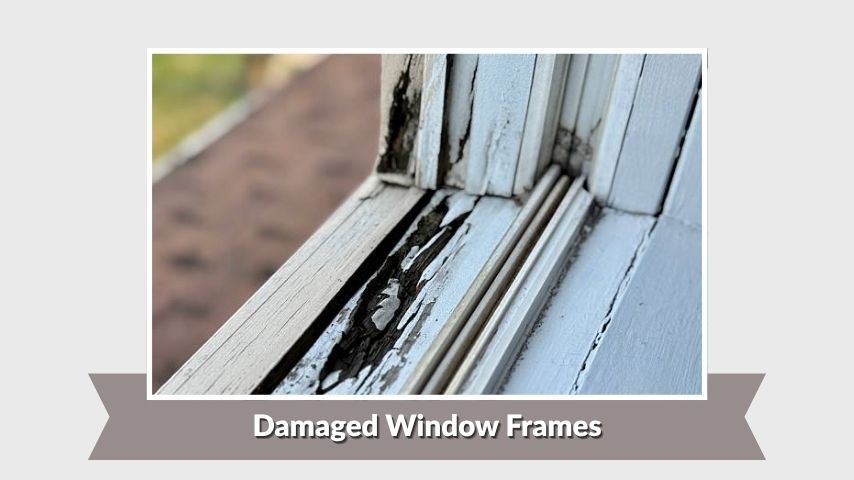
Damaged window frames can be a common sign of carpenter ants in a house, especially when the wood is soft, damp, or rotting. Carpenter ants often choose weakened wood because it is easier to tunnel through. If you notice ants near windows, small piles of frass, hollow wood, or crumbling trim, the window frame may be hiding a carpenter ant nest.
Identification
- Wood around the window looks soft, cracked, or weakened
- Paint may bubble, peel, or blister near the frame
- Small piles of frass may appear on the sill or floor
- Large black ants may be seen near the window
- The frame may sound hollow when tapped
- Tiny holes or gaps may appear in the trim
- Damage is often worse where moisture is present
Why Window Frames Attract Carpenter Ants
Window frames often attract carpenter ants because they can collect moisture from leaks, condensation, poor sealing, or damaged caulking. Once the wood becomes soft, carpenter ants can tunnel through it and create hidden galleries. They do not eat the wood, but they remove it to build nesting space. This can make the frame weaker over time.
Where the Damage Usually Appears
Damage is often found on window sills, lower corners, wooden trim, and areas where the frame meets the wall. Basement windows, bathroom windows, kitchen windows, and old wooden frames are especially vulnerable because they may have more moisture exposure. If ants are entering from outside, the frame can also become a travel route into the home.
What You Should Do Next
If you see damaged window frames, check for leaks, soft wood, frass, and ant activity at night. Repair caulking, improve drainage, and replace badly damaged wood if needed. Do not only paint over the damage, because the nest may still be active inside. If ants keep appearing around the same window, a professional inspection may be needed.
9. Ant Trails at Night
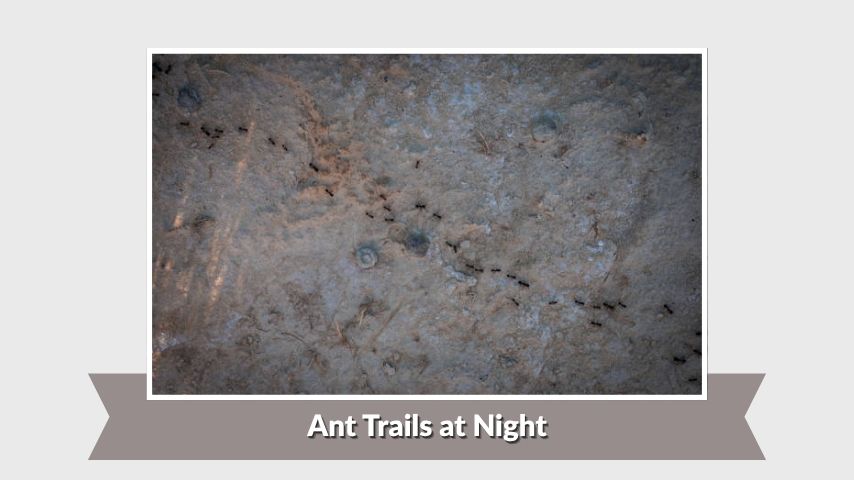
Ant trails at night can be a clear sign of carpenter ants in a house. Carpenter ants are often more active after dark, when they leave the nest to search for food and water. If you see large ants moving in a line along baseboards, counters, pipes, walls, or floors at night, they may be traveling between a hidden nest and a food source.
Identification
- Large ants moving in a visible line
- Trails often appear after dark
- Ants may travel along baseboards, walls, pipes, or counters
- Trails may lead to food, water, or damp wood
- Ants may disappear into cracks, gaps, or wall voids
- Activity may increase in kitchens, bathrooms, or basements
- Repeated trails can suggest a nearby nest
Why Ant Trails Appear at Night
Carpenter ants build trails because worker ants follow scent paths to food and water. At night, they may leave hidden nesting areas and move through the house while people are less active. These trails help the colony collect food efficiently. If you see the same trail more than once, it may be connected to a nest inside the walls, under flooring, or near moisture-damaged wood.
Where You May See the Trails
You may see carpenter ant trails in kitchens, bathrooms, laundry rooms, basements, crawl spaces, attics, and around windows or doors. They often follow edges instead of crossing open spaces. Trails may also appear near pet food bowls, trash cans, sinks, leaking pipes, or sweet and greasy food sources. Watching where the ants enter and exit can help locate the nesting area.
What You Should Do Next
If you see ant trails at night, follow them carefully without disturbing them right away. Look for where they disappear, such as cracks, trim gaps, cabinets, or wall openings. Clean food sources, fix leaks, and inspect nearby wood for frass or hollow sounds. Avoid spraying the visible trail only, because the main colony may remain hidden. Repeated trails usually mean the source needs deeper inspection.
10. Moist or Rotting Wood Areas
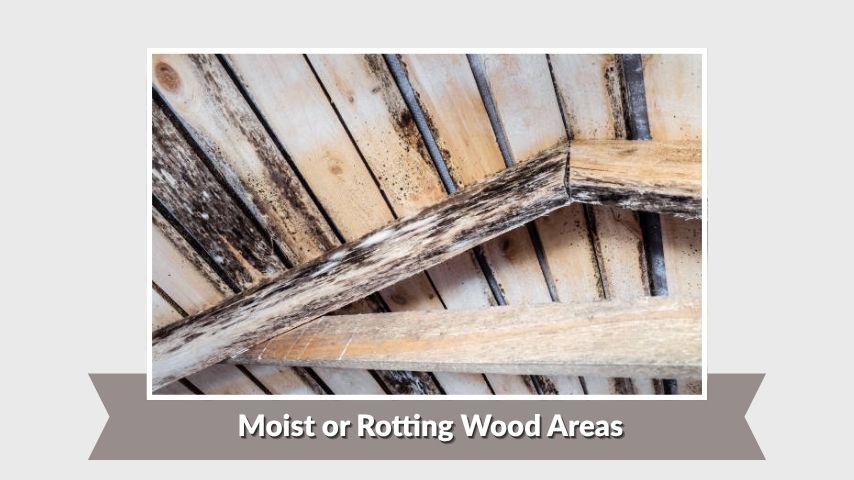
Moist or rotting wood areas are one of the biggest warning signs of carpenter ants in a house. Carpenter ants prefer wood that has been softened by water damage, leaks, humidity, or decay. While they can sometimes tunnel into dry wood, damp and damaged wood is much easier for them to excavate. If your home has moisture problems and you also see large ants, frass, or hollow wood, carpenter ants may be nearby.
Identification
- Wood feels soft, damp, or crumbly
- Paint may peel, bubble, or discolor
- Musty odor may be present in the area
- Large black ants may appear near the damaged wood
- Frass may collect close to the moist area
- Wood may sound hollow when tapped
- Common near leaks, windows, bathrooms, basements, or crawl spaces
Why Moist Wood Attracts Carpenter Ants
Moist wood attracts carpenter ants because it is easier to chew through and build nesting galleries inside. Water-damaged wood also often supports other insects, which can provide food for the ants. A colony may begin in a damp outdoor stump, deck, porch, or wall section and later expand into the house. Moisture does not always mean carpenter ants are present, but it creates the right conditions for them.
Where You May Find Moist Wood Problems
Moist or rotting wood is common around leaking windows, roof edges, bathroom walls, kitchen sinks, basements, crawl spaces, decks, porches, and damaged siding. Areas with poor ventilation or plumbing leaks are especially at risk. If carpenter ants are active, they may use these weakened wooden sections as nesting sites or travel routes.
What You Should Do Next
If you find moist or rotting wood, fix the moisture source first. Repair leaks, improve ventilation, replace damaged wood, and keep wood away from direct soil contact. Then inspect the area for ants, frass, holes, or hollow sounds. Treating ants without repairing moisture problems may only give temporary results, because the same conditions can attract another colony later.
FAQs
What is the first sign of carpenter ants in a house?
One of the first signs is seeing large black ants indoors, especially at night. You may also notice sawdust-like frass near wooden areas, window frames, baseboards, or walls. If the same signs keep appearing, there may be a nest nearby.
Does sawdust always mean carpenter ants?
No, sawdust does not always mean carpenter ants. It can also come from drilling, damaged wood, or other insects. However, if the sawdust-like material keeps returning and appears with large ants, small holes, or hollow wood, carpenter ants may be active.
Are carpenter ants worse than termites?
Carpenter ants and termites damage wood in different ways. Termites eat wood, while carpenter ants tunnel through wood to build nests. Carpenter ants can still cause serious damage over time, especially if the colony is large or hidden inside damp wood.
Where do carpenter ants usually nest indoors?
Carpenter ants often nest in moist or damaged wood. Common indoor nesting spots include wall voids, window frames, door frames, basements, crawl spaces, bathrooms, kitchens, attics, and areas near leaks or poor ventilation.
Should I call pest control for carpenter ants?
Yes, you should consider pest control if you see repeated ant activity, frass, winged ants, hollow wood, or signs of a hidden nest. Carpenter ant colonies can be hard to find, and treating only the ants you see may not remove the main colony.