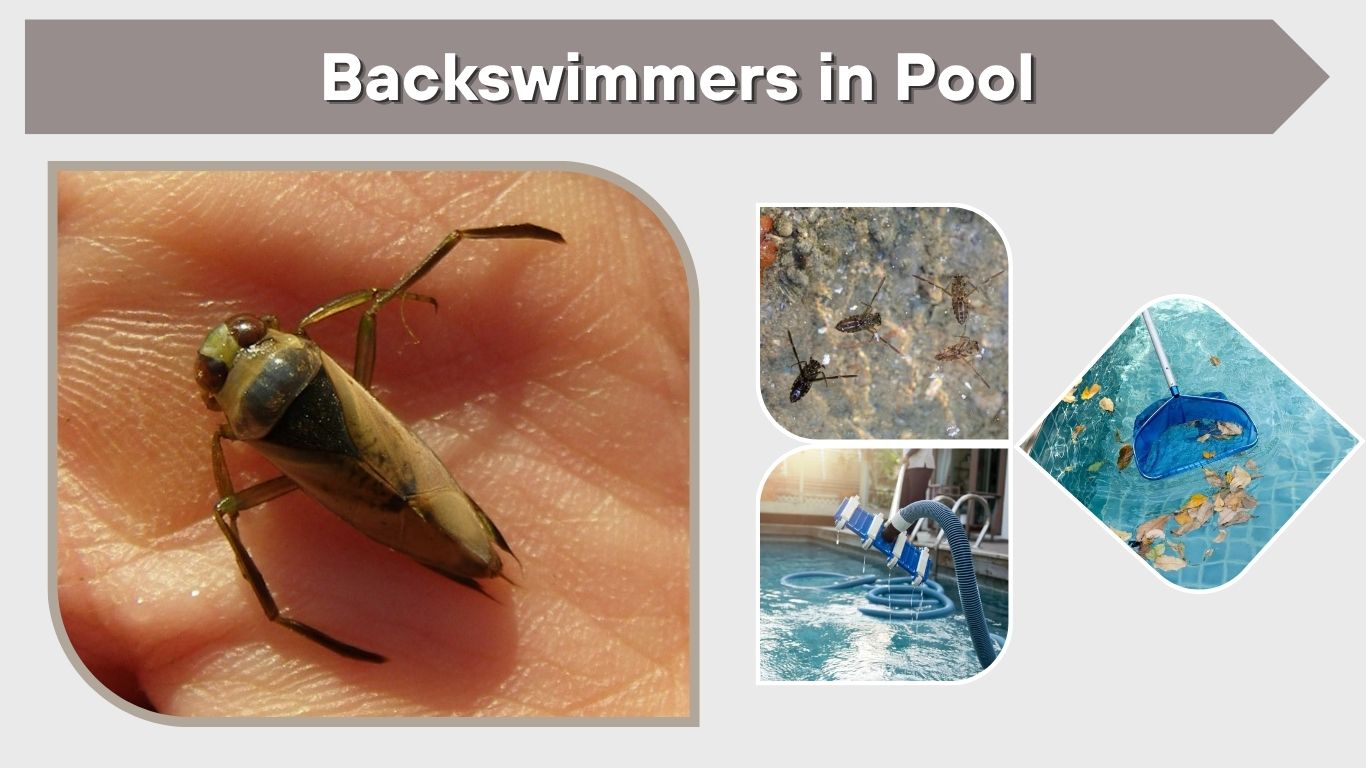
Finding backswimmers in your pool can be frustrating, especially when you are ready to swim. These small water bugs move quickly, swim upside down, and may bite if handled or trapped against the skin. The good news is that backswimmers do not usually mean your pool is unsafe forever. They are often a sign that the pool has insects, algae, or organic debris that gives them a reason to stay.
What Are Backswimmers in a Pool?
Backswimmers are aquatic insects that often live in ponds, lakes, slow-moving water, and sometimes swimming pools. They get their name because they usually swim upside down on their backs. Their long hind legs work like paddles, helping them move quickly through the water.
Unlike some harmless pool bugs, backswimmers are predators. They feed on smaller aquatic insects, mosquito larvae, and other tiny organisms. This is why they often show up after water boatmen or other bugs appear in the pool. Water boatmen are commonly linked with algae and organic matter, while backswimmers may arrive to hunt them. Pool care sources commonly note that removing algae and the bugs backswimmers feed on is key to getting rid of both water boatmen and backswimmers.
What Do Backswimmer Bugs Look Like?
Backswimmer bugs are usually small, oval, and narrow-bodied. They may look dark, gray, brown, tan, or black and white depending on the species and lighting. Many people describe them as “black and white backswimmers in pool” because the contrast on their body can be noticeable in clear water.
You can often identify them by these signs:
- They swim upside down.
- They have long back legs that look like oars.
- They move quickly when disturbed.
- They may rest near the water surface.
- They can fly from one water source to another.
Why Are Backswimmers in My Pool?
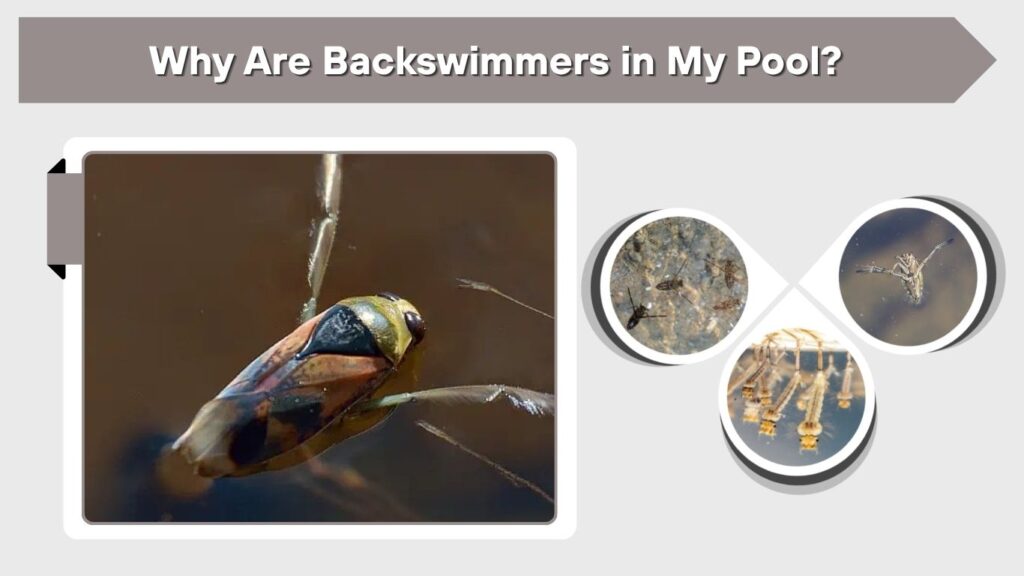
Backswimmers usually enter pools because the pool gives them water, shelter, and food. They are not coming because they want to attack people. They are coming because your pool resembles a small aquatic habitat.
What Causes Backswimmer Bugs in Pool Water?
The most common causes include algae, other insects, mosquito larvae, poor circulation, organic debris, and lights around the pool. Backswimmers are predators, so if smaller bugs are already living in the pool, backswimmers may follow.
| Cause | Why It Attracts Backswimmers | What to Do |
| Algae | Attracts water boatmen and tiny organisms | Brush, shock, and balance water |
| Water boatmen | A food source for backswimmers | Remove algae and skim bugs |
| Mosquito larvae | Can attract predatory insects | Improve circulation and sanitation |
| Leaves and debris | Supports microorganisms and bugs | Skim and vacuum regularly |
| Pool lights | Flying insects may land in the water | Reduce lights near the pool at night |
| Nearby ponds or standing water | Source areas for aquatic insects | Remove standing water where possible |
How Do Backswimmers Get in Your Pool?
Backswimmers can fly. This is one of the main reasons they seem to appear suddenly. They may come from ponds, lakes, ditches, birdbaths, water features, or neighboring pools. At night, lights can attract flying insects, and some may land in the pool.
They can also arrive when your pool already has water boatmen or other small bugs. Once backswimmers find food, they may stay until the food source disappears.
Are Backswimmers in Pool Dangerous?
Backswimmers in pool water are more of a nuisance than a major danger. However, they can bite. Their bite is not like a mosquito bite. They have a piercing mouthpart that can cause a sharp, painful sting if they are handled or trapped against your skin.
Most backswimmer bites are not medically serious, but they can hurt. Some pest and pool references describe them as biting aquatic bugs that are painful but usually not dangerous.
Do Backswimmers Bite in Pools?
Yes, backswimmers can bite in pools. They do not usually chase swimmers, but they may bite if:
- You pick them up with bare hands
- They get pressed between your skin and a pool float
- They are trapped inside swimwear
- A child tries to catch or squeeze them
- You accidentally brush against one in shallow water
To be safe, remove them with a skimmer net instead of your hands.
How to Get Rid of Backswimmers in Pool Fast
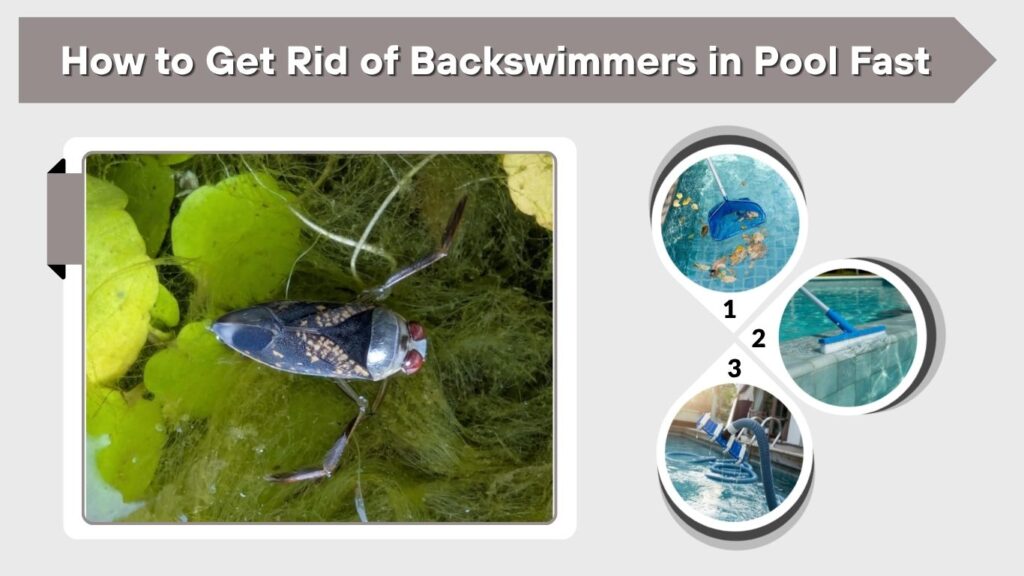
The fastest way to get backswimmers out of your pool is to remove the visible bugs first, then remove what attracted them. Skimming alone may help for a day, but they can come back if your pool still has algae, insects, or poor water balance.
Step 1: Skim the Pool Thoroughly
Use a pool skimmer net to remove visible backswimmers, water boatmen, leaves, and floating debris. Focus on corners, steps, ladders, skimmer openings, and areas near lights.
Do not remove backswimmers by hand. Even if they look small, they can deliver a painful bite.
Step 2: Brush the Walls, Steps, and Floor
Algae can cling to pool walls, ladders, steps, corners, and shaded areas. Even if the water looks mostly clear, a thin algae film can support insects and microorganisms. Brush the entire pool before shocking or vacuuming.
Pay close attention to:
- Pool steps
- Corners
- Tile lines
- Ladder areas
- Shaded sides
- Around returns and skimmers
Step 3: Vacuum the Pool
After brushing, vacuum the pool to remove loosened algae, dead insects, larvae, and debris. If the pool has a heavy bug problem, vacuuming to waste may be useful if your system allows it.
Vacuuming helps remove the organic material that can make your pool attractive to water bugs.
Step 4: Shock the Pool
Shocking the pool helps kill algae and organic contaminants. Follow the label instructions on your pool shock product, and use the correct amount for your pool size. Run the pump after shocking so the sanitizer circulates through the water.
For best results, shock in the evening or at night. Sunlight can reduce chlorine strength, so nighttime shocking often works better.
Step 5: Run the Pump and Filter
Good circulation makes the pool less attractive to aquatic bugs. Run the pump long enough to filter the water properly, especially after brushing and shocking. Clean or backwash the filter if needed.
Poor filtration allows debris, algae, and microorganisms to build up. That can attract water boatmen first, then backswimmers.
Step 6: Test and Balance the Water
Backswimmers are not killed only by “adding more chlorine” if the pool chemistry is unbalanced. Test your pool water and adjust sanitizer, pH, alkalinity, and other levels as needed.
A balanced pool is less likely to develop algae and less likely to attract bugs. This step matters for chlorine pools and salt water pools.
What Kills Backswimmers in Pool Water?
Many people search for “what kills backswimmers in pool” or “how to kill backswimmer bugs in pool,” but the better approach is to make the pool unlivable for them. Backswimmers are air-breathing aquatic insects, and they may survive short exposure to water treatments if they can escape or fly away. Killing the food source is usually more effective than trying to kill each bug directly.
Does Chlorine Kill Backswimmers?
Proper chlorine levels help prevent algae and reduce the conditions that attract water bugs. However, normal chlorine levels may not instantly kill every backswimmer already in the pool. That is why skimming, brushing, vacuuming, shocking, filtering, and balancing water should work together.
Does Dish Soap Kill Backswimmers in Pool?
Some people use dish soap for pool backswimmer bugs because soap can interfere with surface tension and may kill some aquatic insects. However, dish soap is not recommended as a regular pool treatment. It can cause foaming, affect water quality, irritate skin, and create extra work for your filter system.
Instead of dish soap, use proper pool maintenance methods: skimming, brushing, vacuuming, shocking, filtering, and balancing the water.
How to Keep Backswimmers Out of Your Pool
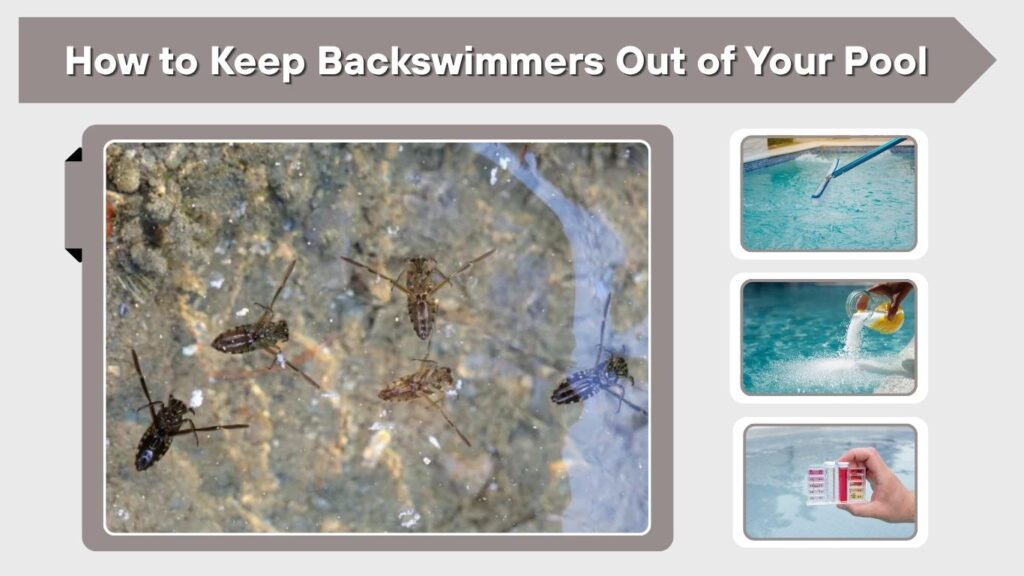
Once the bugs are gone, prevention is the most important step. Backswimmers can fly, so you may not stop every single one from landing in the water. But you can make your pool much less attractive.
Remove Their Food Source
Backswimmers eat other aquatic bugs. If water boatmen, mosquito larvae, or small insects are present, backswimmers may return. Removing algae and organic debris helps break the food chain.
Do these regularly:
- Brush pool surfaces weekly
- Vacuum debris from the floor
- Skim leaves and insects daily when needed
- Empty skimmer baskets
- Keep chlorine or sanitizer in range
- Maintain proper pH
- Remove algae as soon as it appears
Reduce Outdoor Lights at Night
Backswimmers and other flying insects may be drawn toward lights near water. Reducing pool lights and nearby patio lights at night can help reduce bugs landing in the pool. Some sources recommend reducing nighttime lighting and trimming vegetation around the pool to make the area less inviting.
Use lights only when needed, or switch to warmer, less intense lighting away from the pool edge.
Use a Pool Cover
A pool cover can help keep flying insects, leaves, and debris out of the water. It is especially useful at night, when insects are more likely to fly toward lights and water.
A cover also helps reduce organic material in the pool, which lowers the chance of algae and water bug activity.
Remove Standing Water Nearby
If you have buckets, plant saucers, birdbaths, clogged gutters, fountains, or puddles nearby, they can attract insects. Some aquatic insects may move between these water sources and your pool.
Check around the yard for:
- Buckets
- Toys that hold water
- Plant trays
- Wheelbarrows
- Birdbaths
- Clogged gutters
- Unused fountains
- Low spots with standing water
Empty or clean these areas regularly.
Backswimmers in Salt Water Pool
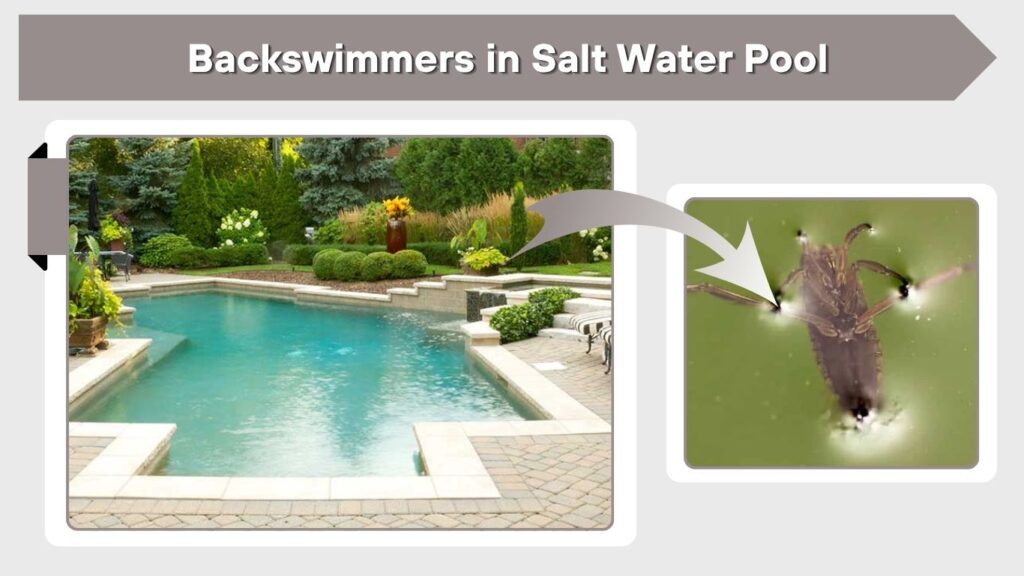
Backswimmers can appear in salt water pools too. A salt water pool still uses chlorine generated from salt, so it can still develop algae or attract insects if water balance, circulation, or sanitation is off.
To get rid of backswimmers in a salt water pool, use the same basic process:
- Skim visible bugs
- Brush pool surfaces
- Vacuum debris
- Check salt cell performance
- Test chlorine, pH, and stabilizer
- Shock if needed
- Run the pump and filter
- Use a cover when the pool is not in use
Do not assume a salt water system prevents all bugs. If algae or prey insects are present, backswimmers may still show up.
Water Boatmen and Backswimmers in Swimming Pool
Water boatmen and backswimmers are often found together, but they are not the same. Water boatmen usually feed on algae, organic debris, and microorganisms. Backswimmers are predators and may feed on water boatmen.
This means water boatmen can be the first warning sign. If you ignore them, backswimmers may arrive later.
Quick Identification
Water boatmen usually swim right-side up and are less likely to bite. Backswimmers swim upside down and can bite if disturbed. If the bug is swimming on its back near the surface, it is probably a backswimmer.
Do Backswimmers Come Back in the Pool?
Backswimmers can come back if the conditions that attracted them remain. If you only skim them out, they may return within days. If you remove algae, water boatmen, larvae, and debris, they are much less likely to stay.
They may also return after storms, heavy winds, warm nights, or nearby pond activity. Regular pool care is the best long-term prevention.
Common Mistakes When Removing Backswimmers
Many pool owners make the problem worse by focusing only on the visible bugs. The real issue is usually the pool environment.
Avoid these mistakes:
- Picking up backswimmers by hand
- Using dish soap as a regular pool treatment
- Ignoring algae because the water looks mostly clear
- Leaving lights on around the pool all night
- Forgetting to clean skimmer baskets
- Shocking without brushing first
- Not testing the water after treatment
- Letting leaves and debris sit in the pool
FAQs
Why are there backswimmers in my pool?
Backswimmers are usually in your pool because there is food available, such as water boatmen, mosquito larvae, or other small insects. Algae and organic debris can attract smaller bugs first, and backswimmers may follow to hunt them.
How do I get rid of backswimmers in my pool fast?
Skim out the visible bugs, brush the pool walls and steps, vacuum debris, shock the pool, run the filter, and balance the water. Fast removal works best when you also remove algae and smaller insects that backswimmers feed on.
Do backswimmers in pools bite?
Yes, backswimmers can bite if handled, squeezed, or trapped against skin. They do not usually chase swimmers, but their bite can feel sharp and painful. Use a skimmer net instead of removing them by hand.
What kills backswimmer bugs in pool water?
Pool shock, proper sanitizer levels, and good filtration help make the pool unsuitable for backswimmers. However, the most important step is removing their food source. Get rid of algae, water boatmen, mosquito larvae, and debris to stop them from coming back.
How do I keep backswimmers out of my pool?
Keep the pool clean, balanced, and algae-free. Skim debris, brush surfaces, run the filter, reduce lights near the pool at night, remove standing water nearby, and use a pool cover when the pool is not in use.