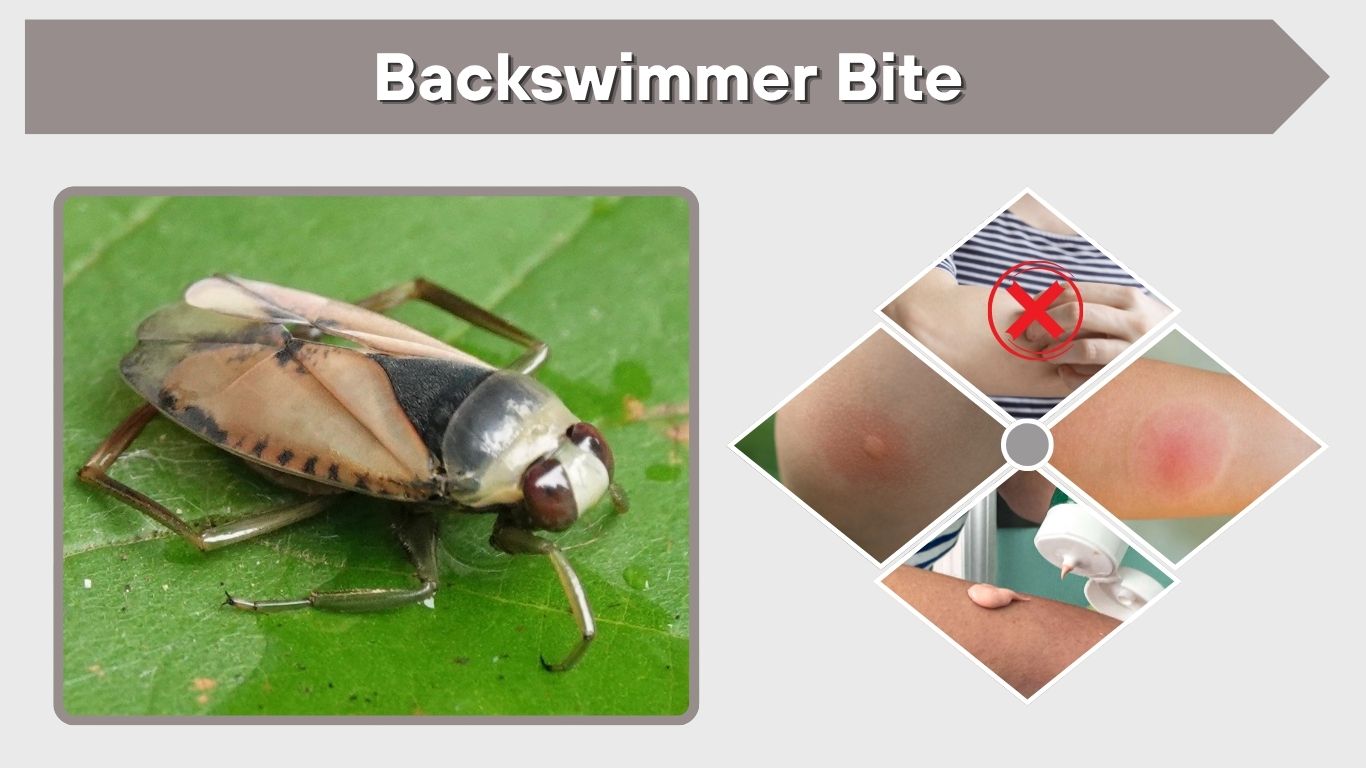
A backswimmer bite can be surprising because these small water insects look harmless at first. Many people notice them in pools, ponds, lakes, or water gardens and wonder whether they can bite humans. The short answer is yes, backswimmers can bite, but they usually do so only when handled, trapped, or disturbed. Their bite can hurt, but it is rarely dangerous.
What Is a Backswimmer?
Backswimmers are aquatic insects that live in still or slow-moving freshwater. They are often found in ponds, lakes, marshes, garden pools, and sometimes swimming pools. Their name comes from the way they swim upside down, using their long back legs like oars.
These insects belong to the true bug group, not beetles. That means a phrase like “backswimmer beetle bite” is common in searches, but it is not technically correct. Backswimmers are bugs with piercing mouthparts, not beetles with chewing jaws.
Why People Notice Them in Water
Backswimmers are active hunters. They feed on small aquatic insects, mosquito larvae, tadpoles, and other tiny water animals. Because they are predators, they have sharp mouthparts designed to pierce prey.
You may see them:
- Swimming upside down near the surface
- Resting under the water surface
- Moving quickly when disturbed
- Appearing in outdoor pools after flying in at night
- Gathering where insects or mosquito larvae are present
Do Backswimmers Bite Humans?
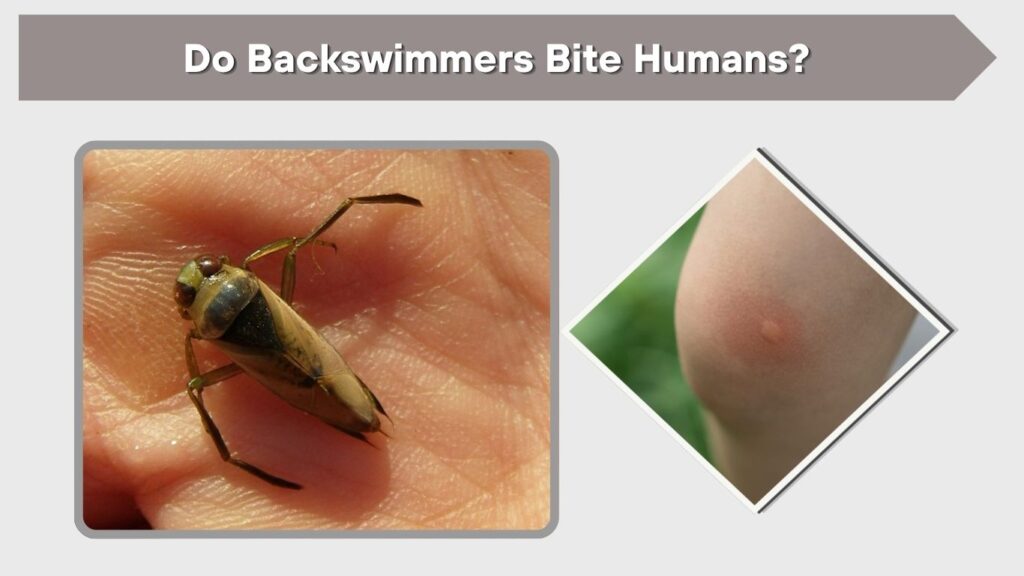
Yes, backswimmers can bite humans. However, the word “bite” is slightly misleading. A backswimmer does not bite the way an ant, mosquito, or beetle might. Instead, it pierces the skin with a sharp, beak-like mouthpart called a proboscis.
Backswimmers usually bite defensively. They are not interested in feeding on people, and they do not chase swimmers. Most bites happen when someone picks one up, steps on one in shallow water, or accidentally presses one against the skin.
Can Backswimmers Bite in a Pool?
Backswimmers in pools can bite if they are trapped against the body or handled. This is one reason people become concerned when they see backswimmers swimming in backyard pools. The insect may end up near a swimmer’s arm, leg, or hand, especially if the pool has insects, algae, or poor circulation.
A clean, well-maintained pool is less attractive to backswimmers because there is less prey available. Still, they can fly into pools from nearby ponds, lights, or wet areas.
What Does a Backswimmer Bite Look Like?
A backswimmer bite on human skin usually looks like a small red spot, mild swelling, or a tiny puncture mark. It may not leave a dramatic mark, even if the pain feels strong at first. Some people compare the pain to a bee sting or sharp needle prick.
The appearance can vary depending on skin sensitivity and how the insect made contact. In many cases, the mark is minor and fades within a short time.
| Concern | What You May Notice |
| Bite mark | Small red dot, puncture-like spot, or mild welt |
| Pain | Sharp, sudden sting or burning feeling |
| Swelling | Usually mild and localized |
| Itching | Possible but often less intense than mosquito bites |
| Duration | Often improves within hours to a few days |
| Risk level | Usually low unless infection or allergic reaction develops |
Backswimmer Bite Marks
Backswimmer bite marks are usually not large, patterned, or clustered. Unlike bed bug bites, they typically do not appear in rows. Unlike mosquito bites, they may hurt more immediately. The mark may look like a tiny red bump with tenderness around it.
Common signs include:
- A sudden sharp pain while in water
- A small red mark on the skin
- Burning or stinging around the area
- Mild swelling
- Tenderness when touched
Backswimmer Bite Picture Expectations
People often search for a “backswimmer bite picture” or “backswimmer bite picture human,” but bite photos are not always easy to identify. Many insect bites look similar. A backswimmer bite may resemble a small bee sting, minor puncture, or irritated red bump.
The best clue is the situation. If the pain happened while swimming in a pool, pond, or lake and you saw a backswimmer nearby, the bite may be from a backswimmer.
Backswimmer Bite Symptoms
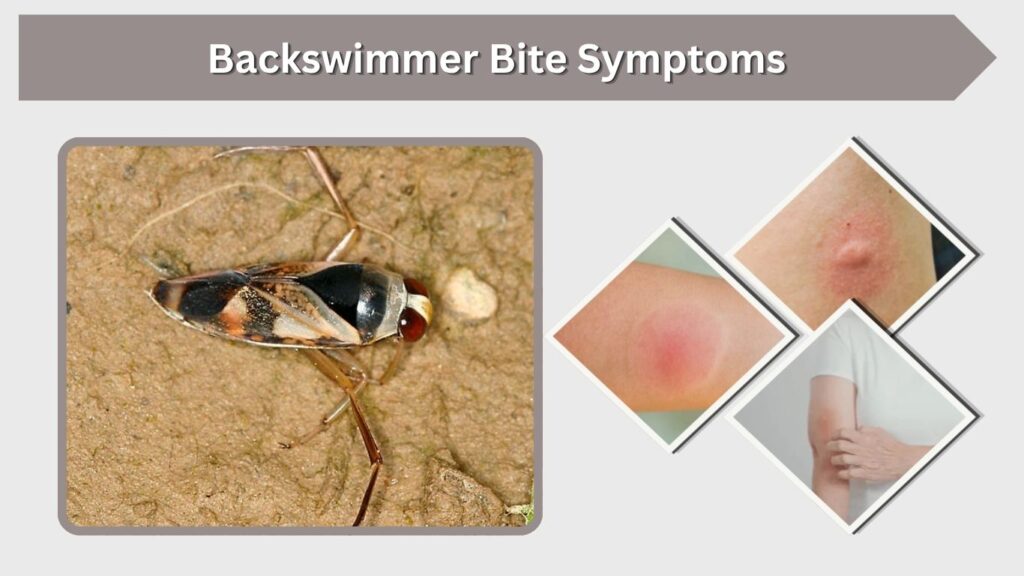
Backswimmer bite symptoms are usually local and short-lived. The most common symptom is immediate pain. Some people describe it as a sharp sting, while others feel burning or throbbing for a short period.
Common Symptoms
Most people may notice:
- Sudden sharp pain
- Burning or stinging feeling
- Small red bump or puncture mark
- Mild swelling around the bite
- Skin tenderness
- Temporary itching or irritation
The pain can feel stronger than expected because the insect’s mouthpart is designed to pierce prey. Even though the bite can hurt, it usually does not mean the bite is dangerous.
Less Common Symptoms
Some people may have stronger skin reactions. This can happen if they have sensitive skin, scratch the area, or develop irritation after the bite.
Less common symptoms include:
- Larger swelling
- Lingering redness
- Warmth around the bite
- Increased itching
- Minor blistering
- Skin irritation lasting more than a day or two
Seek medical advice if swelling spreads, pain worsens, pus appears, fever develops, or the person has trouble breathing. These symptoms are not typical of a simple backswimmer bite and may suggest infection or an allergic reaction.
Are Backswimmer Bites Dangerous?
Backswimmer bites are usually not dangerous. They can be painful, but they are not known as a major medical threat to humans. In most cases, the bite causes temporary discomfort that improves with basic first aid.
Backswimmers are sometimes called “water wasps” or “water bees” because their bite can feel like a sting. This nickname makes the bite sound alarming, but the risk is usually low for healthy adults and children.
Are Backswimmer Bugs Poisonous?
Backswimmer bugs are not poisonous in the way many people use the word. They do not poison humans through casual contact, and they do not spread through the home like bed bugs or fleas. Their mouthparts can inject saliva used for feeding on prey, which may irritate human skin and cause pain.
The main concern is not poison. The main concern is pain, irritation, and keeping the bite clean so it does not become infected.
Backswimmer Bite Treatment
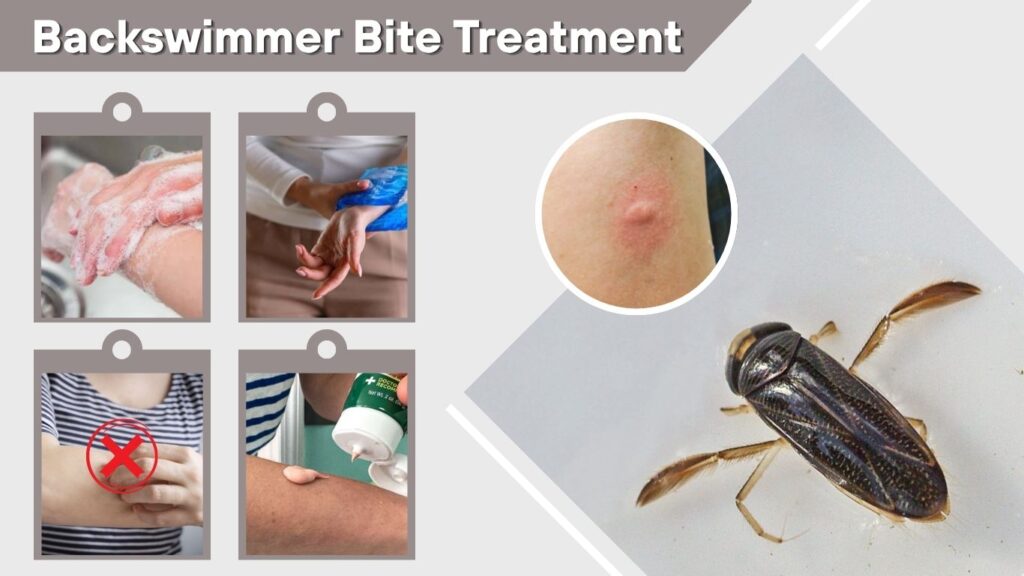
Most backswimmer bites can be treated at home. The goal is to clean the area, reduce pain, and prevent irritation.
How to Treat a Backswimmer Bite
Follow these simple steps:
- Wash the bite with soap and clean water.
- Apply a cold compress for 10 to 15 minutes.
- Avoid scratching the bite.
- Use an over-the-counter anti-itch cream if needed.
- Take a pain reliever if the pain is uncomfortable.
- Watch for signs of infection over the next day or two.
If the bite happened in pond or lake water, cleaning the skin well is especially important. Natural water can contain bacteria, and scratching the bite may increase the chance of infection.
When to Get Medical Help
Most bites do not require a doctor. However, medical help may be needed if symptoms are unusual or severe.
Contact a healthcare professional if:
- Redness spreads away from the bite
- Swelling becomes severe
- The area becomes warm or filled with pus
- Pain gets worse instead of better
- Fever develops
- The bite is near the eye
- The person has signs of an allergic reaction
For children, older adults, or people with immune system concerns, it is better to be cautious if the bite looks infected or does not improve.
Backswimmer vs Water Boatman Bite
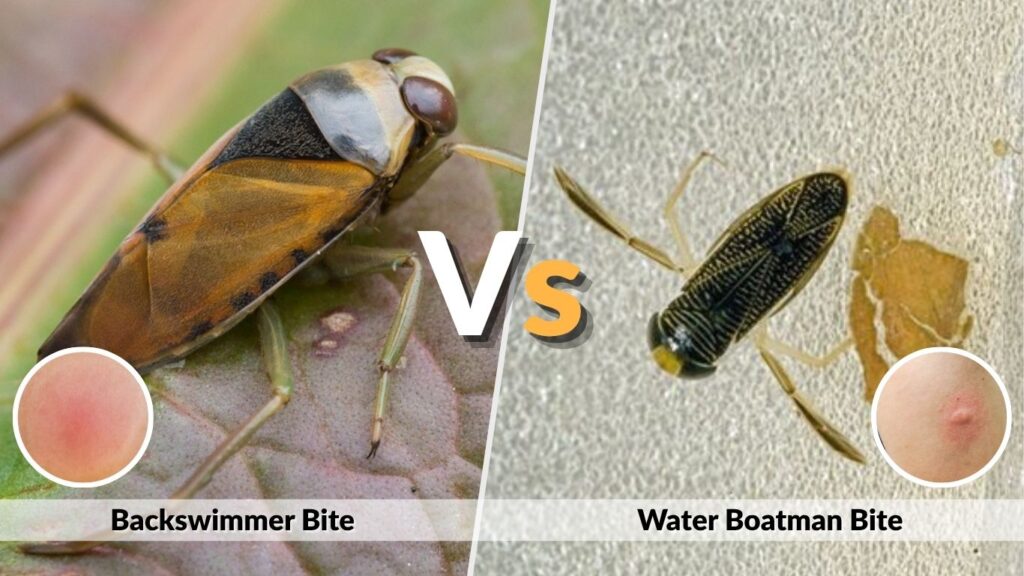
Backswimmers are often confused with water boatmen. This matters because backswimmers can deliver a painful bite, while true water boatmen are generally considered much less likely to bite humans.
Both insects live in water and have oar-like legs, but they behave differently.
How to Tell Them Apart
Backswimmers usually swim upside down near the water surface. Their bodies often look lighter on the back and darker underneath, which helps camouflage them when swimming upside down.
Water boatmen usually swim right-side up. They are often flatter, more oval-shaped, and feed more on algae, plant material, and tiny organic matter instead of hunting larger prey.
Key differences include:
- Backswimmers swim upside down.
- Water boatmen swim right-side up.
- Backswimmers are predators.
- Water boatmen are mostly scavengers or plant-material feeders.
- Backswimmers can cause a painful bite.
- Water boatmen are usually less concerning to swimmers.
Why the Confusion Happens
Many people use names like “water bug,” “water boatman,” and “backswimmer” interchangeably. This can make it hard to know what insect is actually in the pool or pond. If the insect swims on its back and moves quickly with long hind legs, it is likely a backswimmer.
How to Prevent Backswimmer Bites
The easiest way to prevent a backswimmer bite is to avoid handling them. They are not aggressive toward humans, but they may defend themselves when grabbed or trapped.
In Pools
Backswimmers may show up in pools when there are other insects available as food. Reducing insects and improving pool maintenance can help.
Try these steps:
- Skim insects from the pool regularly.
- Keep chlorine and pH balanced.
- Brush pool walls and remove algae.
- Use a pool cover when the pool is not in use.
- Reduce outdoor lights near the pool at night.
- Remove nearby standing water where insects breed.
If you see backswimmers in the pool, use a net instead of your hands. Do not crush or pick them up with bare fingers.
In Ponds and Lakes
In natural water, backswimmers are part of the ecosystem. They help control mosquito larvae and other small aquatic organisms. You do not need to remove them from ponds unless they are causing repeated problems in a swimming area.
To reduce bite risk:
- Avoid grabbing unknown water insects.
- Wear water shoes in shallow areas.
- Teach children not to handle aquatic bugs.
- Shake out pool toys, floats, or nets before use.
- Move away if many aquatic insects are gathered near the surface.
Can Backswimmers Infest Your Home?
Backswimmers do not infest homes like bed bugs, cockroaches, or ants. They need water to live and hunt. If one appears indoors, it likely flew in by accident or came from a pool, pond, or outdoor light source.
They may be attracted to lights at night and can land near patios, porches, or pools. Removing them with a cup, net, or paper towel is usually enough. Avoid picking them up directly with bare hands.
FAQs
Do backswimmers bite?
Yes, backswimmers can bite humans, but bites are uncommon. They usually bite only when handled, trapped, or pressed against skin. The bite is actually a piercing wound from their sharp mouthpart, not a chewing bite.
What does a backswimmer bite look like?
A backswimmer bite usually looks like a small red spot, mild welt, or tiny puncture mark. It may be tender or slightly swollen. The pain can feel stronger than the visible mark suggests, especially right after the bite happens.
Are backswimmer bites dangerous?
Backswimmer bites are usually not dangerous. They can hurt and may cause redness or swelling, but most improve with basic home care. Seek medical help if swelling spreads, pus appears, fever develops, or allergic symptoms occur.
How do you treat a backswimmer bite?
Wash the area with soap and water, apply a cold compress, and avoid scratching. An anti-itch cream or pain reliever may help if needed. Watch the bite for signs of infection, especially if it happened in pond or lake water.
Do backswimmers bite humans in pools?
Yes, backswimmers can bite humans in pools, but they do not usually attack swimmers. Bites are more likely if the insect is trapped against the skin or handled. Skimming insects, balancing pool water, and reducing algae can help prevent them.