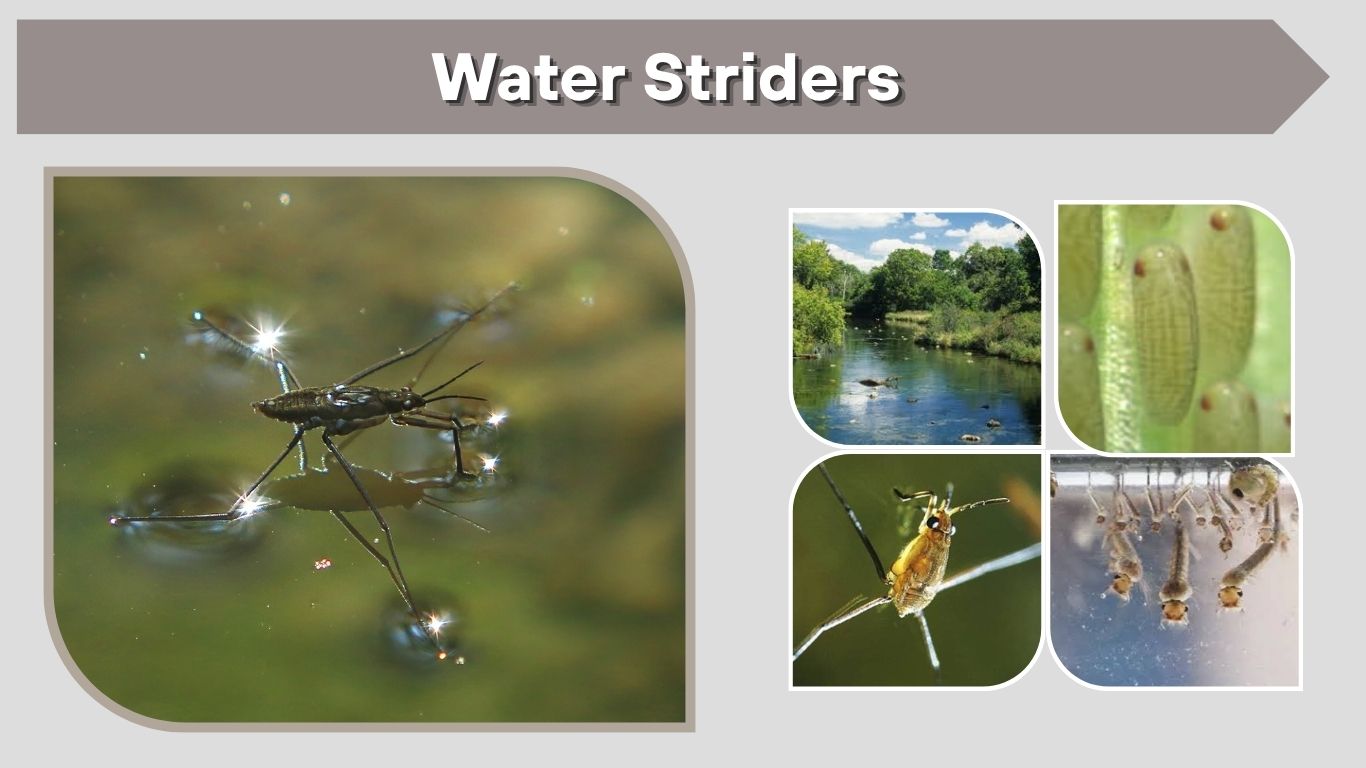
Water striders are small aquatic insects best known for skating across ponds, streams, and even swimming pools. Their ability to walk on water makes them one of the most interesting insects found near freshwater. Although they may look unusual, water striders are not usually dangerous to people. They play an important role in aquatic ecosystems by feeding on small insects and other tiny organisms trapped on the water’s surface.
What Are Water Striders?
Water striders are insects that live on or near the surface of water. They are often seen gliding quickly across ponds, lakes, slow-moving streams, marshes, and sometimes backyard pools.
Water Striders Meaning
The name “water strider” comes from the way these insects move. They appear to stride, skate, or glide across the water without sinking. Many people also call them pond skaters, water skaters, or Jesus bugs because of their ability to move across the water’s surface.
Water Striders Scientific Name
Most water striders belong to the family Gerridae. This is why they are sometimes called gerrids. There are many species of water striders worldwide, and not all of them look exactly the same. However, they generally share long legs, slender bodies, and a surface-skating lifestyle.
What Do Water Striders Look Like?
Water striders usually have narrow, dark-colored bodies with very long legs. Their middle and hind legs are especially long and help them balance on the water. The front legs are shorter and are often used to grab prey.
Common features include:
- Long, thin legs spread widely over the water
- A narrow brown, black, or gray body
- Short front legs for catching food
- Quick, jerky movements across the water
- Some species with wings, while others are wingless
How Do Water Striders Walk on Water?
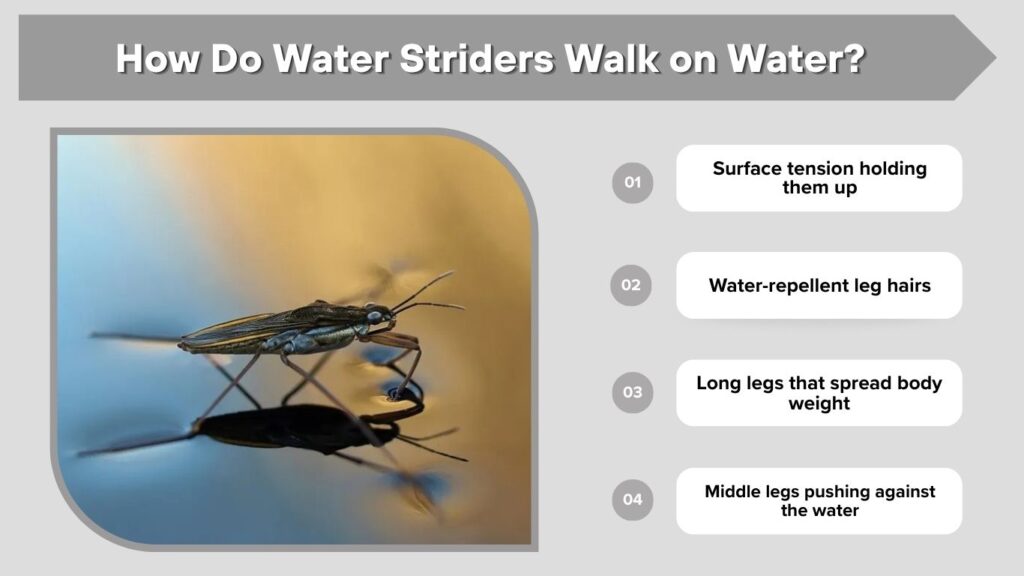
Water striders walk on water because of a combination of surface tension, body structure, and special leg adaptations. They do not float like a leaf. Instead, they distribute their weight so carefully that the surface of the water can support them.
Water Striders and Surface Tension
Surface tension is the thin “skin-like” effect created by water molecules pulling together at the surface. Water striders are light enough that they do not break this surface when standing or moving.
Their legs press gently into the water, creating small dimples without sinking. These dimples help support their body weight.
Special Water-Repellent Legs
Water strider legs are covered with tiny hairs that repel water. These microscopic hairs trap air and prevent the legs from becoming wet. This helps the insect stay on top of the surface rather than falling through it.
Their legs are also shaped in a way that spreads their weight across a larger area. This is similar to how snowshoes help a person walk on snow without sinking deeply.
How They Move So Fast
Water striders use their middle legs like oars. They push against the water’s surface to move forward. Their hind legs help steer, while their front legs are used to sense and catch prey.
Their movement depends on:
- Surface tension holding them up
- Water-repellent leg hairs
- Long legs that spread body weight
- Middle legs pushing against the water
- Hind legs helping with balance and direction
Water Striders Quick Facts
| Topic | Details |
|---|---|
| Common name | Water strider, pond skater, water skater |
| Scientific family | Gerridae |
| Habitat | Ponds, lakes, streams, marshes, pools |
| Diet | Small insects, larvae, trapped organisms |
| Dangerous to humans? | Usually no |
| Can they bite? | Rarely, and not seriously harmful |
| Main adaptation | Walking on water using surface tension |
| Wings | Some species can fly; others cannot |
What Do Water Striders Eat?
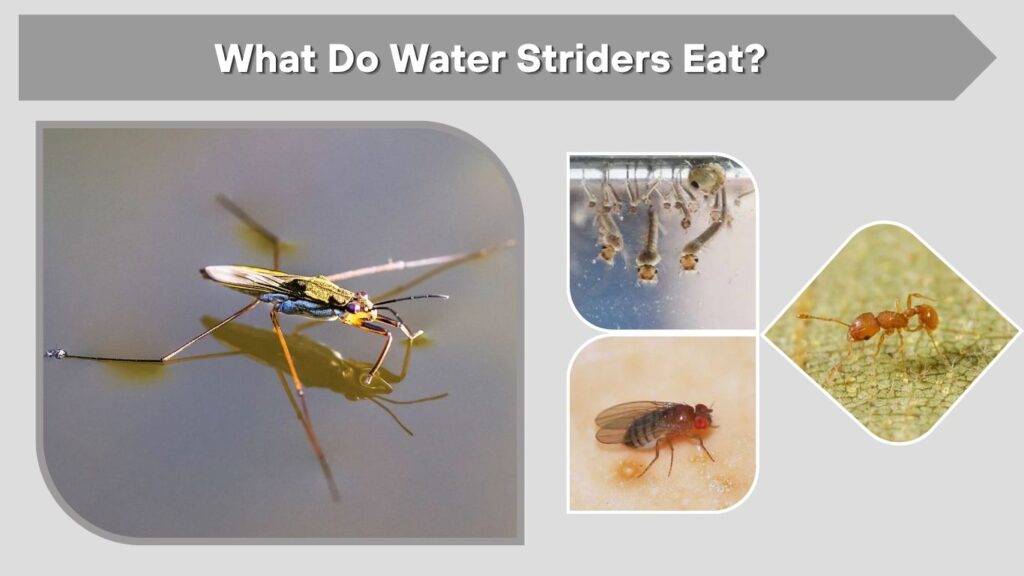
Water striders are predators. They mainly feed on small insects and other tiny animals that fall onto the water’s surface. They do not usually eat plants, algae, phytoplankton, or periphyton as a main food source.
Water Striders Diet
Their diet often includes:
- Mosquito larvae and pupae
- Small flies
- Ants that fall into water
- Tiny aquatic insects
- Springtails
- Small trapped insects
- Dead or weakened bugs floating on the surface
Water striders use vibrations to detect prey. When an insect falls onto the water, it creates ripples. The water strider senses these ripples through its legs and quickly moves toward the source.
How Water Striders Catch Food
Water striders use their front legs to grab prey. Then they pierce the prey with their mouthparts and suck out the body fluids. This feeding style is common among many true bugs.
They do not chew food like grasshoppers or beetles. Instead, they use piercing-sucking mouthparts.
Do Water Striders Eat Mosquitoes?
Yes, water striders can feed on mosquitoes, especially mosquito larvae or pupae near the water surface. This makes them helpful in some aquatic environments. However, they are not a complete mosquito-control solution because they eat many kinds of small prey, not mosquitoes alone.
Are Water Striders Dangerous?
Water striders are not considered dangerous to humans. They are not aggressive, poisonous, or known for spreading disease to people. Most water striders avoid humans and quickly move away when disturbed.
Are Water Striders Harmful in Ponds?
In most cases, water striders are not harmful in ponds. They are part of the natural food web and can help control small insect populations. Fish, birds, frogs, and other aquatic animals may also feed on them.
They usually do not damage:
- Pond plants
- Fish
- Water lilies
- Pool surfaces
- Garden features
Their presence often means there are small insects available on the water surface.
Are Water Striders Dangerous in Pools?
Water striders in pools are more of a nuisance than a danger. They may enter pools while searching for food or suitable water habitat. A few water striders in a pool do not usually indicate a serious problem, but frequent sightings may mean insects are being attracted to the water.
Do Water Striders Bite Humans?
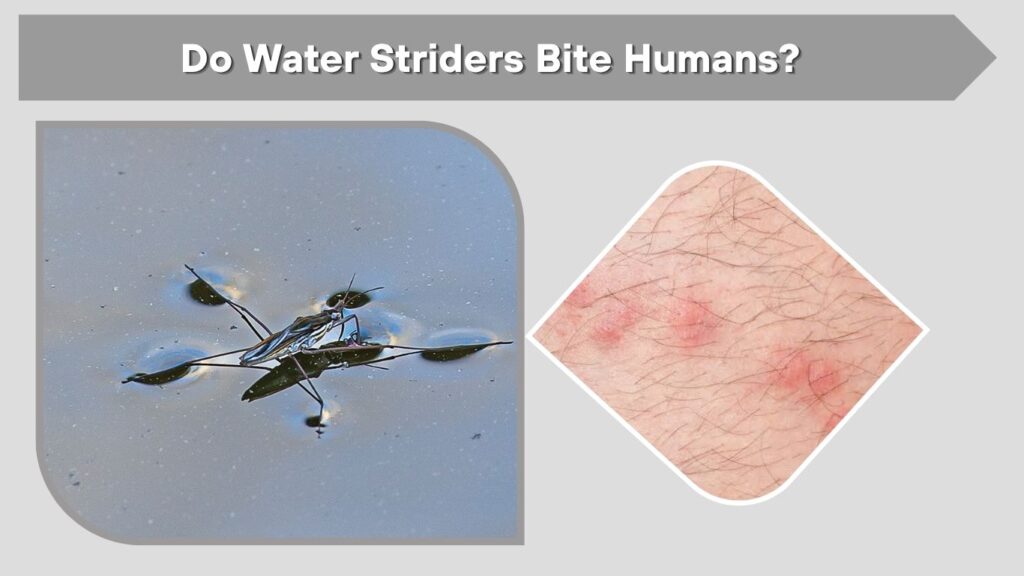
Water striders can bite in rare cases, but they do not normally bite humans. They are designed to feed on small insects, not people. If handled roughly, a water strider may use its piercing mouthparts defensively.
What Happens If a Water Strider Bites?
A water strider bite may feel like a tiny pinch or mild sting. It is not usually medically serious. Most people experience little to no reaction.
Possible minor effects include:
- Brief discomfort
- Mild redness
- Slight itching
- A tiny irritated spot
Serious reactions are uncommon. Washing the area with soap and water is usually enough for a minor bite.
Can Water Striders Bite Humans in Pools?
They can, but it is unlikely. Water striders in pools are usually trying to escape or hunt small insects. They do not seek out people. Avoid picking them up with bare hands if you are concerned about being bitten.
Where Do Water Striders Live?
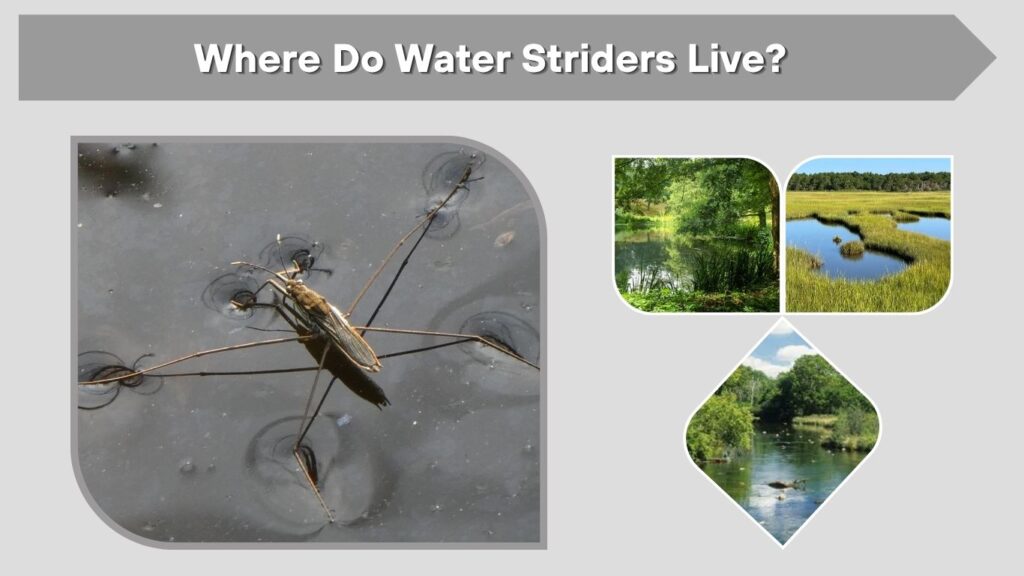
Water striders are found in many freshwater habitats. They prefer calm or slow-moving water where the surface is stable enough for skating.
Common Water Strider Habitats
You may find them in:
- Ponds
- Lakes
- Marshes
- Slow streams
- Wetlands
- Ditches
- Temporary rain pools
- Backyard swimming pools
- Garden water features
Some species can also live near brackish or coastal waters, but most familiar water striders are freshwater insects.
Why Water Striders Appear in Pools
Water striders may enter pools because the water surface attracts insects. Outdoor lights, nearby plants, and standing water can all increase insect activity around a pool.
They may be drawn by:
- Small insects floating in the pool
- Calm water surfaces
- Nearby vegetation
- Pool lights attracting bugs at night
- Lack of regular pool cleaning
Water striders do not usually breed successfully in well-maintained chlorinated pools, but they may stay temporarily if food is available.
Can Water Striders Fly?
Some water striders can fly, while others cannot. Wing development varies depending on the species and environmental conditions. Some have full wings, some have short wings, and some are wingless.
Why Some Water Striders Have Wings
Wings help water striders move to new habitats when water conditions change. If a pond dries up, becomes crowded, or has limited food, winged individuals may fly to another location.
Why Some Are Wingless
In stable habitats, wings may not be necessary. Wingless water striders can use more energy for growth and reproduction instead of flight. This is why wing length can vary even among related species.
Water Strider Life Cycle
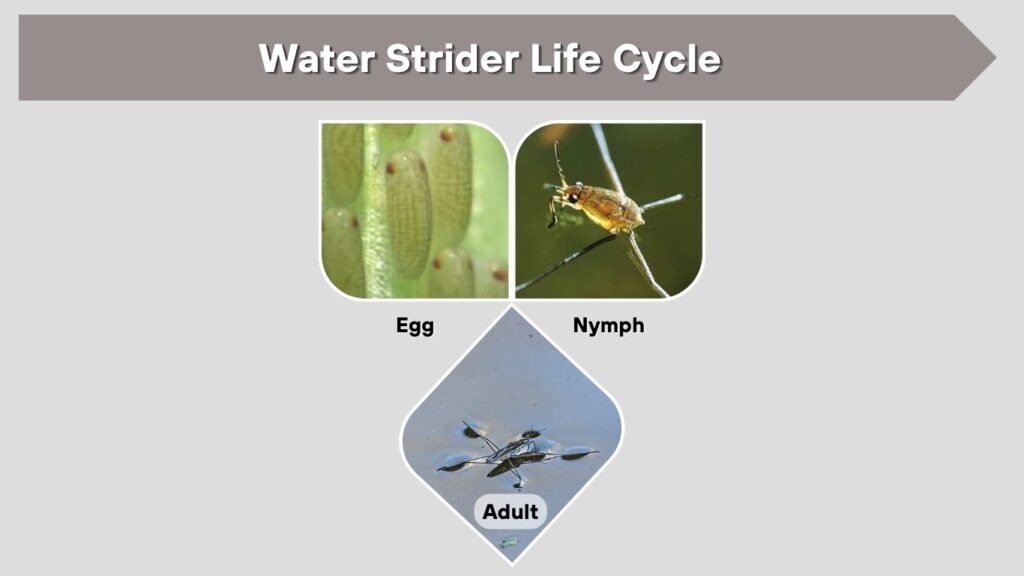
Water striders go through incomplete metamorphosis. This means they do not have a caterpillar-like larval stage or a pupal stage like butterflies or mosquitoes.
Their life cycle includes three main stages:
- Egg
- Nymph
- Adult
Eggs
Female water striders lay eggs on aquatic plants, floating debris, rocks, or other surfaces near water. The eggs are usually placed where the young can access the water surface after hatching.
Nymphs
Young water striders are called nymphs. They look like smaller versions of adults but do not have fully developed wings or reproductive organs. Nymphs molt several times as they grow.
Adults
Adult water striders are fully developed and can reproduce. Depending on the species and climate, adults may live for weeks or months. In colder regions, some species survive winter as adults in sheltered places.
Water Striders Larvae: Do They Have Larvae?
People often search for “water striders larvae,” but technically, water striders do not have larvae. They have nymphs. The nymph stage is different from a true larval stage because the young insects resemble adults.
A mosquito larva looks very different from an adult mosquito. A water strider nymph, however, already has the general body shape of an adult water strider.
Water Striders in Pool: What Should You Do?
Water striders in a pool are usually there because food is available. Removing them is mostly about reducing insects and keeping the water clean.
How to Remove Water Striders From a Pool
You can reduce water striders by:
- Skimming them from the surface with a pool net
- Removing floating insects and debris
- Keeping chlorine and water chemistry balanced
- Running the pool pump regularly
- Brushing pool walls and steps
- Reducing outdoor lights near the pool at night
- Trimming plants around the pool area
Water striders are not usually the root problem. They often appear because other insects are already present.
How to Prevent Them From Coming Back
To prevent water striders, focus on making the pool less attractive to insects. Since water striders feed on small bugs, fewer bugs usually means fewer water striders.
Helpful steps include:
- Covering the pool when not in use
- Cleaning leaves and debris quickly
- Fixing standing water around the yard
- Moving bright lights away from the pool
- Keeping landscaping trimmed
- Maintaining proper filtration
Water Striders vs Similar Aquatic Insects
Water striders are sometimes confused with other bugs found near water. The most common confusion is with backswimmers, water boatmen, and whirligig beetles.
Water Striders vs Backswimmers
Water striders stay on top of the water. Backswimmers swim underwater and often move upside down. Backswimmers are more likely to bite people than water striders.
Water Striders vs Water Boatmen
Water boatmen also swim underwater. They have paddle-like legs and are usually seen below the surface. Unlike water striders, they do not skate across the top of the water.
Water Striders vs Whirligig Beetles
Whirligig beetles swim in circles on the water surface. They have oval bodies and move in groups. Water striders have long legs and usually glide in straighter, more deliberate movements.
Why Can Water Striders Walk on Water?
Water striders can walk on water because their bodies are perfectly adapted for life on the surface. Their lightweight bodies, long legs, and water-repellent hairs all work with surface tension.
The Role of Capillary Action
Capillary action and surface tension both involve the behavior of water molecules, but they are not the same thing. Water striders mainly rely on surface tension, not capillary action. Capillary action is the movement of water through narrow spaces, such as water rising in a thin tube or moving through plant stems.
For water striders, the key factor is the strong surface layer of water that supports their legs.
Why They Do Not Sink
They avoid sinking because their legs spread out their weight and do not break the water’s surface. Their tiny leg hairs also repel water, keeping them dry and buoyant.
Are Water Striders Good or Bad?
Water striders are generally good insects in natural habitats. They help control small insect populations and serve as food for larger animals.
Benefits of Water Striders
Water striders can be useful because they:
- Eat small insects on the water surface
- Help control mosquito larvae and other tiny prey
- Serve as food for fish, frogs, and birds
- Indicate active aquatic ecosystems
- Do not harm most pond plants or fish
When They Become a Nuisance
They may become annoying when they gather in swimming pools or decorative water features. Even then, they are usually not harmful. Their presence often points to a larger insect-attraction issue.
FAQs
Are water striders dangerous?
No, water striders are not considered dangerous to humans. They are not poisonous, aggressive, or known for spreading diseases. They usually avoid people and focus on catching small insects on the water’s surface.
Do water striders bite humans?
Water striders can bite, but it is rare. They may bite if handled or threatened. A bite usually causes only mild, brief discomfort and is not considered serious for most people.
What do water striders eat?
Water striders eat small insects and tiny animals trapped on the water surface. Their diet may include flies, ants, mosquito larvae, springtails, and other small aquatic organisms. They detect prey by sensing ripples in the water.
How do water striders walk on water?
Water striders walk on water by using surface tension. Their long legs spread their weight, and tiny water-repellent hairs keep them from getting wet. This allows them to press on the surface without breaking through.
Can water striders fly?
Some water striders can fly, but not all of them. Winged species or individuals can move to new habitats when conditions change. Others may have short wings or no wings, especially in stable environments where flight is less necessary.