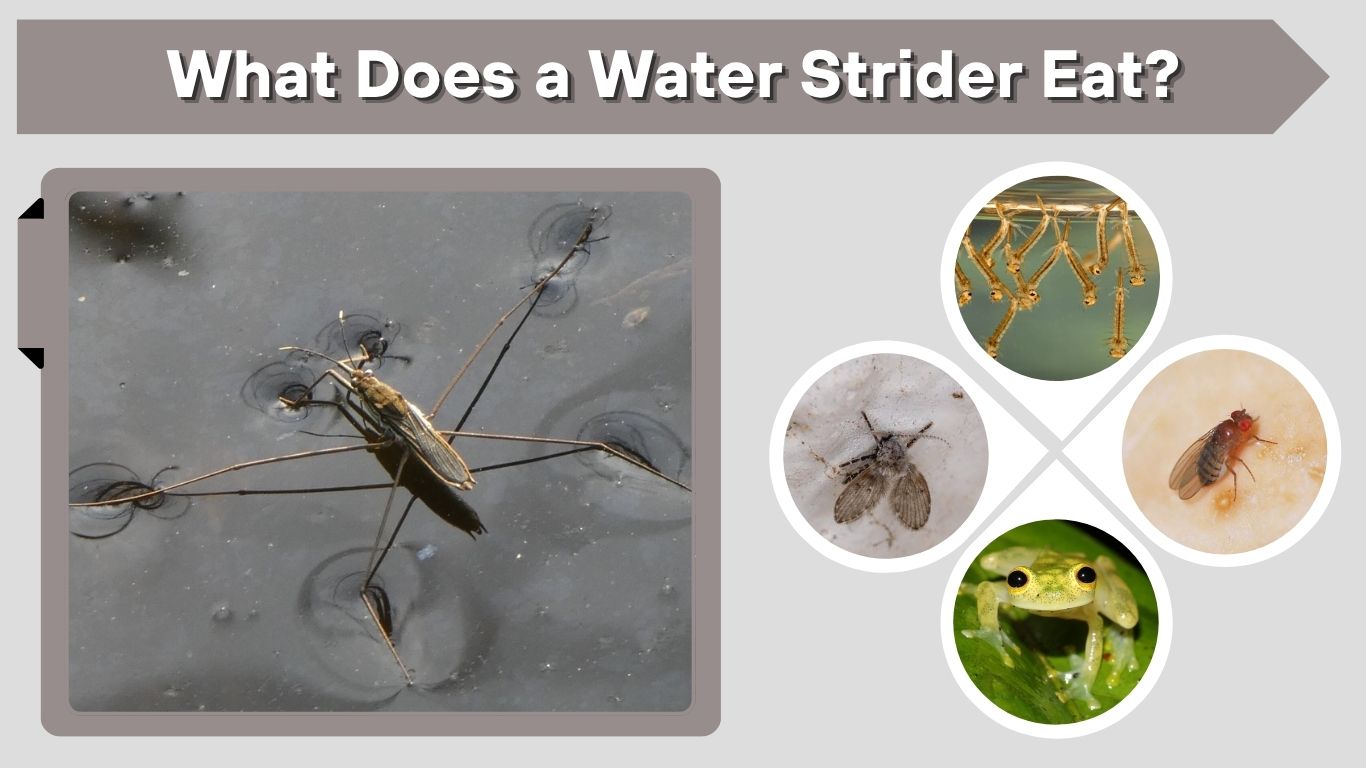
Water striders are small insects often seen skating across ponds, lakes, streams, and swimming pools. Their long legs help them stay on the water’s surface, but they are not just harmless floaters. Water striders are active predators that feed on small insects and other tiny creatures trapped at the surface. Their diet makes them an important part of freshwater ecosystems.
What Do Water Striders Eat?
Water striders mainly eat small insects and other tiny animals that land on or live near the water’s surface. They are carnivorous insects, meaning they feed on animal matter rather than plants.
Their common food sources include:
- Mosquito larvae and pupae
- Small flies
- Ants
- Springtails
- Tiny aquatic insects
- Small moths
- Weakened or dead insects floating on water
Water striders do not usually eat algae, pond plants, phytoplankton, or periphyton. They may move across areas where these organisms grow, but their main food source is small prey.
How Water Striders Find Their Food
Water striders are excellent hunters because they can detect movement on the water. When an insect falls onto the surface, it creates tiny ripples. Water striders sense these vibrations through their legs and quickly move toward the prey.
They Use Water Vibrations
A struggling insect sends signals across the water. These signals help the water strider locate the prey, even if it is several inches away. This is one reason they are so successful at catching insects that fall into ponds or pools.
They Hunt on the Surface
Water striders do not usually dive underwater for food. They stay on top of the water and catch prey floating or struggling at the surface. Their long legs allow them to move quickly without sinking.
Water Strider Diet at a Glance
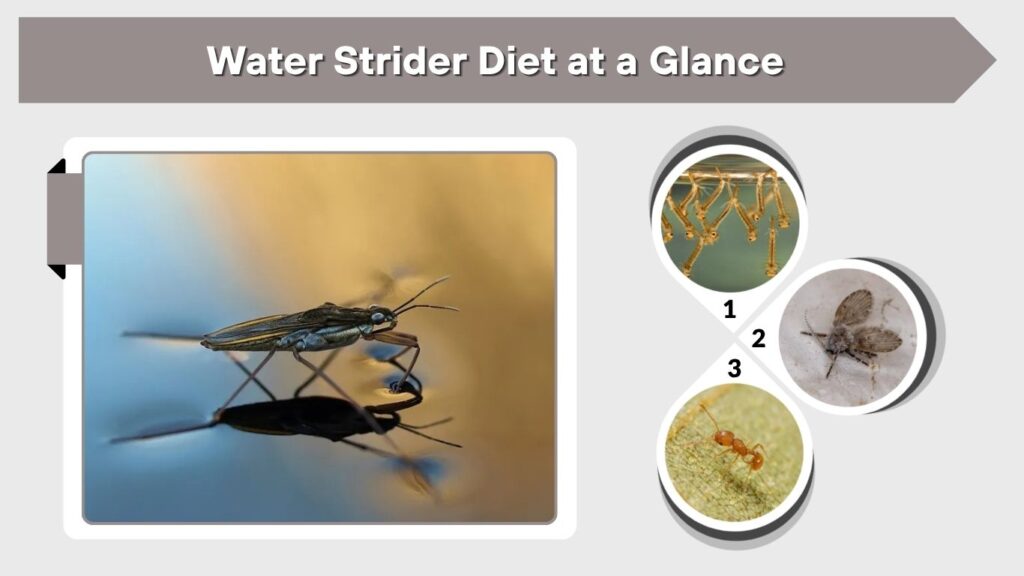
| Food Source | Do Water Striders Eat It? | Notes |
|---|---|---|
| Mosquito larvae | Yes | Common prey near the water surface |
| Small flies | Yes | Often caught after falling into water |
| Ants | Yes | Usually eaten when trapped on the surface |
| Springtails | Yes | Tiny insects found around moist areas |
| Algae | No | Not a normal part of their diet |
| Pond plants | No | Water striders are not plant feeders |
| Dead insects | Yes | They may feed on weakened or dead prey |
How Water Striders Eat Their Prey
Water striders do not chew like many other insects. Instead, they have piercing-sucking mouthparts. Once they catch prey with their front legs, they pierce it and suck out the body fluids.
This feeding method is similar to other true bugs. The water strider holds the prey firmly, injects digestive fluids, and then consumes the softened inner tissues. The empty outer body of the prey may be left behind on the water.
Do Water Striders Eat Mosquitoes?
Yes, water striders can eat mosquitoes, especially mosquito larvae and pupae that stay close to the water surface. They may also eat adult mosquitoes if they fall onto the water.
This makes water striders helpful in ponds and wetlands because they can reduce some mosquito populations. However, they should not be considered a complete mosquito-control solution. They eat many types of small insects, not mosquitoes alone.
Do Water Striders Eat Fish or Tadpoles?
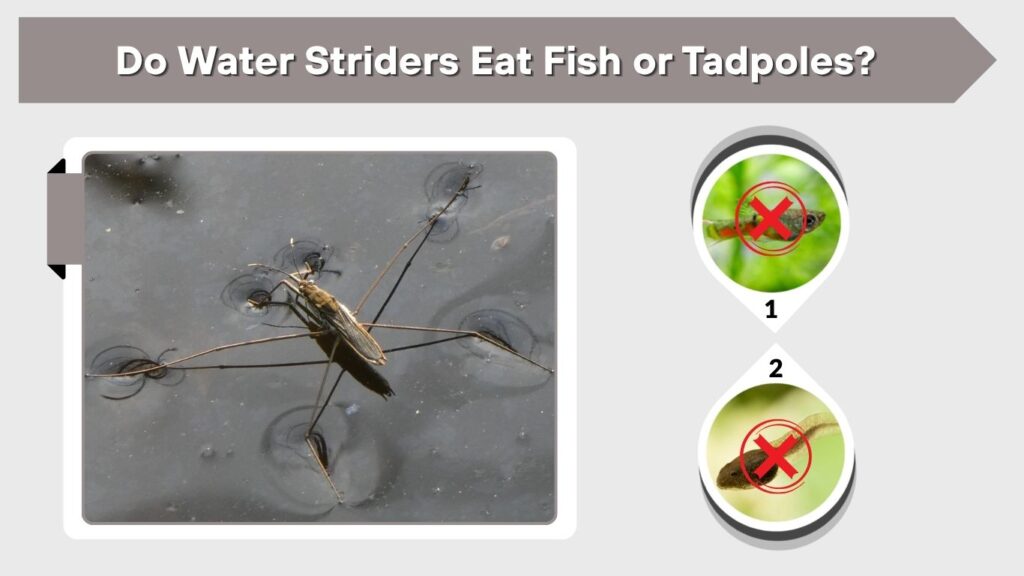
Water striders do not usually eat fish or healthy tadpoles. Most fish and tadpoles are too large for them to capture. Water striders are built to hunt small prey on the surface, not larger animals swimming below.
In rare cases, they may feed on very tiny, weak, or dead aquatic animals near the surface. But their normal diet is made up of small insects and similar prey.
What Do Baby Water Striders Eat?
Young water striders are called nymphs. They look like smaller versions of adults and eat many of the same foods. Because they are smaller, they usually catch smaller prey.
Baby water striders may eat:
- Tiny flies
- Small mosquito larvae
- Springtails
- Small insect nymphs
- Other tiny organisms trapped on the surface
As they grow, they molt several times and become better at catching larger prey.
What Eats Water Striders?
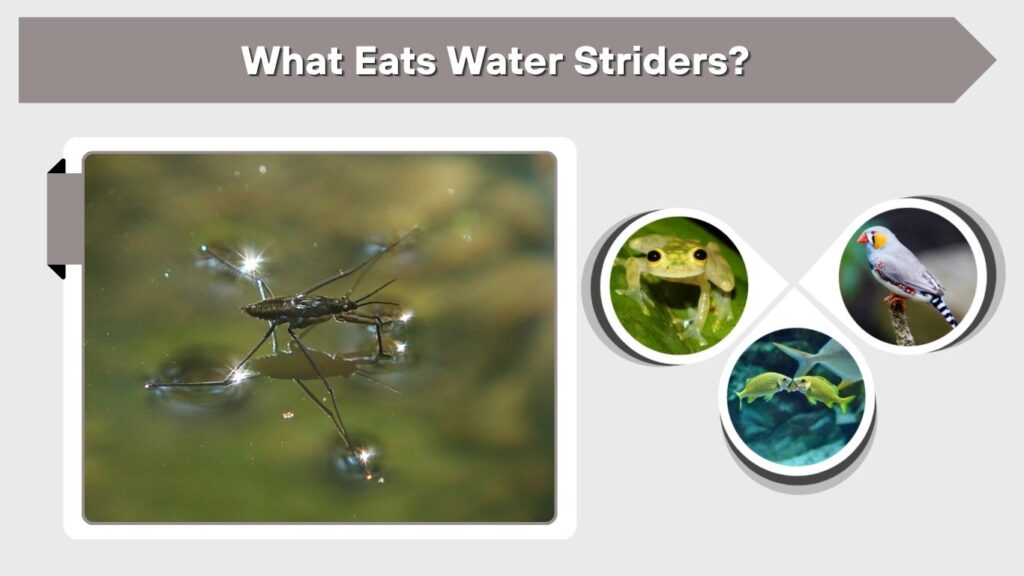
Although water striders are predators, they are also prey for many animals. Fish, frogs, birds, spiders, and larger aquatic insects may eat them. Their speed and ability to sense movement help them escape many threats.
Water striders are part of the food chain. They eat small insects, and larger animals eat them in return. This helps keep pond and stream ecosystems balanced.
Why Their Diet Matters
Water striders help control small insect populations around water. By feeding on mosquitoes, flies, ants, and other tiny insects, they reduce the number of organisms trapped on the water’s surface.
Their feeding habits also help clean the surface of ponds and streams by removing dead or weakened insects. In natural habitats, water striders are usually beneficial and should not be seen as pests.
Are Water Striders Good for Ponds?
Yes, water striders are generally good for ponds. They do not harm pond plants, fish, or water features. Instead, they help manage small insects and provide food for other animals.
If you see water striders in a pond, it usually means the habitat has enough small insects to support them. In swimming pools, however, they may appear because bugs are being attracted to the water. Keeping the pool clean and reducing insects nearby can help prevent them.
FAQs
What is a water strider’s favorite food?
Water striders commonly feed on small insects that fall onto the water surface. Mosquito larvae, small flies, ants, and springtails are common prey. They are opportunistic hunters, so they eat whatever small prey is available.
Do water striders eat algae?
No, water striders do not normally eat algae. They are predators, not plant feeders. Their diet mainly consists of small insects and tiny animals found on or near the water’s surface.
Do water striders eat mosquito larvae?
Yes, water striders can eat mosquito larvae and pupae when they are near the surface. They may help reduce mosquitoes in ponds, but they do not remove all mosquitoes from an area.
How do water striders catch food?
Water striders sense ripples made by struggling insects. They quickly skate across the surface, grab the prey with their front legs, pierce it with their mouthparts, and suck out the body fluids.
Are water striders helpful?
Yes, water striders are helpful in natural water habitats. They eat small insects, help control some mosquito larvae, and serve as food for fish, frogs, birds, and other wildlife.