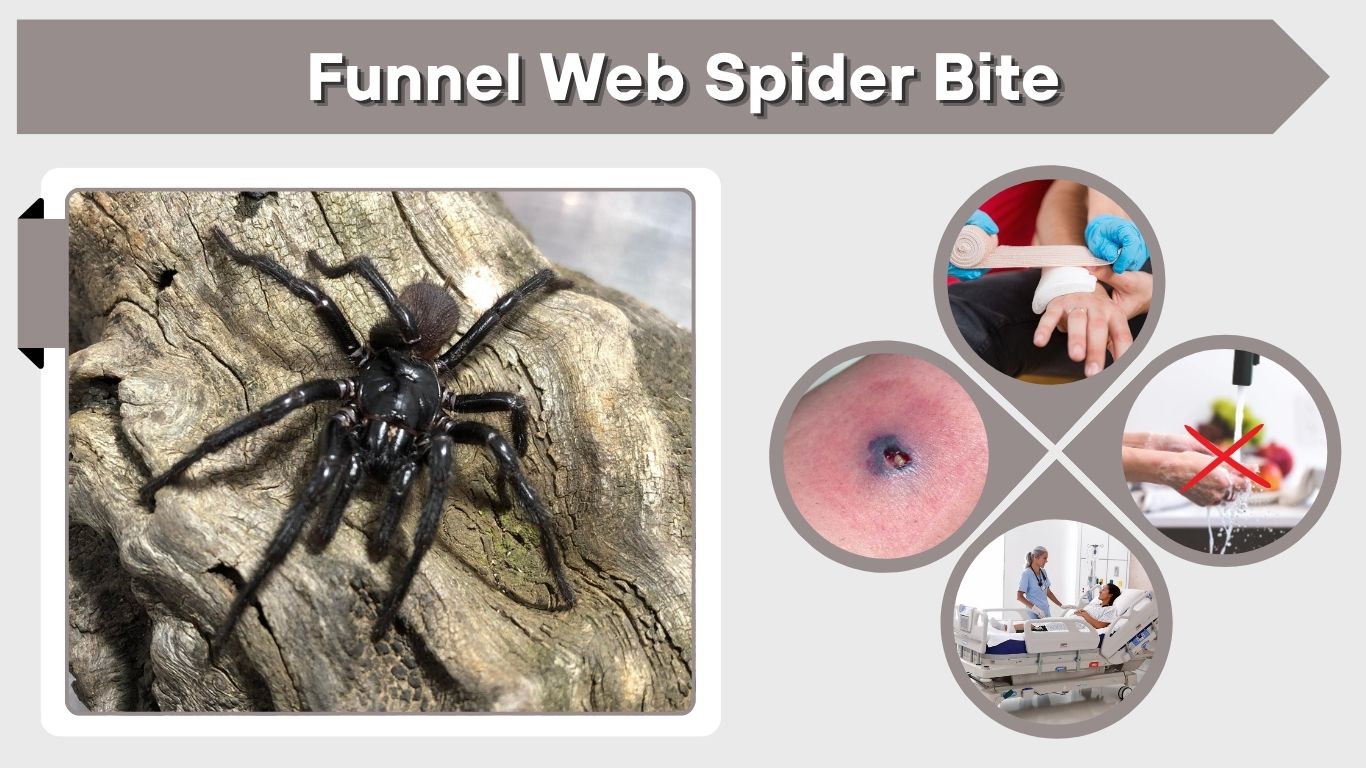
A funnel web spider bite is a medical emergency, especially in Australia where Sydney funnel-web spiders and related species can cause serious poisoning. Many people search for photos, bite marks, symptoms, and survival chances after hearing how dangerous these spiders can be. This guide explains what a funnel web spider bite may look and feel like, what symptoms to watch for, and what first aid steps matter most.
What Is a Funnel Web Spider Bite?
A funnel web spider bite happens when a funnel-web spider uses its fangs to inject venom into the skin. The most medically important species are Australian funnel-web spiders, especially the Sydney funnel-web spider, also known as Atrax robustus. These spiders are known for strong fangs, defensive behavior, and venom that can affect the nervous system.
Not every bite causes severe poisoning. Some bites may be “dry,” meaning little or no venom is injected. However, you should never wait to see what happens if a funnel-web spider is suspected. Serious symptoms can develop quickly, so first aid and emergency medical care are essential.
Sydney Funnel-Web Spider Bite
The Sydney funnel-web spider bite is the best-known and most feared funnel-web bite. This spider lives in parts of eastern Australia, including areas around Sydney, the Blue Mountains, and nearby coastal regions. Males are often considered more dangerous because their venom is highly potent to humans and other primates.
A bite may be intensely painful at first. The person may notice fang marks, bleeding, swelling, or redness. But the most dangerous part is not always the wound itself. The bigger concern is how the venom can affect the whole body.
Australian Funnel Web Spider Bite
The term “Australian funnel web spider bite” can include bites from several related funnel-web species. Some are less dangerous than the Sydney funnel-web, but it is not safe to identify risk by appearance alone. If the spider is from Australia and looks like a funnel-web, treat the bite as serious.
Australian first aid advice generally treats suspected funnel-web and mouse spider bites as emergencies needing pressure immobilisation and urgent transport to hospital.
Funnel Web Spider Bite Symptoms
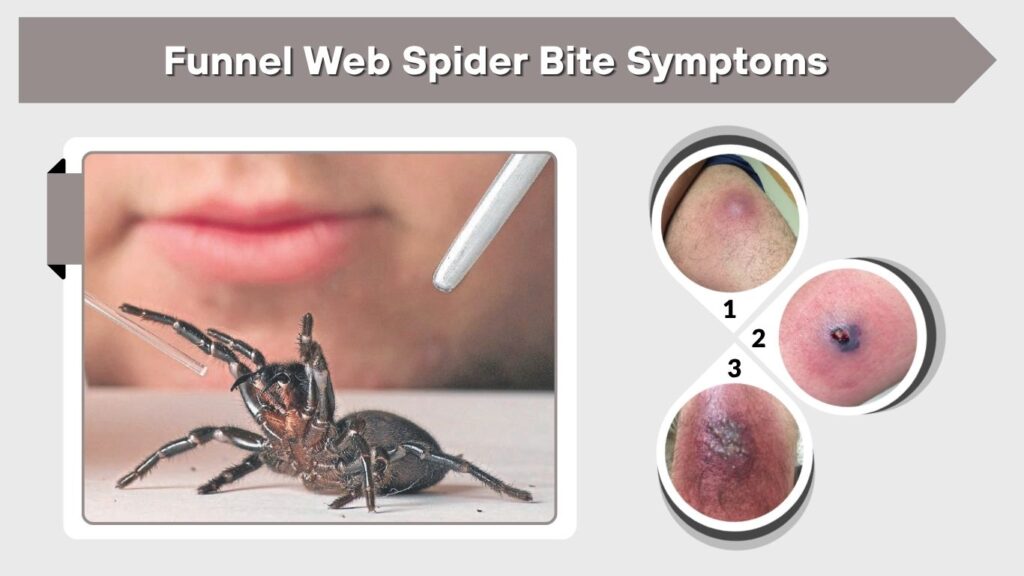
Funnel web spider bite symptoms can be local, meaning they happen around the bite, or systemic, meaning they affect the whole body. Symptoms can vary depending on the spider, the amount of venom, the person’s size, and how quickly first aid is applied.
Common Local Symptoms
A funnel web spider bite may cause:
- Sudden sharp pain at the bite site
- Fang marks or small puncture wounds
- Bleeding from the bite
- Redness or swelling
- Tingling, numbness, or burning near the area
- Pain that feels stronger than an ordinary insect bite
Many people search for “funnel web spider bite wound” or “what does a funnel web spider bite look like.” The problem is that the skin mark alone may not be enough to confirm the spider. A dangerous bite can look small at first, while a harmless bite or skin infection can look more dramatic.
Whole-Body Symptoms
More serious symptoms may include:
- Heavy sweating
- Nausea or vomiting
- Abdominal pain
- Drooling or excess saliva
- Watery eyes
- Muscle twitching
- Goosebumps or hairs standing up
- Numbness around the mouth
- Fast pulse
- High blood pressure
- Breathing difficulty
- Agitation, confusion, or disorientation
- Collapse or unconsciousness in severe cases
These symptoms are signs of possible envenomation and need emergency care. Do not try to manage these symptoms at home.
What Does a Funnel Web Spider Bite Look Like?
A funnel web spider bite can look like two puncture marks, a small bleeding wound, redness, swelling, or a painful bite mark. In some cases, there may be very little visible damage. Because funnel-web spiders have large, strong fangs, the bite may be painful right away and may bleed more than a typical spider bite.
However, bite photos can be misleading. Pictures of funnel web spider bites online may show swelling, punctures, bruising, or irritated skin, but those signs can overlap with many other insect bites, infections, or allergic reactions.
| Search concern | What it usually means | What to do |
|---|---|---|
| “Funnel web spider bite pictures” | User wants to identify the bite visually | Do not rely on photos alone |
| “Funnel web spider bite wound” | User is checking puncture marks or swelling | Treat as urgent if funnel-web exposure is possible |
| “Funnel web spider bite symptoms” | User wants warning signs | Watch for sweating, nausea, twitching, drooling, breathing issues |
| “Can a funnel web spider bite kill you?” | User is worried about fatality | Call emergency services and use first aid immediately |
| “Funnel web spider bite treatment” | User needs next steps | Pressure immobilisation and hospital care |
The safest rule is simple: if you think the bite could be from an Australian funnel-web spider, act first and identify later.
First Aid for Funnel Web Spider Bite
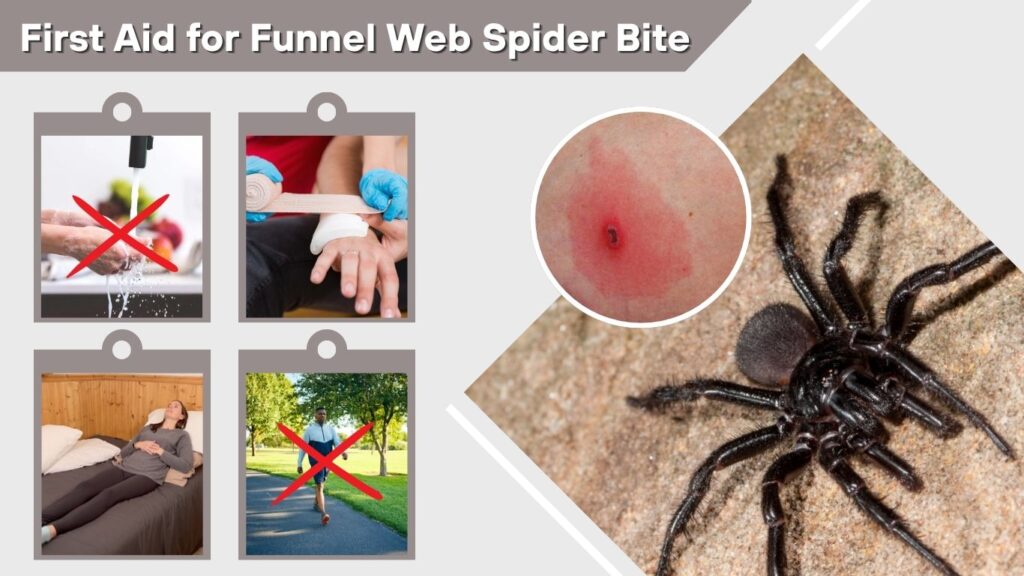
Funnel web spider bite first aid is different from first aid for many other spider bites. For suspected funnel-web bites, pressure immobilisation is recommended. The goal is to slow venom movement through the lymphatic system while waiting for medical help.
Step-by-Step First Aid
Follow these steps for a suspected funnel-web spider bite:
- Call emergency services immediately.
- Keep the person as still and calm as possible.
- Do not wash the bite site if medical identification may be needed.
- Apply a firm pressure bandage over the bite area.
- Continue wrapping the limb from below the bite upward.
- Immobilise the limb with a splint if possible.
- Keep the person lying down and still.
- Do not let them walk.
- Wait for paramedics or urgent medical transport.
The bandage should be firm but not so tight that it cuts off circulation. Fingers or toes should not become blue, cold, or numb from the bandage itself.
What Not to Do
Do not:
- Cut the bite
- Suck out venom
- Apply ice directly as the main treatment
- Use a tourniquet
- Let the person walk around
- Drink alcohol
- Wait for symptoms before calling for help
- Try to catch the spider with bare hands
If the spider can be safely contained without risk, it may help identification. But catching the spider is never more important than the person’s safety.
Funnel Web Spider Bite Treatment
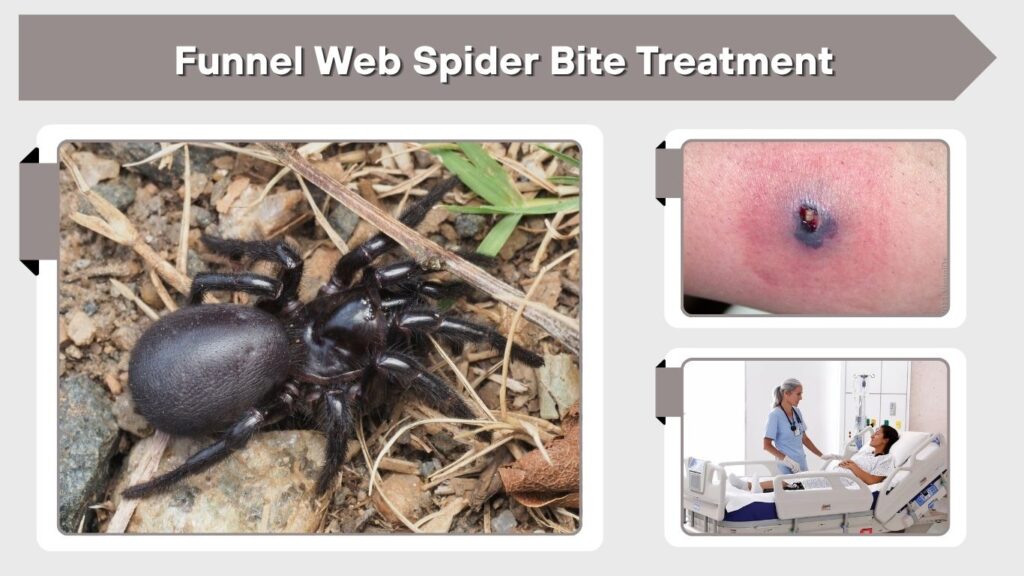
Hospital treatment may include monitoring, pain control, breathing support if needed, and antivenom for serious envenomation. Antivenom has changed the outlook for funnel-web spider bites, which is why fast access to medical care matters so much.
Doctors may monitor blood pressure, heart rate, breathing, neurological symptoms, and progression of venom effects. If symptoms suggest significant envenomation, antivenom may be given. People may need observation even if symptoms seem mild at first.
Is There a Cure for Funnel Web Spider Bite?
There is effective antivenom for serious Australian funnel-web spider envenomation. It is not a home remedy and must be given in a medical setting. First aid helps slow venom movement, but it does not replace emergency treatment.
The best outcome comes from combining quick first aid with rapid transport to hospital.
Can a Funnel Web Spider Bite Kill You?
Yes, a serious funnel web spider bite can be life-threatening without treatment. Historically, Sydney funnel-web spider bites caused deaths. Today, the risk is much lower when correct first aid is used and antivenom is available.
This does not mean the bite is harmless. It means modern treatment works best when people act quickly. Searches such as “funnel web spider bite death time” or “how long to live after bite” show how frightening this topic is, but exact timing is not predictable. Severe symptoms can develop quickly, so emergency response should begin immediately.
Can You Survive a Sydney Funnel-Web Spider Bite?
Yes, survival is very likely with fast first aid and proper medical treatment. The most dangerous mistake is delaying care because the wound looks small or because symptoms have not yet developed.
If you are in an area where funnel-web spiders live and a bite occurs, treat it as an emergency until medical professionals say otherwise.
Does a Funnel Web Spider Bite Hurt?
A funnel web spider bite can hurt a lot. People often describe the bite as sharp, sudden, and intense. The pain may come from both the venom and the spider’s large fangs. There may also be bleeding or visible puncture marks.
Pain alone does not prove that the bite is dangerous, but severe pain after a spider bite in eastern Australia should be taken seriously, especially if the spider was black, glossy, heavy-bodied, and found near a burrow, shoe, garden area, pool, garage, or damp outdoor space.
Funnel Web Spider Bite on Humans
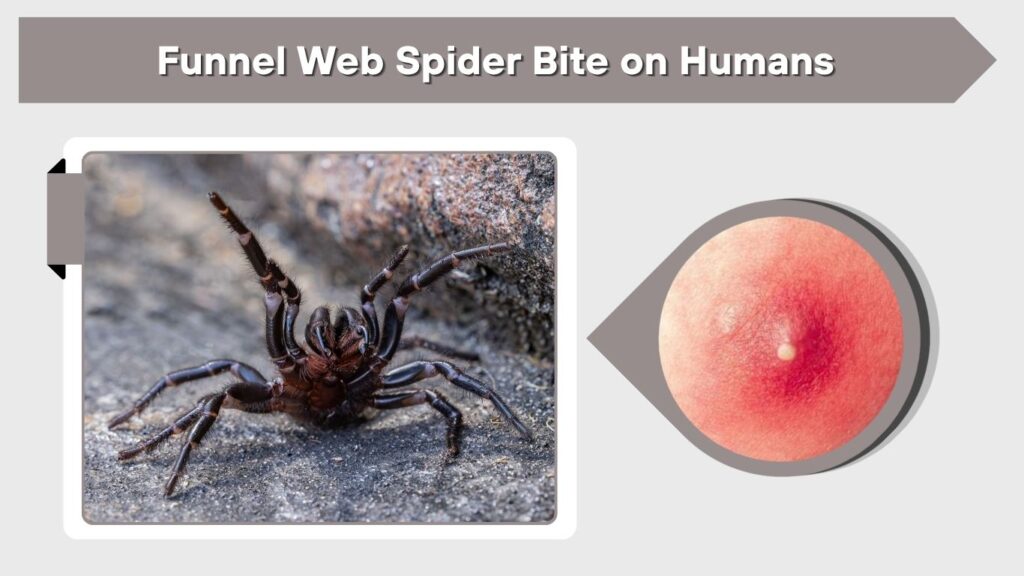
Humans are especially vulnerable to Sydney funnel-web spider venom compared with many other animals. The venom affects nerve signaling and can trigger intense body-wide symptoms.
Children may be at higher risk because of smaller body size, but adults can also become seriously ill. Older people, people with breathing problems, and anyone with rapid systemic symptoms need urgent medical attention.
A bite on a hand, foot, ankle, or lower leg may happen when gardening, walking barefoot, handling outdoor items, or putting on shoes left outside.
Are Dogs Immune to Funnel Web Spider Bites?
Many people ask why funnel web spider bites are not always fatal to dogs or whether dogs are immune. Dogs are not something you should assume are completely safe. Different animals respond differently to venom, and signs may vary by species, size, and bite severity.
If a dog may have been bitten by a funnel-web spider, contact a veterinarian or emergency animal hospital immediately. Watch for distress, drooling, vomiting, weakness, shaking, breathing problems, or collapse. Do not try to treat a pet with human first aid advice unless a veterinarian instructs you.
American, Grass, and North American Funnel Web Spider Bites
Searches like “American funnel web spider bite,” “north American funnel web spider bite,” and “funnel web grass spider bite” often refer to a different group of spiders. In North America, “funnel weaver” or “grass spider” usually describes spiders that build funnel-shaped webs in lawns, shrubs, or corners. These are not the same as the dangerous Australian funnel-web spiders.
Most grass spider bites are not considered medically dangerous to healthy adults, though any bite can cause local irritation, pain, redness, or infection if scratched. The dangerous emergency guidance in this article mainly applies to Australian funnel-web spiders and suspected bites in regions where they live.
How to Reduce the Risk of Funnel Web Spider Bites
Funnel-web spiders often prefer cool, damp, sheltered places. They may enter homes, garages, shoes, clothing, garden tools, or swimming pools, especially after rain or during warm, humid conditions.
Prevention Tips
To reduce risk:
- Shake out shoes, gloves, and clothing left outside.
- Wear gloves while gardening or moving logs, rocks, and pots.
- Avoid walking barefoot outdoors at night.
- Keep outdoor areas tidy and reduce damp hiding spots.
- Check pool filters carefully before handling debris.
- Teach children not to touch spiders.
- Use pest control support if funnel-web activity is common near your home.
Do not handle a suspected funnel-web spider casually. Even a trapped or wet spider may still bite.
When to Seek Emergency Help
Seek emergency help immediately if:
- The bite happened in Australia and a funnel-web spider is possible.
- The person has severe pain, sweating, nausea, or vomiting.
- There is drooling, twitching, breathing difficulty, or confusion.
- The bite victim is a child.
- The spider was black, glossy, large-fanged, or found near a funnel-like burrow.
- Symptoms are spreading or worsening.
When in doubt, treat the bite as serious. It is better to be checked and cleared than to delay treatment for a dangerous envenomation.
FAQs
What are the first signs of a funnel web spider bite?
The first signs may include sudden sharp pain, fang marks, bleeding, redness, swelling, or tingling around the bite. More serious signs can include sweating, nausea, drooling, twitching, breathing difficulty, and confusion. A suspected Australian funnel-web bite should be treated as an emergency even before severe symptoms appear.
What should I do immediately after a funnel web spider bite?
Call emergency services, keep the person still, apply a firm pressure bandage over the bitten limb, and immobilise the area with a splint if possible. Do not let the person walk around. Pressure immobilisation can help slow venom movement until medical help arrives.
Can a Sydney funnel-web spider bite kill you?
A serious Sydney funnel-web spider bite can be life-threatening without treatment. However, modern first aid and antivenom have greatly improved survival. The key is to act quickly, apply pressure immobilisation, and get the person to hospital as soon as possible.
What does a funnel web spider bite wound look like?
It may look like small puncture marks, bleeding, redness, swelling, or a painful bite wound. But appearance alone is not reliable. A dangerous bite may not look dramatic at first, so symptoms, location, and possible spider exposure matter more than photos.
Is a funnel web spider bite the same as a grass spider bite?
No. Australian funnel-web spiders are different from North American grass spiders or funnel weavers. Australian funnel-web bites can be medical emergencies. Grass spider bites are usually much less serious, though they can still cause local pain, redness, or irritation.