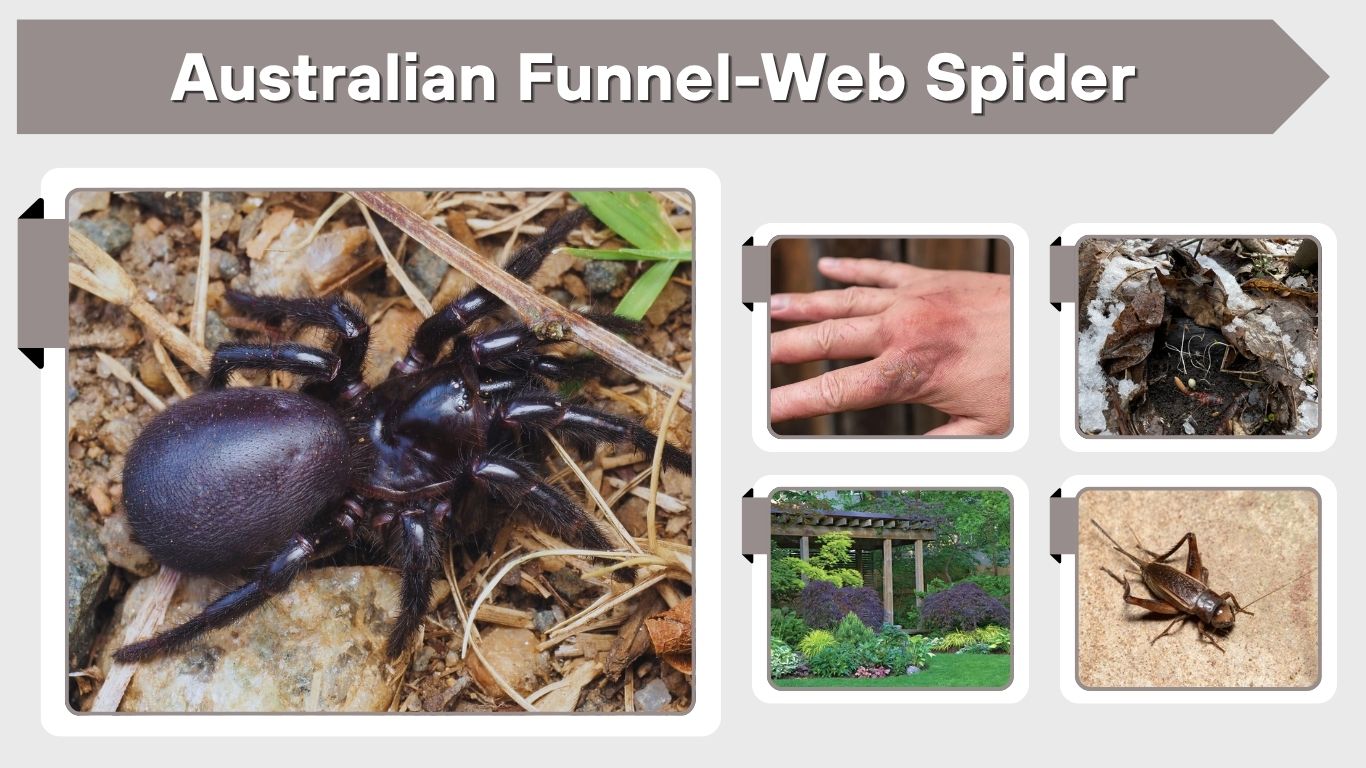
The Australian funnel-web spider is one of the most feared spiders in the world, especially because of the Sydney funnel-web spider and its powerful venom. These spiders are known for glossy dark bodies, strong fangs, burrow homes, and defensive behavior when threatened. Although bites can be dangerous, modern first aid and antivenom have greatly improved outcomes in Australia.
What Is an Australian Funnel-Web Spider?
The Australian funnel-web spider is a group of venomous spiders found mainly in eastern and southern parts of Australia. The most famous species is the Sydney funnel-web spider, but there are many related species in this group. They are often associated with moist habitats, burrows, and silk-lined retreats.
These spiders are mygalomorph spiders, which means they are more closely related to trapdoor spiders than to many common house spiders. They have sturdy bodies, powerful fangs, and a more primitive fang movement compared with modern web-building spiders.
Australian Funnel-Web Spider Characteristics
Australian funnel-web spiders usually have a dark, shiny appearance. Their front body section is often glossy, while the abdomen may look darker, softer, and less shiny. Their legs are strong, and their fangs are large enough to make their bite especially painful.
They are not delicate-looking spiders. Their overall appearance is heavy, alert, and powerful. When threatened, they may raise the front of the body and display their fangs in a defensive posture.
Australian Funnel-Web Spider Size
Australian funnel-web spider size varies by species, age, and sex. Many are medium to large spiders, with body lengths commonly ranging from about 1 to 5 cm. Males are often more lightly built than females and may wander more often, especially during mating season.
Some unusually large individuals have attracted attention because they appear far bigger than typical specimens. However, most funnel-web spiders are not giant spiders; they simply look intimidating because of their strong build and large fangs.
Australian Funnel-Web Spider Identification Table
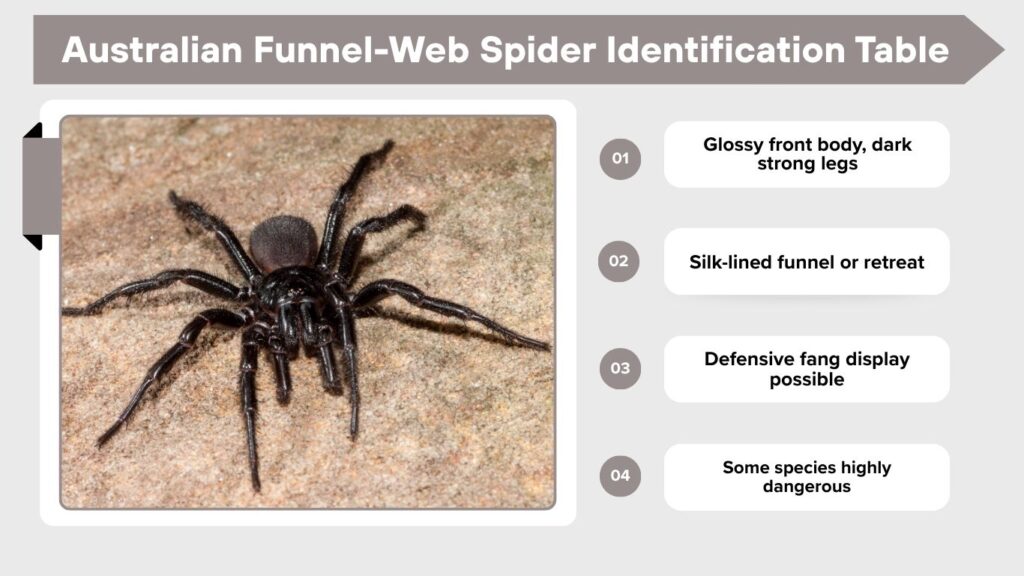
The Australian funnel-web spider can be confused with trapdoor spiders, mouse spiders, and other dark ground-dwelling spiders. This table shows basic differences.
| Feature | Australian Funnel-Web Spider | Trapdoor Spider | Mouse Spider |
|---|---|---|---|
| Body look | Glossy front body, dark strong legs | Often brown or dark, less glossy | Stocky, sometimes with reddish or blue-black tones |
| Burrow | Silk-lined funnel or retreat | Often has a trapdoor-style burrow | Ground burrows, often open |
| Fang posture | Defensive fang display possible | Usually less defensive | Can look similar and should be treated cautiously |
| Medical concern | Some species highly dangerous | Usually lower concern | Some bites may be medically significant |
| Best response | Avoid handling and seek help for bites | Avoid handling | Avoid handling and treat bites seriously |
Australian Sydney Funnel-Web Spider
The Australian Sydney funnel-web spider is the best-known member of the group. Its scientific name is Atrax robustus. It is especially famous because male Sydney funnel-web spiders have venom that can be highly dangerous to humans.
This species is found in the Sydney region and surrounding areas, where it may live in forests, moist gullies, gardens, and suburban environments. Males may wander during warm, humid weather while searching for females.
Why the Sydney Funnel-Web Is Famous
The Sydney funnel-web spider is famous for three main reasons: its potent venom, its strong fangs, and its presence near populated areas. Because it can occur around homes, gardens, shoes, garages, pools, and outdoor spaces, people are more likely to encounter it than some remote species.
Its reputation is serious, but panic is not helpful. The correct response is to avoid contact, use proper first aid after a suspected bite, and get emergency medical care.
Australian Funnel-Web Spider Venom
Australian funnel-web spider venom contains powerful toxins that can affect the nervous system. Severe envenomation can develop quickly, especially after a bite from a medically important species.
Not every bite causes severe poisoning, but every suspected funnel-web bite should be treated as urgent. It is impossible to judge safety by the bite mark alone.
Australian Funnel-Web Spider Bite
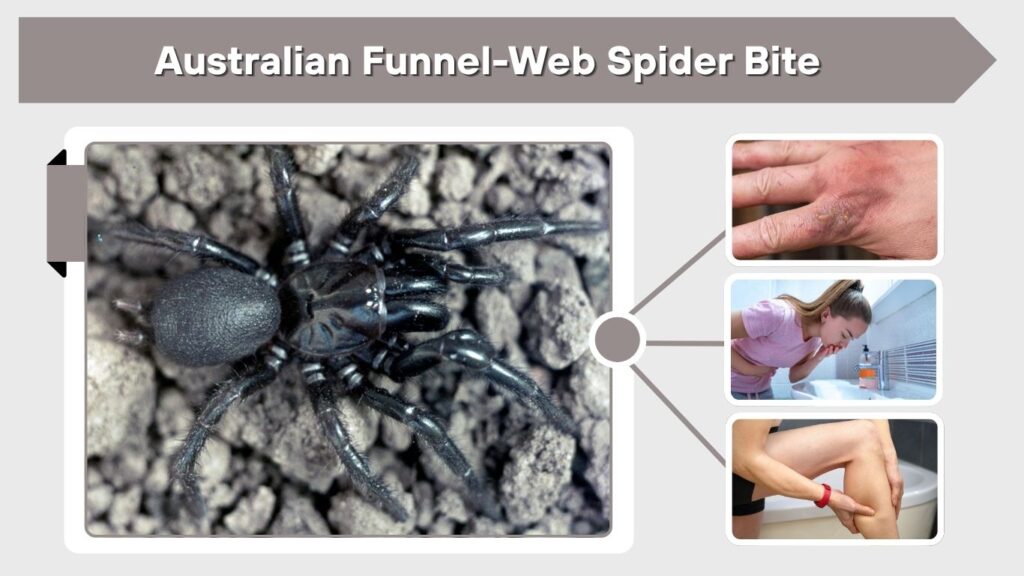
An Australian funnel-web spider bite can be very painful because of the spider’s large fangs. Fang marks, local pain, and bleeding may occur. If venom enters the body in a significant amount, symptoms may develop quickly.
A suspected bite should never be ignored. Funnel-web bites are treated differently from many other spider bites because pressure immobilisation is recommended.
Bite Symptoms to Watch For
Possible symptoms may include:
- Intense pain at the bite site
- Fang marks or local bleeding
- Sweating
- Tingling around the mouth
- Nausea or vomiting
- Muscle twitching
- Salivation or watery eyes
- Fast heartbeat
- Breathing difficulty
- Confusion or agitation
- Collapse in severe cases
Symptoms can progress quickly, so emergency care is important even if the person first seems stable.
First Aid for a Suspected Bite
For a suspected Australian funnel-web spider bite, call emergency services immediately. Keep the person still and calm. Apply pressure immobilisation to the bitten limb if possible, similar to snakebite first aid. Do not let the person walk around.
Do not cut the bite, suck out venom, apply ice directly, or try to catch the spider by hand. If the spider can be safely contained without risk, it may help with identification, but treatment should not be delayed.
How Deadly Is the Australian Funnel-Web Spider?
The Australian funnel-web spider can be dangerous, especially the Sydney funnel-web spider. Historically, severe bites caused deaths. Today, antivenom and modern emergency care have made outcomes much better.
This does not mean the spider is harmless. A suspected bite is still a medical emergency. The safest approach is to treat the situation seriously and get professional care quickly.
Antivenom and Modern Treatment
Antivenom is available for serious funnel-web spider envenomation. Hospitals in affected regions are prepared to treat suspected bites. The success of antivenom is one reason fatalities have been prevented since its introduction.
Fast first aid and quick transport to hospital are important. Pressure immobilisation can slow venom movement while the person is waiting for emergency treatment.
Who Is Most at Risk?
Children, older adults, and people with health problems may be more vulnerable to severe effects. However, any person can be at risk after a significant bite.
Males of some funnel-web species are often considered especially dangerous because they wander more and may have more potent venom to humans.
Where Do Australian Funnel-Web Spiders Live?
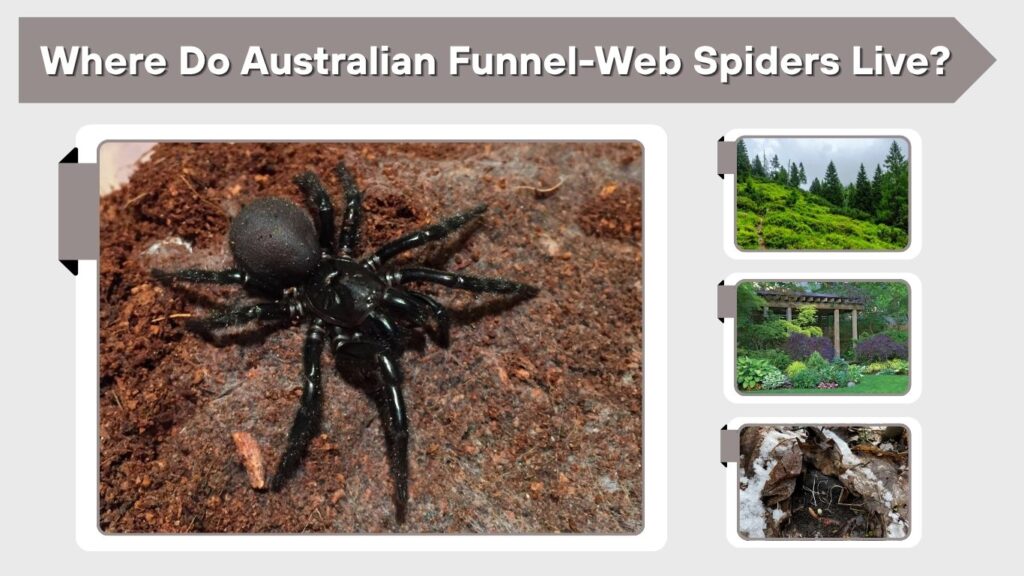
Australian funnel-web spiders are mainly found in eastern Australia, with different species living in different regions. They prefer moist, sheltered places where they can build burrows or retreats.
They are not usually spiders of dry, exposed areas. Damp ground, leaf litter, logs, rock crevices, and shaded gardens can provide suitable habitat.
Common Habitats
Australian funnel-web spiders may live in:
- Moist forests
- Shaded gardens
- Leaf litter
- Rock crevices
- Logs and stumps
- Burrows in soil
- Retaining walls
- Damp gullies
- Suburban yards
- Pool areas after rain
They often build silk-lined burrows with entrance lines that alert them to passing prey.
Australian Funnel-Web Spider in Melbourne
People sometimes search for Australian funnel-web spider Melbourne because they worry about similar dark spiders in Victoria. While funnel-web spiders are more strongly associated with eastern regions such as New South Wales and Queensland, some related mygalomorph spiders may occur in broader southern and eastern areas.
If you find a large dark spider in Melbourne or elsewhere, avoid handling it. Identification can be difficult without expert help.
South Australian Funnel-Web Spider
Searches for South Australian funnel-web spider may refer to funnel-web-like spiders or related species found in southern Australia. Not every dark burrowing spider is the highly dangerous Sydney funnel-web.
Still, any unknown large dark spider should be treated with caution. Do not handle it, and seek expert identification if needed.
What Does an Australian Funnel-Web Spider Eat?
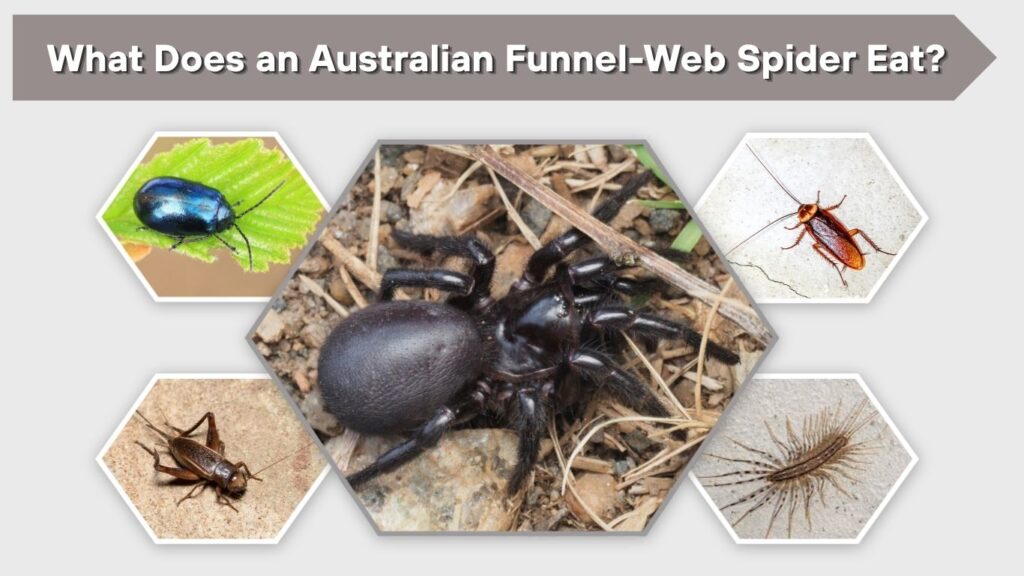
Australian funnel-web spiders are predators. They sit in or near their burrows and detect movement through silk trip lines. When prey comes close, they rush out and grab it with strong fangs.
They help control insects and small invertebrates in their environment.
Common Food Sources
Their diet may include:
- Beetles
- Cockroaches
- Crickets
- Other insects
- Spiders
- Centipedes
- Small arthropods
- Occasionally small vertebrates if available
They do not hunt humans. Bites usually happen when a spider is disturbed, stepped on, trapped in clothing, or accidentally handled.
Australian Funnel-Web Spider Life Cycle
The Australian funnel-web spider life cycle includes egg, spiderling, juvenile, and adult stages. Females usually remain close to their burrows, while mature males are more likely to wander.
This wandering behavior increases the chance that males may enter yards, sheds, garages, shoes, or swimming pools.
Egg and Spiderling Stage
The female produces an egg sac in a sheltered area. After hatching, spiderlings remain protected for a time before dispersing. Young spiders must avoid predators and find suitable places to shelter.
Many do not survive to adulthood because small spiders are vulnerable to weather, predators, and lack of food.
Adult Stage
Adult females may live in burrows for long periods. Males mature and leave their burrows to search for females. This is when people are more likely to encounter them.
Warm, humid, rainy weather can increase male movement, especially during breeding season.
Australian Funnel-Web Spider Lifespan
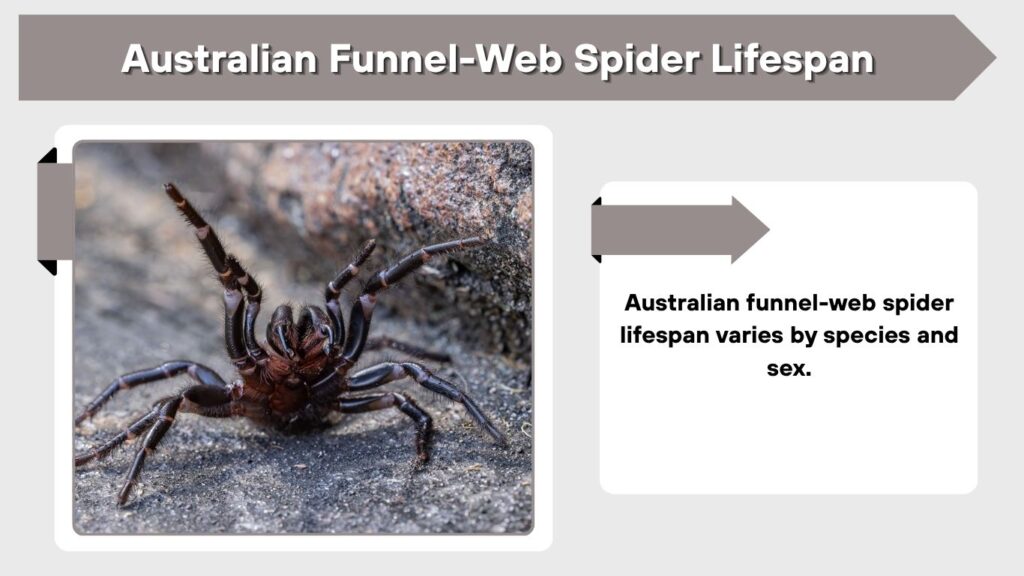
Australian funnel-web spider lifespan varies by species and sex. Females generally live longer than males because they remain in protected burrows. Males often live shorter lives after reaching maturity because they wander, face predators, and spend energy searching for mates.
Some females may live for many years in suitable conditions. This long life helps them produce multiple egg sacs over time.
Why Females Live Longer
Females stay in stable burrows where they are protected from many outside dangers. They can wait for prey near the entrance and avoid unnecessary movement.
Males must travel to find females, which exposes them to birds, lizards, mammals, weather, roads, and human activity.
Australian Funnel-Web Spider Predators
Despite their venom, Australian funnel-web spiders have natural predators. They are part of the food web and are not invincible.
Some predators attack adults, while others may feed on spiderlings or eggs.
Common Predators
Predators may include:
- Birds
- Lizards
- Centipedes
- Wasps
- Small mammals
- Other spiders
- Parasites and parasitoids
Spider wasps can be especially important predators. They may paralyse spiders and use them as food for their young.
New Australian Funnel-Web Spider Discoveries
Searches such as “new Australian funnel-web spider,” “Australian new funnel-web spider,” and “2015 Australian funnel-web spider” often relate to news about new species, unusually large specimens, or research into venom and antivenom.
Australian funnel-web taxonomy continues to develop as scientists study museum specimens, DNA, body features, and regional populations. New or reclassified species may receive attention because they improve understanding of spider diversity and medical risk.
Australian Funnel-Web Spider Silver Coin
The phrase “Australian funnel-web spider silver coin” usually refers to collectible coins featuring the spider. Australia has produced many wildlife-themed coins, and dangerous or iconic animals often appear in collectible designs.
This search intent is different from biological information, but it shows how widely recognized the funnel-web spider has become as an Australian symbol.
What to Do If You Find One
If you find a suspected funnel-web spider, do not touch it. Keep children and pets away. If it is inside, close off the room if safe to do so and call a local pest professional or wildlife authority for guidance.
In regions with funnel-web spiders, people are often advised to check shoes, gloves, towels, and outdoor items before use.
Safety Tips Around the Home
To reduce accidental encounters:
- Wear gloves when gardening.
- Check shoes before putting them on.
- Do not leave clothing or towels on the ground.
- Keep outdoor areas tidy.
- Reduce damp clutter near the house.
- Use caution around pools after rain.
- Teach children not to touch spiders.
- Call professionals for removal if needed.
These habits are especially useful in areas where Sydney funnel-web spiders or related species occur.
FAQs
How big is the Australian funnel-web spider?
Australian funnel-web spiders vary by species, sex, and age. Many have body lengths around 1 to 5 cm. Some unusually large individuals may appear bigger because of their leg span, strong build, and large fangs.
How deadly is the Australian funnel-web spider?
Some Australian funnel-web spiders, especially the Sydney funnel-web spider, can be highly dangerous. However, antivenom and modern emergency care have greatly reduced fatal outcomes. A suspected bite should still be treated as a medical emergency.
What does an Australian funnel-web spider eat?
Australian funnel-web spiders eat insects and other small animals. Their prey may include beetles, cockroaches, crickets, centipedes, other spiders, and small arthropods. They hunt from silk-lined burrows and rush out when prey passes nearby.
What should I do after an Australian funnel-web spider bite?
Call emergency services immediately, keep the person still, and apply pressure immobilisation to the bitten limb if possible. Do not let the person walk around. Get urgent hospital care because antivenom may be needed.
Are Australian funnel-web spiders found in houses?
They can enter houses, garages, sheds, shoes, clothing, or pools, especially wandering males during humid or rainy conditions. They are more often associated with burrows outdoors, but accidental indoor encounters can happen in regions where they live.