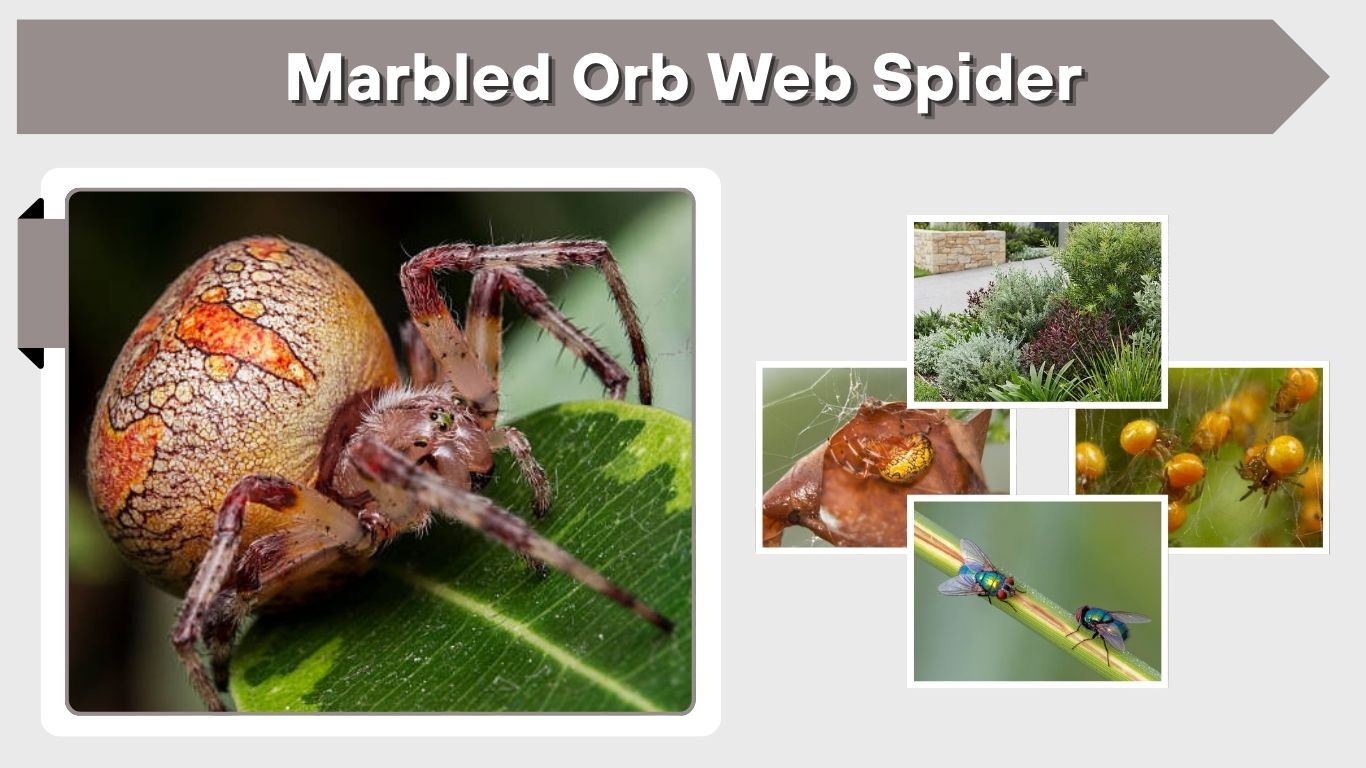
The marbled orb web spider is a colorful orb-weaver known for its round abdomen, marbled patterns, and circular web. It is more correctly called the marbled orb-weaver, and its scientific name is Araneus marmoreus. Many people notice this spider in gardens, shrubs, forests, and tall plants, especially in late summer and fall. Although it may look unusual or even scary, it is usually harmless to humans and helpful because it catches many small insects.
What Is a Marbled Orb Web Spider?
A marbled orb web spider is a type of orb-weaving spider that builds round, wheel-shaped webs to catch flying insects. The name “marbled orb web spider” is commonly searched online, but the more accurate name is marbled orb-weaver. This spider is best known for its bright color, swollen abdomen, and marble-like markings.
Scientific Name and Common Names
The scientific name of the marbled orb web spider is Araneus marmoreus. It is commonly called the marbled orb-weaver or marbled orbweaver. Some people also call it a pumpkin spider because certain individuals have a bright orange abdomen that looks like a small pumpkin.
Why It Is Called Marbled
This spider is called marbled because its abdomen often has mixed colors, patches, and dark markings that look like marble stone. The pattern may include orange, yellow, cream, brown, black, or reddish shades. Not every spider looks exactly the same, which is why people often confuse it with other orb-weavers.
Is It a Garden Spider?
The marbled orb web spider can live in gardens, but it is not the same as the common black-and-yellow garden spider. Both are orb-weavers, and both build circular webs. However, the marbled orb-weaver usually has a rounder abdomen and more mottled or marbled coloring.
Marbled Orb Web Spider Appearance and Size
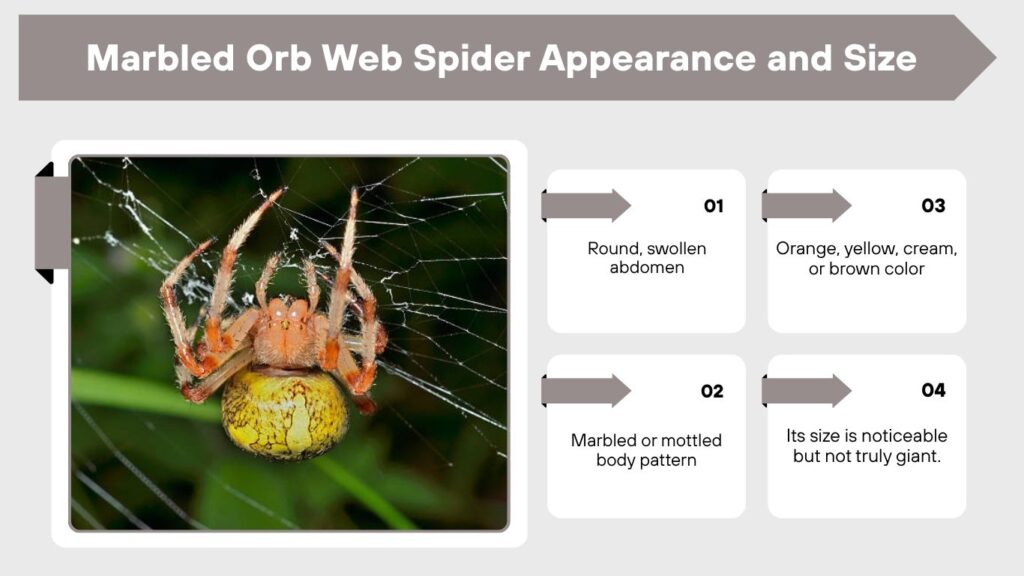
The appearance of this spider is one of the main reasons people search for it. It can look bright orange, pale yellow, brown, or cream with dark marbled lines. Adult females are usually easier to notice because they are larger and rounder than males. Its size is noticeable but not truly giant.
Main Identification Features
- Round, swollen abdomen
- Orange, yellow, cream, or brown color
- Marbled or mottled body pattern
- Dark markings on the abdomen
- Banded legs
- Small head compared with abdomen
- Often found near orb-shaped webs
- Females are larger than males
- Males are slimmer and less colorful
How Big Is a Marbled Orb-Weaver?
A female marbled orb-weaver can reach around half an inch or a little more in body length, while males are usually smaller. The spider may appear larger because of its round abdomen and spread legs. People often notice females more because they become plump and colorful during the adult stage.
Why Some Look Orange
Some marbled orb-weavers are bright orange, especially in late summer and fall. This orange color is why many people call them pumpkin spiders. Other individuals may look pale yellow, brownish, or cream-colored. Because the color can vary, body shape and web type are better clues than color alone.
Marbled Orb Weaver Spider Web
The marbled orb weaver spider web is a classic orb web, usually built between plants, branches, weeds, or shrubs. It is designed to catch flying insects. Unlike some orb-weavers that sit in the center of the web, the marbled orb-weaver may hide nearby in a silk retreat and wait for vibrations.
What Does the Web Look Like?
The web is usually round or wheel-shaped, with straight lines spreading from the center and sticky spiral threads connecting them. It may be vertical and stretched between stems or branches. The web becomes easier to see when dew, sunlight, or dust collects on the silk.
Where the Web Is Built
- Shrubs
- Tall weeds
- Garden plants
- Low tree branches
- Grasses
- Meadow edges
- Forest edges
- Stream banks
- Pond edges
- Around fences
How It Uses the Web
The marbled orb-weaver uses its web as a hunting tool. When a fly, moth, gnat, or mosquito hits the sticky web, the spider feels the vibration. If it is hiding nearby, it follows a signal thread to reach the trapped insect, wraps it in silk, and feeds on it.
Where Do Marbled Orb Web Spiders Live?
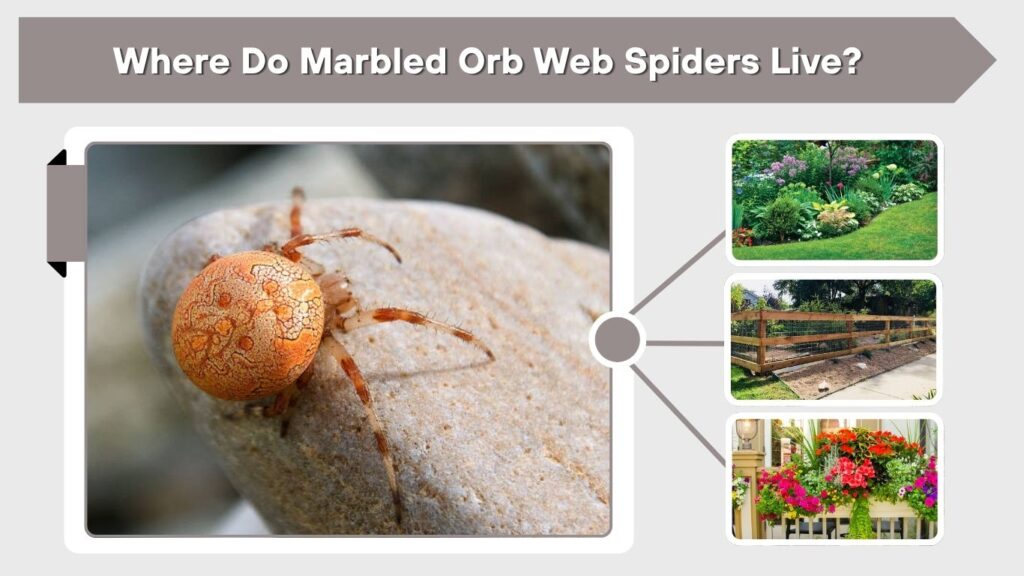
Marbled orb web spiders live in places with plants, moisture, and many flying insects. They are often found in gardens, fields, shrubs, forests, wetlands, and areas near streams or ponds. They need strong web supports, so they usually choose vegetation, branches, or tall weeds instead of open ground.
Natural Habitat
In nature, marbled orb-weavers often live near wooded edges, meadows, wetlands, and stream banks. These places provide both food and shelter. Flying insects are common in moist, plant-filled areas, making them ideal hunting grounds for orb-weaving spiders.
Around Homes and Gardens
Around homes, this spider may appear in gardens, shrubs, fences, outdoor plants, and yard edges. It is not usually trying to enter the house. Most of the time, it stays outside where insects are easier to catch and where plants provide support for its web.
Seasonal Activity
Marbled orb-weavers are most noticeable in late summer and fall. During this time, adult females become larger, rounder, and more colorful. Their orange or yellow body can stand out clearly against green plants, which is why people often notice them during autumn.
Is the Marbled Orb Web Spider Dangerous?
The marbled orb web spider is not considered dangerous to humans. Like most spiders, it has venom to control prey, but its venom is meant for small insects. It is not aggressive and usually avoids people. A bite is uncommon and normally happens only if the spider is pressed, trapped, or handled.
Does It Bite Humans?
A marbled orb-weaver can bite if it feels threatened, but bites are rare. It would usually rather hide, drop from the web, or move away. Most people are bitten only when they accidentally touch or squeeze the spider while gardening or moving plants.
Is It Poisonous or Venomous?
The correct word is venomous, not poisonous. A venomous animal injects venom through a bite or sting. The marbled orb-weaver uses venom to subdue insects, but it is not considered medically dangerous to most people. Still, anyone with unusual symptoms should seek medical advice.
What to Do If Bitten
- Wash the bite area with soap and water.
- Apply a cold compress for swelling.
- Avoid scratching the bite.
- Watch for redness or irritation.
- Seek medical help if symptoms worsen.
- Get urgent help for breathing trouble or allergy signs.
What Do Marbled Orb-Weavers Eat?
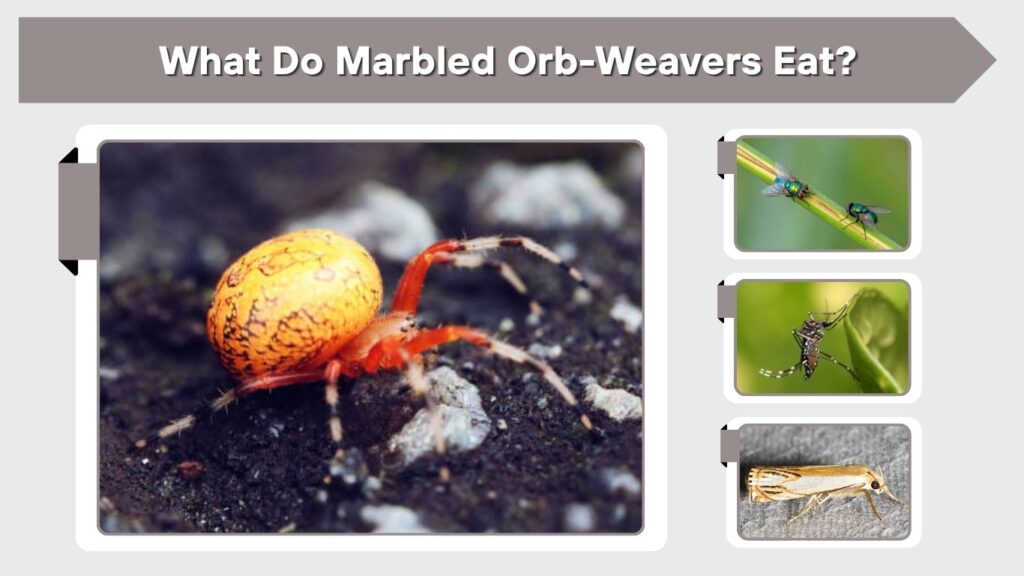
Marbled orb-weavers are helpful predators because they catch many small flying insects. Their webs work like natural insect traps in gardens, fields, and wooded areas. They do not eat plants or damage homes. Instead, they help reduce insects that may bother people, flowers, and garden plants.
Common Prey
- Flies
- Mosquitoes
- Gnats
- Moths
- Beetles
- Leafhoppers
- Small wasps
- Other small flying insects
How They Catch Food
When an insect flies into the sticky web, it becomes trapped. The spider senses the movement through the silk and moves toward the prey. Then it wraps the insect with silk and feeds. This method allows the spider to hunt without chasing prey across the ground.
Why They Are Helpful
Marbled orb-weavers help control insect populations naturally. In gardens and yards, they can reduce flies, mosquitoes, and other small insects. They are not pests in the usual sense. Leaving them alone outside is often better than removing or killing them.
Marbled Orb Web Spider Life Cycle
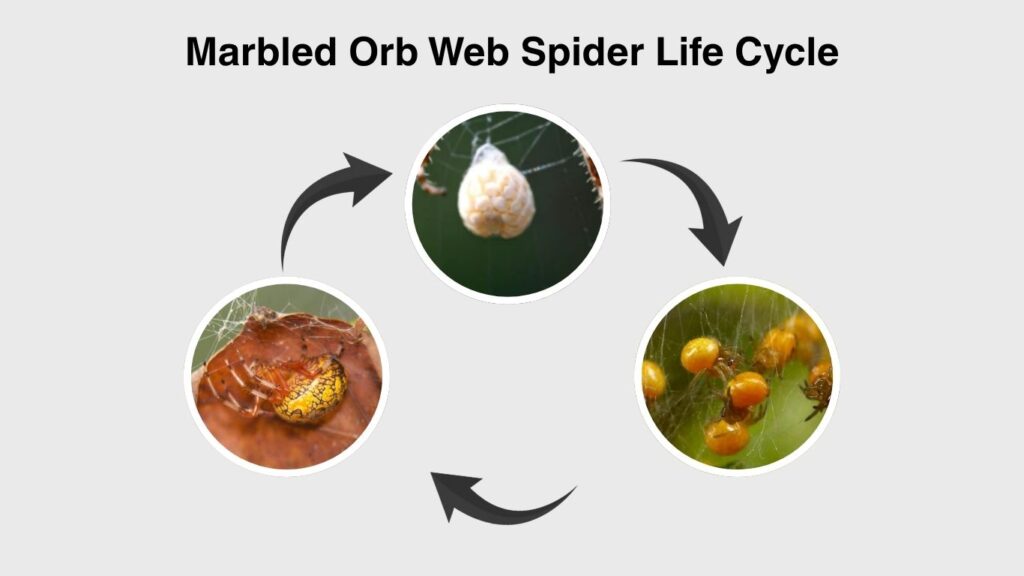
The life cycle of the marbled orb web spider includes eggs, spiderlings, juveniles, and adults. Adults are most visible later in the warm season. Females create egg sacs, and the young spiders later hatch and disperse. Many spiderlings do not survive, but those that do grow into web-building adults.
Eggs and Spiderlings
Female marbled orb-weavers produce egg sacs to protect their young. The eggs remain hidden and safe until spiderlings hatch. When the young emerge, they are tiny and vulnerable. They spread out to find food, shelter, and suitable places to begin building small webs.
Adult Stage
Adults become more visible in late summer and fall. Females are usually the most noticeable because they have large round abdomens and stronger colors. Males are smaller and may be seen searching for females. This adult stage is when people most often notice the species.
How Long They Live
Many orb-weavers live for about one season as adults, though timing can vary by climate and region. Their visibility depends on weather, food supply, and maturity. In colder areas, adults often disappear after the season ends, while eggs or young continue the next generation.
How to Identify a Marbled Orb Web Spider Safely
Identification should be done by looking, not touching. The marbled orb-weaver has many color forms, so it is best to check body shape, markings, web type, and habitat together. A clear photo can help with identification. If you are unsure, avoid handling the spider and leave it alone.
Safe Identification Tips
- Observe from a distance.
- Look for a round marbled abdomen.
- Check for an orb-shaped web.
- Notice the spider’s color pattern.
- Look at the habitat around it.
- Take a photo without touching it.
- Compare shape, not just color.
Spiders It May Be Confused With
The marbled orb-weaver may be confused with other orb-weavers, such as shamrock orb-weavers, cross orb-weavers, or garden spiders. Many orb-weavers have rounded bodies and colorful markings. Because several harmless spiders look similar, exact identification may require a close photo and location details.
Should You Remove It?
In most cases, you do not need to remove a marbled orb-weaver. If its web is blocking a walkway, you can gently move the web area with a long stick or wait for the spider to relocate. Outdoors, it is better to leave the spider alone because it helps catch insects.
FAQs
What is a marbled orb web spider?
A marbled orb web spider is a colorful orb-weaver spider known for its round abdomen and marbled pattern. Its correct common name is marbled orb-weaver, and its scientific name is Araneus marmoreus. It builds circular webs to catch flying insects.
Is a marbled orb-weaver spider dangerous?
No, the marbled orb-weaver is not considered dangerous to humans. It has venom for catching insects, but it is not aggressive and rarely bites people. Most encounters are harmless if the spider is left alone.
What does a marbled orb weaver spider web look like?
Its web is usually round, vertical, and wheel-shaped. The web has radial lines and sticky spiral threads that trap flying insects. The spider may sit near the web or hide in a nearby silk retreat connected by a signal thread.
Where do marbled orb web spiders live?
They live in gardens, shrubs, forests, fields, wetlands, stream banks, and other plant-filled areas. Around homes, they may appear in yards, fences, outdoor plants, and garden edges where insects are common.
Why is it called a pumpkin spider?
Some marbled orb-weavers have a bright orange, round abdomen that looks like a small pumpkin. This color is especially noticeable in late summer and fall, which is why many people use the nickname pumpkin spider.