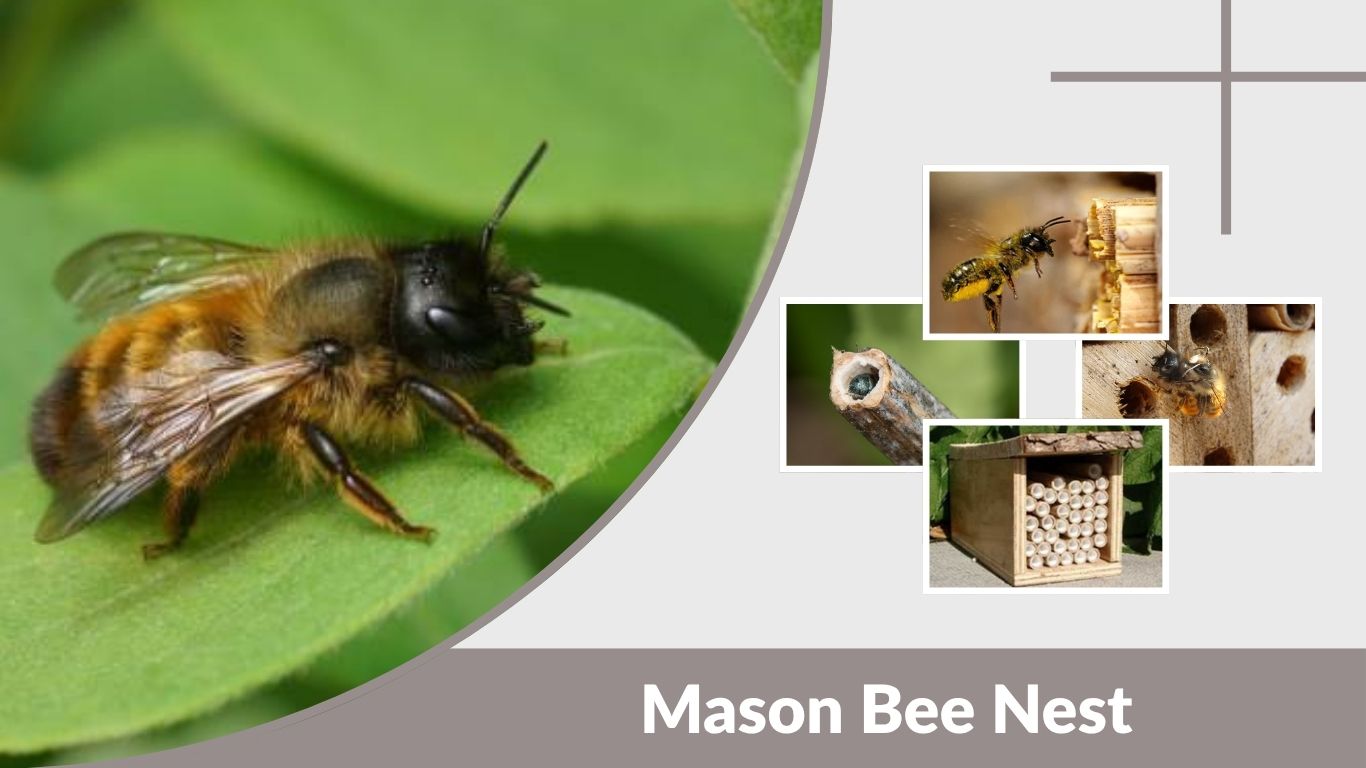
Mason bees are gentle solitary bees that nest in small holes instead of large hives. A mason bee nest may be a hollow stem, reed, drilled block, nesting tube, or small cavity sealed with mud. Each female builds her own nest tunnel, adds pollen and nectar for her young, lays eggs, and closes each chamber with mud. This guide explains what mason bee nests look like, where they nest, how nesting tubes work, and how to create a safe nest box.
What Is a Mason Bee Nest?
A mason bee nest is not a honeybee hive. Mason bees are solitary, so each female uses her own tunnel instead of living in a large social colony. A nest is usually a narrow cavity divided into small chambers. Each chamber contains food and one egg, then the female seals it with mud.
What Does a Mason Bee Nest Look Like?
A mason bee nest often looks like a small round hole or tube plugged with dried mud. In a nest box, you may see several tube openings sealed at the front. Inside each tube, there are separate brood cells divided by mud walls. These hidden cells hold pollen, nectar, and developing young bees.
How Do Mason Bees Make Nests?
Female mason bees do not build wax comb like honeybees. Instead, they find an existing hole, carry in pollen and nectar, lay one egg, and build a mud wall. They repeat this process until the tunnel is filled. At the end, they seal the entrance with mud to protect the developing bees.
How Many Mason Bees Are in a Nest?
Mason bees are solitary, so one female usually manages one tunnel. However, many females may nest close together in the same bee house, reed bundle, or nesting block. A box with many tubes can look busy, but it is not one shared colony like a honeybee hive.
Where Do Mason Bees Nest Naturally?
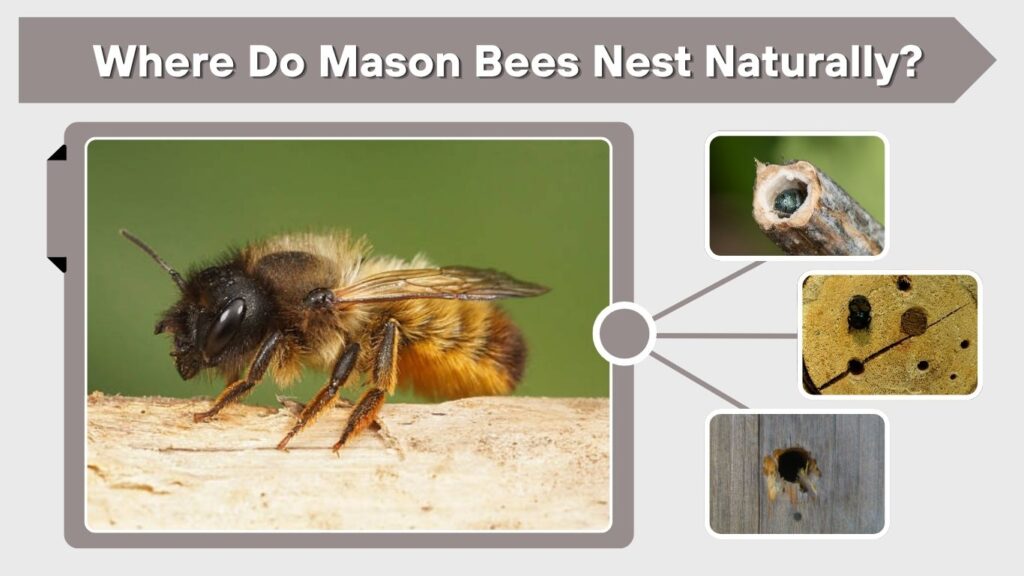
Mason bees are cavity-nesting bees. This means they usually use existing holes instead of digging long tunnels in soil. In nature, they may nest in hollow stems, reeds, beetle holes in dead wood, cracks in bark, or small wall gaps. They also need mud nearby to seal their nest chambers.
Natural Mason Bee Nest Sites
- Hollow plant stems
- Old beetle holes in wood
- Small cracks in dead wood
- Reeds and canes
- Gaps in bark
- Rock crevices
- Small wall gaps
- Natural cavities near flowers
Do Mason Bees Nest in the Ground?
Most mason bees do not nest in the ground. They are cavity nesters, not ground-nesting bees. They usually do not dig their own soil tunnels. However, they may use a low cavity near the ground if it is dry, narrow, protected, and close to flowers and mud.
Mason Bees Nest in Wall
Mason bees may use small existing holes in walls, brickwork, mortar gaps, siding, or old cavities. They usually do not chew new holes or cause major structural damage. However, if bees are using weak mortar, repair the gap after the bees have emerged and the nesting season is over.
Mason Bee Nesting Tubes
Mason bee nesting tubes are one of the easiest ways to support these pollinators in gardens and orchards. A good tube gives the female a dry, narrow tunnel where she can build mud chambers. Tubes should be the right size, deep enough, protected from rain, and replaceable or cleanable after the season.
Best Types of Nesting Tubes
- Paper tubes
- Cardboard tubes
- Natural reeds
- Phragmites reeds
- Removable liners
- Split nesting trays
- Cleanable wooden trays
DIY Mason Bee Nesting Tubes
DIY nesting tubes can be made from clean paper liners, natural reeds, or untreated hollow stems. Avoid plastic straws because they trap moisture and can lead to mold. Each tube should be smooth inside, closed at the back, and placed in a weather-protected shelter.
Mason Bee Nesting Reeds
Reeds are popular because they are natural, breathable, and easy to replace. They should be cut cleanly so sharp edges do not injure bees. Reeds should also be kept dry and replaced after use. A bundle of reeds can work well if it is protected from rain and strong wind.
Mason Bee Nest Box and Nesting House
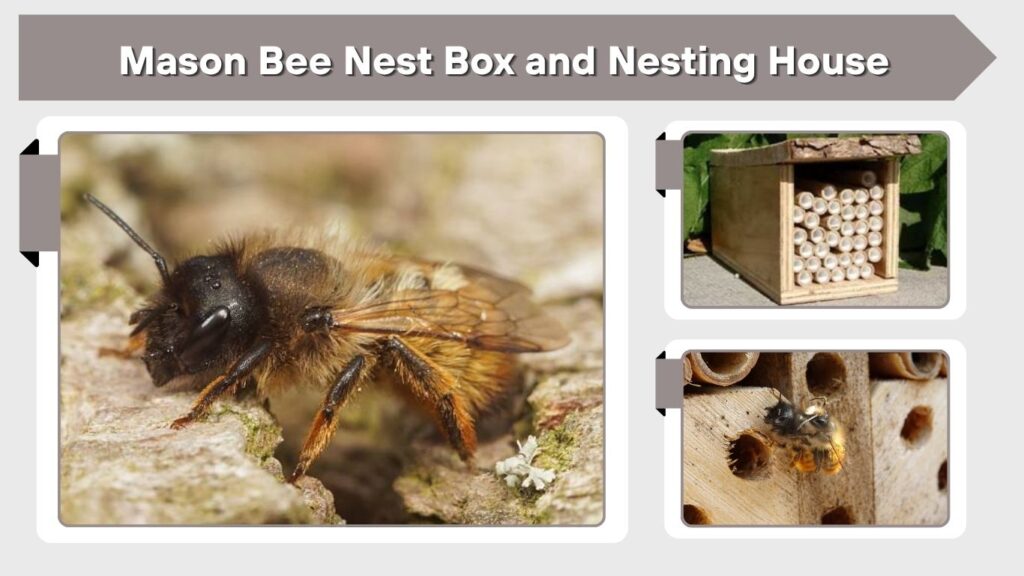
A mason bee nest box is a shelter that holds tubes, reeds, trays, or blocks. The box does not make bees stay by itself; it simply provides safe nesting cavities. Placement, cleanliness, and nearby flowers matter just as much as the box design. A good house should stay dry and allow yearly maintenance.
Mason Bee Nest Box Features
- Weatherproof roof
- Dry nesting area
- Replaceable tubes or trays
- Closed back
- Proper hole size
- Enough tube depth
- Protection from wind
- Morning sun exposure
- Nearby mud source
- Nearby spring flowers
Mason Bee Nest Kit
A good mason bee nest kit should include a sturdy shelter, correctly sized tubes or trays, and clear cleaning instructions. Avoid decorative bee hotels with random hole sizes, splintered bamboo, shallow tubes, or materials that cannot be cleaned. A simple, cleanable design is usually better than a large decorative house.
Mason Bee Nesting Trays
Nesting trays are useful because they can be opened after the season for cleaning and cocoon inspection. This helps reduce mites, mold, and parasites. Trays should fit tightly together during nesting so the tunnels feel dark, safe, and protected.
Mason Bee Nesting Blocks
Mason bee nesting blocks are drilled wood blocks or stacked trays with tunnels for cavity-nesting bees. They can work well when the holes are smooth, deep enough, and protected from rain. However, permanent drilled blocks that cannot be opened or cleaned may collect mites, mold, and parasites over time.
Mason Bee Nest Hole Size
Hole size depends on the mason bee species. Many blue orchard mason bee houses use holes around 5/16 inch wide. Smaller mason bee species may use smaller holes. A good nesting block may include several hole sizes, but the holes should be smooth, clean, and deep enough for healthy nesting.
How to Build a Mason Bee Nest Block
To build a simple mason bee nesting block, use safe materials and avoid anything treated with chemicals.
- Use untreated wood
- Drill smooth, clean holes
- Keep holes closed at the back
- Make holes deep enough
- Avoid splinters inside tunnels
- Add a roof or shelter
- Face the block toward morning sun
- Keep the block dry
- Clean or replace nesting materials yearly
Mason Bees 48 Hole Nesting Block
A 48-hole nesting block can attract many mason bees if it is placed well and kept clean. However, more holes also mean more maintenance. A smaller cleanable block is often better than a large neglected one. If the block cannot be opened, replace it regularly to reduce disease and parasite buildup.
Mason Bee Nest Placement
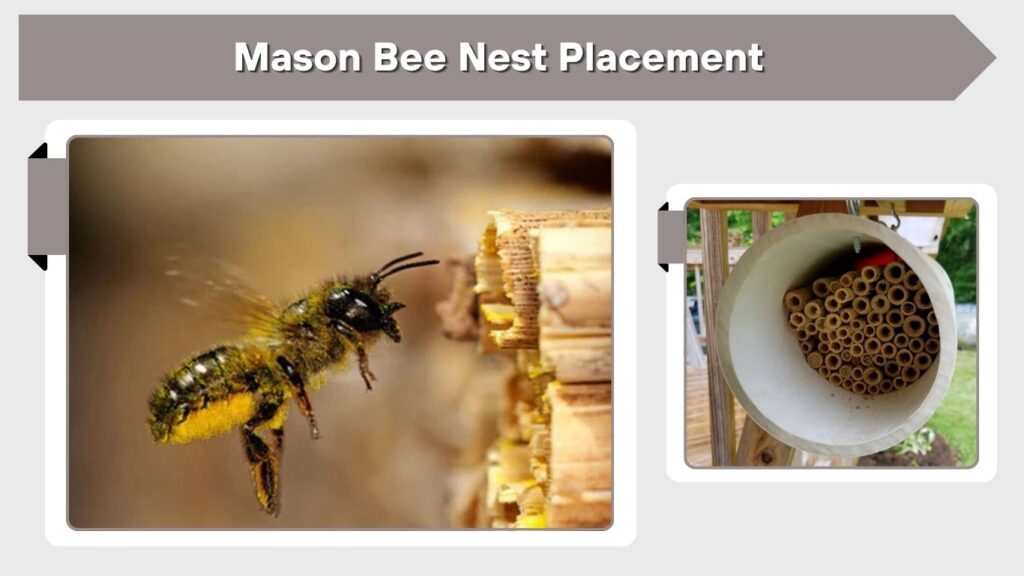
Placement is one of the most important parts of successful mason bee nesting. Even a good nest box may stay empty if it is placed in deep shade, strong wind, or heavy rain. Mason bees need morning warmth, dry tunnels, nearby spring flowers, and a nearby mud source for sealing their nest cells.
Where to Place a Mason Bee Nest Box
A good mason bee nest box location should be warm, dry, stable, and close to flowers.
- Face east or southeast
- Provide morning sun
- Keep it sheltered from rain
- Mount it firmly
- Place near early-blooming flowers
- Keep mud nearby
- Avoid pesticides
- Avoid heavy shade
- Protect from strong wind
- Keep away from bird feeders
How High Should It Be?
A mason bee nest box can be placed around eye level or slightly lower, as long as it is stable and easy to monitor. The exact height is less important than sun, shelter, dryness, and nearby flowers. Avoid placing it where it swings, falls, or gets soaked by rain.
When Do Mason Bees Start Nesting?
Mason bees usually start nesting in spring when temperatures warm and early flowers bloom. Blue orchard mason bees are known as early spring pollinators, especially around fruit trees. Red mason bees are also spring-active in many regions. Nesting activity often ends before the hottest part of summer.
Blue Orchard and Red Mason Bee Nests
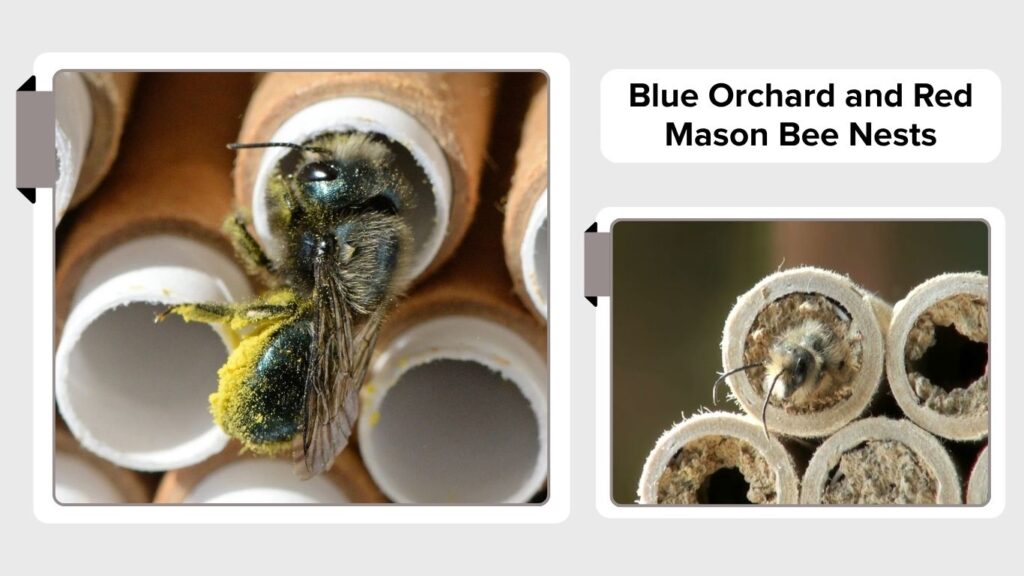
Blue orchard mason bees and red mason bees both use cavity nests, but they are known in different regions and garden settings. Both species use narrow holes, add pollen and nectar, lay eggs, and seal chambers with mud. Local climate and species type can affect timing, hole size, and nest placement.
Blue Orchard Mason Bee Nest
The blue orchard mason bee is a well-known North American orchard pollinator. It often nests in tubes, reeds, drilled blocks, and natural cavities. This species is especially valued for pollinating apples, cherries, plums, and other spring-blooming fruit trees.
Red Mason Bee Nest
The red mason bee is common in parts of Europe and is also a cavity-nesting bee. It may use nest boxes, hollow stems, reeds, drilled blocks, and wall cavities. A red mason bee nest is usually sealed with mud just like other mason bee nests.
Mason Bee Nest NZ
In New Zealand, mason bee searches may involve local pollinators, managed orchard bees, or imported common names. Before buying bees, nest kits, or nesting materials, readers should check local guidance. Some regions have rules about moving insects or using non-native bee species.
Mason Bee Nest Care and Cleaning
Mason bee nests need yearly care. Old tubes, reeds, and dirty blocks can hold mites, mold, fungi, and parasitic wasps. Cleanable trays, paper liners, and replaceable reeds are often better than permanent holes. Good maintenance helps protect the next generation of bees and keeps the nest box useful.
Why Cleaning Matters
Cleaning matters because old nesting material can become unhealthy over time. Parasites and disease may build up when the same tubes are reused year after year. Replacing tubes or opening trays after the season can reduce problems and help more healthy bees emerge.
When to Replace Tubes
Replace tubes or reeds after the bees have emerged and the nesting season is finished. Do not remove active tubes while young bees are still developing inside. If you are unsure, wait until the proper seasonal window or follow local mason bee guidance.
Common Mistakes
Avoid these common mason bee nest mistakes:
- Using plastic tubes
- Using wet bamboo
- Leaving tubes for years
- Making holes too shallow
- Placing boxes in deep shade
- Forgetting a mud source
- Using treated wood
- Spraying pesticides nearby
FAQs
What does a mason bee nest look like?
A mason bee nest usually looks like a small round hole or tube sealed with dried mud. Inside the tunnel are separate chambers, each holding pollen, nectar, and one egg. In a nest box, several tube openings may be plugged with mud.
Where do mason bees nest?
Mason bees nest in existing cavities such as hollow stems, reeds, beetle holes in wood, drilled blocks, nesting tubes, nesting trays, or small wall gaps. Most mason bees do not dig their own nests in the ground.
What size holes do mason bees need?
Hole size depends on the mason bee species. Many blue orchard mason bee houses use holes around 5/16 inch wide. Smaller mason bee species may use smaller holes. The holes should be smooth, deep enough, and closed at the back.
When do mason bees start nesting?
Mason bees usually start nesting in spring when temperatures warm and early flowers bloom. They are often active around fruit trees, flowering shrubs, and garden plants. Nesting usually happens before the hottest part of summer.
How do you make a mason bee nest?
You can make a mason bee nest with untreated wood, paper tubes, natural reeds, or cleanable trays. Keep the tunnels dry, smooth, properly sized, and closed at the back. Place the nest near flowers, morning sun, and a small mud source.