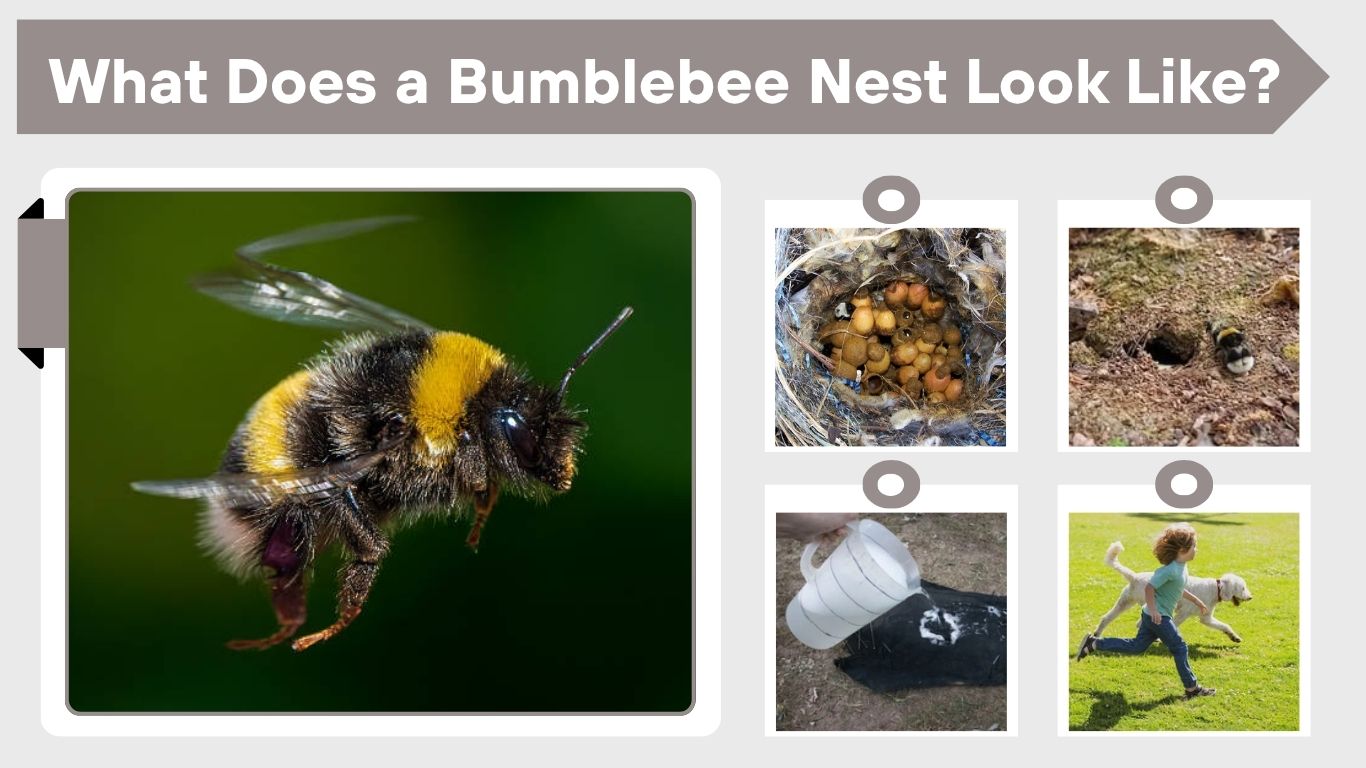
A bumblebee nest is usually hidden, so many people notice the bees before they see the nest itself. You may see fuzzy bees flying in and out of a small hole in the ground, a wall gap, compost pile, shed, bird box, or thick grass. Most bumblebee nests are seasonal and helpful for pollination. This guide explains what bumblebee nests look like, where they are found, how big they get, and when they may need attention.
What Does a Bumblebee Nest Look Like?
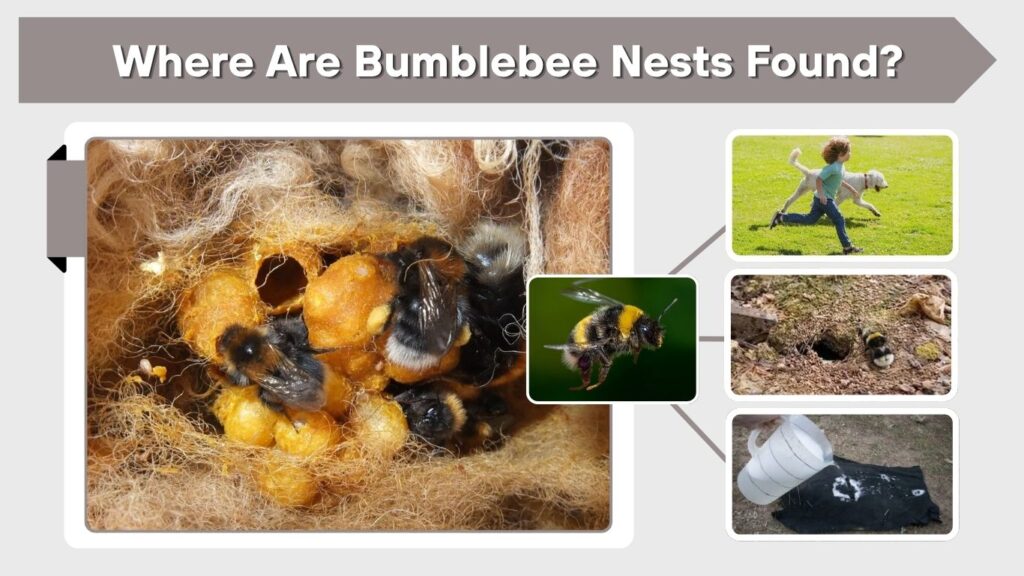
A bumblebee nest does not look like a neat honeybee hive or a paper wasp nest. It is usually hidden inside a cavity and has an irregular waxy structure. From outside, the main sign is repeated bee traffic at one small entrance. Inside, the nest contains brood cells, nectar pots, pollen, larvae, and adult bees.
Outside Signs of a Bumblebee Nest
- Fuzzy bees entering the same hole
- A small opening in soil, grass, compost, or a wall gap
- Bees flying low near the entrance
- Workers returning with pollen on their legs
- Soft buzzing near the nest area
- More activity on warm, dry days
What It Looks Like Inside
Inside, a bumblebee nest is usually messy and uneven compared with a honeybee hive. It may have wax pots for nectar, pollen stores, eggs, larvae, pupae, and adult workers. The wax cells are arranged in clumps rather than flat honeycomb sheets. Most people should not open a nest to look inside because disturbing it can make bees defensive.
What Does a Bumblebee Nest Look Like in the Ground?
An underground bumblebee nest may look like a small dark hole in the soil, grass, or a bank. The actual nest is hidden below the surface, often inside an old mouse or rodent burrow. You may only see bees entering and leaving the same spot throughout the day.
Where Are Bumblebee Nests Found?
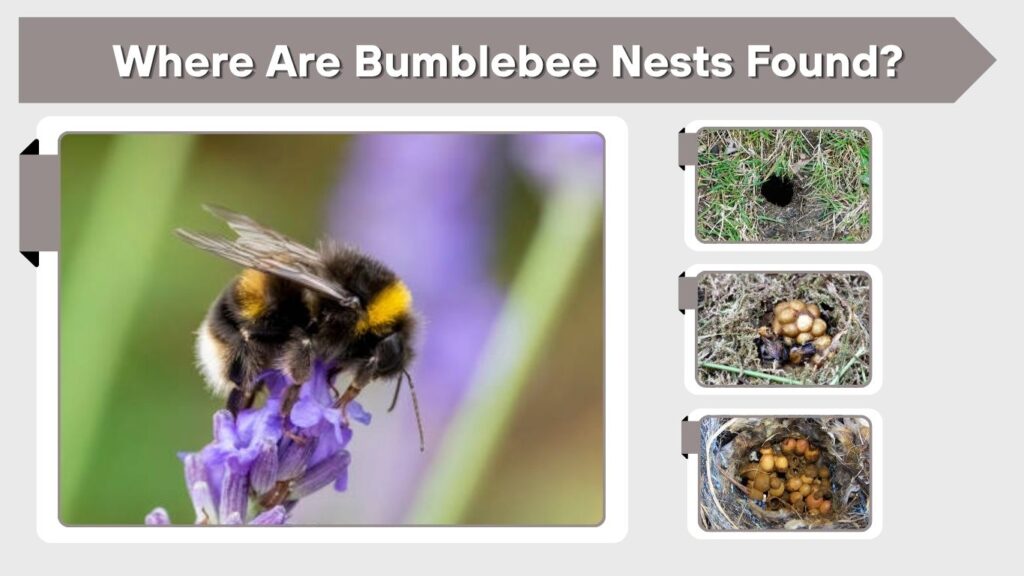
Bumblebees choose sheltered places where a queen can start a colony safely. Different species use different nest sites. Some prefer underground cavities, while others use above-ground spaces. A good nest site gives protection from rain, strong sun, predators, and disturbance, while nearby flowers provide nectar and pollen for the growing colony.
Common Nest Locations
- Underground rodent holes
- Grass banks and lawn edges
- Under sheds or decking
- Compost heaps
- Thick grass or leaf piles
- Bird boxes
- Hollow trees or logs
- Rock piles
- Wall cavities
- Roof eaves or loft spaces
- Flower pots or planters
What Does a Tree Bumblebee Nest Look Like?
A tree bumblebee nest is often found above ground in places like bird boxes, roof spaces, wall cavities, or hollow trees. From outside, it may look like bees repeatedly entering a small gap. Tree bumblebees can be more noticeable because males may gather and fly around the nest entrance during mating season.
How to Find a Bumblebee Nest
The easiest way to find a bumblebee nest is to watch the bees from a safe distance. On warm days, worker bees often fly in and out of the same entrance. Do not poke the hole, dig, pour water, block the opening, or spray chemicals. Quiet observation is safer for both people and bees.
How Big Are Bumblebee Nests?
Bumblebee nests are usually much smaller than honeybee colonies. Their size depends on the species, season, food supply, and available nest space. A new spring nest may have only the queen and a few workers, while a mature summer nest may contain many more bees and more visible activity around the entrance.
How Many Bees Are in a Bumblebee Nest?
Many bumblebee nests contain dozens to a few hundred bees. The number is usually low early in the season and higher in summer when workers are active. Bumblebee colonies are still much smaller than honeybee hives, which can contain thousands of bees.
How Big Can a Bumblebee Nest Get?
Most bumblebee nests stay compact because they last only one season. The nest grows as the queen lays eggs and workers collect food. Inside a cavity, the colony may fill some of the available space with wax cells, brood, pollen, and nectar pots, but it usually does not become a huge structure.
How Long Do Bumblebee Nests Last?
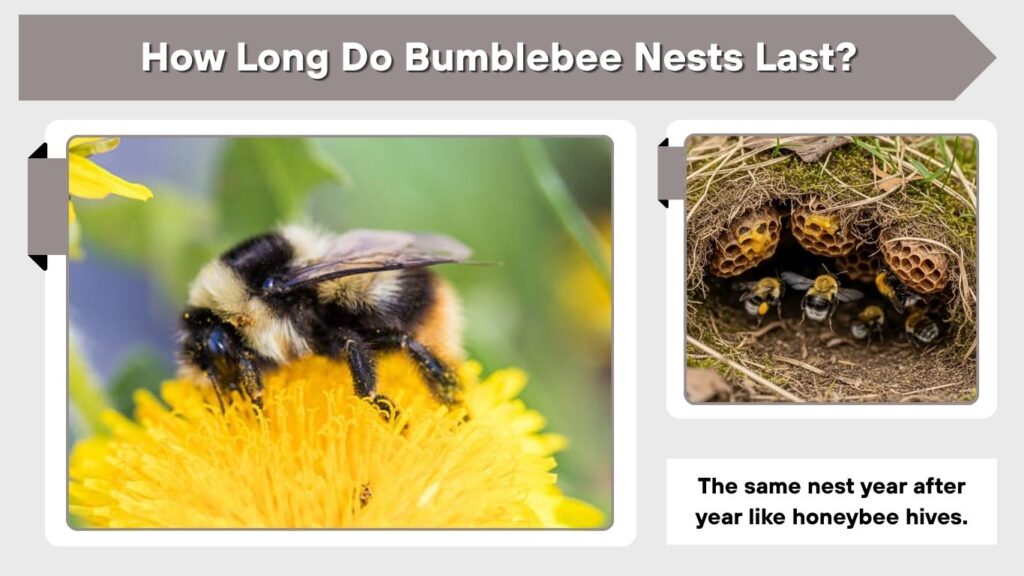
Bumblebee nests are temporary and usually last for one season. A queen starts the nest in spring, workers help it grow, and the colony produces new queens and males later in the year. After that, the old nest naturally declines, while new queens leave to mate and hibernate somewhere else.
When Do Bumblebee Nests Die Off?
Most bumblebee nests die off by late summer or autumn, depending on the species and local climate. The old queen, workers, and males usually do not survive the season. Only newly mated queens hibernate and start fresh nests the following year.
Does a Queen Bumblebee Leave the Nest?
The founding queen may leave the nest early in the season to collect pollen and nectar before enough workers exist. Later, workers do most of the foraging while the queen stays inside laying eggs. New queens leave the nest near the end of the colony cycle to mate and prepare for hibernation.
Will Bumblebees Reuse the Same Nest?
Bumblebee colonies do not continue in the same nest year after year like honeybee hives. The old colony dies off naturally. However, a similar cavity may attract another queen in a future season if it remains dry, sheltered, and close to flowers.
Are Bumblebee Nests Dangerous?
Bumblebee nests are usually not dangerous when they are left alone. Bumblebees are not as aggressive as many wasps, but they can sting if their nest is disturbed, blocked, stepped on, or dug up. The risk depends on the nest location, nearby people, pets, and how much activity happens around the entrance.
When a Nest Is Usually Low Risk
A bumblebee nest is often low risk if it is away from busy areas. It may be safe to leave it alone when:
- The nest is away from doors and walkways
- Children and pets can avoid the area
- Bees are not being disturbed
- No one nearby has a serious sting allergy
- The nest is outdoors and not inside living space
- Mowing or digging can be avoided near the entrance
When a Nest May Be a Problem
A nest may need attention if it is in a place where people or pets cannot avoid it. A problem nest may be:
- Beside a doorway or path
- In a play area
- Under a lawn that must be mowed
- Inside a wall or roof space
- Near pets that keep digging
- Close to someone with a severe sting allergy
- Connected to bees entering indoor rooms
Do Bumblebee Nests Smell?
A healthy bumblebee nest usually does not create a strong smell outside. If you notice a bad smell near the nest area, it may come from damp material, mold, a dead animal, or another issue in the same cavity. Avoid opening the area yourself if bees are active.
What to Do If You Find a Bumblebee Nest
If you find a bumblebee nest, the best first step is to stay calm and watch from a safe distance. Most nests are temporary and helpful for pollination, so they can often be left alone until the season ends. Avoid disturbing the entrance, because sudden digging, blocking, or spraying can make bees defensive.
First Steps
When you find a bumblebee nest, follow these simple steps:
- Stay calm and step back
- Watch from a safe distance
- Keep children and pets away
- Do not block the entrance
- Do not pour water into the nest
- Do not spray pesticides
- Avoid mowing or digging beside it
- Mark the area if needed
What to Do If You Disturb a Bumblebee Nest
If you disturb a bumblebee nest, move away slowly and give the bees time to settle. Do not stand over the entrance, wave your arms, or keep digging. If loose grass, soil, or nest cover was moved, wait until activity calms before doing anything nearby. If anyone is stung and has allergy symptoms, seek medical help immediately.
Should You Get Rid of a Bumblebee Nest?
You usually do not need to get rid of a bumblebee nest if it can be avoided. Most nests last only a few months and die off naturally. Removal may be needed only when the nest is in a dangerous place, such as inside a home, beside a busy doorway, or near someone with a severe sting allergy.
Can You Move a Bumblebee Nest?
Moving a bumblebee nest is difficult and risky. The nest structure is fragile, the bees may become defensive, and the queen or brood can be harmed. Relocation should only be considered when the nest cannot safely remain where it is. In many cases, waiting for the colony to finish naturally is safer.
Can You Move It Yourself?
DIY relocation is not recommended for most people. Underground nests are especially hard to move because the actual nest may be deeper or farther from the entrance than expected. Digging can break the nest and expose larvae. Above-ground nests in bird boxes may seem easier, but they can still be risky without proper timing and protection.
When Professional Help Is Better
Professional help is better if the nest is inside a living space, in a high-traffic area, or near someone with a serious allergy. Choose a bee-friendly professional or local wildlife group when possible. They may advise leaving the nest, moving it carefully, or using another safe option based on the situation.
How to Get Rid of a Bumblebee Nest Safely
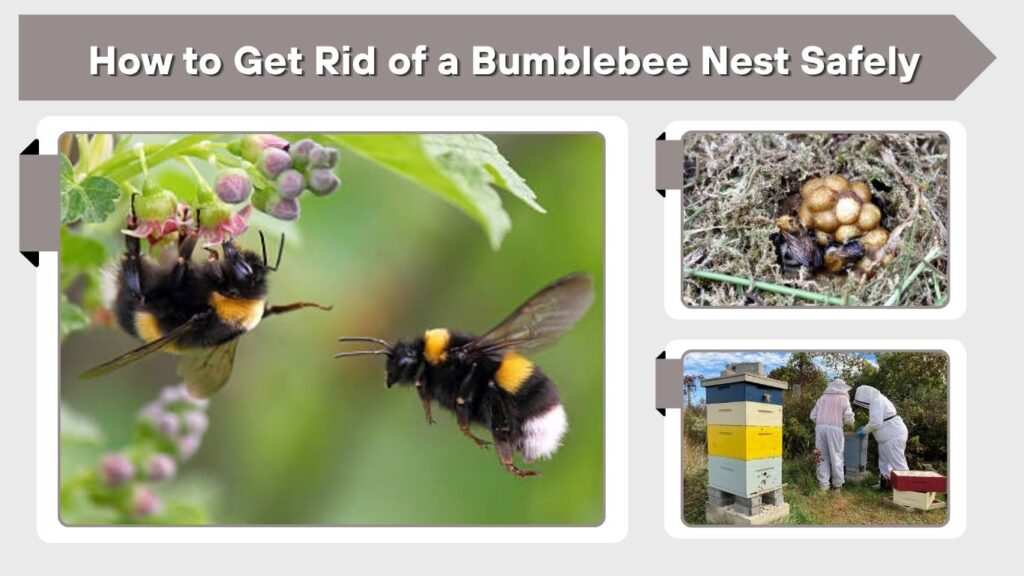
Getting rid of a bumblebee nest should be a last resort. Bumblebees are important pollinators, and most nests naturally end within one season. If the nest is not causing real danger, leaving it alone is usually the best solution. If removal is necessary, avoid harmful DIY methods and seek safe advice.
Best Option: Leave It Until the Season Ends
The safest option is often to leave the nest until it dies off naturally. Most bumblebee nests do not last all year, and they usually do not cause structural damage. If the entrance can be avoided, waiting a few weeks or months may solve the problem without harming pollinators.
Avoid These Methods
Do not use unsafe or harmful methods to destroy a bumblebee nest:
- Do not pour boiling water into the nest
- Do not block the entrance
- Do not burn the nest
- Do not dig it out
- Do not use random garden sprays
- Do not vacuum live bees
- Do not seal bees inside a wall
When Removal Is Necessary
Removal may be necessary if bees are entering indoor rooms, the nest is beside a main doorway, pets or children cannot avoid it, or someone nearby has a severe allergy. In these cases, contact a professional rather than trying to destroy the nest yourself.
How to Build a Bumblebee Nest Box
A bumblebee nest box can give queens a sheltered place to start a colony, but success is not guaranteed. Bumblebees are selective, and many nest boxes stay empty. A good box should be dry, protected, shaded, and near flowers. It should also be placed where people and pets will not disturb it.
Basic Nest Box Features
A useful bumblebee nest box may include:
- Small dry box or cavity
- Narrow entrance hole
- Soft dry nesting material
- Protection from rain
- Partial shade
- Quiet location
- Nearby flowers
- No pesticides nearby
Where to Place a Nest Box
Place a nest box in a quiet, sheltered area near flowering plants. Some bumblebees prefer ground-level nesting, while others may use bird-box-style cavities. Avoid hot, exposed places and areas with heavy foot traffic. Do not keep opening the box to check it, because disturbance may cause a queen to leave.
FAQs
What does a bumblebee nest look like?
A bumblebee nest is usually hidden inside a cavity. From outside, you may only see fuzzy bees entering and leaving one small hole. Inside, the nest has irregular wax cells, nectar pots, pollen stores, eggs, larvae, pupae, and adult bees.
Where do bumblebees build nests?
Bumblebees may nest underground, in old rodent holes, thick grass, compost heaps, under sheds, bird boxes, hollow trees, wall gaps, roof spaces, or flower pots. The nest site must be sheltered, dry, and close to flowers.
Are bumblebee nests dangerous?
Most bumblebee nests are not dangerous if left alone. Bumblebees can sting if their nest is disturbed, stepped on, blocked, or dug up. Keep children and pets away from the entrance and avoid mowing or digging nearby.
How long does a bumblebee nest last?
Most bumblebee nests last only one season. A queen starts the nest in spring, the colony grows through summer, and the old nest usually dies off by late summer or autumn. New queens leave to mate and hibernate elsewhere.
Should I get rid of a bumblebee nest?
You usually should not remove a bumblebee nest unless it creates a real safety problem. Most nests are temporary and helpful for pollination. If the nest is near a doorway, play area, indoor space, or someone with a severe allergy, contact a bee-friendly professional.