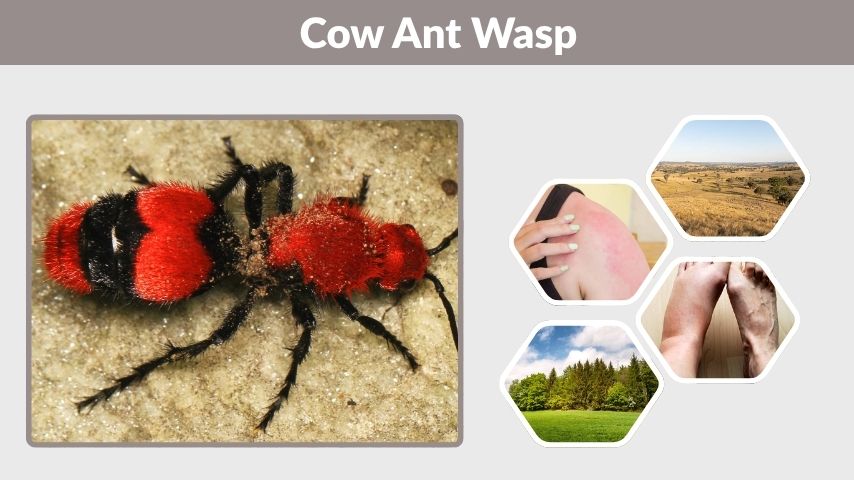
The Cow Ant Wasp, often called the “cow killer ant,” is a fascinating insect known for its painful sting and fuzzy ant-like appearance. Despite its name, it is not a true ant but a type of velvet ant wasp belonging to the family Mutillidae. Female cow ant wasps are wingless and move quickly across the ground, while males have wings and resemble traditional wasps.
Cow Ant Wasps are famous for their extremely painful stings, bright warning colors, and tough exoskeletons. These solitary insects are commonly found in warm regions with sandy soil and open habitats. Understanding their behavior, habitat, sting symptoms, and identification features helps people avoid accidental encounters and appreciate their unusual role in nature.
What Is a Cow Ant Wasp?
The Cow Ant Wasp is a velvet ant species known for its striking appearance and painful defensive sting. Although commonly called an ant, it is actually a solitary wasp. The nickname “cow killer” comes from the intense pain caused by the female’s sting, though it is not strong enough to kill livestock.
Scientific Classification
- Family: Mutillidae
- Common names: Cow killer ant, velvet ant
- Type: Solitary wasp
- Related to: Velvet ants and parasitic wasps
- Native regions: North America and warm climates
Why It Is Called a Cow Ant
The term “cow ant” comes from the insect’s ant-like appearance and strong sting reputation. Bright warning colors help scare predators away by signaling danger. Despite the dramatic nickname, the sting is rarely dangerous to humans unless an allergic reaction occurs.
Physical Appearance
- Fuzzy body covering
- Red, orange, black, or white coloration
- Thick protective exoskeleton
- Wingless females
- Long legs for fast running
Females often resemble large hairy ants, while males appear more like traditional flying wasps.
Cow Ant Wasp Habitat and Distribution
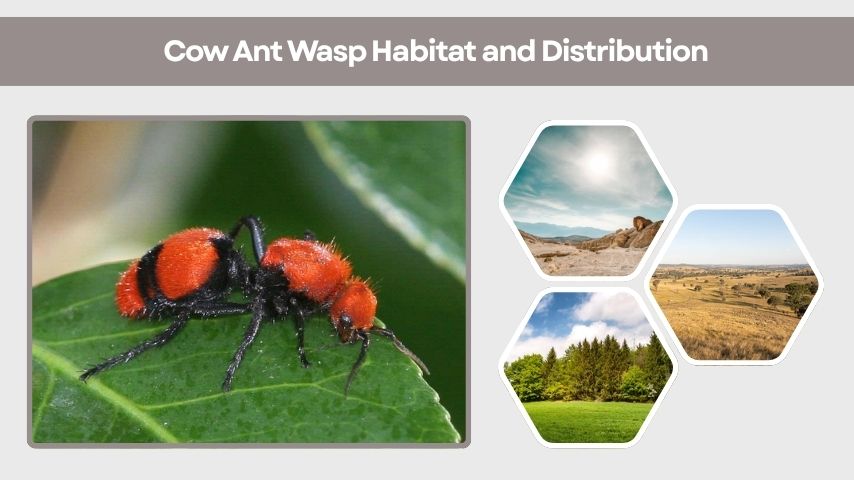
Cow Ant Wasps prefer warm, dry environments where they can search for food and suitable host nests. Because they are solitary insects, they are usually seen moving alone rather than forming colonies like ants or yellowjackets.
Natural Habitat
- Sandy soils
- Dry grasslands
- Forest edges
- Gardens
- Open fields
These environments provide nesting opportunities for the insects they parasitize.
Geographic Distribution
Cow Ant Wasps are commonly found in:
- Southern United States
- North America
- Desert regions
- Warm temperate climates
Some species occur in tropical and subtropical habitats around the world.
Habitat Adaptations
Cow Ant Wasps possess several adaptations that help them survive in harsh outdoor conditions. Their tough exoskeleton protects against predators, while their fast movement allows them to escape danger quickly. Bright coloration also acts as a warning signal to animals that might try to attack them.
Cow Ant Wasp Sting
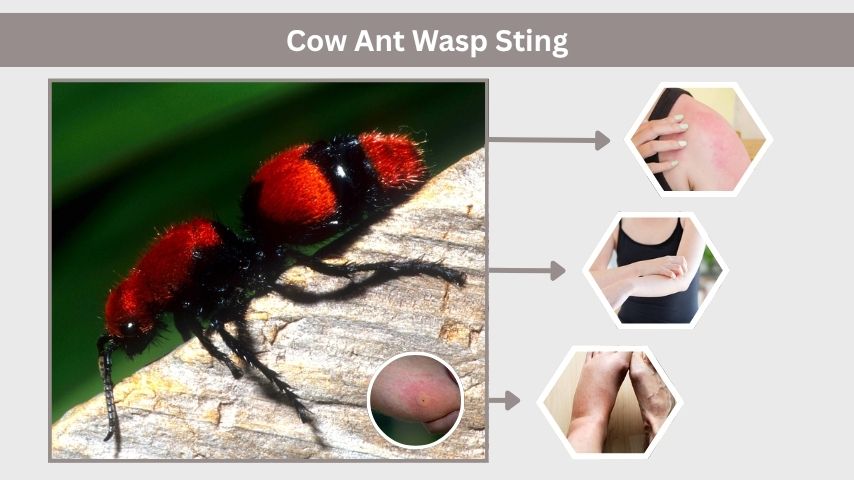
The sting of the female Cow Ant Wasp is considered one of the most painful insect stings in North America. Although extremely painful, it is usually defensive rather than aggressive behavior.
How Painful Is the Sting?
Many people describe the sting as an intense burning or stabbing sensation. The pain may last for several minutes and is often compared to some of the strongest wasp stings measured on the Schmidt Sting Pain Index.
Sting Symptoms
- Sharp burning pain
- Redness
- Swelling
- Itching
- Temporary numbness
Most symptoms improve naturally within a short period, although swelling may persist longer in sensitive individuals.
When to Seek Medical Attention
Medical help may be needed if severe allergic symptoms appear after a sting. Difficulty breathing, chest tightness, facial swelling, or dizziness can indicate a dangerous allergic reaction requiring emergency treatment.
Cow Ant Wasp Male vs Female
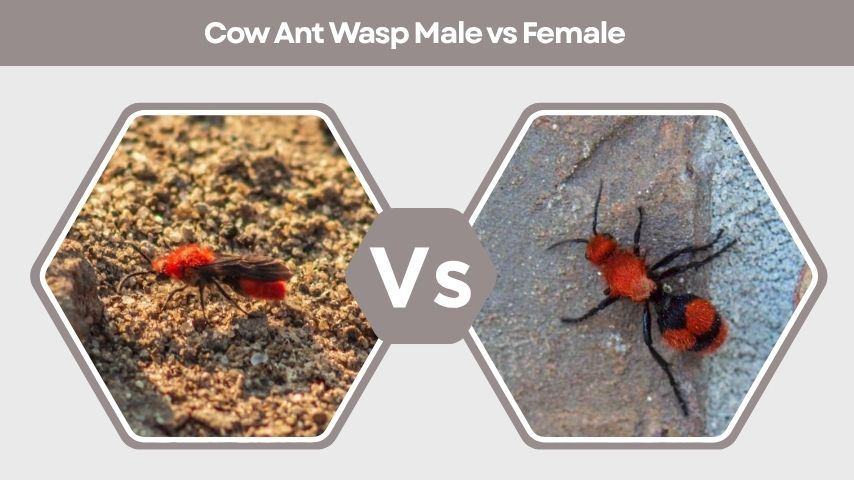
Male and female Cow Ant Wasps differ greatly in appearance and behavior. The most noticeable difference is that females are wingless, while males can fly.
Male Cow Ant Wasp
- Winged body
- Cannot sting
- More wasp-like appearance
- Searches for females during breeding
Male velvet ants may look intimidating, but they lack stingers and are harmless to humans.
Female Cow Ant Wasp
- Wingless body
- Strong painful stinger
- Ant-like appearance
- Fast-running behavior
Females spend much of their time searching for host insect nests where they can lay eggs.
Comparison Table
| Feature | Male Cow Ant Wasp | Female Cow Ant Wasp |
| Wings | Present | Absent |
| Sting | Cannot sting | Extremely painful sting |
| Appearance | Wasp-like | Ant-like |
| Movement | Flying | Fast running |
Cow Killer Ant Wasp Behavior
Cow Ant Wasps are solitary insects that spend much of their lives searching for food and host nests. Unlike social wasps, they do not build large colonies or cooperate in groups. Their unusual defensive behaviors and warning colors help protect them from predators in the wild.
Solitary Lifestyle
Cow Ant Wasps live alone and rarely interact with others except during mating. Females wander across the ground looking for host insect nests where they can lay eggs. This solitary behavior reduces competition and helps them survive in dry habitats.
Defensive Behaviors
- Bright warning coloration
- Loud squeaking sounds
- Tough exoskeleton
- Extremely painful sting
- Fast running speed
These defenses help discourage predators such as birds, reptiles, and small mammals.
Feeding Habits
Adult Cow Ant Wasps commonly feed on nectar and sugary substances found in flowers. Their larvae, however, develop inside the nests of other insects and consume the host larvae as they grow.
Cow Ant Wasp Nest and Life Cycle
Cow Ant Wasps do not build traditional nests like paper wasps or hornets. Instead, females use the nests of ground-dwelling bees and wasps for reproduction.
Do Cow Ant Wasps Build Nests?
Female velvet ants search for underground nests belonging to other insects. After entering the host nest, the female lays eggs near the host larva. The developing velvet ant larva then feeds inside the protected nest.
Egg and Larval Development
The eggs hatch into larvae that consume the host insect or its stored food. After completing development, the larva transforms into a pupa before emerging as an adult Cow Ant Wasp.
Adult Emergence
Adult velvet ants usually emerge during warm months when conditions are favorable. Males fly in search of females, while wingless females continue searching for host nests and food sources.
Cow Ant Wasp vs Other Wasps
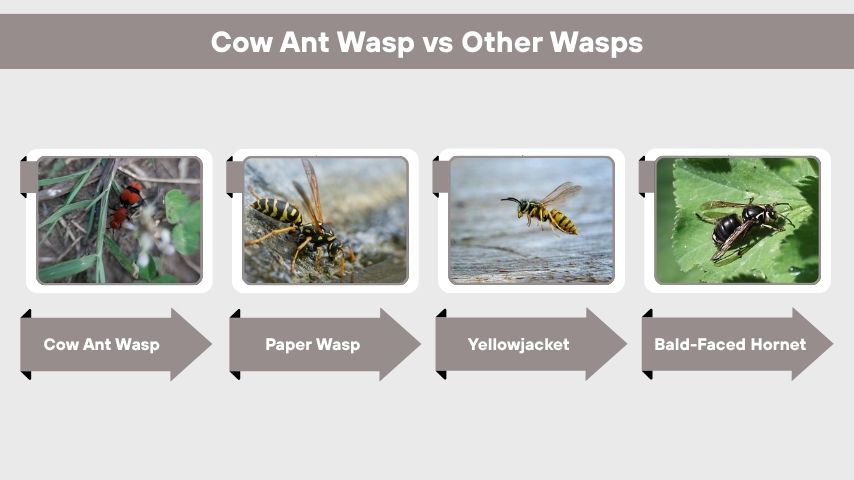
Cow Ant Wasps are very different from common social wasps such as yellowjackets and paper wasps. Unlike colony-forming wasps, Cow Ant Wasps live alone and do not build large nests. Female velvet ants are wingless and resemble ants, while males have wings and look more like traditional wasps. Their extremely painful sting and tough exoskeleton also make them unique among stinging insects.
| Feature | Cow Ant Wasp | Paper Wasp | Yellowjacket | Bald-Faced Hornet |
| Lifestyle | Solitary | Social | Social | Social |
| Female Wings | Absent | Present | Present | Present |
| Sting Pain | Extremely painful | Moderate | Painful | Very painful |
| Nest Type | Uses host nests | Paper nests | Underground or paper nests | Large paper nests |
| Aggression Level | Usually low | Moderate | High | Very defensive |
| Appearance | Fuzzy and ant-like | Slender wasp body | Smooth compact body | Black and white body |
| Defense Strategy | Painful sting and armor | Colony defense | Swarm attacks | Aggressive nest defense |
| Feeding Habits | Nectar and parasitic larvae | Insects and nectar | Insects and sugary foods | Insects and nectar |
Are Cow Ant Wasps Dangerous?
Cow Ant Wasps are not naturally aggressive toward humans, but females can deliver an extremely painful sting if threatened or handled. Most encounters occur accidentally when people step on or touch them.
Danger to Humans
The sting is intensely painful but rarely life-threatening unless the victim experiences an allergic reaction. Most symptoms include temporary pain, redness, and swelling.
Danger to Pets
Dogs and cats may investigate these insects out of curiosity and become stung. Although most pets recover quickly, stings around the mouth or throat can become more serious because swelling may affect breathing.
Can Male Cow Killer Ants Sting?
- Males do not have stingers
- Only females can sting
- Males rely on flight for defense
- Females use venom for protection
This difference is one of the easiest ways to separate males from females.
Interesting Facts About Cow Ant Wasps
Cow Ant Wasps are among the most unusual insects in North America because of their appearance and defensive abilities. Their warning colors and painful stings make them memorable to anyone who encounters them.
Amazing Facts
- Not true ants
- Females are wingless
- Produce squeaking sounds when threatened
- Possess one of the most painful insect stings
- Tough exoskeleton resists predators
- Bright colors warn predators of danger
FAQs
Do Cow Ant Wasps really kill cows?
No, Cow Ant Wasps do not kill cows. The nickname “cow killer” refers only to the extremely painful sting delivered by females.
Are Cow Ant Wasps poisonous or venomous?
Cow Ant Wasps are venomous because females inject venom through their stingers. They are not poisonous to touch, but stings can be very painful.
Where are Cow Ant Wasps most commonly found?
They are commonly found in warm and dry regions, especially in the southern United States, grasslands, sandy soils, gardens, and forest edges.
What do Cow Ant Wasps eat?
Adult Cow Ant Wasps mainly feed on nectar and sugary substances from flowers. Their larvae develop inside the nests of other insects.
Can Cow Ant Wasps fly?
Only male Cow Ant Wasps can fly because they have wings. Females are wingless and move quickly across the ground like ants.