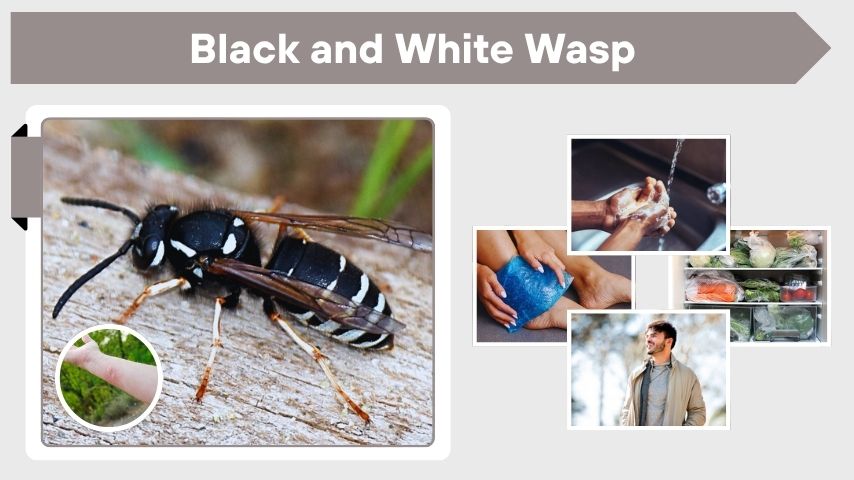
Black and white wasps are known for their striking appearance and painful defensive stings. Species such as bald-faced hornets and black-and-white mason wasps may sting when disturbed, especially near nests. Their venom can cause burning pain, swelling, redness, and in some cases serious allergic reactions that require medical attention.
Many people search for black and white wasp sting symptoms because reactions vary depending on the species, sting location, and individual sensitivity. While most stings are mild and heal within a few days, some may cause severe swelling or dangerous allergic symptoms. Learning proper treatment and prevention methods can help reduce risks and discomfort.
What Is a Black and White Wasp?
Black and white wasps include several species recognized by their dark bodies and pale markings. Some are solitary hunters, while others live in colonies and aggressively defend their nests. Their stings are mainly used for protection and can be painful when humans or animals accidentally disturb them.
Common Black and White Wasp Species
- Bald-faced hornet
- Black and white mason wasp
- Striped hunting wasps
- Solitary black-and-white wasps
Different species may vary in aggression and venom strength.
Physical Appearance
- Black body with white markings
- Narrow waist
- Long antennae
- Transparent wings
- Smooth body compared to bees
These wasps are often confused with hornets or yellowjackets because of their similar body shape and defensive behavior.
Do Black and White Wasps Sting?
Most black and white wasps can sting if threatened. Social species that live in colonies are especially defensive around nests. Solitary species are usually less aggressive and sting only when directly handled or trapped.
Black and White Wasp Sting Symptoms
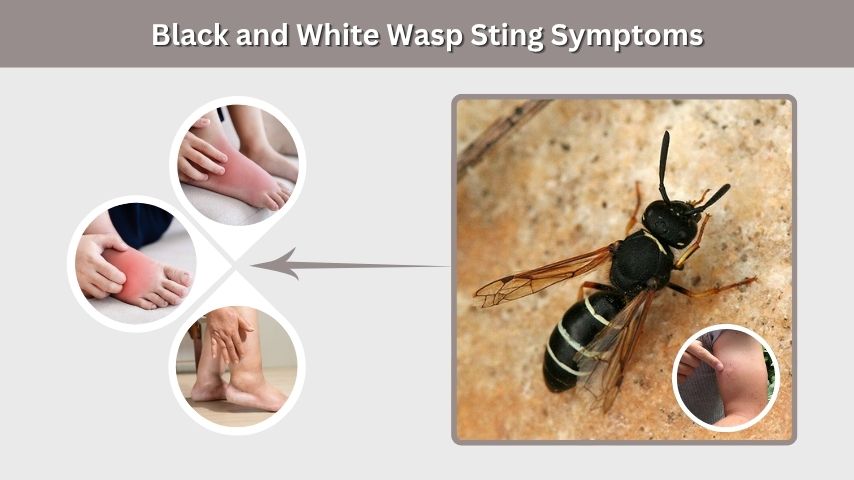
Wasp stings usually cause immediate pain and skin irritation. Reactions can range from mild redness to severe allergic symptoms depending on a person’s sensitivity and the number of stings received.
Mild Symptoms
- Sharp burning pain
- Redness
- Small swelling
- Itching around the sting site
- Temporary discomfort
These symptoms often improve within several hours or days.
Moderate Reactions
Some people experience stronger local reactions with larger swelling and longer-lasting pain. The affected skin may feel warm, tight, or tender for several days after the sting.
Severe Allergic Symptoms
- Difficulty breathing
- Facial swelling
- Dizziness
- Rapid heartbeat
- Severe hives
- Anaphylaxis signs
Severe allergic reactions require emergency medical treatment because they can become life-threatening.
Black and White Wasp Sting Pain Index
Black and white wasp stings are often described as intensely burning and irritating. Social wasps such as bald-faced hornets may sting repeatedly, increasing pain and swelling.
How Painful Is the Sting?
The sting usually produces sudden burning pain followed by throbbing discomfort. Pain intensity depends on the species, venom amount, and sting location. Areas with thinner skin often feel more painful.
Factors Affecting Pain
- Number of stings
- Body location
- Venom sensitivity
- Allergic reactions
- Species aggressiveness
Pain may last from several minutes to a few hours depending on the reaction severity.
Pain Comparison Table
| Insect | Pain Level | Typical Reaction |
| Black and White Wasp | Moderate to painful | Burning and swelling |
| Honey Bee | Moderate | Sharp pain |
| Yellowjacket | Painful | Aggressive repeated stings |
| Paper Wasp | Moderate | Red swollen skin |
Black and White Wasp Sting Swelling
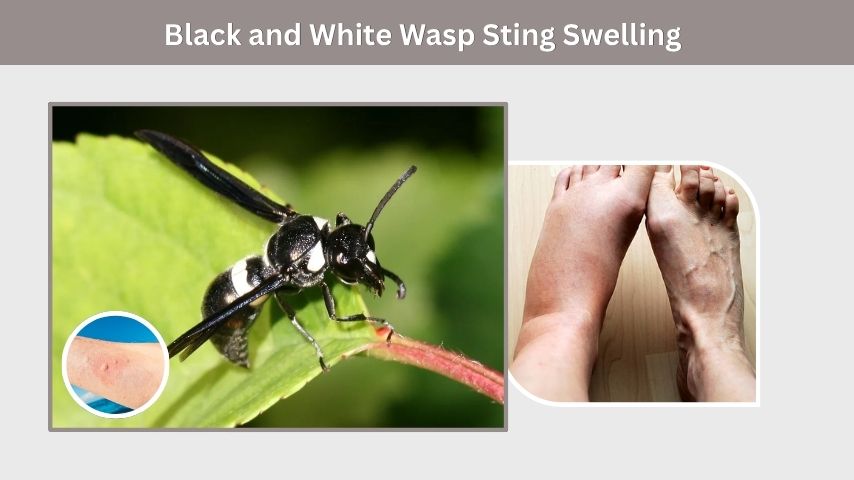
Swelling is one of the most common reactions after a wasp sting. The body’s immune system reacts to venom proteins by increasing blood flow and inflammation around the sting area.
Why Swelling Occurs
Venom injected during the sting triggers an inflammatory response that causes redness, warmth, and swelling. In most cases, this reaction is temporary and improves naturally over time.
Normal vs Severe Swelling
- Small localized swelling
- Puffy skin around the sting
- Larger swelling spreading outward
- Severe swelling affecting breathing or vision
Swelling near the throat, mouth, or eyes should always be treated seriously.
How Long Swelling Lasts
Mild swelling usually improves within one or two days. Larger local reactions may last nearly a week, especially in people who are sensitive to insect venom.
Black and White Wasp Sting Treatment
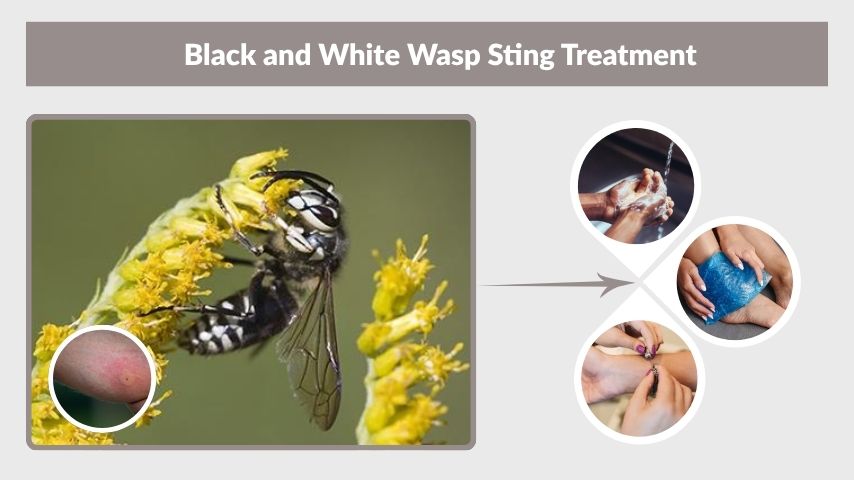
Most black and white wasp stings can be treated at home with basic first aid and careful monitoring. Cleaning the area and reducing swelling early can help prevent infection and discomfort. However, severe allergic reactions or multiple stings may require immediate medical attention.
Immediate First Aid
- Wash the sting area with soap and water
- Apply a cold compress
- Elevate swollen body parts
- Remove tight jewelry near swelling
- Stay calm and monitor symptoms
Cold packs help reduce pain and inflammation during the first few hours after the sting.
Home Remedies
Many people use simple home remedies to ease itching and swelling. Antihistamines and over-the-counter creams may also help reduce irritation and discomfort.
When to Seek Medical Attention
Medical treatment may be necessary if severe symptoms appear. Difficulty breathing, chest pain, dizziness, or swelling around the throat are emergency warning signs that should never be ignored.
Black and White Wasp Sting on Dogs
Dogs are naturally curious and may accidentally disturb wasps while exploring outdoors. Stings can cause pain, swelling, and allergic reactions, especially if the dog is stung around the mouth or nose.
Symptoms in Dogs
- Pawing at the face
- Swelling
- Excessive drooling
- Whining or restlessness
- Difficulty breathing in severe cases
Most dogs recover quickly from mild stings, but serious reactions require veterinary care.
Dangerous Sting Locations
Stings inside the mouth or throat are especially dangerous because swelling may block airflow. Eye stings can also cause severe irritation and possible injury.
What Owners Should Do
Owners should keep the dog calm, apply a cold compress if possible, and monitor breathing closely. Veterinary care is recommended if swelling spreads rapidly or symptoms worsen.
Black and White Mason Wasp Sting
Black and white mason wasps are usually solitary insects that rarely sting humans unless directly threatened. Unlike social hornets, they do not aggressively defend large colonies.
Are Mason Wasps Aggressive?
Mason wasps are generally calm and avoid conflict with humans. Most stings occur only when the insect is trapped, handled, or accidentally crushed.
Mason Wasp Sting Symptoms
- Mild burning pain
- Small local swelling
- Temporary redness
- Minor itching
Symptoms are usually less severe than those caused by aggressive social wasps.
Mason Wasp vs Hornet Sting
Hornet stings are often more painful because hornets defend nests aggressively and may sting multiple times. Mason wasps usually sting only once in self-defense.
Black and White Wasp Bite vs Sting
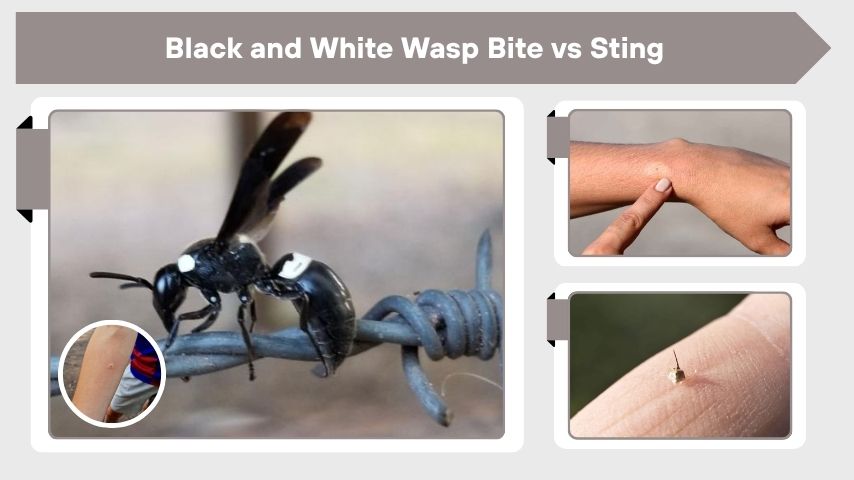
People sometimes confuse wasp bites with stings because wasps may use both their mandibles and stingers during defense. However, the sting is responsible for venom injection and most painful reactions.
Do Wasps Bite?
Wasps use their mandibles mainly for gripping prey, building nests, or defending themselves. Some species may bite while simultaneously stinging.
Difference Between a Bite and Sting
- Stings inject venom
- Bites mainly pinch the skin
- Stings cause stronger swelling
- Venom creates burning pain
The sting is usually far more painful and medically important than the bite itself.
Why People Confuse the Two
When a wasp bites and stings at the same time, it can feel like a single injury. Many people also use the words “bite” and “sting” interchangeably when describing painful insect encounters.
How to Avoid Black and White Wasp Stings
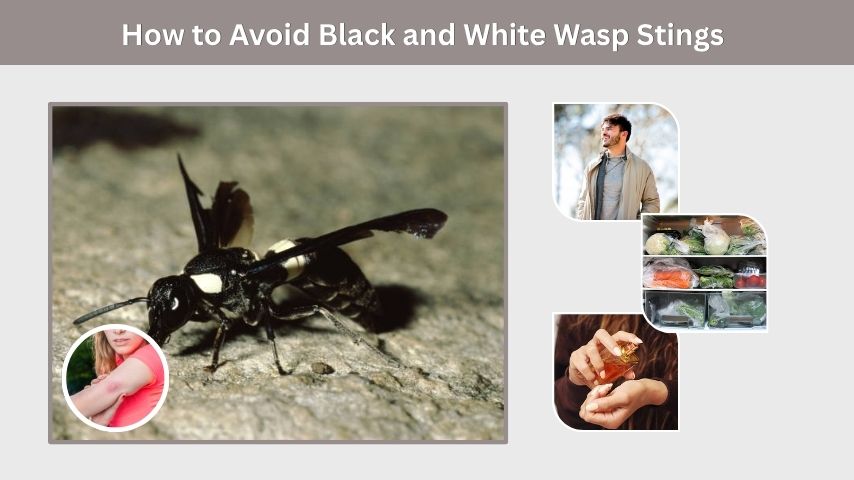
Preventing stings is the best way to avoid painful reactions and allergic emergencies. Wasps usually sting only when they feel threatened or when their nests are disturbed.
Prevention Tips
- Avoid disturbing nests
- Wear protective clothing outdoors
- Keep food and drinks covered
- Move slowly around wasps
- Avoid strong perfumes outdoors
Calm behavior greatly reduces the chance of provoking defensive wasps.
Nest Safety
Removing wasp nests without proper protection can be dangerous. Large nests should be handled by professional pest control services, especially when aggressive species are involved.
Outdoor Safety Around Wasps
Gardening, outdoor eating, and pet activities often increase encounters with wasps. Checking hidden areas before working outside can help prevent accidental nest disturbances.
Interesting Facts About Black and White Wasps
Black and white wasps are important predators that help control insect populations in many ecosystems. Despite their painful stings, they play a useful ecological role by reducing pest insects.
Amazing Facts
- Some species are solitary hunters
- Bald-faced hornets build paper-like nests
- Wasps help control insect populations
- Many species are active during daytime
- Most stings occur during nest defense
- Some wasps can sting repeatedly
FAQs
Do black and white wasps leave a stinger behind?
Most wasps do not leave their stingers behind after stinging. Unlike honey bees, they can usually sting multiple times because their stinger remains attached to their body.
Can black and white wasp stings cause infections?
Yes, scratching the sting area excessively may introduce bacteria and lead to infection. Signs of infection include pus, increasing redness, warmth, and worsening pain after several days.
Are black and white wasps more aggressive in summer?
Yes, many wasp species become more active and defensive during late summer when colonies are larger and food competition increases.
Can repeated wasp stings increase allergy risk?
Repeated exposure to wasp venom may increase the risk of developing allergic reactions in some individuals over time. People with previous severe reactions should carry emergency medication if prescribed.
What attracts black and white wasps to homes?
Sweet foods, garbage, pet food, flowering plants, and sheltered nesting locations commonly attract wasps to homes and gardens.