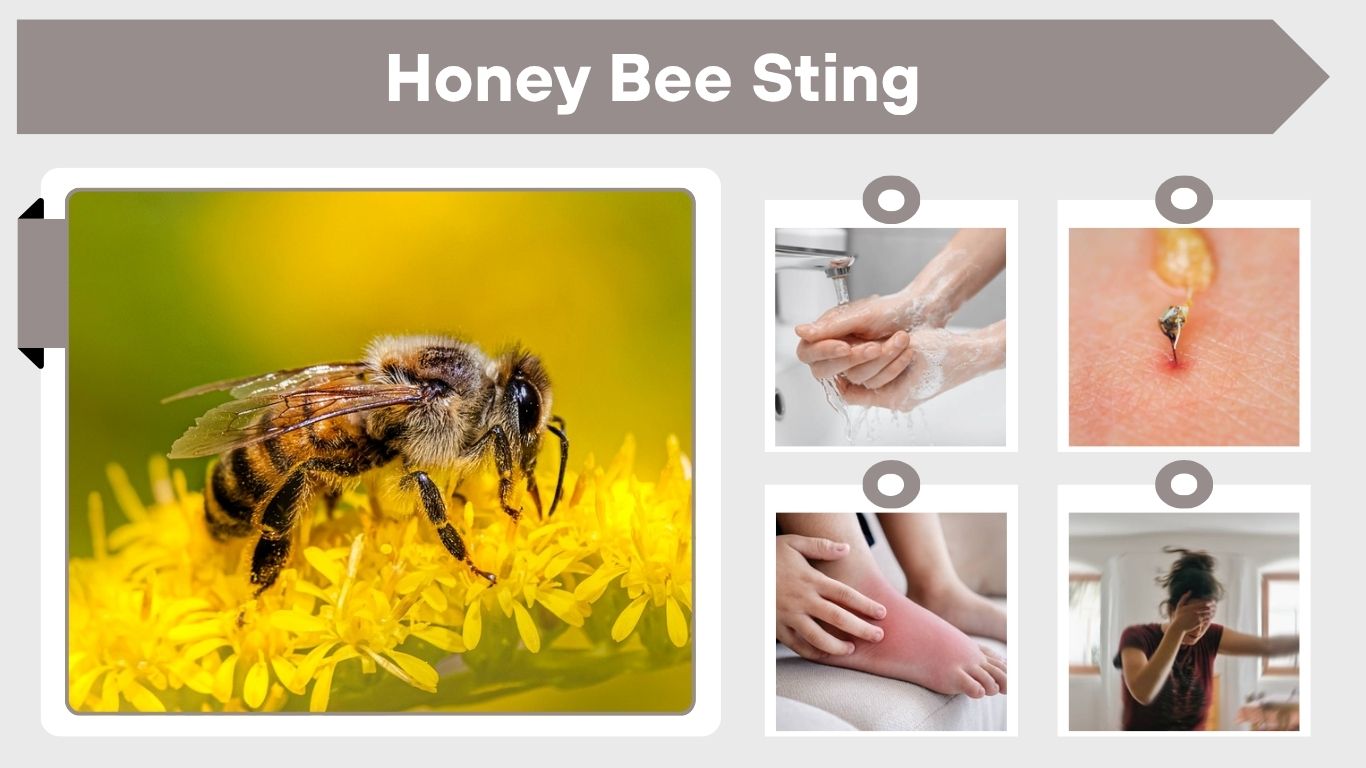
A honey bee sting is a common experience that can cause sudden pain, swelling, and discomfort. While most stings are mild and manageable at home, understanding what happens during a sting and how to respond is important for safety. Honey bees usually sting only when they feel threatened, making their behavior defensive rather than aggressive. This guide explains how honey bee stings work, their symptoms, and what you should do immediately to reduce pain and prevent complications effectively.
What Is a Honey Bee Sting?
A honey bee sting occurs when a worker bee injects venom into the skin using its stinger. This venom causes pain, redness, and swelling as part of the body’s natural reaction. Unlike bites, stings involve a sharp puncture and venom release, which makes them more noticeable and sometimes more uncomfortable.
The stinger is a specialized organ connected to a venom sac. When the bee stings, the stinger often remains in the skin, continuing to release venom for a short time. This is why quick removal is important to reduce the severity of the reaction.
How the Stinger Works
- Barbed structure allows it to lodge in the skin
- Venom sac continues pumping venom briefly
- Stinger detaches from the bee after use
Do Honey Bees Sting?

Honey bees are capable of stinging, but they do not do so without reason. Their primary instinct is to defend their colony and themselves. Most stings happen when a bee feels threatened by sudden movement, pressure, or disturbance near its hive.
Which Honey Bees Can Sting?
- Worker bees (female) can sting and defend the hive
- Queen bees can sting but rarely use it on humans
- Male bees (drones) cannot sting at all
When Are You Likely to Be Stung?
- Disturbing a hive or nest
- Swatting or provoking a bee
- Wearing strong scents or perfumes
- Walking barefoot near flowers or grass
Why Do Honey Bees Sting?
Honey bees sting as a defense mechanism rather than an act of aggression. When they sense danger, they release alarm pheromones that alert other bees, increasing the chance of additional stings if the threat continues.
Their goal is to protect the colony, especially the queen and stored food. This is why bees are more likely to sting near their hive than when they are simply foraging on flowers. In most situations, bees prefer to avoid conflict and will only sting as a last resort.
Do Honey Bees Die After Stinging?

One of the most commonly asked questions is whether honey bees die after they sting. The answer is yes—for worker bees. Their stinger has tiny barbs that cause it to become lodged in human skin. When the bee tries to fly away, the stinger, along with part of its abdomen, is torn away, leading to its death.
This self-sacrificing behavior highlights how important colony defense is in honey bee society. However, not all bees share this trait. Some species can sting multiple times, but worker honey bees cannot.
What Happens After the Sting?
- Stinger remains embedded in the skin
- Venom continues to enter the body briefly
- Bee dies shortly after losing the stinger
Honey Bee Sting Symptoms

A honey bee sting usually causes immediate and noticeable symptoms. The severity depends on individual sensitivity and the location of the sting.
Common Symptoms
- Sharp, burning pain at the sting site
- Redness and swelling
- Itching or irritation
Severe Symptoms (Allergic Reaction)
- Difficulty breathing
- Swelling beyond the sting area
- Dizziness or rapid heartbeat
Severe reactions are rare but can be dangerous and require immediate medical attention.
What Does a Honey Bee Sting Look Like?
A honey bee sting typically appears as a small, raised red bump with a visible puncture point in the center. In many cases, the stinger may still be lodged in the skin, which is a key identifying feature.
Swelling may increase over several hours and sometimes becomes more noticeable the next day. The area can feel warm and tender, and mild itching is common during the healing process.
Honey Bee Sting Treatment

Proper treatment of a honey bee sting can reduce pain, swelling, and the risk of complications. Acting quickly is important, especially to limit how much venom enters the body.
Immediate First Aid
- Remove the stinger as quickly as possible (scrape, don’t squeeze)
- Wash the area with soap and water
- Apply a cold compress to reduce swelling
- Keep the affected area elevated if possible
Medical Treatment Options
- Antihistamines to reduce itching and swelling
- Pain relievers for discomfort
- Epinephrine injection for severe allergic reactions
Honey Bee Sting Home Remedies
Many people prefer simple home remedies to ease symptoms. While these may not replace medical treatment, they can provide relief in mild cases.
Common Home Remedies
- Ice packs to numb pain and reduce swelling
- Baking soda paste to neutralize irritation
- Aloe vera for soothing the skin
- Honey as a traditional remedy for calming inflammation
Does Honey Help Bee Stings?
Honey is often mentioned as a natural remedy for bee stings due to its antibacterial and soothing properties. It may help reduce irritation and keep the skin moisturized, which can support healing. However, it should not be considered a primary treatment, especially in cases of severe reactions. Medical care is always the safest option when symptoms go beyond mild discomfort.
How Long Does a Honey Bee Sting Last?
The duration of a honey bee sting reaction varies depending on the individual and the severity of the sting. In most cases, the sharp pain fades within a few hours, while redness and swelling may last one to two days. Some people may experience mild itching or irritation for several days. If swelling continues to increase or symptoms worsen after 48 hours, it is advisable to seek medical attention.
Typical Recovery Timeline
- Immediate pain: a few minutes to hours
- Swelling: 24–48 hours
- Mild irritation: up to a few days
Prevention: How to Avoid Honey Bee Stings

Preventing stings is often easier than treating them. Understanding bee behavior and taking simple precautions can significantly reduce the risk.
- Avoid sudden movements around bees
- Stay away from hives and nesting areas
- Wear shoes outdoors, especially on grass
- Avoid strong perfumes or scented products
Safe Behavior Around Bees
- Remain calm and move slowly
- Do not swat at bees
- Keep food and drinks covered outdoors
FAQs
Do honey bee stings hurt?
Yes, honey bee stings cause a sharp, burning pain immediately after the sting. The discomfort usually decreases within a few hours, but mild swelling and irritation can last longer depending on the person’s sensitivity.
What should I do right after a honey bee sting?
You should remove the stinger quickly, clean the area, and apply a cold compress. This helps reduce the amount of venom entering the body and minimizes swelling and pain effectively.
Can a honey bee sting more than once?
No, worker honey bees can only sting once because their barbed stinger gets stuck in the skin. However, queen bees can sting multiple times, though they rarely sting humans.
How long does swelling from a honey bee sting last?
Swelling typically lasts between 24 and 48 hours. In some cases, mild swelling may persist for a few days, especially if the sting occurred on sensitive areas like the face or hands.
Are honey bee stings dangerous?
Most honey bee stings are harmless and cause only mild symptoms. However, they can be dangerous for people with allergies, as they may trigger severe reactions that require immediate medical attention.