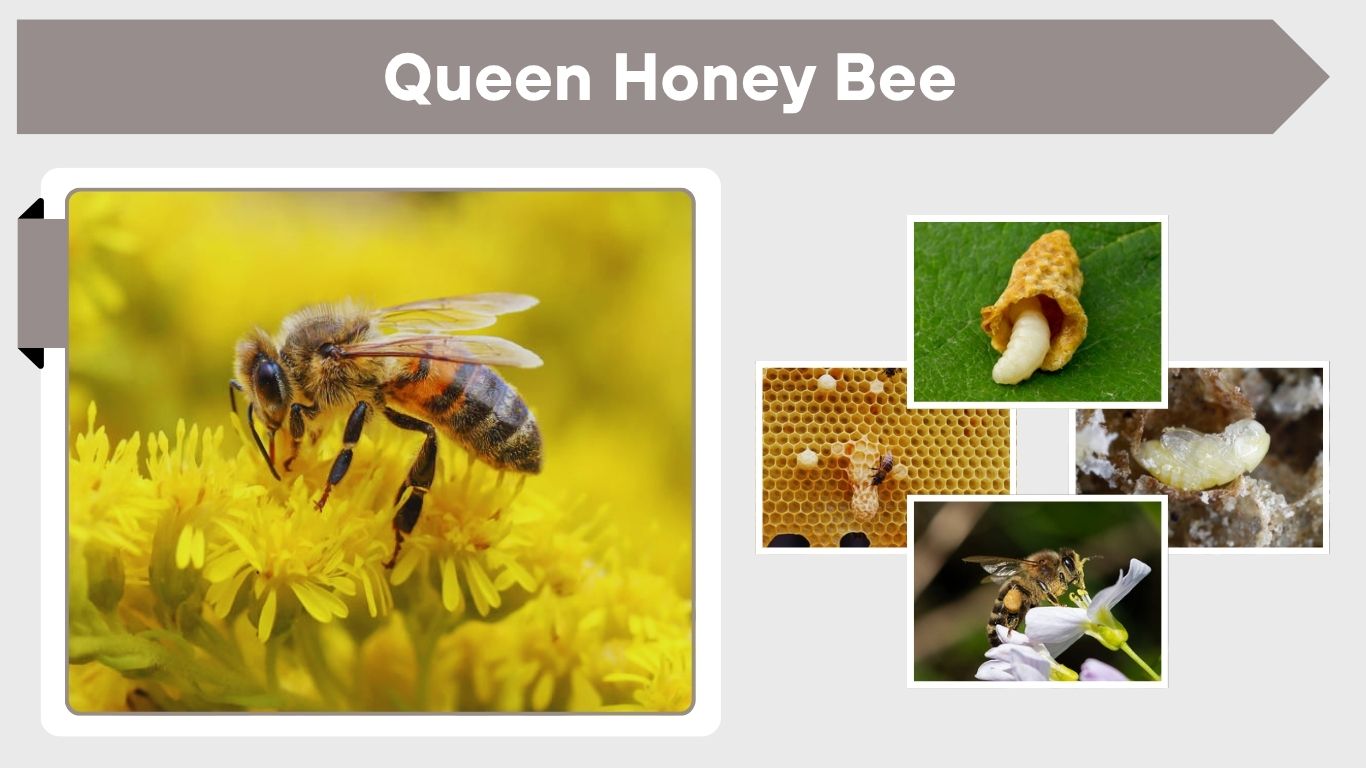
The queen honey bee is the most important member of a honey bee colony, responsible for reproduction and maintaining order within the hive. Unlike worker bees, she does not gather food or defend the hive but focuses entirely on laying eggs and producing chemical signals that guide colony behavior. Her presence ensures stability and growth, making her essential for survival. Understanding her role, appearance, and development provides valuable insight into how honey bee colonies function efficiently.
What Is a Queen Honey Bee?
A queen honey bee is the only fully reproductive female in a colony. She develops differently from worker bees due to being fed royal jelly throughout her early life. This special diet allows her reproductive organs to fully develop, enabling her to lay thousands of eggs.
The queen also produces pheromones that influence the behavior and unity of the colony. These chemical signals help regulate activities such as foraging, hive maintenance, and even prevent other female bees from becoming reproductive.
Key Characteristics of a Queen Bee
- Only egg-laying female in the colony
- Larger body with a long abdomen
- Produces pheromones to control hive behavior
- Central to colony survival and growth
What Does a Queen Honey Bee Look Like?

Identifying the queen honey bee can be challenging, but she has several distinct features that set her apart from other bees. Her body is longer and more slender, especially in the abdomen, which extends beyond her wings. She also moves differently, often surrounded by worker bees that attend to her needs.
Her coloration may vary depending on the subspecies, but she generally appears smoother and less hairy than worker bees. Beekeepers often mark queens with small colored dots to make identification easier within the hive.
Physical Differences from Worker Bees
- Longer abdomen extending past wings
- Less hairy and more streamlined body
- Moves more slowly and deliberately
- Surrounded by a group of worker attendants
Life Cycle of a Queen Honey Bee

The life cycle of a queen honey bee is unique and faster compared to other members of the colony. It begins when the colony decides to raise a new queen, often due to aging, swarming, or loss of the current queen.
The queen starts as an egg laid in a specially constructed queen cell. Once hatched, the larva is fed exclusively on royal jelly, which triggers her development into a fertile queen. After entering the pupal stage, she transforms into an adult and emerges ready to take over colony leadership.
Development Stages
- Egg stage lasting about three days
- Larva fed continuously with royal jelly
- Pupa stage where transformation occurs
- Adult queen emerging from the queen cell
Queen Honey Bee Lifespan
The queen honey bee lives significantly longer than other bees in the colony. While worker bees may only survive for a few weeks during active seasons, the queen can live for several years under the right conditions.
Her lifespan depends on factors such as genetics, colony health, and environmental conditions. As she ages, her egg-laying capacity gradually declines, and the colony may decide to replace her through a process known as supersedure.
Role of the Queen in the Hive
The queen’s role is essential for maintaining the structure and productivity of the colony. She does not perform physical labor like worker bees but instead focuses on reproduction and communication through pheromones.
Egg Laying Function
The queen can lay up to thousands of eggs per day during peak seasons. This ensures a steady supply of worker bees to maintain and grow the colony.
Colony Regulation
Her pheromones help maintain order within the hive, signaling workers to perform their tasks efficiently. Without these signals, the colony can become disorganized and unstable.
Do Queen Honey Bees Sting?

Queen honey bees do have a stinger, but their behavior is very different from worker bees. While worker bees use their stinger to defend the hive, queens mainly use theirs to fight rival queens inside the colony. It is extremely rare for a queen to sting a human, as she is usually protected and stays deep inside the hive.
Stinging Ability
- Queen bees can sting multiple times
- Their stinger is smooth, not barbed
- Mainly used against other queens
Why They Rarely Sting Humans
- They do not leave the hive often
- Worker bees protect them
- Their role is reproduction, not defense
Queen Honey Bee vs Worker Bee

The queen and worker bees have very different roles, appearances, and lifespans. These differences are essential for maintaining a balanced and productive colony.
Key Differences
- Queen lays eggs; workers perform all labor
- Queen is larger with a longer abdomen
- Workers live weeks; queen lives years
- Workers defend the hive; queen focuses on reproduction
Behavioral Differences
- Queen stays mostly inside the hive
- Workers forage and gather food
- Workers communicate through dances
- Queen communicates through pheromones
Mating and Reproduction of the Queen
The queen honey bee’s reproductive process is vital for the colony’s survival. Shortly after emerging as an adult, she takes a mating flight where she mates with multiple drones in the air. The sperm collected during this flight is stored in her body and used throughout her lifetime to fertilize eggs.
After mating, the queen returns to the hive and begins laying eggs. She can control whether an egg is fertilized or not, which determines whether it becomes a worker bee or a drone. This ability allows her to maintain the colony’s population balance efficiently.
Raising and Buying Queen Honey Bees
Beekeepers often raise or purchase queen bees to improve colony productivity or replace aging queens. Selecting a healthy and productive queen is crucial for successful beekeeping.
Raising Queen Bees
- Natural queen rearing by the colony
- Artificial grafting techniques
- Controlled breeding for better traits
Buying a Queen Bee
- Available from beekeeping suppliers
- Choice of subspecies (Italian, Carniolan)
- Cost depends on quality and genetics
- Must be introduced carefully into a hive
Types of Queen Honey Bees
Different types of queen honey bees are bred for specific traits such as temperament, productivity, and climate adaptability.
- Italian queen bees known for high honey production
- Carniolan queen bees valued for calm behavior
- Africanized queens more defensive and aggressive
- Black honey bee queens adapted to cooler climates
FAQs
How long does a queen honey bee live?
A queen honey bee typically lives between 2 to 5 years, much longer than worker bees. Her lifespan depends on genetics, colony health, and environmental conditions, though her egg-laying ability may decline with age.
What does a queen honey bee look like?
The queen is larger than worker bees, with a long, slender abdomen that extends beyond her wings. She also appears less hairy and moves more slowly, often surrounded by worker bees.
Can a queen honey bee sting multiple times?
Yes, unlike worker bees, the queen has a smooth stinger and can sting multiple times. However, she rarely stings humans and mainly uses her stinger to fight rival queens.
Do all honey bee colonies have a queen?
Yes, a healthy colony typically has one queen responsible for reproduction. Without a queen, the colony cannot sustain its population and may eventually collapse.
Where can you buy a queen honey bee?
Queen honey bees can be purchased from local beekeepers, apiaries, or online suppliers. It is important to choose a healthy queen with good genetics to ensure colony success.