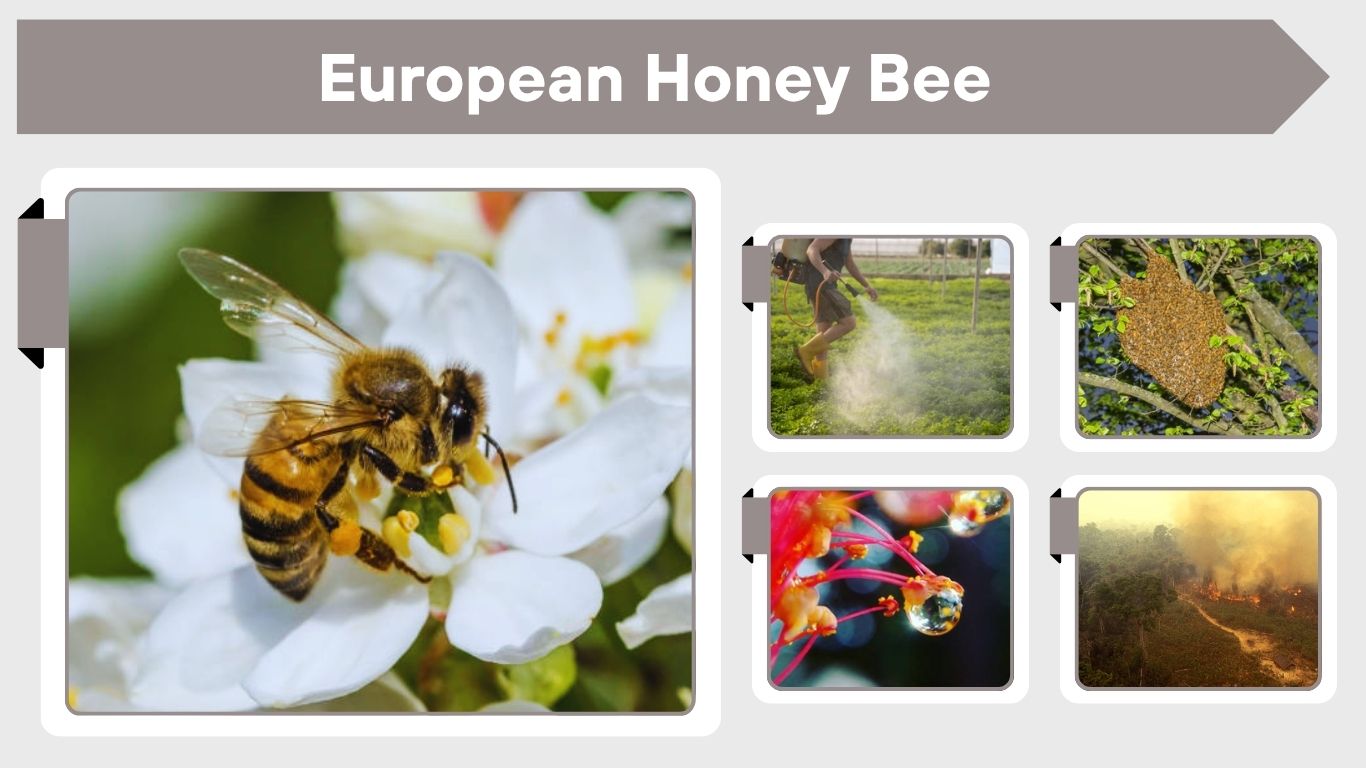
The European honey bee (Apis mellifera) is one of the most recognized and valuable insects in the world. Known for its role in pollination and honey production, this species supports both natural ecosystems and global agriculture. Found across many regions due to human introduction, it thrives in diverse environments. Understanding its biology, behavior, and structure helps explain why it is essential for food security, biodiversity, and sustainable farming practices worldwide.
What Is the European Honey Bee?
The European honey bee is a highly social insect species belonging to the genus Apis. Originally native to Europe, Africa, and parts of the Middle East, it has been widely introduced across continents for beekeeping and crop pollination. Today, it is the most commonly managed bee species globally due to its adaptability and productivity.
These bees live in structured colonies and are known for producing honey and beeswax. Over time, different subspecies have developed, each with slightly different traits such as temperament, climate tolerance, and honey yield. This adaptability has made them a preferred choice for both commercial and small-scale beekeeping.
European Honey Bees Physical Characteristics

The European honey bee has a well-adapted body structure that allows it to efficiently collect food, communicate, and survive in different environments. Its physical features are designed for flight, pollen collection, and colony defense, making it one of the most effective pollinators in nature.
- Body divided into head, thorax, and abdomen
- Covered with fine hairs for trapping pollen
- Two pairs of transparent wings for flight
- Large compound eyes for detecting movement
- Antennae used for sensing smell and touch
- Stinger for defense against threats
Life Cycle of the European Honey Bee
The life cycle of the European honey bee consists of four main stages, each critical to the development of the colony. The queen lays eggs in hexagonal wax cells, and these eggs hatch into larvae within a few days. Worker bees feed the larvae until they develop into pupae, where transformation into adult bees occurs.
Once fully developed, the adult bee emerges and begins its role in the colony. The duration of each stage varies depending on the type of bee. Queens develop faster than workers, while drones take slightly longer. Lifespan also differs significantly, with queens living for years and workers surviving only a few weeks during active seasons.
Social Structure and Colony Organization
European honey bees live in highly organized colonies that function almost like a single organism. Each member contributes to the survival and efficiency of the hive, creating a balanced and cooperative system.
Queen Bee Role
The queen bee is central to the colony’s survival. Her primary function is reproduction, and she can lay thousands of eggs per day under optimal conditions. She also releases pheromones that regulate the behavior and unity of the colony, ensuring smooth coordination among members.
Worker Bee Responsibilities
Worker bees perform a wide range of duties throughout their lives. These include cleaning the hive, feeding larvae, producing wax, and foraging for nectar and pollen. As they age, their roles shift, showing a highly efficient division of labor within the colony.
Drone Bee Function
Drones exist mainly for mating purposes. They do not participate in foraging or hive maintenance. After mating with a queen, drones typically die, and those that do not mate are often expelled from the hive during times of resource scarcity.
Behavior and Communication
Communication among European honey bees is highly advanced and essential for colony success. One of the most fascinating behaviors is the waggle dance, which allows bees to share precise information about the direction and distance of food sources.
Bees also use pheromones to signal danger, coordinate activities, and maintain social order. Their foraging behavior is influenced by environmental conditions, availability of flowers, and seasonal changes. This complex communication system ensures that the colony operates efficiently and adapts quickly to its surroundings.
European Honey Bees Habitat and Nesting Habits

European honey bees are highly adaptable and can thrive in a wide range of environments, from forests to agricultural landscapes. They typically prefer sheltered locations that provide protection from weather and predators.
- Natural nests found in tree cavities and rock crevices
- Artificial hives used in beekeeping practices
- Preference for areas rich in flowering plants
- Seasonal adjustments such as clustering in winter
Environmental Adaptation
These bees adjust their behavior based on climate and seasonal changes. In colder months, they cluster together to conserve heat, while in warmer seasons, they expand their activity and population. This adaptability allows them to survive in various regions across the world.
European Honey Bees Diet and Honey Production

European honey bees rely on a simple but highly efficient diet that supports both individual survival and colony growth. Their feeding habits are closely tied to flowering plants, making them essential pollinators in many ecosystems.
What Do They Eat?
- Nectar as the main energy source
- Pollen for protein and nutrients
- Water for cooling and digestion
- Propolis for hive protection
How Honey Is Made
- Bees collect nectar from flowers
- Enzymes break down complex sugars
- Nectar is stored in honeycomb cells
- Water evaporates to thicken into honey
Importance of European Honey Bees
The European honey bee plays a critical role in maintaining ecological balance and supporting human food systems. Its pollination activities directly impact the production of fruits, vegetables, and seeds, making it indispensable in agriculture.
Key Contributions
- Pollination of major crops worldwide
- Increased agricultural yield and quality
- Production of honey, beeswax, and propolis
- Support for biodiversity and plant reproduction
Threats and Challenges

Despite their importance, European honey bees face multiple threats that are affecting their populations globally. Environmental changes, human activities, and biological factors all contribute to their decline.
Pesticide exposure is one of the most serious issues, as chemicals can weaken bees or disrupt their navigation systems. Habitat loss due to urbanization reduces the availability of flowering plants. Climate change also alters blooming cycles, making food sources less predictable. Additionally, parasites like Varroa mites and various diseases weaken colonies, sometimes leading to large-scale losses.
Major Threat Factors
- Chemical pesticides and pollution
- Loss of natural habitats
- Climate and seasonal changes
- Parasites and diseases
Beekeeping and Human Interaction
Beekeeping has been practiced for centuries and continues to be an important activity for both commercial and small-scale farmers. It not only provides valuable products but also supports crop pollination.
Basics of Beekeeping
- Setting up and maintaining hives
- Using protective equipment
- Monitoring colony health
- Managing seasonal changes
Benefits of Beekeeping
- Sustainable honey production
- Improved crop pollination
- Additional income source
- Contribution to environmental conservation
European vs Other Honey Bees

European honey bees are often compared with other species, especially Africanized honey bees, due to differences in behavior and adaptability. European bees are generally calmer and easier to manage, which makes them ideal for beekeeping.
They also show strong honey production capabilities and adapt well to different climates. In contrast, some other bee species may be more aggressive or less suitable for managed hives. These differences influence how they are used in agriculture and their interaction with humans.
FAQs
What is the scientific name of the European honey bee?
The scientific name is Apis mellifera. It is the most widely distributed honey bee species and is commonly used in beekeeping due to its adaptability, productivity, and relatively calm nature compared to other bee species.
Why are European honey bees important for humans?
They are essential for pollinating crops and plants, which directly supports global food production. Without them, many fruits, vegetables, and nuts would be harder to produce, leading to reduced food availability and higher costs.
How do European honey bees make honey?
They collect nectar from flowers and store it in their hive. Through enzyme activity and evaporation, the nectar thickens and transforms into honey, which serves as a long-term food source for the colony.
What threats do European honey bees face today?
They face threats such as pesticide exposure, habitat loss, climate change, and parasites like Varroa mites. These factors weaken colonies and contribute to declining bee populations in many regions.
Are European honey bees aggressive?
They are generally not aggressive and only sting when they feel threatened. Compared to some other species, they are calmer and easier to manage, which is why they are widely used in beekeeping.