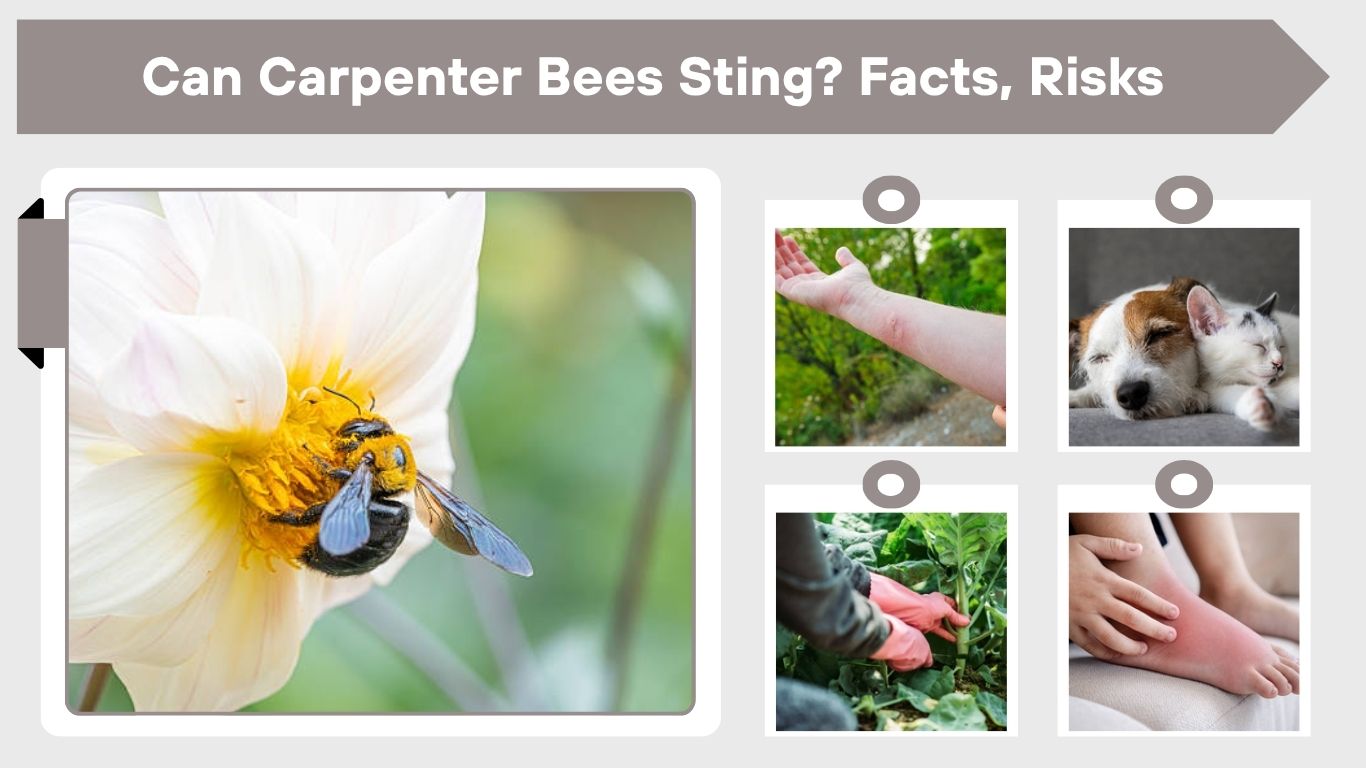
Carpenter bees are often misunderstood because of their large size and aggressive hovering behavior. Many people immediately assume they are dangerous and capable of stinging at any moment. In reality, carpenter bees are far less threatening than they appear. While they can sting under certain conditions, the risk is relatively low for most people. Understanding their behavior, differences between males and females, and when they might sting can help you stay safe and avoid unnecessary fear around these common insects.
Do Carpenter Bees Sting Humans?
Carpenter bees can sting, but not all of them pose a risk. The key factor is understanding which ones are capable of stinging and under what conditions.
Can Carpenter Bees Sting You?
- Only female carpenter bees can sting
- Stings usually happen when they feel threatened
- Most human encounters do not lead to stings
Are Carpenter Bee Stings Common?
- Stings are rare compared to other bees
- They do not attack unless provoked
- Hovering behavior is often mistaken for aggression
Male vs Female Carpenter Bees: Which One Stings?

Knowing the difference between male and female carpenter bees is essential for understanding their behavior and risk level.
Can Male Carpenter Bees Sting?
- Males do not have stingers
- They hover aggressively near people
- Their behavior is meant to scare, not harm
Can Female Carpenter Bees Sting?
- Females have functional stingers
- They sting only in self-defense
- Usually protect their nesting tunnels
Do Carpenter Bees Bite or Sting?

Carpenter bees do not bite humans. Although they have strong jaws, these are used strictly for drilling into wood to create nesting tunnels. Their only method of defense is stinging, and even that is rarely used unless the bee feels directly threatened or handled.
How Many Times Can a Carpenter Bee Sting?
Unlike some other bee species, carpenter bees do not lose their stinger after attacking. This means they are physically capable of stinging more than once. However, this does not mean they will repeatedly sting people. In most cases, even female carpenter bees prefer to avoid conflict and will only sting as a last resort. Their behavior is defensive rather than aggressive, making multiple stings highly unlikely in normal situations.
Are Carpenter Bee Stings Dangerous?

For most people, carpenter bee stings are not dangerous. They typically cause mild discomfort similar to a wasp sting, including slight pain, redness, and swelling around the affected area.
Common Symptoms of a Sting
- Mild to moderate pain
- Redness and swelling
- Temporary irritation or itching
When a Sting Becomes Serious
- Signs of allergic reaction (difficulty breathing)
- Severe swelling beyond the sting area
- Dizziness or nausea
Who Should Be More Careful
- People with known bee sting allergies
- Children and elderly individuals
- Anyone with a history of severe reactions
Why Carpenter Bees Seem Aggressive
Carpenter bees often appear more dangerous than they really are, mainly due to the behavior of male bees. These males tend to hover closely around humans, especially near their faces, creating a sense of threat. However, this is simply a territorial display meant to scare away intruders. Since male carpenter bees cannot sting, this behavior is harmless. Females, on the other hand, are usually less visible and more focused on building and protecting their nests, which is why stings are uncommon.
Can Carpenter Bees Sting Pets Like Dogs and Cats?

Carpenter bees can sting animals, but the risk is generally low. Pets usually get stung only if they try to catch or disturb the bees. Since many dogs and cats are curious by nature, they may provoke a defensive reaction without realizing it.
What Happens If a Pet Gets Stung
- Mild pain and temporary discomfort
- Swelling around the sting area
- Occasional whining or pawing at the spot
Signs of a Serious Reaction
- Difficulty breathing
- Excessive swelling or hives
- Lethargy or unusual behavior
Do All Types of Carpenter Bees Sting?
Not all carpenter bees behave differently when it comes to stinging. Across different regions and species, the pattern remains mostly the same.
Eastern and Black Carpenter Bees
- Female bees can sting
- Male bees cannot sting
- Behavior is similar across species
Do Carpenter Bees Have a Queen?
- Carpenter bees do not live in large colonies
- There is no queen like in honeybee hives
- Each female builds and manages her own nest
How to Avoid Getting Stung by Carpenter Bees

Preventing a sting is simple once you understand their behavior. Most stings happen only when bees feel threatened or cornered.
Simple Safety Tips
- Avoid touching or blocking nesting holes
- Stay calm when bees hover nearby
- Do not swat or chase them
Working Safely Around Wood Structures
- Wear gloves and long sleeves
- Inspect wood before handling
- Work during early morning or evening
Common Myths About Carpenter Bees
Carpenter bees are often misunderstood, which leads to unnecessary fear. Many people assume they are highly aggressive or dangerous, but most of these beliefs are not accurate. While females can sting, they rarely do unless provoked. Male bees may seem aggressive, but they cannot sting at all. Another common myth is that carpenter bees behave like honeybees with a queen and colony, which is incorrect since they are mostly solitary insects.
When Should You Be Concerned About Carpenter Bees?
Situations That Require Attention
- Frequent bee activity near your home
- Visible nesting holes in wood
- Repeated yearly presence
When to Take Action
- If bees are nesting inside walls
- If wood damage becomes noticeable
- If someone in your home has allergies
FAQs
Can a carpenter bee sting you?
Yes, but only female carpenter bees can sting. They usually sting only when they feel threatened or are handled directly, which makes stings uncommon during normal outdoor activities.
Can male carpenter bees sting?
No, male carpenter bees cannot sting because they do not have stingers. Their aggressive hovering behavior is simply a way to protect territory and scare away intruders.
How many times can a carpenter bee sting?
Female carpenter bees can sting multiple times because they do not lose their stinger. However, they rarely sting more than once since they prefer to avoid confrontation.
Are carpenter bee stings dangerous?
Most stings are mild and cause minor pain, redness, and swelling. Serious reactions are rare but can occur in people with allergies, requiring immediate medical attention.
Can carpenter bees sting dogs or cats?
Yes, female carpenter bees can sting pets if provoked. Most stings are mild, but pet owners should watch for signs of allergic reactions or unusual behavior after a sting.