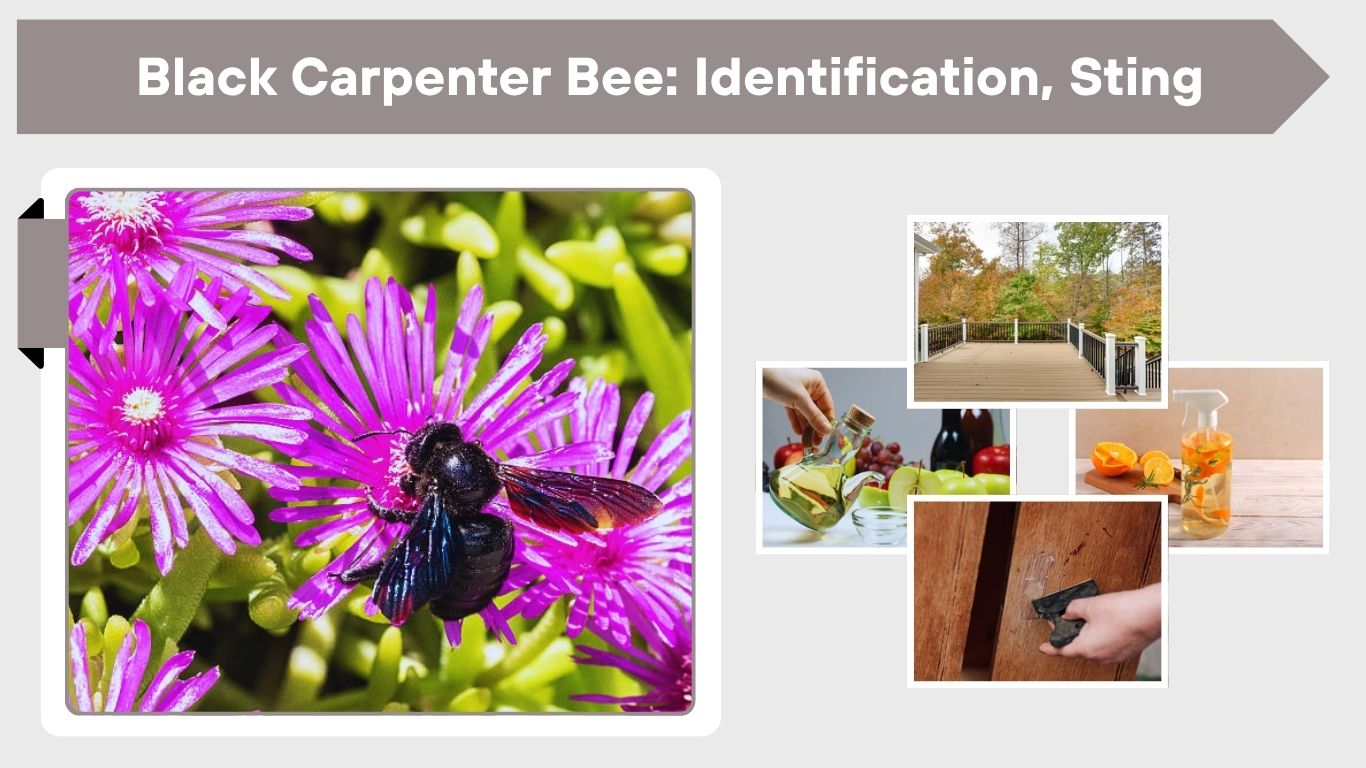
Black carpenter bees are often mistaken for bumblebees due to their large size and buzzing flight. These insects are commonly seen hovering around wooden structures, which can make homeowners nervous. While they may look intimidating, their behavior is often misunderstood. Knowing how to identify black carpenter bees, understanding their habits, and learning whether they pose a real threat can help you respond appropriately. This guide explains their appearance, nesting behavior, and risks in a clear and practical way.
What Is a Black Carpenter Bee?
Black carpenter bees belong to the Xylocopa genus and are known for their large size and smooth, shiny appearance. They are commonly referred to as “big black bees” because of their dark coloring and noticeable presence.
Basic Characteristics
- Large body size, often between 1 to 2 inches
- Shiny, hairless black abdomen
- Strong wings with a loud buzzing sound
Why They Look Different From Other Bees
- Lack of fuzzy hair compared to bumblebees
- More reflective, glossy body surface
- Sometimes appear blue-black or violet in sunlight
How to Identify a Black Carpenter Bee

Proper identification is important because many people confuse carpenter bees with other insects. Their unique features make them easier to recognize once you know what to look for.
Key Identification Features
- Smooth, shiny abdomen instead of a fuzzy one
- Larger and more elongated body shape
- Fast, direct flight patterns
Color Variations
- Fully black carpenter bees
- Black with slight yellow or white markings
- Dark metallic shades depending on lighting
Black Carpenter Bee vs Bumblebee

Black carpenter bees are frequently confused with bumblebees, but their differences are quite noticeable once you understand them. Bumblebees have a soft, fuzzy appearance and tend to look rounder, while carpenter bees appear sleeker and shinier. Bumblebees usually nest in the ground, whereas carpenter bees prefer drilling into wood. This distinction is important because it explains why carpenter bees are often found around decks, fences, and wooden siding rather than gardens or soil.
Where Do Black Carpenter Bees Live?

Black carpenter bees are found in many parts of the world and prefer environments that provide easy access to wood for nesting. Their distribution varies depending on species, but their behavior remains similar across regions.
Common Locations
- North America, including states like California and Texas
- Parts of Europe such as the UK and France
- Regions in Asia and Africa
Preferred Habitats
- Wooden decks, porches, and siding
- Dead trees and exposed timber
- Warm, dry, and sheltered environments
Black Carpenter Bee Nesting Behavior
Black carpenter bees are known for their ability to drill into wood and create tunnels for reproduction. Unlike honeybees, they do not form large colonies or hives. Instead, each female builds her own nest, lays eggs, and provides food for the larvae inside these tunnels. Over time, they may return to the same nesting spots, expanding the tunnels and causing more noticeable damage. This behavior is why they are often considered pests around homes with exposed wood.
Male vs Female Black Carpenter Bees
Understanding the difference between male and female carpenter bees helps explain their behavior and risk level.
Male Carpenter Bees
- Cannot sting
- Hover aggressively near people
- Act territorial but harmless
Female Carpenter Bees
- Capable of stinging
- Responsible for drilling into wood
- Usually less visible than males
Do Black Carpenter Bees Sting?

Many people worry about being stung when they see these large bees flying nearby. The reality is less alarming than it seems.
Are They Dangerous to Humans?
- Only females can sting
- Stings are rare and usually defensive
- Most encounters do not result in stings
Are They Aggressive?
- Males appear aggressive but cannot sting
- Females avoid confrontation unless threatened
- Hovering behavior is often misunderstood
Are Black Carpenter Bees Poisonous?
Black carpenter bees are not poisonous, and their presence does not pose a serious health risk for most people. While females can sting, their venom is mild and used only for defense. In typical situations, a sting may cause minor pain, redness, or swelling, similar to other common bee stings. Severe reactions are rare and usually limited to individuals with specific allergies.
Why Black Carpenter Bees Are Attracted to Your Home
Black carpenter bees are drawn to specific conditions that make nesting easier and safer. Homes with exposed or untreated wood provide the perfect environment for them to drill tunnels and lay eggs. Over time, if these conditions are not addressed, bees may return year after year to the same spots.
Main Attraction Factors
- Untreated or soft wood surfaces
- Existing holes from previous nesting
- Warm, dry, and sheltered areas
Common Problem Areas
- Wooden decks and railings
- Roof eaves and soffits
- Fences, siding, and outdoor furniture
How to Get Rid of Black Carpenter Bees

Removing black carpenter bees requires a combination of immediate action and long-term prevention. Simple DIY solutions can help reduce their presence, while proper maintenance keeps them from coming back.
Natural and DIY Methods
- Use citrus sprays or essential oils to repel bees
- Apply vinegar solutions as a mild deterrent
- Install carpenter bee traps near active areas
Long-Term Prevention
- Paint or seal all exposed wood surfaces
- Fill existing holes with wood filler or caulk
- Replace severely damaged wood if necessary
Black Carpenter Bee Damage and Holes
Carpenter bees can cause noticeable damage over time, especially if infestations are ignored. Their drilling creates tunnels that weaken wooden structures and may attract other pests.
The damage usually starts with small, round entry holes that look clean and smooth. As bees continue to use the same tunnels, the internal structure of the wood becomes more fragile. In some cases, woodpeckers may be attracted to these areas, increasing the damage further. Addressing the problem early helps prevent costly repairs and long-term structural issues.
How to Prevent Black Carpenter Bees
Protecting Wooden Surfaces
- Apply paint, varnish, or sealant regularly
- Use pressure-treated or hardwood materials
- Repair cracks and exposed areas quickly
Routine Maintenance Tips
- Inspect wood structures each spring
- Clean and monitor previously infested areas
- Reapply protective coatings when needed
When Should You Be Concerned About Black Carpenter Bees?
While black carpenter bees are not highly dangerous, there are situations where their presence should not be ignored. Repeated nesting can lead to structural damage, especially in areas like decks or roofing components. If you notice increasing numbers of bees or extensive wood damage, it may be time to take stronger action or seek professional help. Being proactive ensures that a minor issue does not turn into a larger, more expensive problem.
FAQs
Do black carpenter bees sting?
Yes, female black carpenter bees can sting, but they rarely do unless provoked. Male bees cannot sting at all, even though they may appear aggressive when hovering nearby.
Are black carpenter bees dangerous?
They are not considered dangerous to most people. Their stings are usually mild, and they tend to avoid human interaction unless they feel threatened.
How do you tell if a bee is a carpenter bee?
You can identify carpenter bees by their large size and shiny, hairless abdomen. Unlike bumblebees, they are less fuzzy and often seen around wooden structures.
Where do black carpenter bees live?
They live in wooden structures, dead trees, and outdoor wood surfaces. They prefer warm, dry environments where they can easily drill and build nests.
How do you get rid of black carpenter bees?
You can remove them using natural repellents, traps, and by sealing wood surfaces. Long-term prevention involves painting, maintaining wood, and closing existing nesting holes.