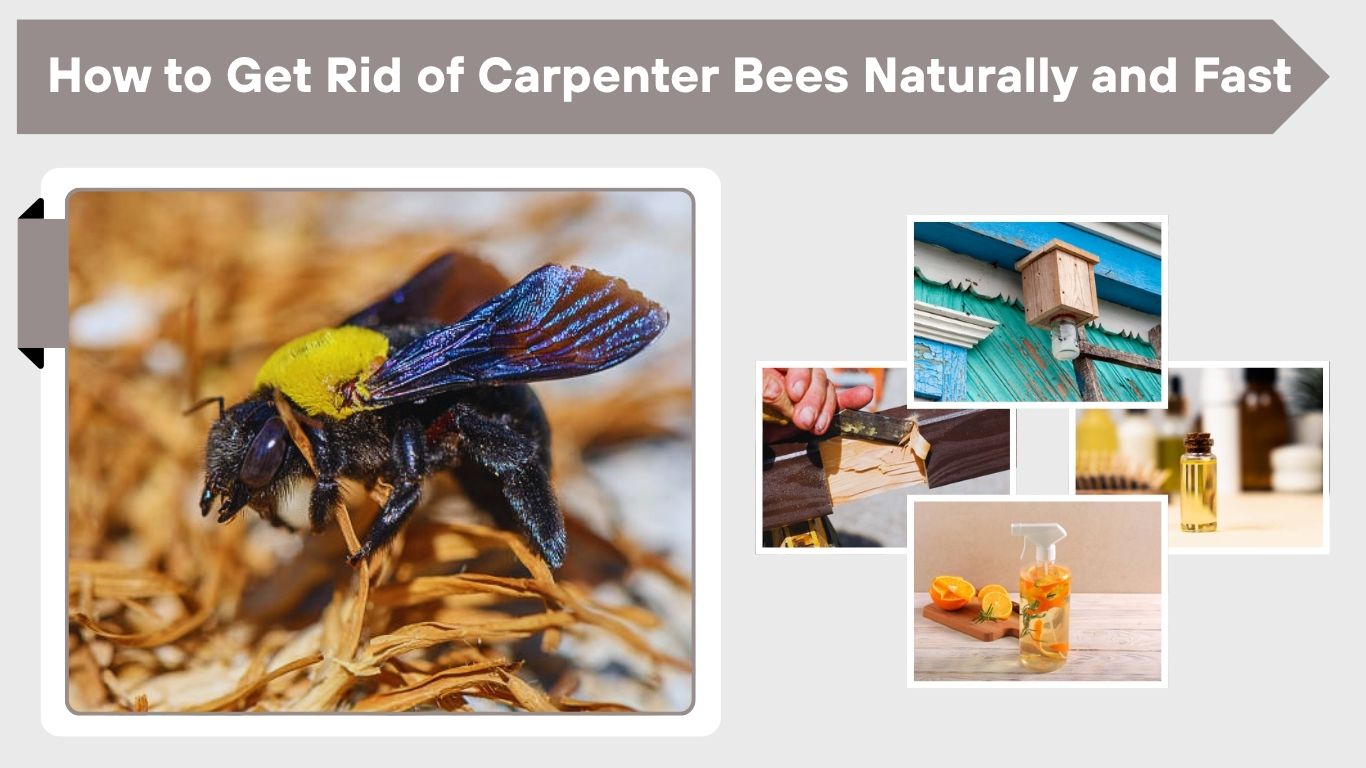
Carpenter bees may look harmless, but they can quietly damage wooden structures around your home. From decks and porches to siding and eaves, these bees drill perfectly round holes to create nests, which can lead to long-term structural issues if ignored. The good news is that you can control and prevent carpenter bees using a mix of natural remedies, targeted treatments, and smart prevention strategies. This guide covers practical, safe, and effective ways to deal with them—whether you want a quick fix or a long-term solution.
What Are Carpenter Bees and Why Do They Invade?
Carpenter bees are large, black-and-yellow bees often mistaken for bumblebees. Unlike bumblebees, they have shiny, hairless abdomens and prefer to nest in wood rather than underground.
They invade homes mainly because exposed, untreated wood provides an ideal place to lay eggs. Female carpenter bees drill tunnels into wood surfaces, while males hover nearby to guard the area. Although males may seem aggressive, they do not sting, while females rarely sting unless provoked.
Over time, repeated nesting in the same spots can weaken wood and attract other pests like woodpeckers. This makes early action important before the damage spreads.
Signs of a Carpenter Bee Infestation

Recognizing the problem early helps you take action before it gets worse.
- Perfectly round holes in wooden surfaces
- Small piles of sawdust (frass) below the holes
- Bees hovering near decks, porches, or siding
- Faint buzzing sounds coming from inside wood
How to Get Rid of Carpenter Bees Naturally

If you prefer eco-friendly solutions, natural methods can help repel carpenter bees without harming them. These work best for small infestations or as preventive measures.
Natural Repellents That Work
- Citrus spray made from boiled lemon or orange peels
- Essential oils like tea tree, lavender, or eucalyptus
- Vinegar mixed with water as a mild deterrent
Limitations of Natural Methods
Natural remedies are safer but not always permanent. They usually require repeated application and may not fully eliminate established nests. For best results, combine them with sealing and maintenance.
How to Get Rid of Carpenter Bees Fast
When you need quick results, especially during peak activity, faster methods are necessary. Acting at the right time—usually in the evening when bees are inside their tunnels—makes treatments more effective.
- Apply insecticide dust or spray directly into the holes
- Use carpenter bee traps to reduce active populations
- Treat multiple nesting areas at once
- Repeat treatment if activity continues
How to Get Rid of Carpenter Bees in Wood

Since carpenter bees nest inside wood, treating the affected areas is essential for long-term control.
Treating Active Nesting Holes
Start by applying a suitable treatment inside each hole. This could be a natural spray or a targeted dust product. Timing matters—apply it when bees are less active to ensure better results.
Repairing and Sealing the Wood
Once the activity stops, seal the holes properly. Use wood filler or dowels to close the tunnels, then sand and paint the surface. This prevents bees from returning to the same spot and protects the wood from further damage.
How to Get Rid of Carpenter Bees Without Killing Them

Many homeowners prefer humane solutions that remove bees without harming them. This approach focuses on deterrence and relocation rather than extermination.
Humane Removal Methods
Using traps designed to capture and release carpenter bees is one of the most effective non-lethal options. These traps encourage bees to enter but make it difficult for them to escape, allowing you to relocate them safely away from your home.
Preventing Their Return
After removal, sealing all entry points is crucial. Leaving holes open invites new bees to reuse the same tunnels. Painting or staining wood surfaces also makes them less attractive for nesting.
How to Get Rid of Carpenter Bees on Deck, Porch, and Siding
Carpenter bees often target outdoor wooden structures because they are exposed and usually untreated. Decks, porches, and siding provide ideal nesting spots, especially in warm seasons when bee activity increases.
Deck and Porch Treatment
Focus on railings, undersides, and corners where bees commonly drill holes. Treat any visible holes first, then apply a protective finish such as paint or sealant. Regular inspection during spring helps catch new activity early before it spreads.
Siding, Roof, and Eaves
Check soffits, fascia boards, and roof edges carefully. These areas are often overlooked but frequently attacked. Sealing cracks and repainting surfaces creates a barrier that discourages bees from nesting again.
How to Get Rid of Carpenter Bee Holes
Properly dealing with the holes is just as important as removing the bees. Leaving them open invites reinfestation.
- Clean out dust and debris from each hole
- Apply treatment inside the tunnel
- Fill the hole with wood filler or caulk
- Sand and repaint to match the surface
DIY Carpenter Bee Control Methods
If you prefer handling the problem yourself, several simple and cost-effective methods can help control carpenter bees.
Homemade Solutions
- Create traps using jars or bottles with wood blocks
- Use citrus oil spray regularly on exposed wood
- Apply vinegar and water mixture as a deterrent
Simple Preventive Tricks
- Hang decoy nests to confuse bees
- Place traps near high-activity areas
- Keep wooden surfaces polished or painted
WD-40, Vinegar, and Home Remedies: Do They Work?
Many home remedies are suggested online, but not all are equally effective. WD-40 may repel carpenter bees temporarily, but it does not solve the root problem or prevent them from returning. Vinegar and essential oils can help deter bees, especially when used consistently, but they are not strong enough to eliminate established infestations on their own. The most reliable approach is combining these remedies with proper sealing, repairs, and long-term prevention techniques.
How to Get Rid of Carpenter Bees Permanently

Seal and Protect All Wood
- Paint or varnish exposed wood surfaces
- Use pressure-treated or hardwood materials
- Repair damaged wood immediately
Eliminate Nesting Opportunities
- Fill old holes and cracks
- Replace heavily infested wood
- Block access to hidden spaces
Maintain Your Home Regularly
- Inspect wood structures each spring
- Reapply protective coatings as needed
- Monitor for early signs of activity
When to Call a Professional
If the infestation becomes large or continues despite your efforts, professional pest control may be necessary. Experts can safely treat hidden nests inside walls or attics and prevent further structural damage. This is especially important if you notice repeated yearly infestations or extensive wood deterioration.
FAQs
How do you get rid of carpenter bees permanently?
To remove carpenter bees permanently, you need to combine treatment with prevention. Eliminate active bees, seal all holes, and protect wood surfaces with paint or varnish. Regular maintenance and inspection ensure they don’t return to the same nesting areas year after year.
Are carpenter bees dangerous to humans?
Carpenter bees are generally not aggressive. Males may hover and appear threatening but cannot sting. Females can sting but rarely do unless directly handled or provoked, making them less dangerous compared to many other stinging insects.
What is the best natural repellent for carpenter bees?
Citrus sprays and essential oils like lavender or eucalyptus are among the most effective natural repellents. These scents discourage bees from nesting in treated areas, but they require frequent application to maintain effectiveness.
How quickly can carpenter bees damage wood?
Damage can begin as soon as bees start drilling holes for nesting. While a single bee causes minimal harm, repeated nesting over time can weaken wood structures and lead to more serious issues if not addressed early.
Do carpenter bee traps really work?
Yes, carpenter bee traps can be effective in reducing the bee population around your home. They work by attracting bees into a container they cannot easily escape. While helpful, traps should be used alongside sealing and prevention methods for best results.