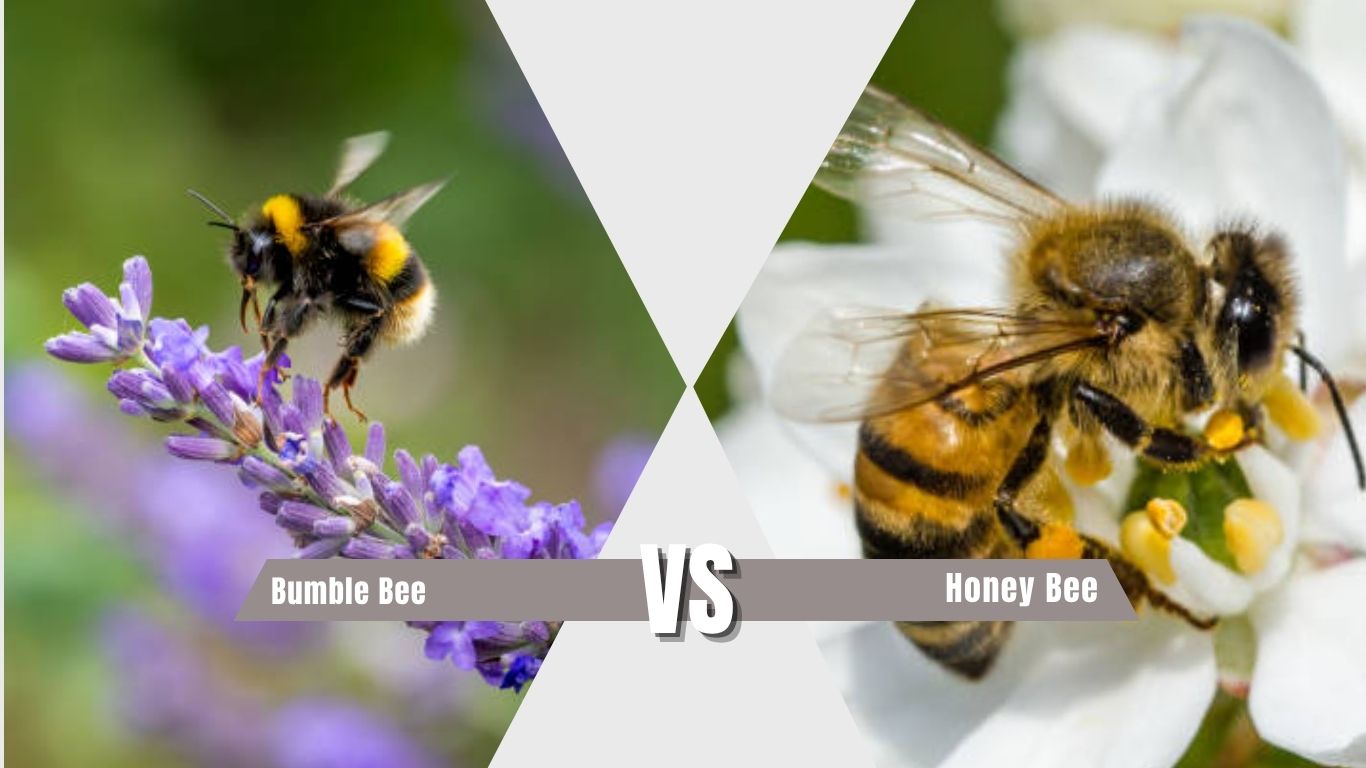
Bumble bees and honey bees are two of the most common bees people encounter, yet they are often confused with one another. Both play an essential role in pollination and maintaining healthy ecosystems, but they differ significantly in appearance, behavior, and lifestyle.
Understanding the difference between bumble bees and honey bees is important for gardeners, homeowners, and anyone interested in nature. From their size and sting behavior to how they live and work, this guide explains everything you need to know.
What Is a Bumble Bee?
Bumble bees are large, fuzzy insects known for their gentle nature and powerful pollination abilities. They are commonly seen buzzing around flowers, collecting nectar and pollen.
Appearance and Characteristics
Bumble bees are easily recognized by their thick, hairy bodies and bold black and yellow stripes. Their fuzzy appearance helps them collect pollen more effectively, making them excellent pollinators.
They are generally larger and rounder than honey bees, giving them a more robust and soft-looking shape. Their wings may appear small compared to their body size, but they are strong fliers.
Behavior and Habitat
Bumble bees are social insects, but their colonies are much smaller than those of honey bees. A typical colony may contain only a few dozen to a few hundred individuals.
They usually build nests in the ground, such as in abandoned rodent burrows, grass clumps, or sheltered spaces. Bumble bees are active pollinators and spend most of their time moving from flower to flower.
They are generally calm and non-aggressive, only stinging when threatened or disturbed.
What Is a Honey Bee?
Honey bees are well-known for their ability to produce honey and live in highly organized colonies. They are one of the most important insects for agriculture and food production.
Appearance and Characteristics
Honey bees are smaller and slimmer compared to bumble bees. Their bodies are less hairy and have a more streamlined shape. They typically have golden-brown and black stripes rather than the bold yellow patterns seen in bumble bees.
Their appearance may seem less “fuzzy,” but they are still effective at collecting pollen and nectar.
Behavior and Habitat
Honey bees live in large colonies that can contain thousands of individuals. These colonies are highly organized, with each bee having a specific role, such as worker, drone, or queen.
They build hives made of wax, often found in tree cavities, man-made bee boxes, or other protected spaces. Honey bees are constantly working—gathering nectar, producing honey, and maintaining the hive.
Unlike bumble bees, honey bees store large amounts of honey, which helps them survive through colder months.
Bumble Bee vs Honey Bee (Quick Comparison Table)

| Feature | Bumble Bee | Honey Bee |
| Body | Large, fuzzy | Smaller, less hairy |
| Color | Black & yellow | Golden brown & black |
| Nesting | Underground | Hives (trees/boxes) |
| Social Structure | Small colonies | Large colonies |
| Honey Production | Very little | Produces honey |
The easiest way to tell these bees apart is by their body shape and texture. Bumble bees are larger and fuzzier, while honey bees are slimmer and smoother. Their nesting habits and colony size also differ significantly.
Key Differences Between Bumble Bees and Honey Bees

Although they share some similarities, bumble bees and honey bees have several clear differences that set them apart.
- Bumble bees are larger and rounder, while honey bees are smaller and slender
- Bumble bees are covered in dense hair, while honey bees have less hair
- Bumble bees live in smaller colonies, while honey bees form large hives
- Honey bees produce and store honey, while bumble bees do not
- Bumble bees are more effective at certain types of pollination
These differences influence how they interact with their environment. For example, bumble bees are better suited for cooler temperatures, while honey bees thrive in structured colony systems.
Bumble Bee vs Honey Bee Size
Which Is Bigger?
Bumble bees are generally larger than honey bees. Their bodies are thicker and more rounded, which makes them appear bigger even when viewed from a distance.
Honey bees, on the other hand, are smaller and more streamlined. This difference in size is one of the easiest ways to distinguish between the two.
Visual Size Difference
In real-life situations, the size difference is noticeable when both insects are seen side by side. Bumble bees look bulkier and fluffier, while honey bees appear more compact and narrow.
This visual contrast can help you quickly identify which type of bee you are observing.
Bumble Bee vs Honey Bee Sting

One of the most common concerns people have is whether these bees sting and how dangerous they are.
- Bumble bees can sting multiple times
- Honey bees sting once and then die
- Bumble bee stings are usually defensive
- Honey bees become aggressive near their hive
- Both stings can cause allergic reactions
Bumble bees have smooth stingers, allowing them to sting more than once if necessary. Honey bees, however, have barbed stingers that get stuck in the skin, causing the bee to die after stinging.
In most cases, both bees will avoid humans unless they feel threatened. However, caution should always be taken, especially near nests or hives.
Behavior Differences
Bumble bees and honey bees have distinct behavior patterns that reflect their different lifestyles and colony structures.
Bumble Bee Behavior
Bumble bees are known for their slow, steady flight and calm nature. They spend most of their time visiting flowers, collecting nectar and pollen. Because of their fuzzy bodies, they are excellent at carrying pollen from one plant to another.
They are less defensive compared to honey bees and usually ignore humans unless directly disturbed. Their colonies are smaller, so they are less focused on defending territory.
Honey Bee Behavior
Honey bees are highly organized and constantly active. Each bee in the colony has a specific role, and their behavior is centered around maintaining the hive and producing honey.
They communicate with each other through movements and signals, helping the colony locate food sources efficiently. Honey bees are more defensive near their hive and may react quickly to protect it.
Nesting Differences

| Feature | Bumble Bee | Honey Bee |
| Nest Location | Ground or sheltered areas | Hives in trees or man-made boxes |
| Nest Type | Simple wax nests | Complex honeycomb structures |
| Colony Size | Small (50–500) | Large (thousands) |
Nesting is one of the biggest differences between these two species. Bumble bees usually build simple nests in the ground or hidden areas, while honey bees construct intricate hives made of hexagonal wax cells.
Honey bee hives are much larger and more complex, allowing them to store food and support thousands of individuals.
Are Bumble Bees or Honey Bees Dangerous?
Which Bee Is More Aggressive?
Honey bees are generally more defensive, especially when their hive is threatened. They may swarm or sting to protect their colony.
Bumble bees, on the other hand, are typically less aggressive. They will only sting if they feel directly threatened or if their nest is disturbed.
Risk to Humans
For most people, both bumble bees and honey bees pose little danger. Stings are usually mild and temporary, causing pain, swelling, and irritation.
However, people with allergies to bee stings should be cautious, as reactions can be more serious. In general, avoiding sudden movements and staying calm around bees reduces the risk of being stung.
Benefits of Bumble Bees and Honey Bees

Both bumble bees and honey bees are essential to the environment and play a major role in pollination.
- Help plants reproduce by transferring pollen
- Support food crops and agriculture
- Increase fruit and seed production
- Maintain biodiversity in ecosystems
- Contribute to healthy gardens and landscapes
Without these bees, many plants would struggle to grow and reproduce. Their role in pollination makes them critical for both natural ecosystems and human food supply.
Bumble Bee vs Honey Bee Pollination
Which Is Better for Pollination?
Bumble bees are often considered more effective pollinators for certain plants because of their ability to perform “buzz pollination.” This involves vibrating flowers to release pollen, which is especially useful for crops like tomatoes and blueberries.
Honey bees, however, are widely used in agriculture because of their large colony size. Their ability to cover large areas makes them essential for pollinating crops on a large scale.
Role in Agriculture
Honey bees are commonly managed by beekeepers and transported to farms to pollinate crops. They play a major role in global food production.
Bumble bees are also important, particularly for plants that require specialized pollination techniques. Both species complement each other in supporting agriculture.
Bumble Bee vs Honey Bee vs Carpenter Bee
| Feature | Bumble Bee | Honey Bee | Carpenter Bee |
| Social | Social | Highly social | Mostly solitary |
| Nesting | Ground | Hive | Wood |
| Honey Production | No | Yes | No |
Including carpenter bees in the comparison helps highlight the differences among common bee types. Each species has its own behavior, habitat, and ecological role.
How to Identify Bumble Bees vs Honey Bees
If you want to quickly tell these bees apart, there are a few simple features to look for.
- Bumble bees are larger and fuzzier
- Honey bees are smaller and smoother
- Bumble bees have bold yellow and black stripes
- Honey bees have more muted golden-brown tones
- Bumble bees are often seen near ground nests, while honey bees are near hives
These visual and behavioral clues can help you identify them even from a distance.
FAQs
What is the difference between a bumble bee and a honey bee?
Bumble bees are larger, fuzzier, and live in smaller colonies, while honey bees are smaller, less hairy, and live in large, highly organized hives where they produce honey.
Which is more aggressive: bumble bee or honey bee?
Honey bees are generally more defensive, especially near their hive. Bumble bees are calmer and usually sting only when threatened.
Do bumble bees sting more than honey bees?
Bumble bees can sting multiple times, while honey bees can sting only once before dying. However, both typically sting only in defense.
Which bee is better for pollination?
Both are important, but bumble bees are especially effective for certain plants due to buzz pollination, while honey bees are widely used in large-scale agriculture.
How can you tell them apart quickly?
Bumble bees are larger and fuzzier with bold stripes, while honey bees are smaller, smoother, and have a more slender body.