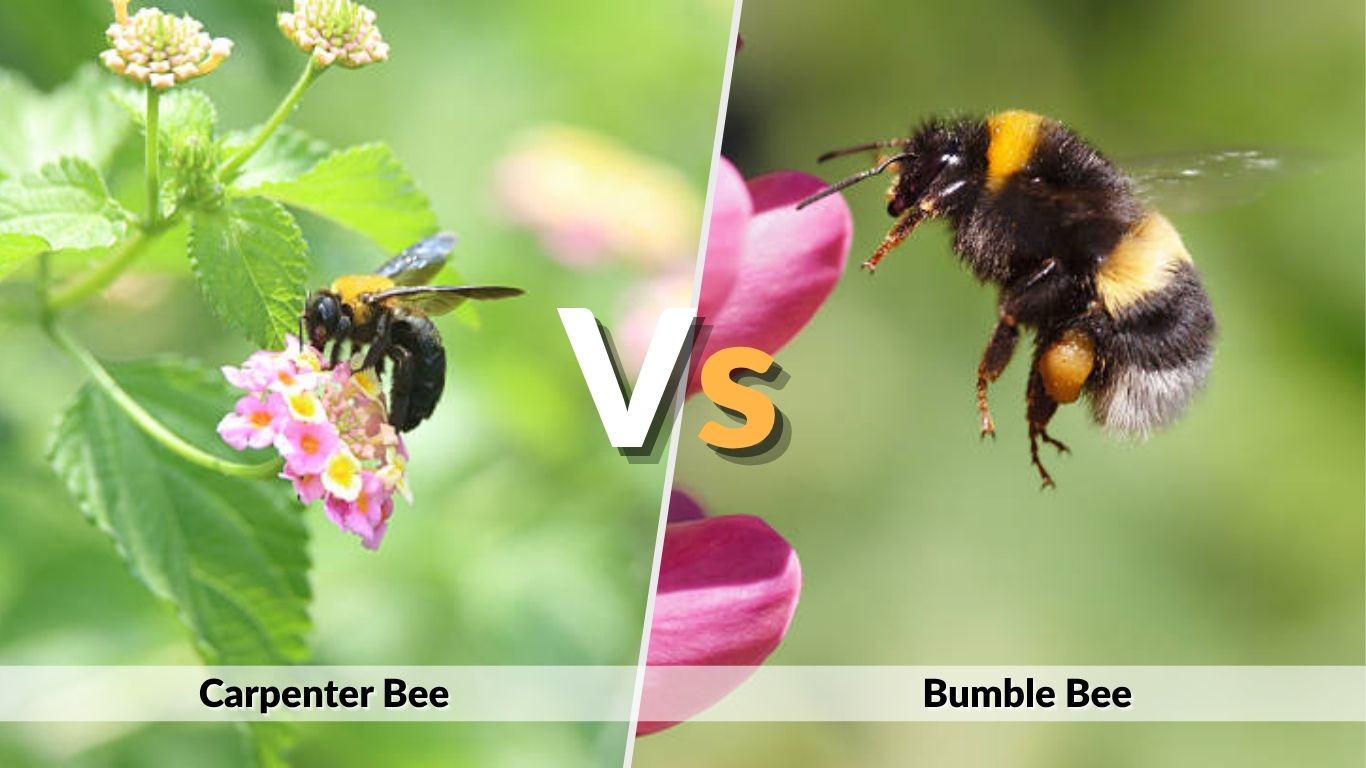
Carpenter bees and bumble bees are often confused due to their similar size and appearance. Both are large, buzzing insects commonly seen around flowers and gardens, especially during spring and summer. However, despite these similarities, they are quite different in behavior, nesting habits, and appearance.
Understanding the difference between carpenter bees and bumble bees is important, especially for homeowners, gardeners, and anyone concerned about stings or property damage. This guide breaks down everything you need to know—from how to identify them to which one is more aggressive.
What Is a Carpenter Bee?
Carpenter bees are large bees known for their ability to drill into wood to create nests. They are commonly found around wooden structures such as decks, fences, and eaves.
Appearance and Characteristics
Carpenter bees are typically large and robust, similar in size to bumble bees. However, their most noticeable feature is their shiny, hairless abdomen. While their thorax may have some yellow or golden hairs, the back half of their body appears smooth and glossy.
They are often black or dark in color, which can sometimes make them look intimidating at first glance.
Behavior and Habitat
Carpenter bees are mostly solitary insects. Unlike social bees, they do not live in large colonies. Instead, each female creates her own nest by drilling tunnels into wood.
Male carpenter bees are often seen hovering near nesting areas. While they may appear aggressive, they do not have stingers and cannot harm humans. Female carpenter bees can sting but rarely do unless directly handled.
What Is a Bumble Bee?
Bumble bees are social insects known for their fuzzy bodies and important role in pollination. They are commonly seen visiting flowers and are vital to many ecosystems.
Appearance and Characteristics
Bumble bees are easily recognized by their thick, hairy bodies covered in black and yellow stripes. Unlike carpenter bees, their abdomen is fully covered in dense hair, giving them a soft, fuzzy appearance.
Their bright coloring helps signal their presence to predators and plays a role in pollination.
Behavior and Habitat
Bumble bees live in colonies, similar to honey bees, although their colonies are usually smaller. They typically build nests in the ground, such as in abandoned rodent burrows or sheltered areas.
These bees are active pollinators and spend most of their time collecting nectar and pollen from flowers. They are generally non-aggressive but can sting if threatened.
Carpenter Bee vs Bumble Bee (Quick Comparison Table)

| Feature | Carpenter Bee | Bumble Bee |
| Body | Shiny, hairless abdomen | Fuzzy, hairy body |
| Color | Mostly black | Yellow and black |
| Nesting | Drills into wood | Nests in ground |
| Behavior | Solitary | Social colonies |
| Sting | Rarely stings | Can sting if threatened |
The easiest way to tell these bees apart is by looking at their abdomen. Carpenter bees have a smooth, shiny back, while bumble bees are covered in thick hair. This simple visual difference can help you quickly identify them in the wild.
Key Differences Between Carpenter Bees and Bumble Bees
While they may look similar from a distance, several important differences set these two bees apart.
- Carpenter bees have a shiny abdomen, while bumble bees are fuzzy
- Carpenter bees nest in wood, while bumble bees nest in the ground
- Carpenter bees are solitary, while bumble bees live in colonies
- Bumble bees are more active pollinators
- Carpenter bees may cause structural damage to wood
These differences affect how they interact with their environment and humans. For example, carpenter bees are more likely to be noticed around homes, while bumble bees are commonly found in gardens and fields.
Carpenter Bee vs Bumble Bee Size
Which Is Bigger?
Carpenter bees and bumble bees are similar in size, usually ranging between 1/2 inch to 1 inch in length. In many cases, carpenter bees may appear slightly larger due to their body shape and less dense hair covering.
However, the size difference is often minimal, making it difficult to distinguish between them based on size alone.
Visual Size Comparison
In real-life situations, the difference in texture often makes a bigger impact than size. Bumble bees appear rounder and fluffier, while carpenter bees look sleeker and more solid.
This visual contrast can help you identify them more easily than trying to judge their size.
Carpenter Bee vs Bumble Bee Sting

One of the most common concerns people have is whether these bees sting and how dangerous they are.
- Male carpenter bees cannot sting at all
- Female carpenter bees can sting but rarely do
- Bumble bees can sting if they feel threatened
- Stings from both are usually mild for most people
- Allergic reactions are possible in sensitive individuals
Male carpenter bees often hover aggressively near people, which can be intimidating. However, this behavior is purely defensive, and they are harmless.
Bumble bees, on the other hand, are generally calm but will defend themselves or their nest if disturbed.
Behavior Differences
Carpenter bees and bumble bees behave quite differently, which can help with identification and understanding their role in nature.
Carpenter Bee Behavior
Carpenter bees are often seen hovering around wooden structures such as decks, fences, and roofs. Male carpenter bees are especially territorial and may fly close to people or animals. This behavior can seem aggressive, but it is mostly a display to protect their nesting area.
Female carpenter bees spend much of their time drilling into wood and laying eggs. They are less visible but more important for reproduction.
Bumble Bee Behavior
Bumble bees are busy and active pollinators. They move from flower to flower collecting nectar and pollen, playing a vital role in plant reproduction.
Unlike carpenter bees, bumble bees live in colonies and work together. They are less likely to hover near people and are usually focused on gathering food.
Nesting Differences

| Feature | Carpenter Bee | Bumble Bee |
| Nest Location | Wood structures | Underground |
| Nest Type | Tunnels in wood | Wax-based nests |
| Colony Size | Solitary or small groups | Large colonies |
Nesting is one of the biggest differences between these two bees. Carpenter bees drill into wood to create tunnels where they lay eggs. Over time, this can cause damage to wooden structures.
Bumble bees, on the other hand, build nests underground or in sheltered spaces. Their nests are made of wax and house a colony of bees working together.
Are Carpenter Bees or Bumble Bees Dangerous?
Many people worry about the danger these bees may pose, especially when they see them near their homes.
Which Bee Is More Aggressive?
Carpenter bees may appear more aggressive because males hover and chase intruders. However, they cannot sting, making them harmless in most cases.
Bumble bees are generally calm but can become defensive if their nest is disturbed. They are more likely to sting compared to carpenter bees.
Risk to Humans
For most people, both carpenter bees and bumble bees pose very little risk. Stings are usually mild and similar to those of other bees.
However, individuals with allergies should be cautious, as any bee sting can trigger a serious reaction. In general, both bees will avoid humans unless provoked.
Benefits of Carpenter Bees and Bumble Bees

Despite concerns, both carpenter bees and bumble bees are extremely beneficial to the environment.
- Both are effective pollinators
- Help plants produce fruits and seeds
- Support biodiversity and ecosystems
- Important for agriculture and crop production
- Contribute to healthy gardens
Bumble bees are especially valuable because they can perform “buzz pollination,” which helps certain plants release pollen more effectively. Carpenter bees also contribute to pollination, although they may sometimes take nectar without pollinating.
Carpenter Bee Damage vs Bumble Bee Impact
Carpenter Bee Damage
Carpenter bees can cause damage to wooden structures by drilling holes to create nests. Over time, repeated nesting can weaken wood and lead to structural issues.
However, this damage is usually slow and can be managed with proper maintenance and prevention.
Bumble Bee Impact
Bumble bees are generally harmless to structures and do not cause damage. Their main impact is positive, as they play a key role in pollination.
For this reason, they are often encouraged and protected in gardens and natural habitats.
How to Identify Carpenter Bees vs Bumble Bees

If you want to quickly tell these bees apart, there are a few simple things to look for.
- Check the abdomen: shiny means carpenter bee, fuzzy means bumble bee
- Look at nesting location: wood vs ground
- Observe behavior: hovering vs flower activity
- Notice color patterns: solid black vs yellow stripes
- Watch flight style: slow hovering vs active foraging
These quick identification tips can help you distinguish between the two even from a distance.
Carpenter Bee vs Bumble Bee vs Honey Bee

| Feature | Carpenter Bee | Bumble Bee | Honey Bee |
| Social | Mostly solitary | Social | Highly social |
| Nesting | Wood | Ground | Hives |
| Honey Production | No | No | Yes |
Adding honey bees into the comparison helps provide a clearer picture of how these species differ. While honey bees live in large colonies and produce honey, carpenter and bumble bees serve different ecological roles.
FAQs
What is the difference between a carpenter bee and a bumble bee?
Carpenter bees have shiny, smooth abdomens and nest in wood, while bumble bees are fuzzy with yellow and black stripes and nest in the ground. They also differ in behavior, with carpenter bees being solitary and bumble bees living in colonies.
Which is more aggressive: carpenter bee or bumble bee?
Carpenter bees may seem more aggressive due to hovering behavior, but they are less dangerous. Bumble bees are generally calm but can sting if their nest is disturbed.
Do carpenter bees sting?
Female carpenter bees can sting but rarely do. Male carpenter bees cannot sting at all, even though they may appear aggressive.
Are bumble bees beneficial?
Yes, bumble bees are highly beneficial pollinators. They help plants grow, produce fruits, and maintain healthy ecosystems.
How can you tell them apart quickly?
The easiest way is to look at the abdomen. Carpenter bees have a shiny, hairless back, while bumble bees are fuzzy and striped.