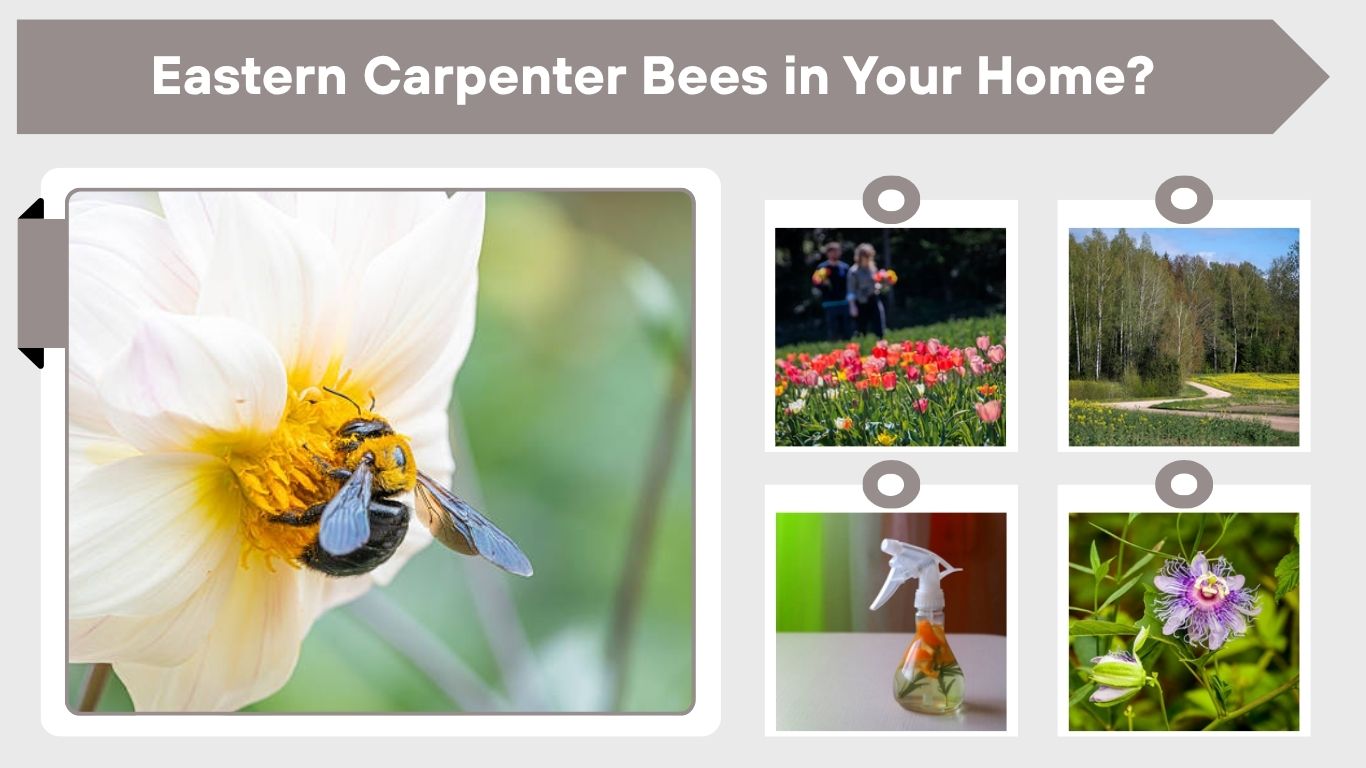
Eastern carpenter bees are large, buzzing insects commonly seen around wooden structures, gardens, and homes throughout Eastern North America. Their size and behavior often make them appear intimidating, especially when they hover near people or buildings. However, despite their bold presence, these bees are not as dangerous as many assume.
Unlike social bees that live in colonies, eastern carpenter bees are solitary insects that create nests by drilling into wood. While this habit can lead to property damage, they also play an important role as pollinators. Understanding how to identify them, how they behave, and when to take action can help you manage them effectively without unnecessary concern.
What Is an Eastern Carpenter Bee?
The eastern carpenter bee, scientifically known as Xylocopa virginica, is one of the most common carpenter bee species found in Eastern North America. It belongs to the bee family Apidae, which also includes honeybees and bumblebees.
What makes this bee unique is its ability to bore into wood to create nests. Instead of building hives or living underground, female carpenter bees tunnel into wooden surfaces to lay their eggs and raise their young.
They are often mistaken for bumblebees because of their similar size and coloring. However, their nesting behavior and body features clearly distinguish them from other bee species.
Eastern Carpenter Bee Identification

Correct identification is important, especially since these bees are frequently confused with bumblebees or other insects.
Physical Characteristics
Eastern carpenter bees are large and robust, typically measuring between ¾ inch to 1 inch in length. They have a distinctive appearance that makes them easier to identify once you know what to look for.
Key features include:
- A yellow, fuzzy thorax (upper body)
- A shiny, smooth black abdomen (unlike fuzzy bumblebees)
- Dark or slightly greenish eyes
- Strong wings that produce a loud buzzing sound
Their smooth abdomen is one of the easiest ways to tell them apart from bumblebees.
Size and Appearance
These bees are slightly larger than honeybees and have a more solid, heavy body shape. Their loud buzzing flight often draws attention, especially when they hover near structures or people.
Because of their size and noise, they are sometimes mistaken for more aggressive insects, but their behavior is usually harmless.
Male vs Female Eastern Carpenter Bee
There are clear differences between male and female carpenter bees:
- Male eastern carpenter bees:
- Have a lighter or pale-colored face
- Cannot sting
- Often hover aggressively around people
- Female eastern carpenter bees:
- Have a black face
- Can sting, but rarely do
- Responsible for drilling and nesting
Male bees are often mistaken as the bigger threat because of their hovering behavior, but they are completely harmless.
Eastern Carpenter Bee vs Bumblebee

Many people confuse eastern carpenter bees with bumblebees, but there are several key differences.
Key Visual Differences
The easiest way to distinguish them is by looking at the abdomen:
- Carpenter bee: smooth and shiny
- Bumblebee: covered in dense hair
This single feature is often enough to identify which bee you are dealing with.
Nesting Differences
Their nesting habits are also very different:
- Carpenter bees drill into wood to create tunnels
- Bumblebees typically nest underground or in hidden cavities
If you see bees entering holes in wood, they are almost certainly carpenter bees.
Behavior Differences
Carpenter bees are more likely to hover in place, especially males guarding territory. Bumblebees tend to fly more directly between flowers and are less likely to hover around people.
Eastern Carpenter Bee Habitat and Range

Eastern carpenter bees are widely found across the eastern United States, including states like Maryland, Missouri, Illinois, and surrounding regions. They thrive in areas where wood is readily available for nesting.
Common habitats include:
- Residential areas with wooden structures
- Forest edges and wooded environments
- Gardens and backyards
- Farms and rural settings
They are especially attracted to untreated, weathered, or soft wood, which makes it easier for them to drill nesting tunnels. Structures such as decks, fences, siding, and wooden beams are common targets.
Their presence is most noticeable during spring and early summer when they are actively mating and building nests.
Eastern Carpenter Bee Nest & Damage

One of the main concerns with eastern carpenter bees is their nesting behavior, which can lead to damage over time.
Nesting Behavior
Female carpenter bees create nests by drilling perfectly round holes into wood surfaces. These holes serve as the entrance to a system of tunnels inside the wood.
Inside the tunnel, the female:
- Creates multiple chambers
- Lays one egg in each chamber
- Provides pollen as food for the larvae
These tunnels can be reused and expanded year after year, increasing the extent of damage.
Signs of Infestation
There are several clear signs that carpenter bees are nesting in wood:
- Round holes about ½ inch in diameter
- Sawdust-like material (called frass) below the holes
- Yellowish stains from waste
- Bees frequently entering and exiting the same spot
These signs often appear on wooden surfaces such as decks, railings, and eaves.
Damage to Property
While a single nest may not cause significant harm, repeated nesting over time can lead to:
- Structural weakening of wood
- Surface damage and staining
- Increased vulnerability to moisture
Additionally, woodpeckers may be attracted to the larvae inside the wood, causing even more damage as they peck at the surface.
Eastern Carpenter Bee Life Cycle
The life cycle of the eastern carpenter bee follows a predictable seasonal pattern, with most activity occurring in spring and early summer.
It begins when adult bees emerge from their nests after winter. Males usually appear first and wait near nesting sites to mate with females. After mating, females begin creating or expanding tunnels in wood to lay their eggs.
The development stages include:
- Egg
- Larva
- Pupa
- Adult
Each egg is placed in a separate chamber inside the tunnel, along with a supply of pollen and nectar. Once the egg hatches, the larva feeds on this food and develops into a pupa before becoming an adult.
New adults typically emerge later in the season but may remain inside the nest until the following spring. The overall lifespan of an eastern carpenter bee is about one year, although most visible activity happens over just a few months.
Eastern Carpenter Bee Behavior
Eastern carpenter bees have distinct behaviors that often draw attention, especially around homes and wooden structures.
Males are known for their hovering behavior, often flying close to people or pets. While this may seem aggressive, it is actually a territorial display. Males are guarding nesting areas and trying to deter other insects—but they cannot sting.
Females, on the other hand, are more focused on practical tasks such as:
- Drilling into wood
- Building nest chambers
- Collecting pollen and nectar
They are generally less visible unless actively working on a nest. Carpenter bees prefer quiet, undisturbed areas, which is why they are commonly found in less busy parts of a property.
Do Eastern Carpenter Bees Sting? Are They Dangerous?
Eastern carpenter bees are often misunderstood when it comes to safety. Despite their large size and loud buzzing, they pose very little risk to humans.
Do They Sting?
Yes, female carpenter bees can sting. However, they rarely do so unless directly handled or threatened. Male carpenter bees, which are more noticeable due to their hovering behavior, cannot sting at all.
Are They Aggressive?
These bees are not truly aggressive. Males may appear intimidating as they fly close to people, but this is simply a bluff. Females are generally calm and will avoid confrontation whenever possible.
Risk Level
For most people, eastern carpenter bees are more of a nuisance than a danger. The main concern is not their sting but the potential damage they can cause to wooden structures.
Eastern Carpenter Bee Diet and Pollination Role

Eastern carpenter bees feed primarily on nectar and pollen, which provide the energy and nutrients they need to survive and reproduce.
As they move from flower to flower, they act as important pollinators. They help fertilize a wide variety of plants, including:
- Redbud trees
- Passionflower (passiflora)
- Garden flowers and crops
Although they do not produce honey, their role in pollination is highly valuable. In some cases, they are even more efficient than honeybees because of how they transfer pollen.
Are Eastern Carpenter Bees Good or Bad?
Eastern carpenter bees can be both beneficial and problematic, depending on the situation.
Benefits
- Excellent pollinators for flowers and crops
- Support plant reproduction and biodiversity
- Help maintain healthy ecosystems
Drawbacks
- Drill into wood, causing structural damage
- Reuse and expand nesting tunnels over time
- Attract predators like woodpeckers
For gardeners, they often welcome visitors. For homeowners, especially those with exposed wood, they can become a concern if not managed properly.
Predators and Natural Threats
Eastern carpenter bees are part of a larger ecosystem and have several natural predators and threats.
Common predators include:
- Woodpeckers, which break into wood to eat larvae
- Birds and small mammals
- Parasitic insects that invade nests
Environmental factors such as weather and habitat changes can also affect their population. Despite these threats, carpenter bees remain widespread due to their adaptability.
How to Get Rid of Eastern Carpenter Bees

If carpenter bees are causing damage to your property, there are several ways to control or prevent them.
Prevention Methods
Prevention is the most effective long-term solution:
- Paint or seal exposed wood, as bees prefer untreated surfaces
- Use hardwood instead of softwood when possible
- Regularly inspect wooden structures for early signs of damage
Natural Deterrents
Some natural methods may help discourage bees:
- Citrus-based sprays (bees dislike the scent)
- Noise or vibration near nesting areas
- Essential oils (limited effectiveness but sometimes helpful)
Traps and Treatments
For more active infestations:
- Use carpenter bee traps to capture bees
- Apply insecticides specifically designed for carpenter bees (if necessary)
- Treat nests in the evening when bees are less active
After treatment, it’s important to plug and seal the holes to prevent reuse.
Professional Extermination
If the infestation is severe or widespread, professional pest control may be the best option. Experts can safely remove bees and apply long-term prevention strategies.
Eastern Carpenter Bee Prevention Tips
To avoid future problems, consistent maintenance is key.
Effective prevention includes:
- Filling and sealing old nesting holes
- Replacing damaged wood
- Keeping wooden surfaces painted or treated
- Installing traps early in the season
Taking these steps can greatly reduce the chances of carpenter bees returning year after year.
FAQs
Do eastern carpenter bees bite?
No, eastern carpenter bees do not bite. They may appear intimidating due to their size and hovering behavior, but they are not aggressive toward humans.
How big are eastern carpenter bees?
Eastern carpenter bees typically range from about ¾ inch to 1 inch in length, making them larger than many other common bee species.
Where do eastern carpenter bees build their nests?
They build nests by drilling into wood, commonly in decks, fences, siding, wooden beams, and even tree trunks.
What time of year are eastern carpenter bees most active?
They are most active during spring and early summer when they emerge, mate, and begin nesting.
Can eastern carpenter bees damage my house?
Yes, over time they can cause damage by drilling tunnels into wood. Repeated nesting and expansion of tunnels may weaken wooden structures if not managed.