Red mason bees are among the most valuable yet often overlooked pollinators in gardens and orchards. Known for their gentle nature and impressive efficiency, these solitary bees play a crucial role in supporting plant growth and food production. If you’ve ever seen a small, furry, reddish bee around early spring flowers or noticed sealed holes in a bee house, chances are you’ve encountered a red mason bee.
Unlike honeybees, red mason bees do not live in colonies or produce honey. Instead, each female works independently to build nests, lay eggs, and provide food for her offspring. This makes them far less aggressive and easier to manage around homes and gardens. Understanding their behavior, appearance, and life cycle can help you attract them—or handle them properly if needed.
What Is a Red Mason Bee?
The red mason bee, scientifically known as Osmia bicornis, is a solitary bee species commonly found in Europe and the UK. It is also sometimes referred to as the red-tailed mason bee due to its distinctive coloring.
Unlike social bees, red mason bees do not form hives or large colonies. Each female builds her own nest and works alone. The name “mason bee” comes from their unique habit of using mud or clay to construct and seal their nests, much like a mason uses cement.
These bees are especially active in early spring, making them vital pollinators for fruit trees such as apples, cherries, and plums. In fact, a small number of red mason bees can pollinate as effectively as a much larger number of honeybees.
Red Mason Bee Identification

Identifying red mason bees correctly is important, as they are often confused with other insects like wasps or even small hornets.
Physical Appearance
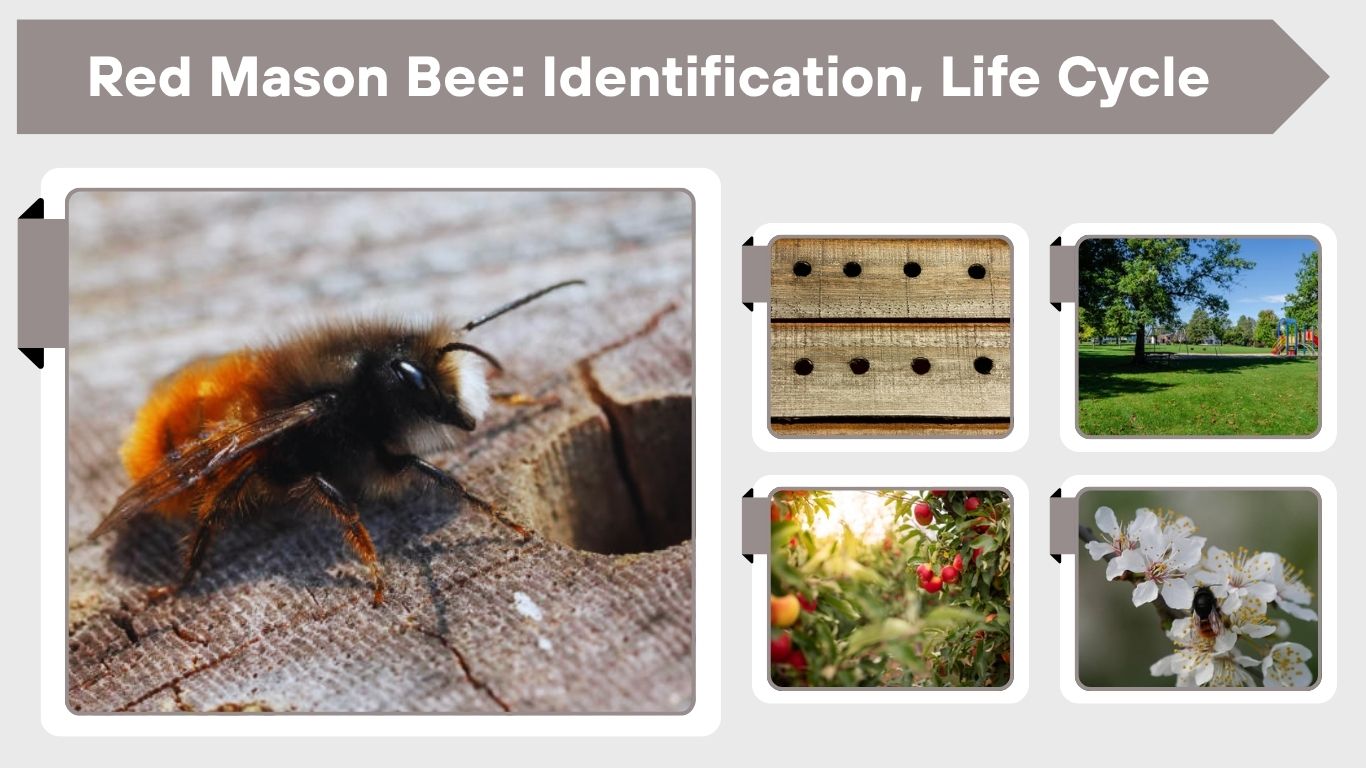
Red mason bees have a furry, reddish-brown body, which helps them collect pollen efficiently. Their hair gives them a soft, almost fluffy appearance compared to the smooth bodies of wasps.
Key features include:
- Rusty red or orange-brown coloring
- Dense body hair
- Dark head and sometimes darker abdomen
- Compact, rounded shape
Because of their coloration, they are sometimes mistaken for more aggressive insects, but their behavior quickly sets them apart.
Male vs Female
There are noticeable differences between male and female red mason bees:
- Male red mason bees are slightly smaller and often have a distinctive tuft of white hair on their face
- Females are larger, darker, and responsible for nesting and pollen collection
- Males do not have stingers and are completely harmless
Males are often seen flying around nesting sites, especially in spring, waiting for females to emerge.
Size and Color Variations
Red mason bees are generally medium-sized, slightly smaller than honeybees. Their color can vary from bright reddish-orange to darker brown tones depending on age and environment.
Some people confuse them with “furry red hornets,” but this is a myth. Red mason bees are not hornets and lack the aggressive traits associated with them.
Red Mason Bee Habitat and Distribution

Red mason bees are widely distributed across Europe and the UK, where they thrive in gardens, orchards, and natural landscapes. While the exact species Osmia bicornis is less common in the United States, similar mason bee species exist and serve the same ecological role.
These bees prefer environments that provide:
- Plenty of flowering plants
- Access to nesting holes
- A nearby source of moist soil or clay
They are often found in:
- Home gardens
- Parks and green spaces
- Fruit orchards
- Woodland edges
Red mason bees are particularly attracted to sunny, sheltered locations, as warmth helps them remain active during their short seasonal lifespan.
Red Mason Bee Nest & Nesting Habits

One of the most interesting aspects of red mason bees is how they build and manage their nests.
Nesting Sites
Unlike ground-nesting bees, red mason bees prefer to nest in pre-existing holes rather than digging their own. Common nesting locations include:
- Hollow plant stems
- Holes in wood or walls
- Bee houses or hotels
- Nest boxes designed specifically for mason bees
This is why many gardeners install red mason bee houses to encourage their presence.
Nest Construction
The female bee begins by selecting a suitable hole, typically around 6–8 mm in diameter. She then creates a series of chambers inside the tunnel.
For each chamber, she:
- Collects pollen and nectar to form a food supply
- Lays a single egg
- Seals the chamber using mud or clay
This process is repeated until the entire hole is filled. Finally, the entrance is sealed with a thicker layer of mud for protection.
Access to clay or moist soil is essential for this process. Without it, the bee cannot properly construct or seal her nest, which is why gardeners sometimes provide a small mud source nearby.
Red Mason Bee Life Cycle
The life cycle of the red mason bee is closely tied to the seasons, particularly spring.
It begins when adult bees emerge from their cocoons, usually between March and May. Males emerge first and wait near nesting sites for females. After mating, females begin the process of building nests and laying eggs.
The development stages include:
- Egg
- Larva
- Pupa
- Adult
Once the egg hatches, the larva feeds on the stored pollen and nectar. It then develops into a pupa and eventually forms a cocoon inside the sealed chamber.
The new adult bee remains inside the cocoon through summer, autumn, and winter, emerging the following spring to start the cycle again.
Because of this lifecycle, red mason bees are only active for a few weeks each year, but their impact on pollination during that time is significant.
Red Mason Bee Cocoons and Larvae
Red mason bee cocoons are a key part of their life cycle and are often handled by gardeners who actively support these bees. After the larva completes its development, it spins a protective cocoon inside the nesting chamber.
These cocoons:
- Are oval-shaped and dark brown in color
- Protect the developing bee through winter
- Contain fully formed adults waiting to emerge in spring
Proper care of cocoons is important, especially if you are using a bee house. Some people choose to harvest and store cocoons to protect them from pests such as mites or parasitic insects. In regions like the UK, it is also common to buy red mason bee cocoons online to introduce them into gardens for better pollination.
The larval stage occurs inside the sealed chamber, where the young bee feeds on the pollen provided by the female. This stage is completely hidden from view but is essential for healthy development.
Do Red Mason Bees Sting? Are They Dangerous?
Red mason bees are widely known for their gentle and non-aggressive nature, making them one of the safest bee species to have around.
Do Red Mason Bees Sting?
Female red mason bees do have stingers, but they rarely use them. A sting would only occur if the bee is directly handled or feels trapped. Male bees, on the other hand, cannot sting at all.
Are They Aggressive?
These bees are not aggressive and do not defend their nests like honeybees or wasps. Since they are solitary, there is no colony to protect, which greatly reduces the chance of defensive behavior.
Risk Level
For most people, red mason bees pose almost no risk. They are safe to have in gardens, even around children and pets, and are far less threatening than other common stinging insects.
Benefits of Red Mason Bees

Red mason bees are considered highly beneficial pollinators, often more efficient than honeybees in certain situations.
Their benefits include:
- Excellent pollination of fruit trees like apples, pears, and cherries
- Increased crop yields in gardens and orchards
- Support for biodiversity and healthy ecosystems
A single red mason bee can visit thousands of flowers in a short period. Because they carry pollen loosely on their bodies, they transfer it more effectively between plants.
Although they do not produce honey, their pollination value makes them extremely valuable for both home gardeners and farmers.
How to Attract Red Mason Bees
If you want to encourage red mason bees to visit your garden, creating the right environment is key.
Provide Nesting Spaces
Installing a bee house or nest box is one of the easiest ways to attract them. These structures should have holes around 6–8 mm wide, which is the ideal size for red mason bees.
Place the bee house:
- In a sunny, sheltered location
- Facing south or southeast
- Protected from strong wind and rain
Provide Food Sources
Red mason bees rely on early spring flowers for food. Planting a variety of nectar- and pollen-rich plants will help attract and support them.
Good options include:
- Fruit trees
- Wildflowers
- Flowering shrubs
Provide Mud Source
Since they use mud to build nests, access to moist soil or clay is essential. You can:
- Keep a small patch of soil damp
- Provide clay-rich soil if your ground is too sandy
This simple step can significantly increase nesting success.
Red Mason Bee House, Box & Kits

Using a red mason bee house or kit is a popular way to support these bees, especially in home gardens.
There are different options available:
- Ready-made bee hotels
- Wooden nest boxes with drilled holes
- Complete kits that include cocoons
When setting up a bee house:
- Place it at least 1–1.5 meters above the ground
- Ensure it stays dry and stable
- Clean or replace nesting materials annually to prevent disease
Proper maintenance helps keep the bees healthy and encourages them to return each year.
How to Get Rid of Red Mason Bees (If Needed)
In most cases, removing red mason bees is unnecessary, but there may be situations where action is required.
When Removal Is Necessary
- Nesting in unwanted areas (walls, vents, or structures)
- Severe allergy concerns
- Large numbers causing discomfort
Safe Removal Methods
The best approach is to relocate rather than eliminate:
- Move bee houses to a more suitable location
- Block access to holes after the season ends
- Avoid disturbing active nests
It is important not to use harmful chemicals, as red mason bees are beneficial and often protected in some regions.
Common Problems and Misidentification
Red mason bees are sometimes confused with other insects or associated with unexpected issues.
Common situations include:
- Red and black insects in bee tubes, which may be parasites or other species
- Mistaking them for hornets due to their color
- Poor nesting success due to unsuitable habitat conditions
Factors like micro-site conditions—including sunlight, temperature, and moisture—can strongly influence where red mason bees choose to nest. Providing the right environment can prevent many of these problems.
FAQs
Are red mason bees dangerous?
No, red mason bees are not dangerous. They are gentle, solitary insects that rarely sting and are safe to keep in gardens or near homes.
Do red mason bees sting humans?
Only females can sting, and even then it is extremely rare. They are not aggressive and will usually avoid contact with people.
Are red mason bees found in the U.S.?
The exact species is more common in Europe and the UK, but similar mason bees exist in the U.S. and provide the same pollination benefits.
Can I buy red mason bees?
Yes, red mason bee cocoons and kits are widely available online, especially in the UK, for gardeners looking to boost pollination.
What size hole do red mason bees need?
They prefer holes that are about 6–8 mm in diameter, which provides the ideal space for nesting and raising their young.