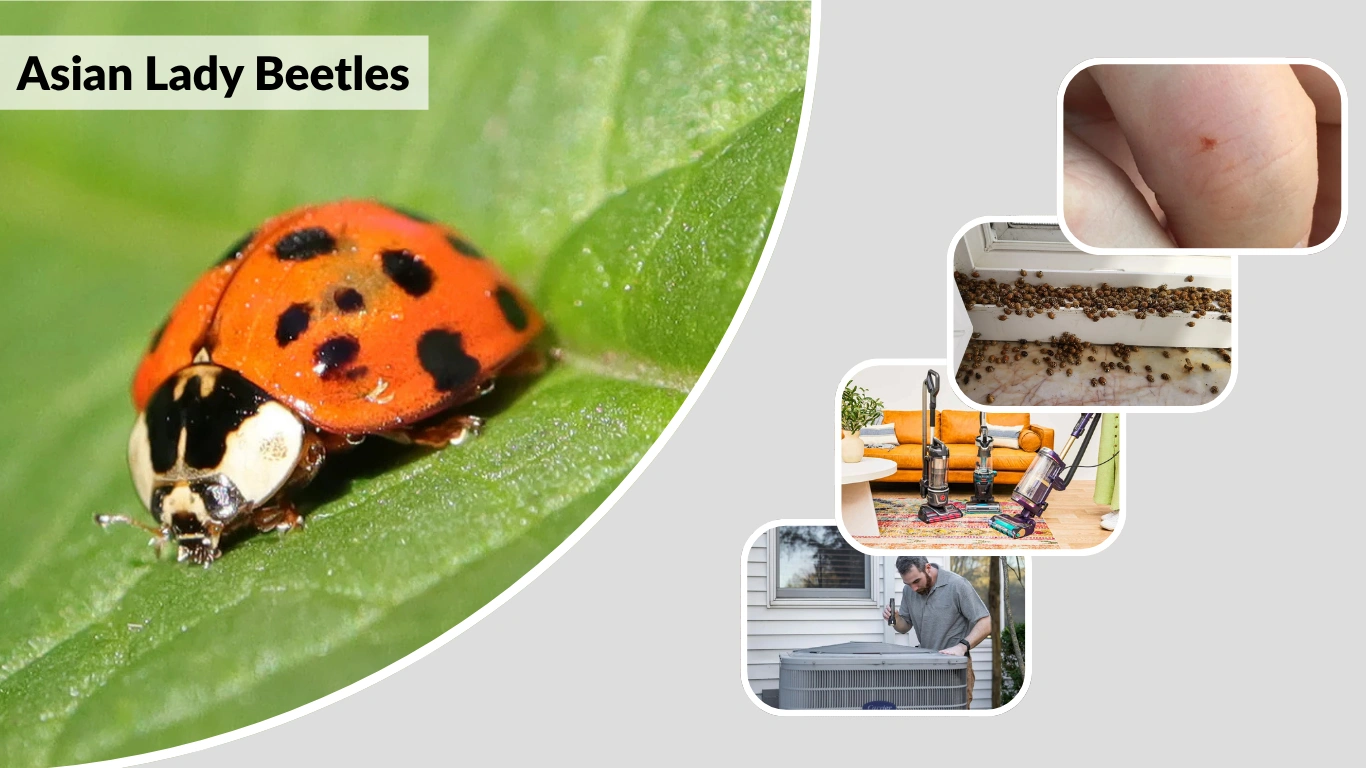
Asian lady beetles may look like harmless ladybugs, but these insects can quickly turn into unwanted houseguests. Scientifically known as Harmonia axyridis, the Asian lady beetle is an invasive species that was first introduced to North America in the 1970s to control aphids and other plant pests. While they can be beneficial outdoors, they’ve become a nuisance across homes in the U.S., especially during the fall and winter.
Unlike native ladybugs, Asian lady beetles bite, emit a foul odor, and release a yellow fluid that stains walls and furniture. If you’ve ever seen swarms of orange or red beetles gathering near windows, doors, or ceilings, chances are you’ve encountered these uninvited visitors.
In this guide, we’ll explore how to identify Asian lady beetles, how they differ from ladybugs, what causes infestations, and the first steps to getting rid of them naturally and safely.
What Is an Asian Lady Beetle?

Origin and Background
The Asian lady beetle (Harmonia axyridis) originated in East Asia — primarily Japan, China, and Korea — where it naturally controls crop pests. In the 1970s, agricultural authorities in the United States intentionally released these beetles to help manage aphid populations in soybean and fruit crops.
However, without natural predators to keep them in check, they multiplied rapidly and spread across the country. Today, Asian lady beetles are found in nearly every U.S. state, Canada, and parts of Europe. They are now classified as an invasive species due to their impact on native ladybug populations and their tendency to invade homes in large numbers.
What Do Asian Lady Beetles Look Like?
Asian lady beetles closely resemble native ladybugs, but there are key differences that make them easy to identify once you know what to look for:
- Size: About ¼ inch long (roughly the size of a pencil eraser).
- Shape: Oval and dome-shaped like a ladybug.
- Color: Ranges from orange to red, yellow, or even black.
- Spots: Some have many spots, others have none at all.
- Distinct Marking: Look for a black “M” or “W” shape on the white area (pronotum) just behind the head — the signature feature of an Asian lady beetle.
Their coloration varies greatly, which is why they’re also known as the multicolored Asian lady beetle.
Asian Lady Beetle vs Ladybug

Many people confuse Asian lady beetles with native ladybugs, but the differences go beyond appearance. Native ladybugs (also called “ladybirds” or “ladybird beetles”) are gentle garden helpers that rarely enter homes.
| Feature | Asian Lady Beetle | Ladybug (Native) |
| Color | Orange, yellow, or red (varied) | Bright red or orange |
| Marking | Distinct black “M” behind head | No marking |
| Spots | Inconsistent or absent | Symmetrical black spots |
| Behavior | Invades homes, bites, releases odor | Harmless, outdoor insect |
| Origin | Asia (invasive) | North America (native) |
| Smell | Emits foul yellow fluid when disturbed | No odor |
While both species eat aphids and help farmers, the Asian lady beetle’s aggressive nature and overwintering habits make it a problem pest indoors.
Life Cycle and Behavior

Understanding the life cycle of the Asian lady beetle is crucial for controlling infestations. Like many beetles, they undergo complete metamorphosis with four distinct stages:
- Egg – Females lay clusters of 20–50 small, yellow eggs on the underside of leaves near aphid colonies.
- Larva – After a few days, larvae hatch and begin feeding immediately. They look black and spiny with orange stripes — more like tiny alligators than ladybugs.
- Pupa – The larvae attach to leaves and transform inside a hard orange-brown shell.
- Adult – After a few days, adults emerge, ready to eat, mate, and eventually find shelter for winter.
A single female can lay hundreds of eggs in her lifetime, which means populations can explode in just one season. Adults live for 30 to 90 days, often surviving through winter by entering homes, barns, and attics.
Where Do Asian Lady Beetles Live?
Outdoors, Asian lady beetles are most commonly found in gardens, orchards, and agricultural fields, where they feed on aphids and other soft-bodied insects. However, as temperatures drop in the fall, they start looking for warm, sheltered spots to overwinter.
That’s when they become household pests — sneaking into attics, wall voids, ceilings, and window frames through tiny cracks or gaps. Once inside, they can remain dormant for months until spring, when they wake up and try to get back outside.
What Do Asian Lady Beetles Eat?
Asian lady beetles are voracious predators. Their diet primarily consists of:
- Aphids (their favorite prey)
- Scale insects
- Mites
- Small soft-bodied pests
When aphids are scarce, they may also nibble on pollen, nectar, or ripe fruit such as grapes and apples — causing minor agricultural damage. While this makes them beneficial outdoors, it’s also what made them so successful — and problematic — after their introduction to North America.
Are Asian Lady Beetles Harmful?

Do Asian Lady Beetles Bite?
Yes — Asian lady beetles can bite humans, although their bites are harmless and non-poisonous. They don’t break the skin, but the bite can cause mild irritation or a pinching sensation.
Their tendency to bite isn’t due to aggression; rather, they test surfaces (including skin) for food or moisture. For sensitive individuals, the bite may leave a small red bump or rash.
Allergic Reactions and Pets
In rare cases, Asian lady beetles can cause allergic reactions such as itching, coughing, or eye irritation. They produce a defensive yellow fluid (called reflex bleeding) that has a strong odor and can trigger allergies in some people.
Pets — especially dogs — may also be affected. If a dog eats or licks these beetles, the insects can attach to the roof of the mouth, releasing toxic chemicals that cause drooling, vomiting, or small mouth ulcers.
If this happens, it’s best to consult a veterinarian immediately.
Other Nuisance Behaviors
While not directly harmful like termites or cockroaches, Asian lady beetles are considered nuisance pests because:
- They swarm in large numbers around homes in autumn.
- They stain walls and curtains with yellow fluid when disturbed or crushed.
- They emit a foul, musty smell when threatened.
- They clog vents, lights, and ceiling fixtures, especially in attics.
Their persistence and unpleasant odor make them one of the most frustrating seasonal pests for homeowners.
Asian Lady Beetle Infestations

When and Why They Invade Homes
Asian lady beetles typically invade homes during the fall months (September–November). As the weather cools, they search for warm, dry places to overwinter. Homes, especially those with light-colored siding or good sun exposure, are perfect hiding spots.
They often gather on the south- and west-facing walls before squeezing into cracks, vents, or under siding. Once indoors, they seek dark, insulated areas such as attics, ceilings, window frames, or wall voids, where they can remain dormant until spring.
When temperatures rise or indoor heating increases, the beetles “wake up” and start moving toward light sources — windows, skylights, or lamps — which is why you may see them suddenly appearing in winter.
Signs of an Infestation
You can usually tell you have an Asian lady beetle problem by these signs:
- Swarming beetles near windows, ceilings, or door frames.
- Yellowish stains on walls, curtains, or ceilings (from their defensive fluid).
- A musty odor when crushed or disturbed.
- Beetles clustering in light fixtures or attic corners.
Unlike termites or carpenter ants, they don’t damage wood or furniture — but their sheer numbers and smell can make them unbearable indoors.
How to Get Rid of Asian Lady Beetles

Step 1 — Vacuum and Dispose
The easiest way to remove beetles already inside your home is with a vacuum cleaner.
- Use a vacuum with a disposable bag or a detachable canister.
- Suck up beetles gently — avoid crushing them to prevent stains and odor.
- Dispose of the bag or empty the canister immediately outdoors.
- Wipe affected areas with mild soap or vinegar to remove pheromone trails (which attract other beetles).
This method is safe, fast, and chemical-free, especially useful for small infestations.
Step 2 — Natural Remedies
If you prefer eco-friendly methods, several natural options can deter or kill beetles without harming pets or plants.
Vinegar Spray
Mix equal parts white vinegar and water in a spray bottle.
- Spray directly on beetles to kill them on contact.
- Wipe surfaces afterward to remove residue and odor.
- Acts as both a repellent and cleaner.
Essential Oils
Asian lady beetles dislike strong scents. Oils like peppermint, clove, citronella, lemon, or eucalyptus can help.
- Add 10–15 drops to water and spray around windows, doorways, and vents.
- Reapply weekly during fall.
Diatomaceous Earth (DE)
A fine, natural powder made from fossilized algae.
- Sprinkle DE along window sills, baseboards, and entry points.
- It dehydrates and kills insects that crawl through it.
- Safe for indoor use and harmless to pets when applied properly.
Step 3 — Insecticidal Treatments
For large infestations, insecticides may be necessary.
- Use pyrethrin-based sprays (a plant-derived insecticide) around doors, attics, and cracks where beetles enter.
- Products like Harris Asian Lady Beetle Killer or Ortho Home Defense are commonly used.
- Always follow label instructions and spray during cooler hours when beetles are less active.
Avoid spraying directly on walls or fabrics — it can cause staining or strong odors.
Step 4 — Use Traps
Traps are another effective way to manage beetles without chemicals.
DIY Trap
You can make a simple homemade trap using household items:
- Mix dish soap, vinegar, and warm water in a bowl.
- Place under a desk lamp or LED light in a dark room at night.
- Beetles are attracted to the light, fall into the solution, and drown.
Commercial Traps
Available online or at hardware stores. Look for indoor sticky traps or UV light traps designed for flying insects. Place traps near windows or entry points where beetles congregate.
Repellents and Deterrents
Natural Repellents
- Peppermint or clove oil sprays are highly effective.
- Citrus-scented cleaners repel beetles while keeping surfaces fresh.
- Bay leaves or cloves can be placed in window sills and drawers as a natural deterrent.
Mechanical Barriers
- Install tight-fitting screens on windows and vents.
- Add door sweeps and weatherstripping to entryways.
- Seal small cracks in siding, soffits, and utility openings with silicone caulk.
- Consider light-colored exterior paint — beetles are less attracted to pale or white surfaces.
Prevention and Long-Term Control

Home Maintenance
- Conduct a thorough inspection of your home each late summer.
- Seal any gaps, cracks, or holes where beetles might enter.
- Check around chimneys, utility lines, and roof edges.
- Use a combination of caulking, mesh, and foam sealants for long-term prevention.
Outdoor Control
- Keep aphid populations in check to reduce food sources for beetles.
- Prune plants near windows and doors.
- Remove old siding or leaf piles that can serve as hiding spots.
- Encourage natural predators like birds, spiders, and parasitic wasps, which feed on beetles and their larvae.
Seasonal Plan
- Summer: Control aphids and inspect garden plants.
- Fall: Seal your home and use repellents.
- Winter: Use traps indoors for any beetles that sneaked inside.
- Spring: Vacuum up overwintered beetles as they emerge.
FAQs
Are Asian lady beetles the same as ladybugs?
No. Asian lady beetles are invasive, can bite, and release an unpleasant odor — unlike native ladybugs, which are harmless.
Do Asian lady beetles bite?
Yes, but their bite is mild and non-toxic. It may cause a small red bump or slight irritation.
Are Asian lady beetles harmful to pets or humans?
They’re not deadly, but they can cause mild allergic reactions in people and mouth ulcers in dogs if eaten.
How long do Asian lady beetles live?
Typically 30–90 days, though some overwinter indoors and survive longer.
What kills them instantly?
Vinegar, soapy water, or pyrethrin sprays kill on contact.