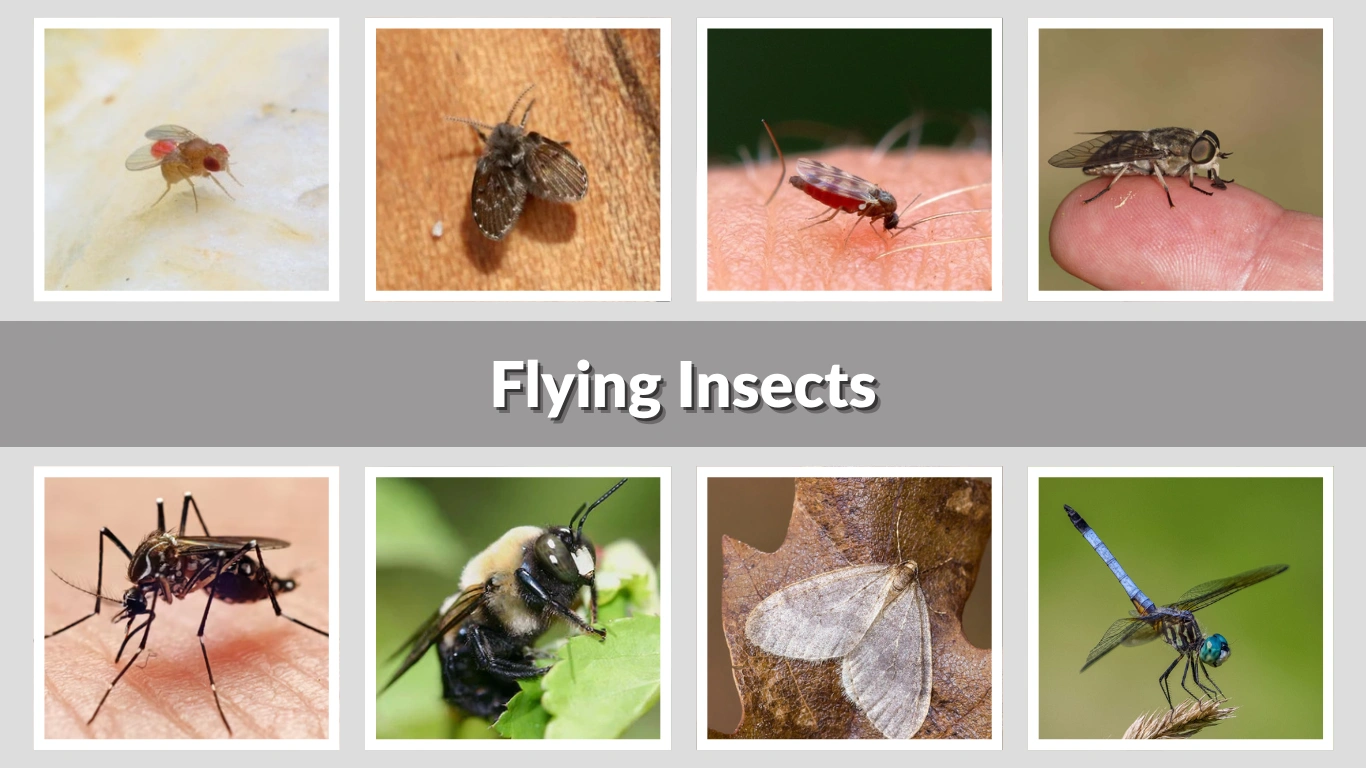
Flying insects are among the most diverse and adaptable creatures on Earth. Found in every environment—from tropical forests to urban homes—they play crucial roles in pollination, decomposition, and the food chain. Yet, some species can become nuisances or even health hazards. Understanding their characteristics, behavior, and habitats helps in managing them effectively while appreciating their ecological significance.
Identification of Flying Insects

Appearance and Size
Flying insects come in various shapes and sizes, ranging from the tiny fruit fly to large dragonflies and moths. Most share common traits such as six legs, antennae, compound eyes, and a pair of wings. Their wing structure differs by species; some have membranous wings like wasps, while others, like beetles, possess hardened wing covers called elytra.
Color Variations
Color plays an important role in insect identification. Many flying insects exhibit black, brown, red, or yellow patterns. For example, wasps and bees have bold yellow and black stripes, while dragonflies may display vibrant metallic hues. Some species mimic others for defense—harmless hoverflies often resemble bees to deter predators.
Distinctive Body Features
Each flying insect species has unique physical traits:
- Long tails: Seen in mayflies and fish flies.
- Stingers: Found in bees, wasps, and hornets.
- Long legs: Characteristic of crane flies, which are often mistaken for giant mosquitoes.
- Hairy bodies: Common in bees and moths, aiding in pollen collection.
These traits not only aid identification but also provide insight into each insect’s ecological role.
Common Types of Flying Insects

Small Flying Insects
Small flying insects, including gnats, fruit flies, and midges, are frequently encountered indoors and outdoors. They thrive in moist environments, feeding on decaying organic matter or plant material. Indoors, they often gather around drains, ripe fruits, and potted plants where moisture and organic debris are plentiful.
Large Flying Insects
Larger species such as dragonflies, moths, and beetles are typically outdoor dwellers. Dragonflies are agile hunters, consuming mosquitoes and other small insects mid-flight. Moths are mostly nocturnal, drawn to lights, and some species play essential roles as nighttime pollinators. Large beetles, though intimidating, are usually harmless and vital for breaking down organic waste.
Black or Dark-Colored Flying Insects
Dark-colored flying insects are common in gardens and wooded areas. Examples include black flies, carpenter bees, and certain beetles. Carpenter bees are often mistaken for bumblebees but have shiny, hairless abdomens. Black flies, on the other hand, can bite and are especially active near rivers and streams during warm months.
Colorful and Patterned Insects
Colorful species like firebugs, with their red and black markings, use bright coloration as a warning to predators. Wasps and hornets display yellow and black bands, signaling danger. Butterflies and dragonflies use colors not only for defense but also for attracting mates and regulating body temperature through sunlight absorption.
Flying Insects That Bite or Sting

Biting Insects
Biting insects such as mosquitoes, horseflies, and midges pierce the skin to feed on blood. Their bites can cause redness, swelling, and itching. While most are harmless, certain mosquitoes transmit diseases like dengue, malaria, and Zika. Horseflies, known for their painful bites, are active during summer and are attracted to movement and carbon dioxide.
Stinging Insects
Stinging insects, including bees, wasps, and hornets, use their stingers defensively. Bees sting when threatened, sacrificing themselves afterward, while wasps and hornets can sting multiple times. Their stings may trigger allergic reactions in sensitive individuals. Despite their reputation, bees are invaluable pollinators vital to the environment.
Flying Insects Found Indoors

Common Indoor Species
Indoors, small flying insects like drain flies, fungus gnats, and fruit flies are most prevalent. Drain flies breed in organic buildup inside pipes, while fungus gnats live in the damp soil of overwatered houseplants. Fruit flies multiply quickly near decaying fruits, vegetables, and fermented liquids.
Reasons They Enter Homes
Flying insects invade homes in search of food, moisture, and shelter. Warm indoor air and artificial lighting attract them, especially at night. Open windows, unsealed doors, and vents serve as easy entry points.
Prevention Tips
To minimize indoor infestations:
- Keep sinks, drains, and garbage areas clean and dry.
- Discard overripe fruits and clean up spills immediately.
- Use fine mesh screens on windows and vents.
- Avoid overwatering houseplants and remove decaying leaves.
Maintaining cleanliness and reducing moisture are key steps to keeping flying insects under control indoors.
Ecological Importance of Flying Insects
Flying insects are essential to maintaining the balance of nature. They act as pollinators, decomposers, and food sources for countless animals. Without them, many ecosystems would collapse, and agricultural productivity would drastically decline. Although often considered pests, their roles in nature are far more beneficial than harmful.
Pollination and Food Chains
Bees, butterflies, moths, and certain flies are primary pollinators, transferring pollen between flowers and enabling plant reproduction. Around 75% of flowering plants depend on these insects for pollination, including many crops that humans rely on for food. In turn, these insects become a food source for birds, bats, reptiles, and amphibians, forming a crucial link in global food webs.
Decomposition and Recycling
Many flying insects, such as flies and beetles, feed on decaying organic material. This process helps recycle nutrients back into the soil, enriching it for plant growth. By breaking down dead animals, waste, and plant matter, these insects keep the environment clean and reduce disease spread from decomposing matter.
Pest Control and Ecological Balance
Predatory flying insects like dragonflies and robber flies help regulate pest populations by feeding on mosquitoes, gnats, and other small insects. This natural pest control maintains ecological balance and reduces the need for harmful chemical insecticides. In gardens and farms, these predators play a silent but critical role in protecting crops naturally.
Environmental Indicators
Flying insects also serve as bioindicators—species whose health reflects environmental conditions. A decline in butterfly or bee populations often signals pollution, habitat loss, or pesticide overuse. Monitoring these species helps scientists measure ecosystem health and take action to prevent further damage.
Importance of Managing Flying Insects Indoors
While beneficial outdoors, flying insects can become a nuisance inside homes. Their buzzing, biting, or contamination of food can cause discomfort and health issues. Managing them involves identifying the cause of infestation—whether moisture, food residue, or entry points—and addressing it with preventive methods.
Natural remedies, such as essential oils, vinegar traps, and improved ventilation, often provide eco-friendly control. Avoiding chemical sprays indoors helps protect both humans and beneficial insects that might wander inside.
FAQs
What are the most common types of flying insects?
Common flying insects include flies, mosquitoes, gnats, moths, bees, and wasps. Each serves a different ecological purpose, such as pollination, decomposition, or pest control. Their variety makes them one of the most successful animal groups on the planet.
Why do flying insects come indoors?
Flying insects enter homes seeking warmth, moisture, or food. Kitchens, bathrooms, and basements attract them due to water sources and organic residues. Ensuring proper sanitation, sealing cracks, and managing waste helps keep them outside where they belong.
Which flying insects bite humans?
Mosquitoes, horseflies, and biting midges are the most common biters. They pierce the skin to feed on blood, often leaving itchy or red marks. In rare cases, bites can cause allergic reactions or transmit diseases, so it’s best to use repellents and eliminate stagnant water.
What attracts black or large flying insects?
Black or large flying insects are often drawn to bright lights, nectar-rich flowers, and decomposing matter. Outdoor lighting and compost piles can attract them at night. Using yellow-tinted bulbs or motion-activated lights helps reduce nighttime insect activity around homes.
How can I control small flying insects naturally?
You can manage small flying insects by reducing moisture, cleaning drains, and disposing of overripe fruits. Natural deterrents such as vinegar traps, citrus peels, and essential oils—especially peppermint or lemongrass—help repel them without using harmful chemicals. Maintaining cleanliness is the most effective prevention method.