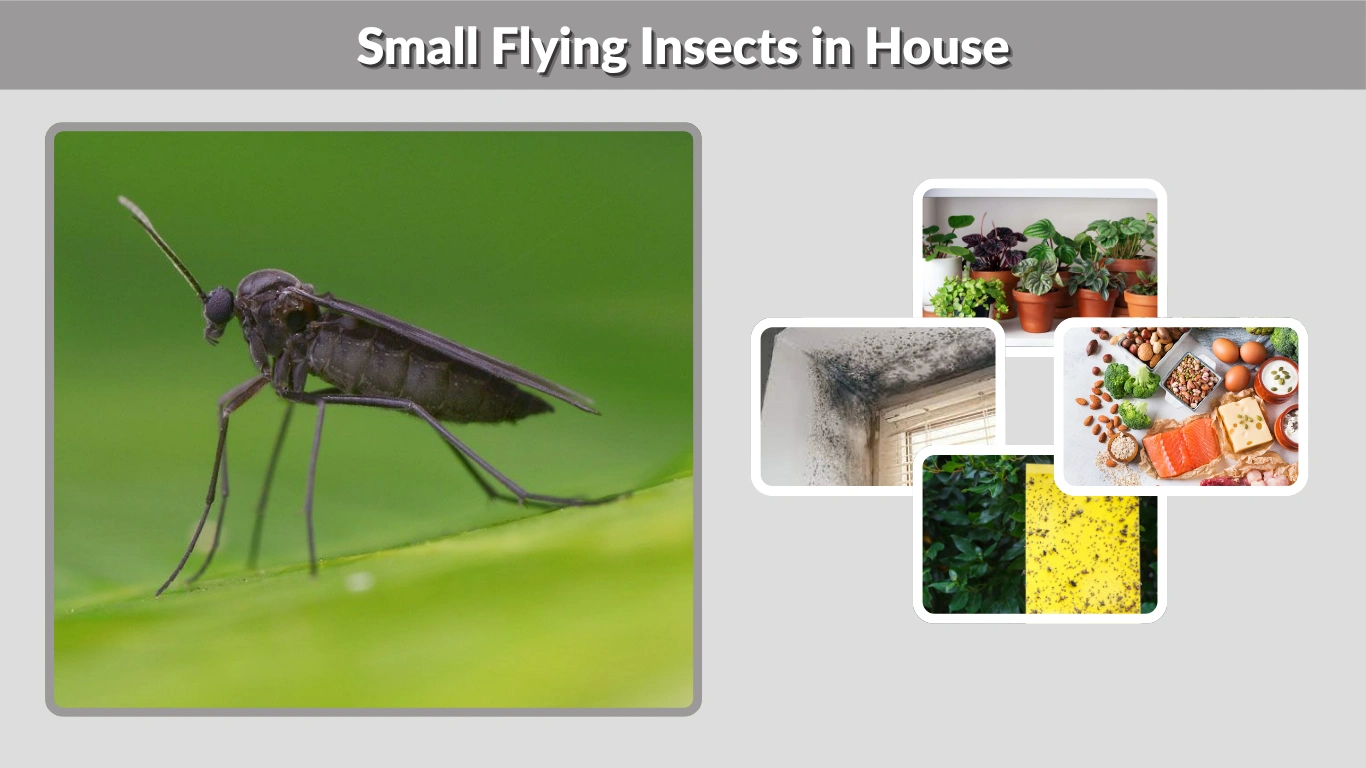
Small flying insects in the house can be a frustrating sight, especially when they seem to appear out of nowhere. These tiny invaders are commonly found in kitchens, bathrooms, and near plants. While most are harmless, their presence can indicate moisture problems, poor sanitation, or overwatered houseplants. Understanding their types, behavior, and prevention methods helps maintain a clean, insect-free home.
Identification of Small Flying Insects in House

Appearance and Size
Small flying insects are usually less than 5 millimeters long and often resemble miniature flies or gnats. They have slender bodies, delicate wings, and rapid flight patterns. Depending on the species, they may hover near lights, food sources, or houseplants. Some are barely visible until they cluster together or land on walls and windows.
Common Colors
Their colors vary widely depending on species:
- Black: Fungus gnats, drain flies, or small house flies
- Brown or tan: Fruit flies or pantry moths
- White or silver: Whiteflies and clothes moths
- Green or red: Aphid-like insects or plant-feeding species
Observing color and movement patterns is the first step toward identifying which type has entered your home.
Behavior and Habitat Clues
Different insects reveal themselves through where and how they appear:
- Around lights: Small moths and gnats are attracted to light sources.
- Near moisture: Drain flies and fungus gnats thrive in damp areas.
- Around food or trash: Fruit flies are drawn to decaying fruits and vegetables.
- On plants: Whiteflies and gnats prefer soil or leaves with excess moisture.
Identifying these habits makes it easier to locate breeding sites and eliminate them effectively.
Common Types of Small Flying Insects in Houses

Fungus Gnats
Fungus gnats are among the most common household flying pests. These tiny black insects live in the moist soil of potted plants. Adults are harmless but their larvae feed on organic matter in the soil, sometimes damaging plant roots. Overwatering is the main cause of infestation, especially during humid months.
Fruit Flies
Fruit flies are small brown or tan insects that reproduce rapidly around ripe or decaying fruits. They are often seen in kitchens, hovering near fruit bowls or garbage bins. A single overripe banana or unwashed juice spill can attract hundreds within days. Regular cleaning and covering food items can prevent infestations.
Drain Flies (Moth Flies)
These small, fuzzy insects resemble tiny moths and often rest near sinks, showers, or drains. They breed in organic buildup inside pipes. While they do not bite or sting, they can multiply quickly in bathrooms and kitchens. Cleaning drains with baking soda, vinegar, and boiling water is an effective way to control them.
Whiteflies
Whiteflies are tiny, pale insects that gather on the undersides of plant leaves. When disturbed, they fly in small clouds. Though primarily garden pests, they can enter homes through open windows or infested houseplants. Whiteflies suck plant sap, weakening leaves and promoting mold growth.
Clothes and Pantry Moths
These small moth-like insects are attracted to fabrics, grains, and stored food products. Clothes moths damage wool, silk, and fur, while pantry moths infest flour, cereals, and nuts. Regular inspection and proper storage can help prevent them from spreading indoors.
Why Small Flying Insects Appear in Houses

Moisture and Humidity
Damp environments attract many flying insects. Bathrooms, kitchens, and basements often provide perfect breeding conditions for gnats and drain flies. Leaky faucets, standing water, and wet towels can all encourage infestations.
Food Sources
Small insects like fruit flies and moths are drawn to leftover food, sugary spills, and unsealed containers. Even tiny crumbs or residue inside trash bins can support their reproduction.
Houseplants and Soil
Overwatered soil is a common source of indoor flying insects. Fungus gnats and whiteflies breed in moist, nutrient-rich environments around houseplants. Allowing soil to dry and removing dead leaves prevents larvae from developing.
Open Doors and Windows
Tiny insects easily enter through screens, vents, and door gaps, especially at night when indoor lights attract them. Keeping windows closed or covered with fine mesh screens can significantly reduce their entry.
How to Identify Small Flying Insects in the House

Accurate identification is essential for effective control.
Visual Inspection
Examine windowsills, lights, drains, and plants to see where insects gather. Using a flashlight or magnifying glass helps distinguish details like wing shape or color.
Simple Traps
Set sticky traps near plants or vinegar traps in kitchens to capture flying insects. This allows closer examination and helps identify the type of pest infesting your home.
Professional Help
If you cannot identify them, pest control experts or local extension services can examine specimens and recommend targeted solutions.
How to Get Rid of Small Flying Insects in House

Once you’ve identified the species, removing small flying insects becomes much easier. The key is eliminating their breeding sites and preventing re-entry. Most infestations can be controlled with natural cleaning methods, moisture reduction, and consistent sanitation habits.
Clean and Sanitize Regularly
Keeping the house clean is the first line of defense. Wipe down countertops, clean up food spills, and empty trash daily. Scrub sinks and drains using a mix of baking soda, vinegar, and boiling water to remove buildup that attracts drain flies. Avoid leaving dishes unwashed overnight, as leftover food particles quickly draw insects.
Manage Moisture and Humidity
Most small flying insects thrive in damp conditions. Reduce indoor humidity by using dehumidifiers and fixing leaky pipes or faucets. Dry bathroom tiles and shower areas after use, and avoid leaving standing water in sinks or pet bowls. These steps eliminate breeding conditions for gnats and flies.
Use Natural Remedies
You can control infestations effectively without harsh chemicals:
- Vinegar traps: Mix apple cider vinegar with a few drops of dish soap to lure and trap fruit flies.
- Essential oils: Lemongrass, peppermint, and eucalyptus oils naturally repel flying insects.
- Sticky traps: Place near windows, plants, or drains to catch flying adults.
- Dry plant soil: For fungus gnats, let the top inch of soil dry completely before watering again.
Remove Attractants and Entry Points
Seal cracks, window gaps, and vents where insects can enter. Cover food containers tightly and store grains and cereals in airtight jars. Use mesh screens on windows and doors to block entry. Installing yellow or LED bulbs outdoors can also reduce insect attraction to light.
Houseplant Maintenance
Indoor plants often harbor small flying insects. Check for larvae or tiny flies around the soil. Remove dead leaves, avoid overwatering, and use sterile potting soil. If infestation persists, replace the top layer of soil or use a layer of sand to deter egg-laying.
Regional and Seasonal Occurrence
Sudden Infestations
Many homeowners notice small flying insects appear “all of a sudden.” This usually happens during warm, humid weather when insect eggs hatch rapidly. A sudden increase in moisture, decaying organic material, or overripe fruit can trigger mass emergence within days.
Geographic Variations
Different regions experience different types of flying insects indoors:
- United States: Drain flies and fruit flies are most common during summer.
- United Kingdom: Fungus gnats and small house flies are frequent in humid homes.
- Australia (Sydney): Tiny silver-winged moth flies and midges appear after rainfall or near light sources.
Understanding these variations helps tailor prevention methods according to local conditions.
Small Flying Insects Attracted to Light
Many small flying insects are phototactic, meaning they are attracted to light. Moths, gnats, and certain flies are especially drawn to lamps and windows at night. Reducing unnecessary lighting, using yellow-tinted bulbs, or installing motion-activated lights outside can minimize their attraction. Closing curtains after dark further helps prevent them from gathering indoors.
FAQs
What are the small black flying insects in my house?
These are often fungus gnats or drain flies. Fungus gnats live in moist potting soil, while drain flies breed in sink and shower drains. Drying out soil and cleaning drains usually solves the problem within a week.
Why do small flying insects suddenly appear in my house?
A sudden increase in humidity, overripe fruit, or damp soil provides ideal conditions for breeding. Insects multiply quickly when these factors combine, often appearing overnight. Regular cleaning and reducing moisture prevent their return.
How do I get rid of small flying insects naturally?
Combine apple cider vinegar traps, essential oils, and improved ventilation. Keep drains clean, empty trash bins frequently, and allow plant soil to dry between watering. These eco-friendly steps remove insects without chemicals.
Are small flying insects in houseplants harmful?
Most aren’t dangerous but can damage plant roots if their larvae feed on organic matter in the soil. To prevent this, avoid overwatering, clean plant trays, and add a thin layer of sand on top of the soil to deter breeding.
What are the tiny white or silver flying insects in my house?
They’re likely whiteflies or small moths. Whiteflies infest indoor plants, sucking sap from leaves, while small moths target fabrics or dry goods. Identifying their source—plants or closets—helps determine the correct treatment method.