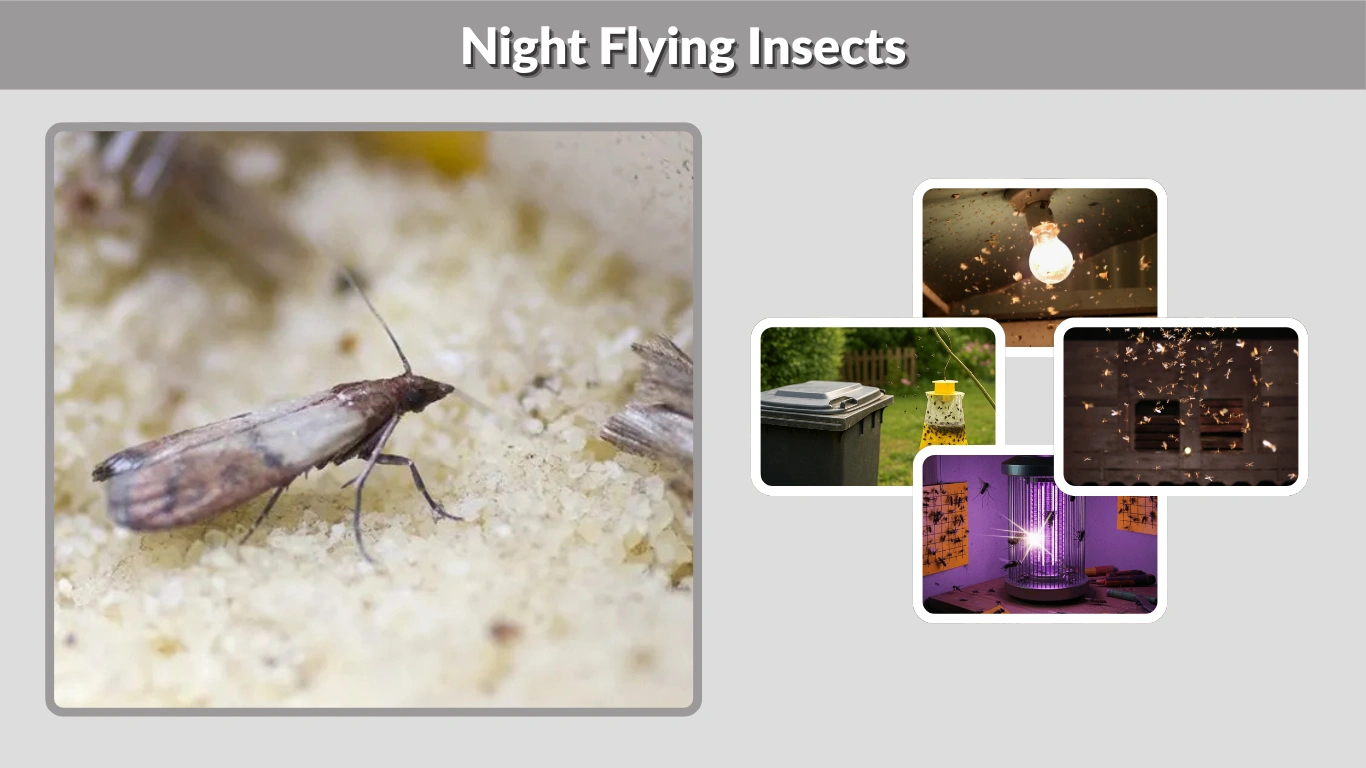
Night flying insects are a common sight around homes, gardens, and streetlights once the sun goes down. Drawn by warmth and light, these creatures range from gentle pollinators like moths to bothersome pests such as mosquitoes. Some make loud buzzing or clicking sounds, while others quietly flutter through the dark. Understanding which insects fly at night, why they are attracted to light, and how to manage them helps maintain comfort indoors and outdoors.
Common Night Flying Insects

Moths
Moths are the most widespread night flyers, recognized for their soft, powdery wings and erratic flight around lamps. They are naturally drawn to light, a behavior called positive phototaxis. While most moths are harmless, some—like pantry or clothes moths—can cause damage to stored food or fabrics. Their fluttering wings can create faint tapping or buzzing sounds as they bump against walls or bulbs.
Beetles
Large beetles, especially June beetles and click beetles, are common nighttime visitors. They’re often heard before seen, producing heavy thuds or clicking noises as they collide with light fixtures. The loud “click” from click beetles comes from a spine mechanism they use to flip themselves upright. Though intimidating in size, these beetles are harmless and primarily active during warm summer nights.
Mosquitoes
Mosquitoes are among the most unwelcome night fliers. They’re attracted to carbon dioxide, sweat, and body heat, often biting when humans are asleep. The high-pitched buzzing near your ear is the sound of their rapidly beating wings. Besides being annoying, mosquitoes can carry diseases like West Nile virus or malaria, making prevention essential.
Crane Flies
Crane flies are frequently mistaken for giant mosquitoes because of their long legs and slender bodies. However, they don’t bite or feed on blood. They enter homes seeking warmth and light, often resting on walls or ceilings. Their clumsy flight can make them seem menacing, but they are harmless and short-lived.
Fireflies
Fireflies, or lightning bugs, are nocturnal beetles that produce soft, glowing flashes to attract mates. Their gentle illumination adds beauty to summer nights. They’re beneficial insects and harmless to humans, using bioluminescence as part of their natural communication system.
Hawk Moths and Hummingbird Moths
Large, fast-flying moths—sometimes mistaken for birds—are hawk or hummingbird moths. They hover while feeding on flower nectar, producing a faint humming sound with their wings. Their reddish or brown coloration and strong flight patterns often cause confusion when seen indoors at night.
Why Insects Fly at Night

Nocturnal Adaptation
Many insects evolved to be nocturnal to avoid predators such as birds and lizards. Flying at night also helps them conserve water and energy, as cooler nighttime temperatures reduce dehydration. Their eyes are highly sensitive to low light, allowing them to navigate effectively even in near darkness.
Attraction to Light
One of the most notable behaviors of night flying insects is their attraction to artificial light. This happens because many species use the moon and stars as navigation references. Artificial lights disrupt this orientation, confusing the insects into circling or colliding with light sources—a phenomenon known as phototactic disorientation. White and blue lights attract the most insects, while yellow and red lights have minimal effect.
Mating and Feeding
Nighttime is prime time for mating and feeding. Flowers that bloom after sunset, such as jasmine or evening primrose, attract moths and beetles. Male insects often fly in search of females, using sound, scent, or light cues to locate them. The cool, humid air also aids insect respiration, making flight easier and safer.
Identifying Night Flying Insects by Sound and Behavior

Buzzing and Humming Sounds
Buzzing typically comes from mosquitoes, flies, and large beetles. The tone and pitch depend on wing speed—mosquitoes produce high, whining buzzes, while beetles create deeper hums. If the sound is persistent around your ears or lights, it’s likely a mosquito or gnat.
Clicking and Thudding Noises
If you hear sudden clicks or thuds, you may have June beetles or click beetles nearby. These insects often hit windows or walls as they navigate toward indoor lights. Some large moths also create audible fluttering sounds when trapped in enclosed spaces.
Glowing or Flashing Lights
A steady or pulsing glow is a sure sign of fireflies. Their bioluminescent signals differ by species—some flash in short bursts, while others glow continuously. These displays are harmless and a natural form of courtship communication.
Preventing and Controlling Flying Insects

Outdoor Prevention
Controlling night flying insects begins outdoors. Most are drawn to bright lights and moisture, so reducing both can make a big difference. Replace bright white bulbs with yellow or LED bulbs, which are less attractive to insects. Keep porch lights off when not needed, and avoid placing outdoor lights directly near doors or windows.
Eliminate standing water from birdbaths, buckets, and gutters to prevent mosquito breeding. Regularly trim overgrown plants and mow grass to remove resting spots for insects. Installing motion-sensor lights can also help since they only activate when needed, minimizing continuous attraction.
Indoor Protection
Once indoors, these insects often gravitate toward light sources or windows. To keep them out:
- Use tight-fitting window and door screens to block entry.
- Close doors quickly when entering or exiting at night.
- Install UV bug traps or electric zappers in rooms where insects gather.
- Keep food sealed and trash bins covered to prevent flies and beetles.
- Burn citronella candles or diffuse essential oils like lemongrass, lavender, or eucalyptus, which naturally repel mosquitoes and moths.
For persistent infestations, use indoor-safe insect sprays or sticky traps, focusing on corners, ceilings, and light fixtures where insects rest.
When to Be Concerned
While most night-flying insects are harmless, some can indicate larger issues or pose mild risks:
- Constant buzzing or swarming indoors may suggest an entry gap or insect infestation.
- Itchy or red bites often point to mosquitoes or biting midges.
- Damaged clothing or linens can signal the presence of clothes moths.
- Large, loud insects like June beetles or hawk moths are harmless but can become disruptive when trapped inside.
If insects appear in large numbers despite cleaning and sealing efforts, it’s best to contact a pest control specialist. They can identify the species and use targeted treatments safely.
Eco-Friendly Control Options
Chemical sprays can harm beneficial insects, so eco-friendly methods are ideal:
- Bug zappers use light to attract and neutralize insects efficiently.
- Neem oil and soap-water sprays can repel flying insects naturally in gardens.
- Predatory helpers like bats and birds consume mosquitoes and moths, balancing your yard’s ecosystem.
Encouraging these natural insect predators through nest boxes and small ponds keeps flying pest populations in check.
FAQs
What insects fly around lights at night?
Common insects that fly around lights include moths, beetles, mosquitoes, and crane flies. Artificial lights confuse their natural navigation systems, causing them to circle or bump against bulbs repeatedly.
What is the big red flying insect in my house at night?
You may be seeing a hummingbird moth or June beetle. Both are harmless but can appear alarming due to their size and color. They’re typically drawn indoors by light and may buzz loudly while flying.
Why are insects attracted to light at night?
Many nocturnal insects navigate using moonlight and starlight. Artificial lights disrupt this instinct, making them fly toward bulbs and screens. Blue and white lights are most attractive to insects, while yellow lights attract fewer.
How can I get rid of flying insects in my yard at night?
Use yellow bulbs, remove standing water, and install light traps. Burning citronella candles and diffusing essential oils outdoors can also reduce mosquito and moth activity naturally.
Do any flying insects bite at night?
Yes. Mosquitoes, biting midges, and some gnats are active at night and feed on human or animal blood. Wearing long sleeves, applying insect repellent, and sleeping with screens or nets help prevent bites effectively.